Quick answer
Infinity blocks, with their curved and flat surfaces, are ideal for restorative yoga because they provide stable, customizable support for longer-held poses, allowing you to relax deeply without strain.
Why Infinity Blocks Work for Restorative Yoga
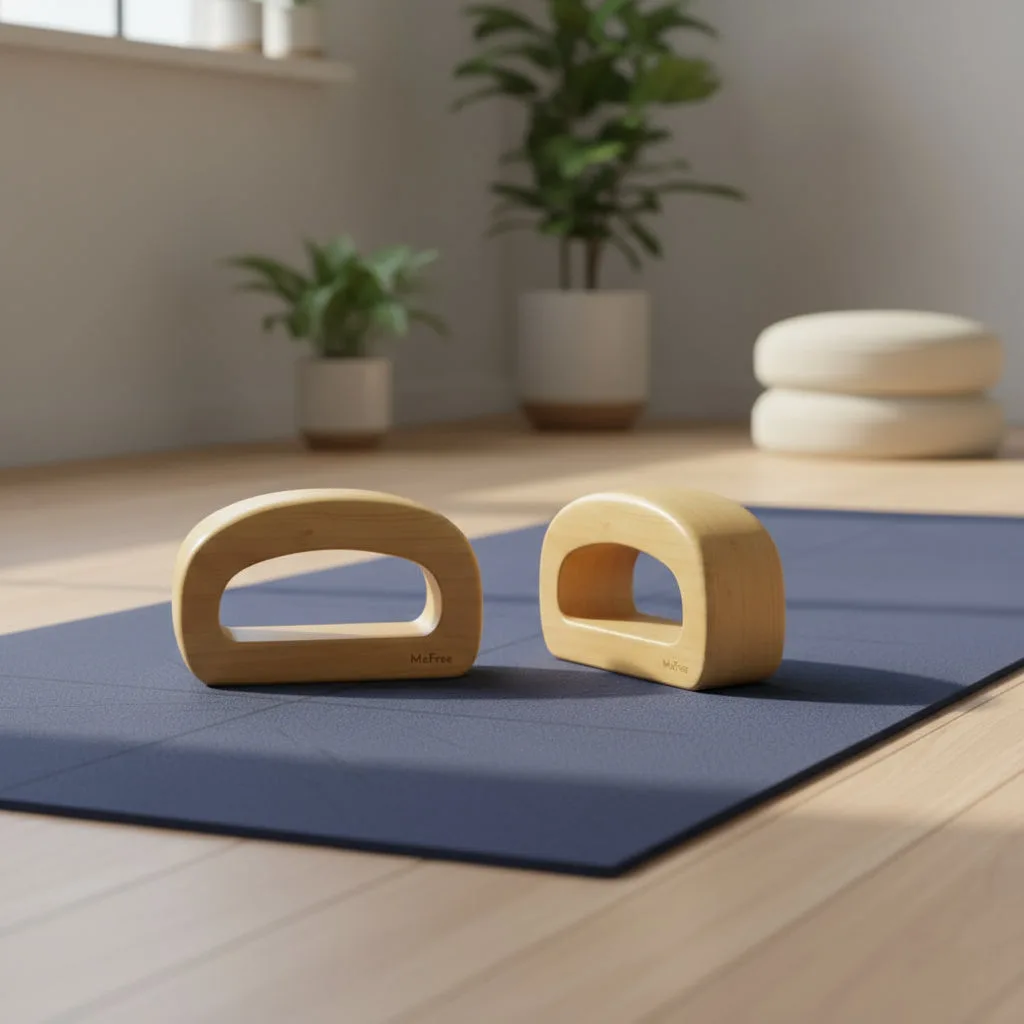
Restorative yoga relies on props to create a passive stretch and relaxation. Unlike standard rectangular blocks, infinity blocks offer multiple surfaces and shapes, including a curved edge that can cradle the spine or neck, and a flat side for traditional support. This versatility makes them a smart alternative to using several different props.
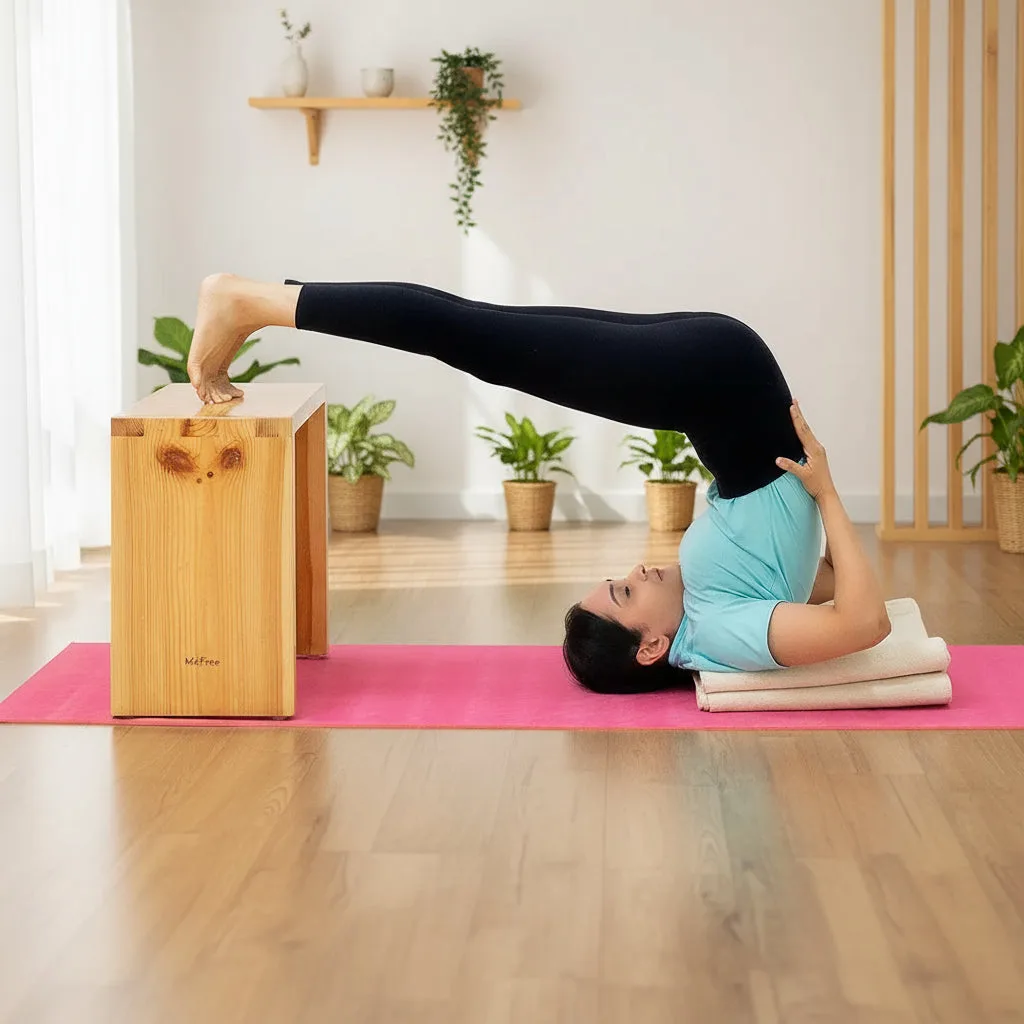
One common trade-off: infinity blocks are often made of denser materials like pinewood, as seen in the Infinity Blocks - Pack of 2. While this provides sturdy support, it means they are less cushioned than foam blocks. For restorative poses where comfort is key, you may want to pair them with a blanket or towel for extra padding.
Step-by-step guide: Using Infinity Blocks in Restorative Yoga
- Choose your block orientation: Place the infinity block on its widest flat side for maximum stability in poses like supported child's pose. Use the curved edge under your neck or lower back for gentle spinal support. A common mistake is using only the flat side. The curved edge is specifically designed for restorative support.
- Set up a supported reclining twist: Lie on your back with knees bent. Place one infinity block on its side under your hip on the side you plan to twist toward. Slowly lower your knees to that side, letting the block support your hip and lower back. Check that the block is not slipping; if it does, try placing it on a non-slip mat or use the flat side for more contact.
- Use for a restorative forward fold: Sit with legs extended. Place an infinity block under your knees (curved side up) to support the back of your thighs. Then, hinge forward from the hips, resting your forehead on a second block or a folded blanket. Avoid rounding your lower back; the block under your knees helps keep a gentle curve in your spine.
- Adapt for a supported bridge pose: Lie on your back with knees bent and feet flat. Place an infinity block under your sacrum (the flat bone at the base of your spine) using the widest flat side. Relax your arms by your sides and breathe deeply for 3-5 minutes. If the block feels too hard, place a folded blanket on top. This is a common checkpoint for comfort.
- Incorporate into a side-lying relaxation: Lie on your side with a block placed under your head (curved edge for neck support) and another between your knees (flat side) to align your hips. This is a great alternative to a full-body bolster. Make sure your neck is not twisted; the block should support the natural curve without tilting your head.
Product facts
-
Infinity Blocks - Pack of 2: The Infinity Blocks - Pack of 2 are made of solid pinewood, designed for unwavering foundation and support. This material gives you a stable, non-slip base for holding restorative poses, but you may need a soft layer on top for pressure points.
Infinity Blocks - Pack of 2