Quick Answer
To use a pre-connected foley catheter tray, follow the sterile insertion steps in order, from setup to securing the catheter, ensuring the pre-attached drainage bag remains sealed and connected throughout.
Why a Pre-Connected Tray Simplifies Catheter Insertion
A pre-connected foley catheter tray combines the catheter and drainage bag into one sterile system, reducing setup steps and minimizing the risk of contamination. This design is especially helpful in busy clinical settings or for home caregivers who need a straightforward, reliable process.
The main trade-off is that the catheter and bag are not separate, so you cannot mix and match sizes or brands. However, the convenience and reduced infection risk often outweigh this limitation for most patients.
Step-by-Step Guide to Using a Pre-Connected Foley Catheter Tray
- Prepare the sterile field: Wash hands thoroughly and set up a clean, sterile work area. Open the tray carefully, touching only the outer packaging to maintain sterility of the contents. Check that the tamper evident seal is intact before opening.
- Position the patient and cleanse: Place the patient in a supine position with legs spread. Use the antiseptic solution from the tray to clean the urethral area, moving from the meatus outward. Use a new swab for each stroke. Always clean from the center outward to avoid introducing bacteria.
- Lubricate the catheter tip: Apply the lubricant from the tray to the catheter tip, following the manufacturer's instructions. Ensure the drainage bag is clamped or the valve is closed to prevent urine flow during insertion. Do not touch the catheter tip after lubrication; keep it sterile.
- Insert the catheter: Gently insert the catheter into the urethra until urine flows, then advance it another 2–3 cm to ensure the balloon is in the bladder. Inflate the balloon with the recommended volume of sterile water. Never inflate the balloon unless urine is flowing; this confirms bladder placement.
- Secure and connect the drainage bag: Once the catheter is in place, gently pull back until resistance is felt. Secure the catheter to the patient's thigh with the provided strap. Ensure the pre-attached drainage bag is positioned below the bladder level and the tubing is not kinked. Check that the bag is lower than the bladder to allow gravity drainage.
- Monitor and maintain: Empty the drainage bag regularly and record urine output as needed. Keep the system closed and avoid disconnecting the catheter from the bag to maintain the sterile fluid path. Do not disconnect the pre-attached system unless absolutely necessary; always use the drain spout.
Product Spotlight
-
AMSure® Pre-Connected Foley Catheter Urine Drainage Bag Trays 5 cc Balloon Silicone Catheter: AMSure® Pre-Connected Foley Catheter Urine Drainage Bag Trays feature a catheter pre-attached to a low-profile drainage bag with a tamper evident seal to maintain a sterile fluid path. This pre-attached design minimizes potential contamination and ensures the drainage system stays sealed, reducing the risk of urinary tract infections.
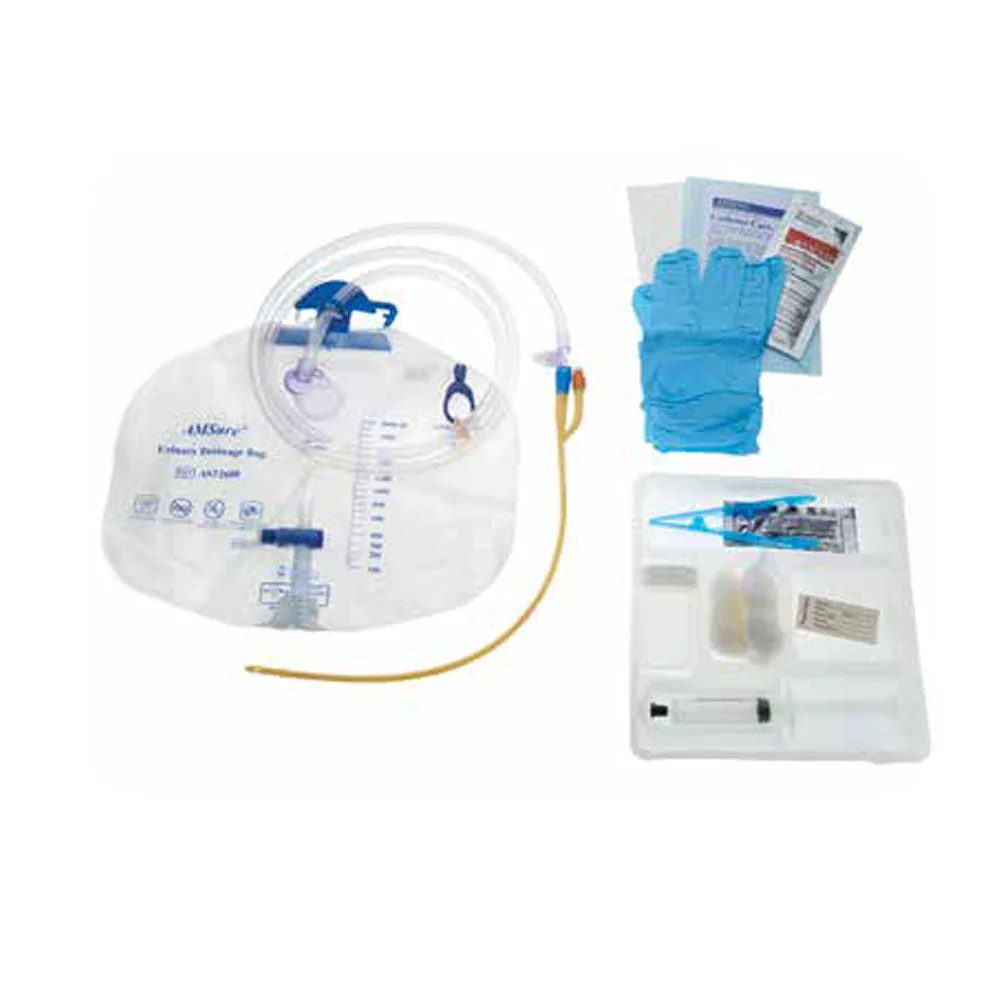
AMSure® Pre-Connected Foley Catheter Urine Drainage Bag Trays 5 cc Balloon Silicone Catheter