Quick answer
Use 2 to 3 tablespoons of psyllium husk powder per 3 cups of gluten free flour blend. Mix the powder with the dry ingredients first, then add warm water to activate its gel-forming ability. This replaces the elasticity that gluten normally provides, giving your bread structure and a tender crumb.
Why psyllium husk powder works in gluten free bread
Gluten free flours lack the stretchy protein network that traps gas and gives bread its rise. Psyllium husk powder, made from the husks of Plantago ovata seeds, forms a gel when mixed with water. That gel mimics gluten's role by holding air bubbles and preventing the crumb from crumbling. Because Terrasoul's organic psyllium powder is ultra-fine and 99% pure, it hydrates quickly and evenly, reducing the risk of dry spots or a gummy texture.
Choosing the right psyllium husk form
Recipes may call for whole husks or powder. Powder disperses more evenly in dry ingredients, which matters for bread where you want consistent structure. Whole husks can leave visible flecks and may not gel as uniformly. Stick with a fine powder like Terrasoul's for reliable results. If a recipe specifies whole husks, use about 25% less powder by volume.
Step-by-step: Adding psyllium husk powder to gluten free bread dough
- Weigh or measure the psyllium husk powder: For a standard loaf (about 3 cups of flour blend), measure 2 to 3 tablespoons (15 to 22 grams) of psyllium husk powder. Too little and the bread won't hold together; too much creates a dense, rubbery crumb. Common mistake: adding by guesswork. Always measure precisely — psyllium is potent.
- Mix psyllium with dry ingredients first: Whisk the psyllium husk powder into your gluten free flour blend along with salt, yeast, and any other dry ingredients. This prevents clumps when you add liquid later. Checkpoint: After whisking, there should be no visible clumps of psyllium in the flour.
- Add warm water and let the dough rest: Pour in warm water (about 100°F / 38°C) and mix until a shaggy dough forms. Let it rest for 10 to 15 minutes. The psyllium will absorb the water and create a gel that gives the dough structure. Common mistake: skipping the rest period. Without it, the dough won't hold shape and the bread will be flat.
- Shape and proof the dough: After resting, the dough should feel like a stiff, slightly tacky mass. Shape it into a loaf and place it in a greased pan. Let it proof until nearly doubled — about 45 to 60 minutes depending on your yeast and room temperature. Checkpoint: The dough should hold its shape when gently poked. If it spreads flat, it needs more psyllium or a longer rest.
- Bake until golden and internal temperature reaches 205°F: Bake at 375°F (190°C) for 40 to 50 minutes. The psyllium gel helps retain moisture, so the bread stays tender. Check the internal temperature with a probe thermometer — 205°F (96°C) means it's done. Common mistake: underbaking. Gluten free bread with psyllium looks done before it actually is. Always use a thermometer.
Product used in this guide
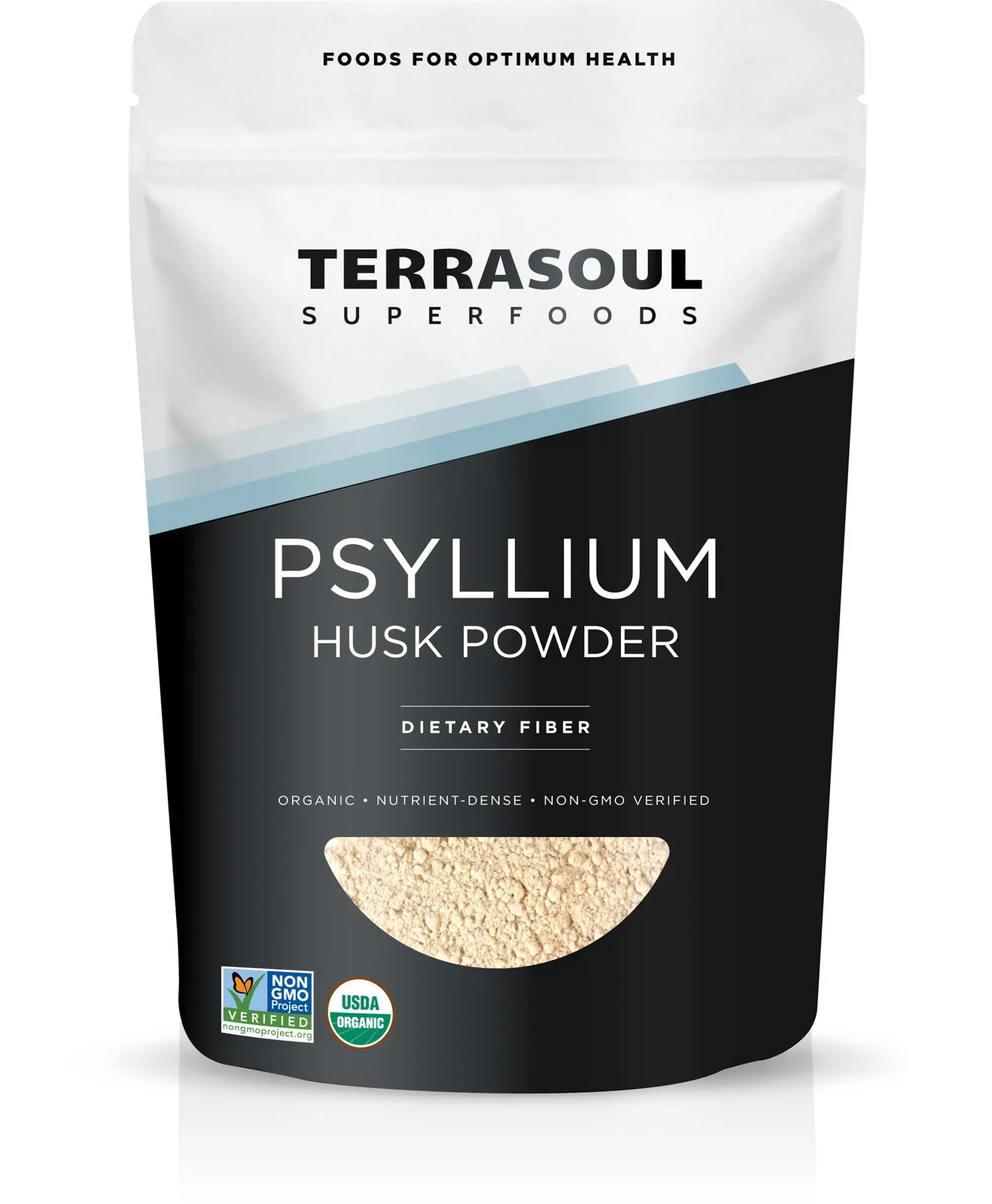
- Psyllium Husk Powder: Our organic psyllium powder provides a combination of pre-biotic insoluble and soluble fiber, essential for the maintenance of optimal digestion. Our ultra-fine psyllium powder with 99% purity makes supplementing your fiber intake simple and enjoyable. The ultra-fine grind dissolves quickly in the dough without clumping, which is critical for achieving an even crumb in gluten free bread. The high purity means no fillers that could throw off your hydration ratio.