Quick answer
Use a hand puppet as a character who has a small, relatable problem, then let your child help solve it. Keep sessions to five or ten minutes, name feelings out loud, and let your child lead the story. Any soft puppet or plush figure works, so you do not need a special set to begin.
Puppet play gives children a safe distance from big feelings. When a puppet is the one who feels left out or frustrated, your child can talk about the emotion without admitting it is theirs. That small step makes it easier to practice what to say and do next.
You do not need a stage or a script. A single puppet, a few minutes, and a familiar problem are enough to turn playtime into real social-emotional practice. The steps below show how to set up the habit and keep it going.
Why puppet play works for social-emotional learning
Young children often understand a feeling before they can explain it. A puppet gives them a character to project that feeling onto, so they can say 'he is sad' before they can say 'I am sad.' Over time, that practice builds the vocabulary they need to name their own emotions.
Puppet play also lets children rehearse social scripts. Sharing, apologizing, asking to join a game, and calming down are all skills that improve with repetition. When a puppet makes a mistake, your child gets to be the helper, which reinforces the behavior you want to see.
- Keep the puppet's problem small and familiar, like losing a turn or missing a friend.
- Let your child correct the puppet; being the expert builds confidence.
Choosing puppets and props that fit your child
Any soft puppet or plush figure can work as a feelings character. Look for one that is easy for small hands to hold and light enough to move without tiring. If you already own stuffed animals, they can step in as puppets with no extra cost.
You can also add a second character so your child can practice both sides of a conversation. A simple pair of puppets makes turn-taking visible: one talks, one listens, then they switch. That back-and-forth is the core of social skills practice.
- Washable fabric matters if the puppet will be a comfort object too.
- Avoid puppets with small loose parts for children under three.
Setting up a five-minute puppet routine
Pick a consistent time, such as after lunch or before bath, so the routine becomes expected. Start with the same short opening, like the puppet waking up and saying hello. Predictability helps children relax into the pretend play.
Introduce one problem per session. The puppet might not want to share a toy, or might feel nervous about a new place. Ask your child what the puppet could do, then act out their idea together. End by naming the feeling and the solution.
- Five minutes of focused play beats twenty minutes of distracted play.
- If your child loses interest, let the puppet yawn and say goodnight.
Questions that keep the conversation going
Open-ended questions work better than yes-or-no questions. Ask 'What do you think the puppet is feeling?' or 'What could she try next?' These prompts invite your child to think instead of guessing the answer you want.
If your child gives a one-word answer, mirror it back and add a small detail. For example, 'Sad because no one asked him to play. That is a lonely feeling.' This shows you are listening and gives them new words to use.
- Repeat your child's words before adding your own.
- Let silence sit for a few seconds; children often fill it.
Common mistakes to avoid
The biggest mistake is turning the puppet into a lecture. If the puppet only exists to correct your child, the play stops feeling safe. Let the puppet be wrong sometimes, and let your child be the one who knows better.
Another common issue is pushing a feeling your child does not recognize yet. If they say the puppet is fine, accept that and move on. The goal is practice, not a perfect emotional vocabulary in one sitting.
- Do not force an apology through the puppet; model it instead.
- Stop while the play is still fun, not after a meltdown.
Your seven-step puppet play routine
- Pick a regular time and place: Choose a five-minute slot that already happens every day, like after snack. Sit in the same spot so the routine feels familiar. Checkpoint: if you miss a day, just start again the next day without making up for it.
- Choose one puppet and one problem: Use a single soft puppet or plush figure. Give it one small, relatable problem, such as not wanting to share or feeling left out. Mistake to avoid: stacking several problems into one session.
- Name the feeling out loud: Have the puppet say what it feels, using simple words like sad, mad, scared, or excited. Ask your child to guess the feeling too. Checkpoint: your child does not need to get the label right; any guess keeps the conversation going.
- Ask your child for an idea: Ask an open question like 'What could the puppet try?' Then act out your child's idea with the puppet, even if it seems silly. Mistake to avoid: correcting the idea before you try it.
- Let your child lead the next scene: Hand over the puppet or let your child direct what happens next. Follow their story instead of steering it back to your plan. Checkpoint: if your child takes the story somewhere unexpected, that is a sign the play is working.
- Practice one social script: Choose a short phrase your child can use in real life, such as 'Can I play too?' or 'I need a break.' Have the puppet say it, then have your child say it. Mistake to avoid: practicing too many scripts at once; one phrase per session is plenty.
- Close with a calm ending: End the same way each time, such as the puppet saying goodnight or putting the puppet to bed. A predictable ending helps your child transition out of play. Next step: try the same routine with a second puppet so your child can practice both sides of a conversation.
Puppet-friendly toys that support feelings play
- 6" Plush Wild Onez Sloth: This six-inch stuffed sloth has a textured brown coat and is made with recycled materials. It is recommended for ages three years and up. Its small size fits a child's hand for puppet-style play, and the soft texture makes it a natural comfort character for talking about calm-down strategies.
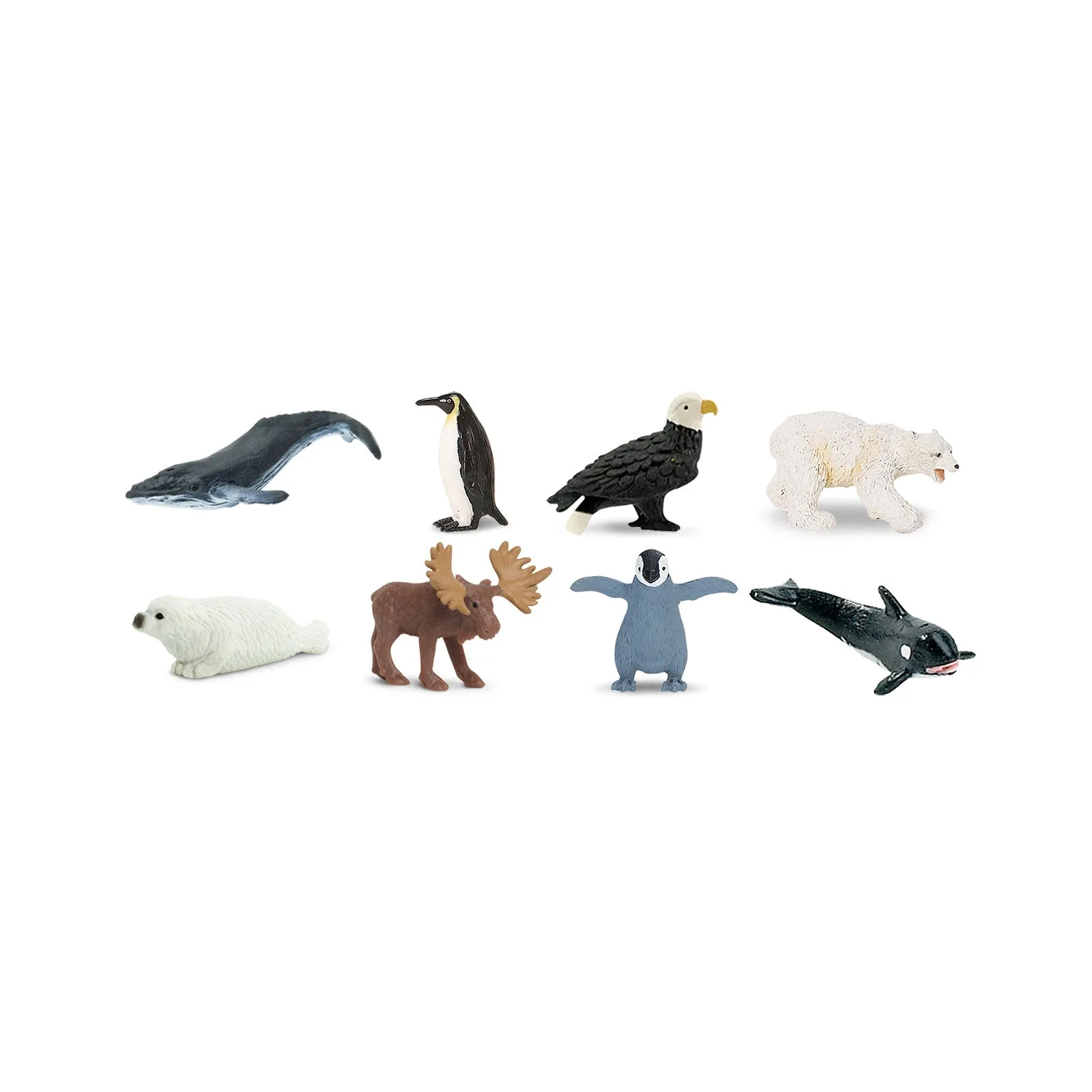
- Mini Arctic Animal Toys Fun Pack: The Arctic Fun Pack includes a Humpback Whale, Emperor Penguin and Chick, Bald Eagle, Polar Bear, Harp Seal, Moose, and Killer Whale. Multiple small figures let you act out group scenes, so children can practice sharing, taking turns, and noticing how different characters might feel.
Puppet play is one of the simplest ways to practice social-emotional skills because it turns big feelings into a story your child can control. Start with five minutes, one puppet, and one small problem. The words your child practices with a puppet are the same words they can use with friends, siblings, and you.