Quick answer
Set up your quilting ruler stand at the end of your longarm frame, within arm's reach but clear of the needle path. Load only the rulers you are using, keep them flat and secure, and never reach across the machine to grab a ruler. A stand turns loose rulers into a safe, organized station so you can focus on quilting.
A quilting ruler stand keeps your longarm rulers upright, visible, and off the quilt. Instead of digging through a pile on your frame, you slide the ruler you need out of a slot and get back to stitching. The setup takes a few minutes, but it changes how you work.
This guide walks through the steps for a safe, useful stand, from choosing the spot to loading rulers. You will also see how a small ruler like the Inside Out Mini Machine Quilting Ruler fits into a stand-based workflow, and why a tidy ruler station matters when you quilt with rulers and free-motion together.
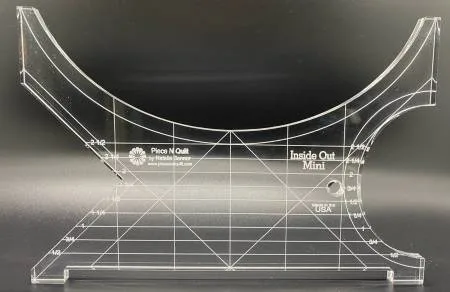
Inside Out Mini Machine Quilting Ruler
Choose the right spot for your ruler stand
Place the stand at the end of your longarm frame or beside the machine head, on the side where you naturally stand. It should be within arm's reach without leaning over the quilt. Keep it outside the needle path and away from the carriage wheels so nothing can be bumped into the machine while it moves.
If you quilt from both the front and back of the frame, pick the side you use most and consider a second stand or a movable caddy for the other side. The goal is to avoid walking around the frame for every ruler change. A stand that is slightly below waist height lets you see labels and grab rulers without lifting your shoulders.
- Checkpoint: stand up at your normal quilting position and reach for the stand. If you have to step or stretch, move it closer.
- Common mistake: placing the stand where the machine carriage can hit it. Leave clear space around the frame.
Assemble and stabilize the stand
Follow the maker's instructions for your specific stand. Most models slot together or use a few screws, and some have a weighted base or a clamp for the frame. Tighten everything by hand first, then snug the screws once the stand sits flat. A wobbly stand is a safety problem, not just an annoyance.
If your stand has a clamp, attach it to a stable part of the frame or table, not to a moving rail. If it sits on the floor, check that all feet touch and add a non-slip pad if the floor is smooth. Test by pressing down gently on the top; it should not tip or slide.
- Checkpoint: give the loaded stand a light nudge. It should stay put.
- Common mistake: overtightening plastic parts and cracking them. Snug, not cranked.
Load rulers so they stay put and stay visible
Load the rulers you plan to use for the current quilt, not your whole collection. Slot them so the edge you grip is up and the shape is easy to identify. If your stand has dividers, group by type: straight rulers together, curves together, and specialty shapes like the Inside Out Mini in their own slot. Keep the thickest rulers at the back so they do not hide smaller ones.
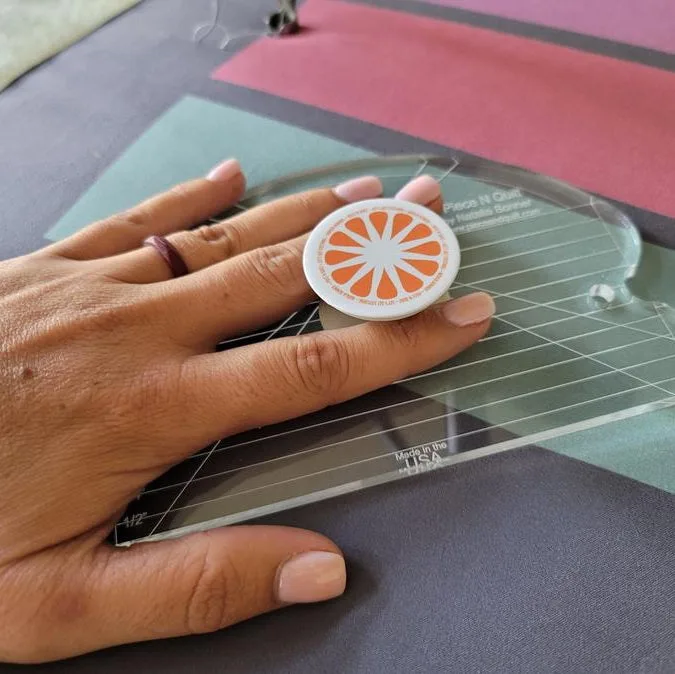
For rulers with grip handles or pop sockets, check that the handle does not catch on the slot when you pull the ruler out. If it does, turn the ruler around or move it to a wider slot. Rulers that are stored flat and separated are less likely to get scratched, and you can see the markings when you grab one.
- Checkpoint: pull each ruler out and put it back once. If it snags, reposition it now.
- Common mistake: overloading the stand until rulers lean and fall. Leave a little breathing room.
Build a safe reach-and-return habit
Before you start quilting, decide where each ruler goes and return it there after every use. The habit keeps the stand organized and keeps rulers off the quilt. When you need a different ruler, stop the machine, bring the needle to a safe stop, and then reach for it. Never grab a ruler while the machine is running or while your hands are near the needle.
If you use a ruler with a grip, press it onto the ruler before you position it on the quilt, not while the machine is moving. Keep your fingers behind the guard or edge as your machine's manual instructs. A stand supports this rhythm because the next ruler is already waiting in a known spot.
- Checkpoint: pause, stop, reach, return. Say it once and it becomes automatic.
- Common mistake: leaving a used ruler on the quilt where it can be hit by the machine.
Maintain and adapt the stand as your ruler collection changes
Dust the stand and check screws every few quilting sessions. If you add rulers, rearrange rather than cram. If a ruler no longer gets used, move it to longer-term storage and keep the stand for current projects. That keeps the station useful and prevents the pile-up that makes a stand pointless.
If you travel with your longarm, pack the stand so rulers cannot shift. A small case or a strap over the slots works. At home, a stand near the machine plus a drawer for the rest of your rulers is a practical balance between access and storage.
- Checkpoint: once a month, pull everything out, wipe the stand, and reload only what you use.
- Common mistake: treating the stand as permanent storage for every ruler you own. It is a working station.
Ruler stand setup steps at a glance
- Pick the position: Stand at your normal quilting spot and place the stand within arm's reach, outside the needle path and clear of the carriage. If you have to step to reach it, it is too far.
- Assemble and stabilize: Follow the maker's instructions, tighten by hand first, then snug screws. Clamp to a fixed part of the frame or set it flat on the floor. A light nudge should not move it.
- Load current rulers only: Slot the rulers for the project you are quilting, grouping straight, curved, and specialty shapes. Keep smaller rulers visible and handles clear of slots. Test each ruler in and out once.
- Practice stop, reach, return: Stop the machine before reaching for a ruler, and put it back in the same slot after use. Keep hands behind the guard when quilting. Never grab a ruler while the machine is running.
- Refresh the stand regularly: Dust and check screws every few sessions, and reload only the rulers you are using. Move unused rulers to longer-term storage. A working station beats a crowded shelf.
Tools that fit a stand-based workflow
- Inside Out Mini Machine Quilting Ruler: The Mini Inside Out machine quilting ruler is designed by professional machine quilter Natalia Bonner and is a smaller version of the Inside Out, suited to machine quilting curves, small curves, angles, and straight lines with precision and control. Its compact size makes it a natural fit for a stand slot near the machine, so you can switch to it for tight curves without hunting through a pile.
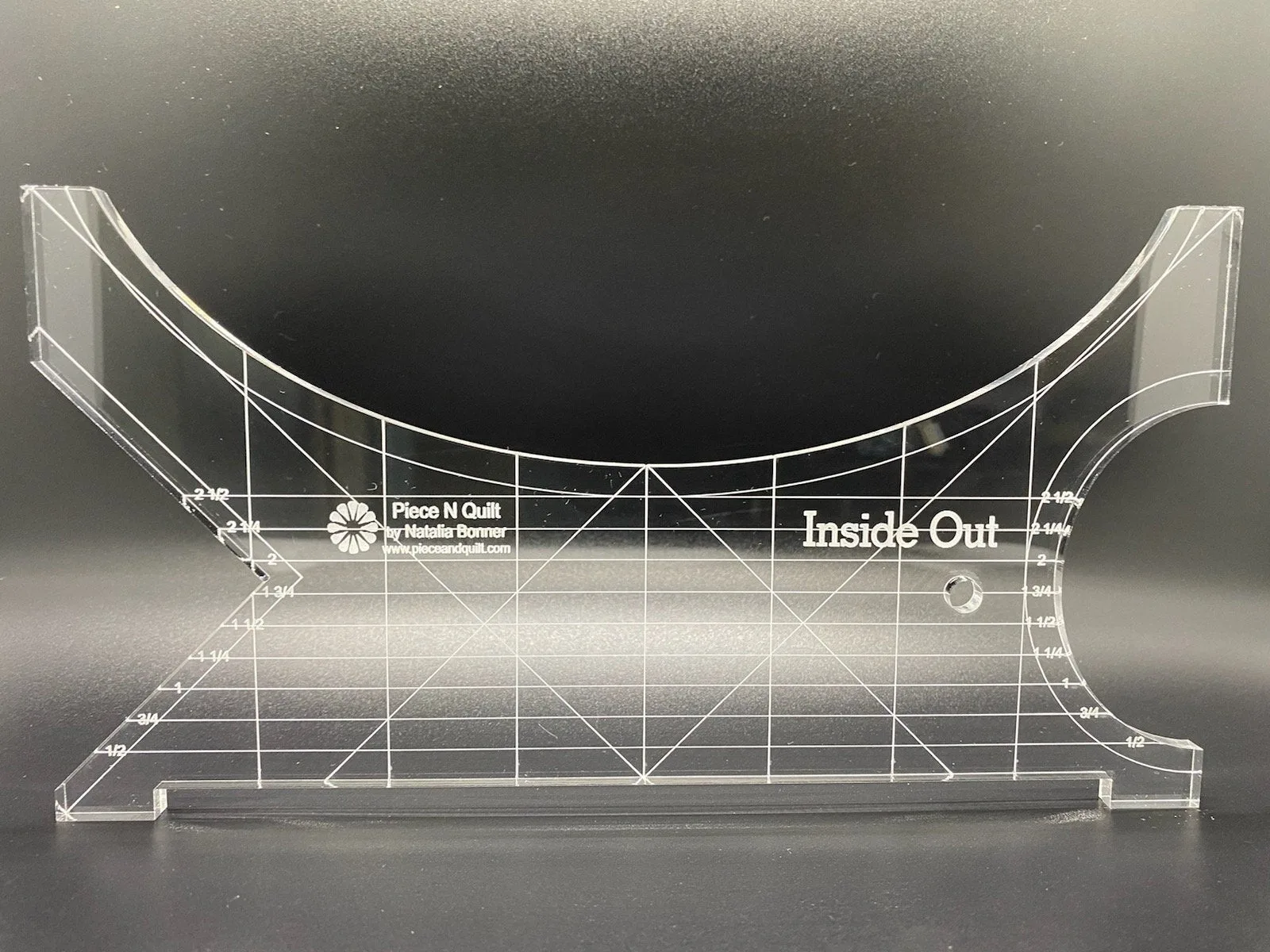
Inside Out machine quilting ruler
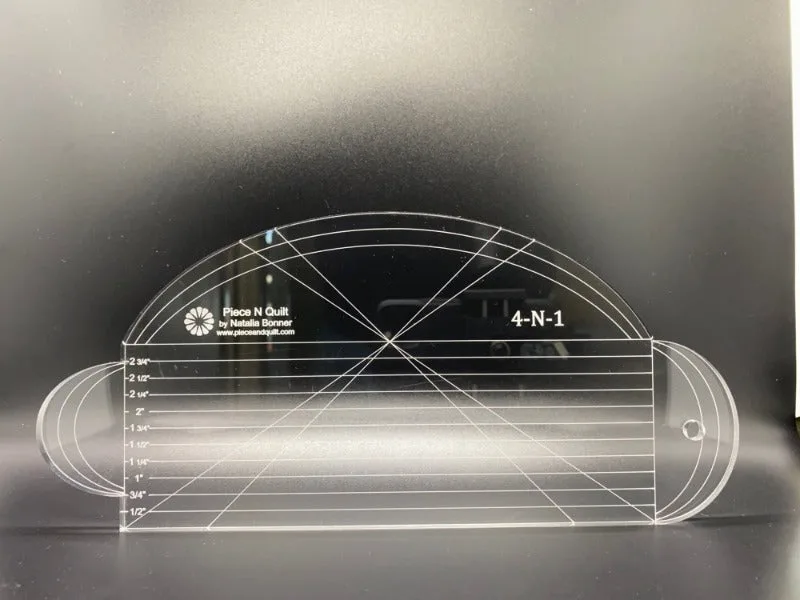
- Machine Quiltig an Incredible Flying Geese Quilt with Natalia Bonner: In this course, Natalia uses a Mini 4-N-1 Machine Quilting Ruler and a Piece N Quilt Pop Socket Ruler Grip while combining free-motion quilting and ruler work. Seeing how a quilter manages ruler changes mid-project shows why a dedicated stand and grip setup keeps the work flowing.
A quilting ruler stand is a small setup that pays off every time you quilt. Put it in the right spot, load only what you need, and build the stop-reach-return habit. Your rulers stay safe, your quilt stays clean, and your hands stay clear of the needle.