Quick answer
Offer a clean, chilled rattle teething ring during active gum discomfort, let your baby explore it with hands and mouth, and supervise the entire time. For most babies, a wooden rattle teething ring works best as a short, guided soothing tool rather than a leave-in-crib toy. Stop if your baby turns away or becomes upset.
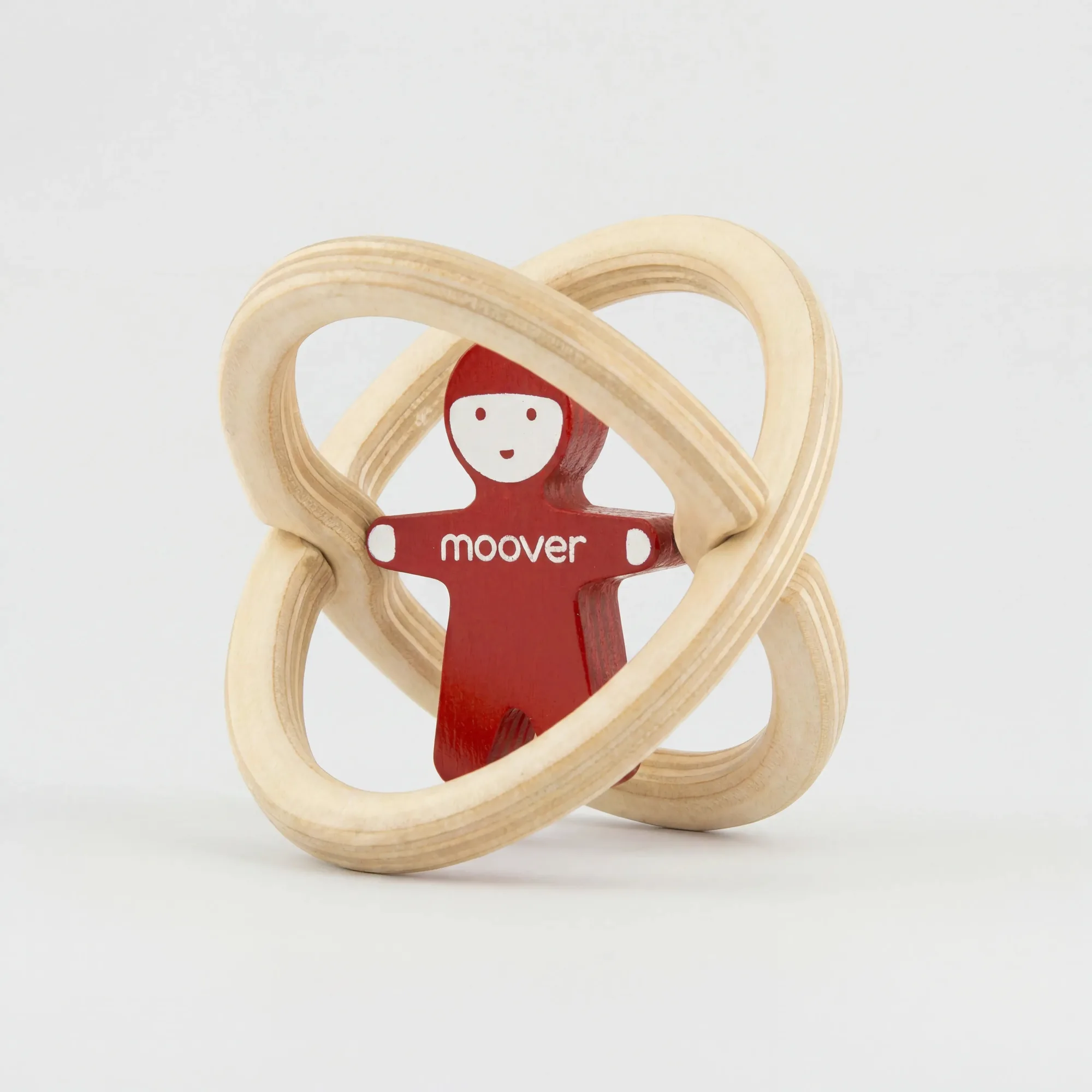
rattle teething ring
Teething can turn a calm baby into a restless one, and a rattle teething ring gives you a simple tool that combines gentle sound, texture, and something safe to gnaw on. The trick is knowing when to offer it, how to prepare it, and what to watch for so it actually helps.
This guide walks through a practical sequence you can repeat at home. It uses the Rattle Teething Ring from Moovershop as the example, but the steps apply to any similar wooden rattle teething ring you already own. Each step includes a checkpoint so you can tell whether it is working or whether you should change approach.
When a rattle teething ring helps most
A rattle teething ring is most useful when your baby is actively chewing, drooling, and reaching for things to put in their mouth. That is the window when a firm, cool surface gives counter-pressure to swollen gums. It is less useful for general fussiness, hunger, or tiredness, where a teething ring will just add one more thing to push away.
Watch for your baby's own signals rather than a schedule. Reaching, gnawing on fists, and brief fussiness that stops when something firm touches the gums are good signs. If your baby is crying continuously or has a fever, that is not a teething ring moment. Check with your pediatrician instead.
- Best timing: during active gum discomfort, not as a pacifier replacement.
- Skip it if your baby is hungry, overtired, or clearly unwell.
How to prepare and offer the ring
Start with a clean ring. Wipe it with a damp cloth and mild soap, then rinse and dry fully. If your baby seems to want cold relief, place the ring in the refrigerator for about 10 to 15 minutes, not the freezer. A frozen wooden ring is too hard and can hurt tender gums.
Hand the ring to your baby rather than pressing it into their mouth. Let them bring it to their lips and decide how much pressure feels right. Stay close, and if they drop it, clean it again before offering it back. This keeps the experience soothing instead of frustrating.
- Chill, do not freeze: 10 to 15 minutes in the fridge is enough.
- Let your baby lead the mouthing; never force the ring between the gums.
Using the rattle sound as a distraction
The rattle element is not just for play. A gentle shake can redirect your baby's attention away from the ache for a moment, which often breaks the fussy cycle. Shake it softly to one side and let your baby track the sound with their eyes before they reach for it.
Keep the sound low and slow. Loud, fast rattling can overstimulate a tired or uncomfortable baby. If your baby startles or turns away, stop and simply offer the ring as a chewy object instead. The goal is calm, not entertainment.
- Use one or two soft shakes, then pause and watch your baby's reaction.
- If the rattle winds them up, switch to quiet mouthing only.
Common mistakes and how to avoid them
The most common mistake is leaving a rattle teething ring in the crib or playpen as an unattended toy. Even a simple wooden ring should be used with supervision, because a baby can gag or get a limb caught. Treat it as a guided tool, not a pacifier you leave behind.
Another mistake is over-chilling. A freezer-cold ring feels numbing at first but can damage delicate gum tissue. Stick to the refrigerator, and check the ring against your own wrist before handing it over. If it feels painfully cold to you, it is too cold for your baby.
- Supervise every use; put the ring away when you step out of the room.
- Test the temperature on your wrist before offering it.
Step-by-step rattle teething ring routine
- Step 1: Check your baby's readiness: Look for active gum discomfort: chewing on fists, drooling, and reaching for objects. Skip the ring if your baby is hungry, overtired, or unwell. Checkpoint: your baby is calm enough to reach for the ring, not already crying hard.
- Step 2: Clean and chill the ring: Wipe the ring with mild soap and water, rinse, and dry. Refrigerate for 10 to 15 minutes if you want cold relief. Never freeze it. Checkpoint: the ring feels cool, not painfully cold, against your wrist.
- Step 3: Offer, do not push: Hand the ring to your baby and let them bring it to their mouth. Stay close and supervise. If they drop it, clean it before returning it. Checkpoint: your baby is mouthing the ring on their own terms.
- Step 4: Add a soft rattle shake: Shake the rattle gently once or twice to redirect attention, then pause. If your baby startles or turns away, stop shaking and let them chew quietly. Checkpoint: the sound calms your baby rather than winding them up.
- Step 5: Know when to stop: End the session when your baby loses interest, turns their head away, or becomes fussy. Put the ring away rather than leaving it in the crib or playpen. Checkpoint: the ring is stored out of reach once you step away.
Product facts that matter for this routine
- Rattle Teething Ring: This Moover CLASSIC toy is from the original, highest-quality line of luxury wooden mobility toys, made with FSC-certified birch veneer plywood and environmentally-friendly, water-based paint, and is designed for babies 3+ months for sensory awareness and teething. The FSC-certified wood and water-based paint make it a reasonable choice for a toy that will spend a lot of time near your baby's mouth, and the 3+ month age guidance helps you decide when to introduce it.
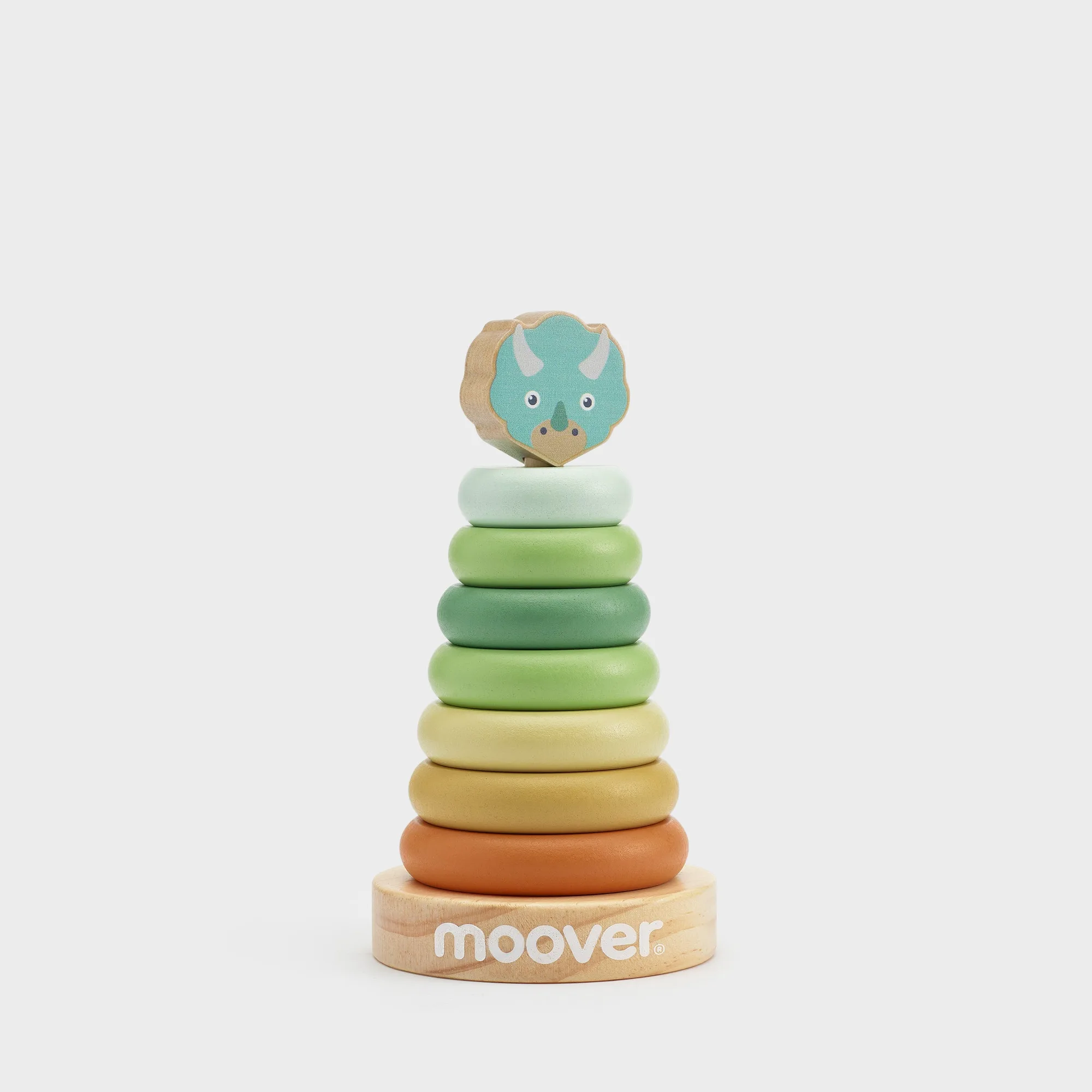
- Wooden ring dino: The Wooden Stacking Ring Set is designed for curious minds aged 1 and above and invites children to explore balance and coordination by stacking rings of varying sizes onto a central peg. Once your baby outgrows the rattle teething stage, a stacking ring set is a natural next step that continues the same hand-to-mouth and fine motor practice.
A rattle teething ring works best as a short, supervised soothing tool, not a background toy. Clean it, chill it briefly, offer it during active gum discomfort, and stop when your baby is done. Used that way, it can turn a rough teething afternoon into a calmer one.