Quick answer
Use the PlanToys Solid Drum with its included rubber-tipped drumstick to introduce your toddler to rhythm, hand-eye coordination, and auditory play through simple tapping, marching, and call-and-response games.
Why a solid drum works for toddlers
Unlike electronic music toys, an acoustic drum gives immediate cause-and-effect feedback: the harder you tap, the louder the sound. This helps toddlers connect action to outcome naturally.
The rubber head on the drumstick softens the sound, so you don't have to worry about harsh noise levels during play. It also makes the drum suitable for indoor use without disturbing others.
What to expect from the PlanToys Solid Drum
The drum is made from sustainable rubberwood and finished with non-toxic paints, so it's safe for mouthing and rough handling. The drumstick is attached by a cord, reducing the chance of losing it.
Because the drum is lightweight, toddlers can carry it around and play in different positions—sitting, standing, or even marching.
How to play with the solid drum: step by step
- 1. Start with free tapping: Place the drum on a flat surface or let your toddler hold it in their lap. Show them how to hold the drumstick and tap the drumhead. Let them explore at their own pace without instructions. Common mistake: forcing a rhythm too early. Let your child discover the sound first.
- 2. Introduce a steady beat: Once your toddler is comfortable tapping, tap along with a slow, steady beat—about one tap per second. Use a simple word like 'tap' each time to connect sound and language. Checkpoint: If your toddler loses interest, switch to a different tempo or stop and try again later.
- 3. Play call-and-response: Tap a short pattern (e.g., two quick taps, one slow tap) and pause. Encourage your toddler to copy it. Keep patterns very short—two or three taps max—so they can succeed. Common mistake: making patterns too long. Toddlers can only repeat 2–3 sounds at a time.
- 4. March and drum together: Stand up and march in place while tapping the drum on each step. Sing a simple marching song or chant 'left, right, left, right' to reinforce the rhythm. Checkpoint: If your toddler stumbles, slow down or sit and tap the drum on their lap instead.
- 5. Combine with other instruments: If you have other percussion toys like shakers or bells, play them alongside the drum. Let your toddler choose which instrument to use and follow their lead. Common mistake: taking over the play. Let your child direct the music session as much as possible.
Product facts
-
Solid Drum: The drumstick has a rubber head to soften the sound. This makes the drum less startling for sensitive ears and quieter for household use.
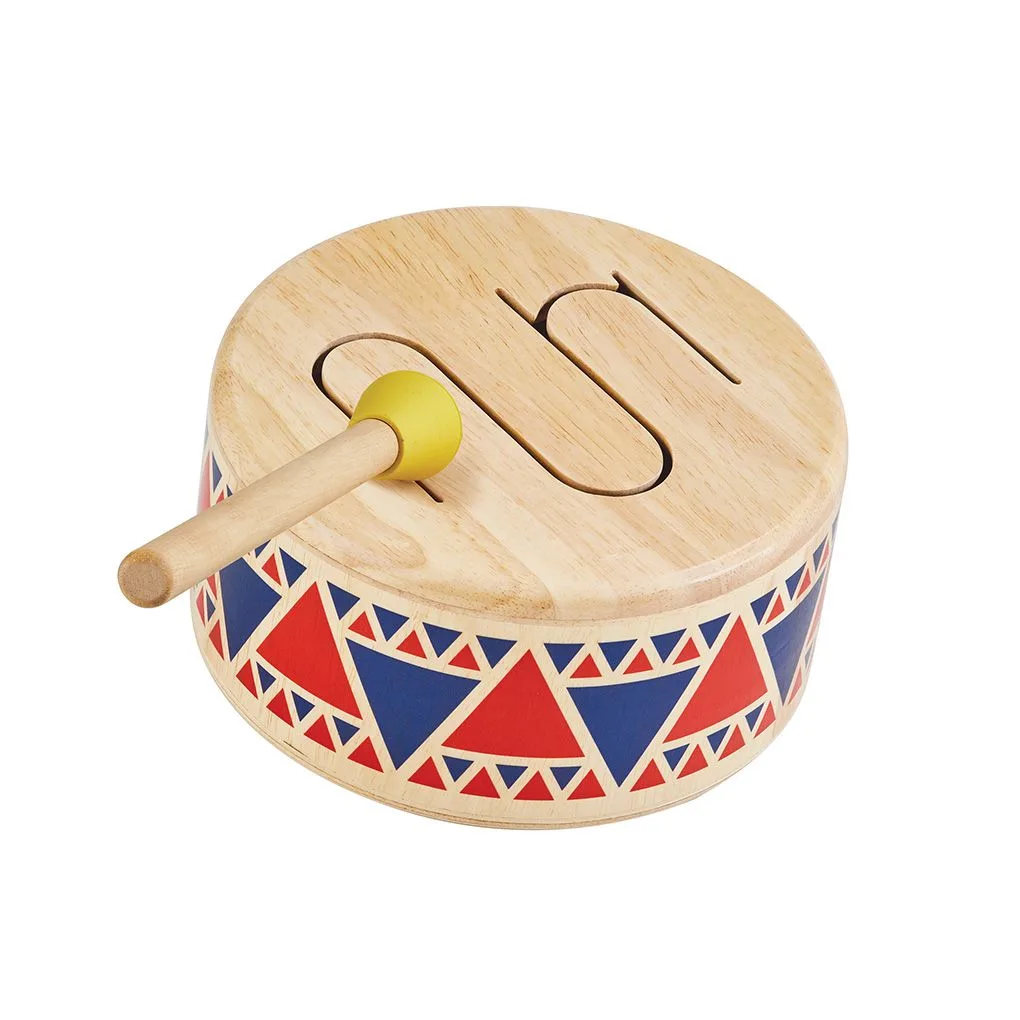
Solid Drum
-
Solid Drum: The drum supports fine motor skill development and improves hand-eye coordination through realistic pretend play. Toddlers practice aiming and striking, which builds the same skills used later for writing and self-feeding.