Quick Answer
Use the Godox Lux Elf flash on your film camera by setting the correct sync speed, adjusting aperture for flash distance, and testing with a roll of print film to confirm exposure before important shoots.
Why the Godox Lux Elf Works Well with Film Cameras
The Godox Lux Elf is a compact speedlight that works across most camera systems, including older film bodies with a standard hot shoe. Its lightweight design makes it easy to carry as a fill flash for outdoor portraits or as a main light indoors. Because it delivers consistent color temperature and reliable triggering, you get predictable results even when using manual flash exposure.
Key Limitations to Know Before You Start
The Lux Elf does not have TTL (through-the-lens) metering, so you will need to set flash power and aperture manually. This is standard for many compact flashes, but it means you must calculate or guess exposure based on distance. Also, the flash sync speed on most mechanical film cameras is 1/60s or 1/125s — using a faster shutter speed will cause a partially black frame.
Step-by-Step: Using the Godox Lux Elf with a Film Camera
- 1. Mount the Flash and Set Sync Speed: Slide the Godox Lux Elf into your camera's hot shoe until it clicks. Set your camera's shutter speed to the flash sync speed — typically 1/60s or 1/125s on mechanical film bodies. Faster speeds will cause a black bar across the frame. Check your camera manual for the exact sync speed; using a slower speed (e.g., 1/30s) is safe but may blur motion.
- 2. Choose the Right Aperture for Your Distance: For a subject 6–10 feet away, start with an aperture of f/8 on ISO 400 film. If the subject is closer (3–5 feet), stop down to f/11 or f/16. Farther subjects (10–15 feet) need f/5.6 or wider. The Lux Elf has no distance scale, so estimate or use a tape measure. A common mistake is using too wide an aperture for close subjects, which overexposes the frame. Bracket by shooting one stop over and under.
- 3. Set Flash Power Manually: The Lux Elf has a manual power switch — usually full or half power. For fill flash outdoors, half power (or even lower if available) prevents harsh shadows. Indoors as a main light, use full power and adjust aperture accordingly. If your flash has no half-power option, move the flash farther from the subject or use a diffuser to soften the light.
- 4. Focus and Compose with Flash in Mind: Frame your shot and focus normally. Remember that flash exposure is determined by aperture and distance, not shutter speed (as long as you stay at sync speed). Keep the subject within the flash's effective range — about 3–15 feet for the Lux Elf. Avoid placing the subject against a bright background; the flash will expose for the foreground, leaving the background dark.
- 5. Test with a Roll of Print Film: Before a critical shoot, run a test roll of inexpensive color print film (ISO 400). Shoot the same scene at different apertures and distances, noting each setting. Develop and scan to see which combination gives the best exposure. This eliminates guesswork for future shoots. Slide film has less exposure latitude than print film, so test with print film first to avoid wasting expensive slide stock.
About the Godox Lux Elf Flash
-
Godox Lux Elf Universal Camera Flash: The Godox Lux Elf delivers compact flash performance without compromising on power or versatility. This universal speedlight works seamlessly across most camera systems, offering consistent color temperature and reliable triggering. Its small size and dependable output make it a practical choice for film photographers who need a portable fill flash without complicated setup.
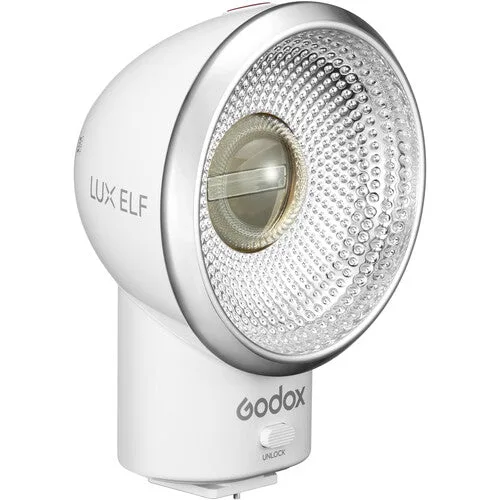
Godox Lux Elf Universal Camera Flash