Quick Answer
Using a torque screwdriver ensures you tighten scope mount screws to the manufacturer's specified torque, preventing damage to screws, threads, and the scope tube.
Why Torque Matters for Scope Mounts
Over-tightening scope mount screws can crush the scope tube, distort the internal erector mechanism, or strip threads. Under-tightening can allow the scope to shift under recoil, causing loss of zero. A torque screwdriver removes the guesswork by applying a precise amount of force.
Manufacturers like INNOMOUNT specify exact torque values for their mounts and rings. Using a torque screwdriver set to those values gives you a repeatable, safe installation every time.
Choosing the Right Torque Screwdriver
For scope mount work, a torque screwdriver with a range of 10-50 in-lbs (1.1-5.6 Nm) is typical. Look for a model that accepts standard 1/4-inch hex bits so you can use the correct bit for your mount screws.
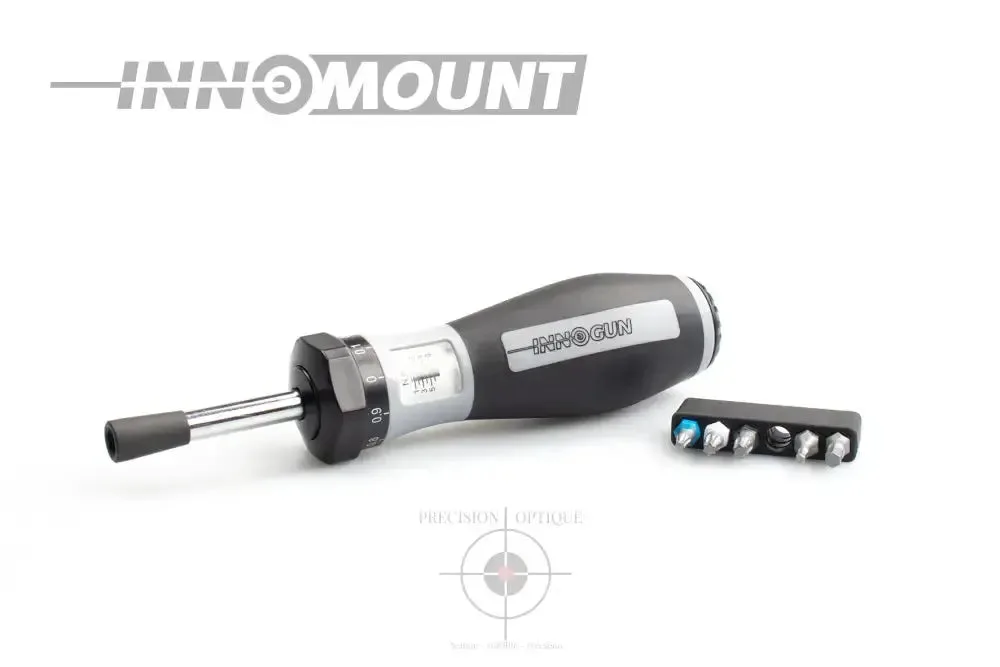
The INNOMOUNT torque screwdriver kit includes a BG-1/4 drive and matching bit inserts, making it a convenient choice for installing their mounts and rings. It is designed to help you avoid rounding screw heads or exceeding the allowed torque.
Step-by-Step: Using a Torque Screwdriver for Scope Mounts
- 1. Gather Your Tools: You will need your torque screwdriver, the correct bit for your mount screws (usually a hex or Torx bit), and the manufacturer's torque specification for each screw. For INNOMOUNT mounts, use the bits provided in the kit. Check the mount manual for torque values; never guess.
- 2. Set the Torque Value: Rotate the handle of the torque screwdriver to the required torque value. Most models have a locking ring to prevent accidental changes. For typical scope ring screws, values range from 15 to 25 in-lbs (1.7-2.8 Nm). Always start at the lower end of the recommended range if you are unsure.
- 3. Insert the Bit and Align: Insert the bit firmly into the driver and place it fully into the screw head. Keep the driver perpendicular to the screw to avoid cam-out or rounding. A misaligned bit can strip the screw head before reaching the correct torque.
- 4. Tighten in a Cross Pattern: For mounts with multiple screws (e.g., two-piece rings), tighten each screw a little at a time in a cross or alternating pattern. This ensures even pressure and prevents the scope from binding. Tightening one screw fully before the others can misalign the scope.
- 5. Apply Steady, Even Pressure: Turn the driver smoothly until you feel or hear the clutch click (for click-type drivers) or the needle reaches the mark (for beam-type). Stop immediately—do not continue turning after the click. Over-torquing after the click can damage the driver and the screw.
- 6. Double-Check All Screws: After the initial pass, go back and check each screw in the same cross pattern. It is common for the first screws to lose a little torque as the mount settles. Re-checking prevents loose screws after the first shot.
Product Facts
-
Tournevis dynamométrique - INNOMOUNT: The INNOMOUNT torque screwdriver (BG-1/4) comes with matching bit inserts for installing all fixation and adjustment screws on their mounts. This ensures you have the correct bit and torque range for INNOMOUNT mounts, reducing the risk of stripped or over-tightened screws.
Tournevis dynamométrique - INNOMOUNT