Quick answer
A totepack works as a diaper bag when you pack in layers: a base layer of absorbent essentials, a middle layer of clothing and feeding gear, and a top layer for quick-grab items. Keep the carry mode you use most often loaded first, and treat the tote handles as your short-trip mode and the backpack straps as your long-outing mode.
Choose the right totepack shape for baby gear
Not every totepack converts well to diaper duty. Look for a wide, flat base so the bag stands up while you load it one-handed, and a main compartment tall enough to hold a swaddle folded flat without crushing it. A totepack with a shallow main compartment forces you to stack vertically, which makes the bottom items unreachable during a diaper change.
- Wide base: the bag stays upright on a changing table or bench.
- Flat back panel: backpack straps sit comfortably when the bag is full.
- At least one exterior pocket: for wipes or a pacifier you need in seconds.
Pack the base layer first
The base layer is everything absorbent and bulky: diapers, a changing pad, and a spare swaddle or blanket. Place these at the bottom of the main compartment because you will not need them until a change happens, and a flat, heavy base keeps the totepack from tipping when you set it down. If you carry cloth diapers, this layer grows fast, so measure your daily count before committing to a smaller totepack.
Build the middle layer around feeding and clothing
The middle layer holds a spare onesie, a burp cloth, and any feeding gear. Roll clothing instead of folding it flat so you can see every item at a glance and pull one out without unpacking the whole bag. Keep feeding items in their own pouch or divider so a spilled bottle does not soak the spare outfit underneath.
Keep quick-grab items on top and outside
The top layer and exterior pockets are for items you reach for constantly: wipes, hand sanitizer, a pacifier, your phone, and keys. If you have to open the main compartment every time someone needs a wipe, you will end up leaving the bag unzipped, which defeats the purpose of a totepack. Test your layout by timing how long it takes to pull a wipe one-handed.
Switch carry modes deliberately, not constantly
A totepack's advantage is that it adapts, but switching modes mid-outing usually means setting the bag down and reloading your pockets. Decide before you leave: tote handles for quick errands where you will set the bag on a cart or bench, backpack straps for longer outings where you need both hands free. If you switch often, keep the heaviest items centered so the bag does not sag differently in each mode.
Step-by-step totepack diaper bag setup
- Empty and inspect the totepack: Turn the bag upside down, shake out crumbs and receipts, and check every zipper and strap. Confirm the main compartment is deep enough to hold a folded swaddle flat. Checkpoint: if the bag will not stand upright when empty, it will not stand upright when loaded.
- Lay the absorbent base layer: Place diapers, a changing pad, and one folded swaddle or blanket flat across the bottom of the main compartment. Common mistake: stacking diapers vertically, which hides the count and makes the bag top-heavy.
- Add the middle layer in pouches: Roll a spare onesie and burp cloth, and put feeding gear in its own pouch or divider above the base layer. Checkpoint: you should be able to remove the feeding pouch without disturbing the base layer.
- Load quick-grab items on top and outside: Put wipes, sanitizer, pacifier, phone, and keys in the top layer or exterior pockets. Keep at least one exterior pocket dedicated to wipes alone. Common mistake: burying wipes in the main compartment, which forces a full unzip every change.
- Test both carry modes before you leave: Sling the totepack on your shoulder using the tote handles, then switch to backpack straps. Adjust the heaviest items toward the center if the bag sags or digs in. Checkpoint: if the bag pulls on one shoulder in tote mode, move the feeding pouch to the center.
- Restock after every outing, not before the next one: As soon as you get home, replace used diapers, wipes, and any soiled clothing. Leave the bag packed and ready by the door. Common mistake: waiting until you are already late to discover the wipes are empty.
Product facts that affect packing
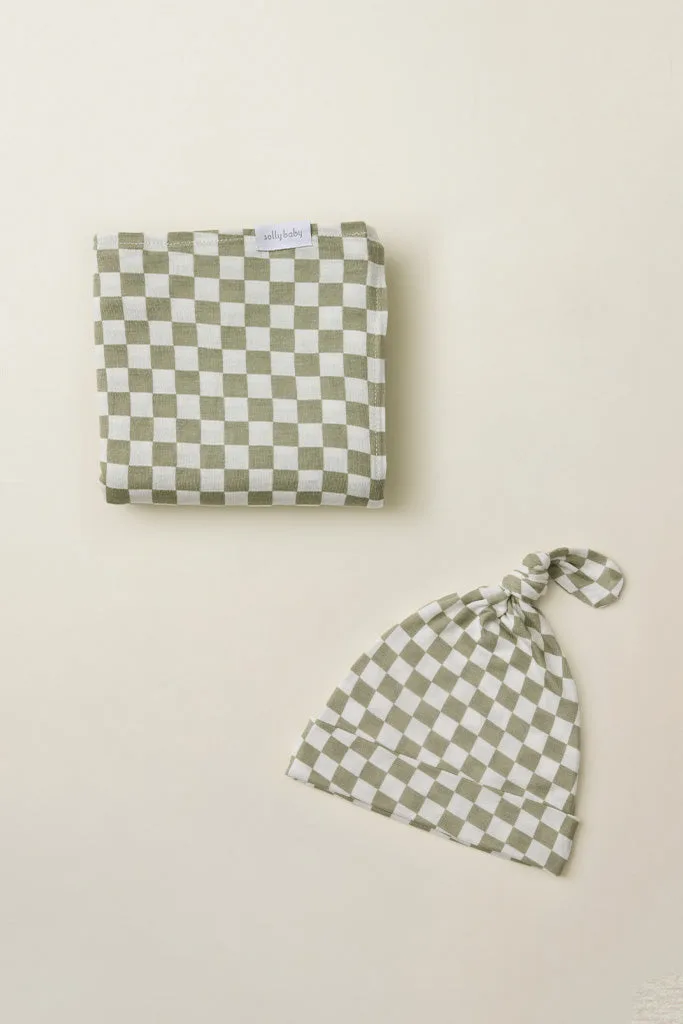
- Spelt Swaddle + Hat Set: Spelt Swaddle + Hat Set uses buttery-soft TENCELTM Modal swaddles sized approximately 47 by 49 inches with natural stretch and a matching hat. The generous size and slight stretch let you fold the swaddle flat as a base-layer item or roll it as a spare blanket, and the matching hat means one less loose item to hunt for in the bag.
- Sage Chequer Swaddle + Hat Set: Sage Chequer Swaddle + Hat Set pairs the same generously sized, lightweight TENCELTM Modal swaddle with a matching hat. Because the fabric is lightweight and breathable, it compresses well in a totepack middle layer without adding bulk, which matters when you are packing for warm-weather outings.
- Cottage Rose Swaddle + Hat Set: Cottage Rose Swaddle + Hat Set includes the same approximately 47 by 49 inch TENCELTM Modal swaddle and matching hat. A swaddle-and-hat set covers both a base layer and a spare clothing item, so you can skip packing a separate blanket and hat for short trips.