Quick Answer
Use the Trust Leash's climbing-rope weave and DWR coating to teach loose leash walking by rewarding slack and stopping when tension appears.
Why the Trust Leash Works for Loose Leash Training
The Trust Leash is woven from climbing rope material and treated with a DWR coating, giving it a strong, weather-resistant feel that stays comfortable in your hand. This construction provides consistent feedback—when your dog pulls, you feel the tension immediately, and when they walk beside you, the leash goes slack. That clear signal helps your dog learn faster than with stretchy or padded leashes that mask the difference between pulling and loose walking.
Because the Trust Leash is available in multiple colors, you can choose a high-contrast option that's easy to spot in low light, which adds safety during early-morning or evening training sessions.
Step-by-Step Loose Leash Walking with the Trust Leash
- Step 1: Start with a calm, stationary setup: Stand still with your dog on your left side, holding the Trust Leash in your left hand and the loop end in your right. Wait until your dog looks at you or the leash is completely slack. Mark and reward that moment. Common mistake: starting to walk while the leash is already tight. Always begin with slack.
- Step 2: Walk forward and stop at tension: Take a few steps. The moment the Trust Leash becomes taut—your dog moves ahead or to the side—stop immediately. Stand still, say nothing, and wait. Do not pull back. When your dog releases tension by stepping toward you or looking back, mark and reward, then resume walking. Checkpoint: If your dog keeps tension for more than 10 seconds, take a single step backward to encourage them to turn toward you.
- Step 3: Change direction unpredictably: Instead of stopping, you can also turn 180 degrees and walk the other way. Keep the Trust Leash loose in your hand and call your dog's name as you turn. Reward them when they catch up and walk beside you with slack. This teaches your dog to watch you instead of pulling toward distractions. Common mistake: turning too fast or without calling your dog's name, which can confuse them. Use a cheerful voice to guide the turn.
- Step 4: Add duration and distractions gradually: Once your dog maintains slack for 5-10 steps indoors, move to a quiet outdoor area. Use the Trust Leash's DWR coating to your advantage—train after light rain or on damp grass, because the leash stays grippy and won't soak up moisture. Reward every few seconds of loose walking, then slowly increase the interval between rewards. Checkpoint: If your dog regresses, go back to a quieter environment for one session before trying the distracting area again.
Product Facts
-
Trust™ Leash: Woven from the soul of a climbing rope and fortified with a DWR coating. The climbing-rope weave gives you a firm, non-slip grip and instant tension feedback, while the DWR coating keeps the leash dry and easy to clean during outdoor training.
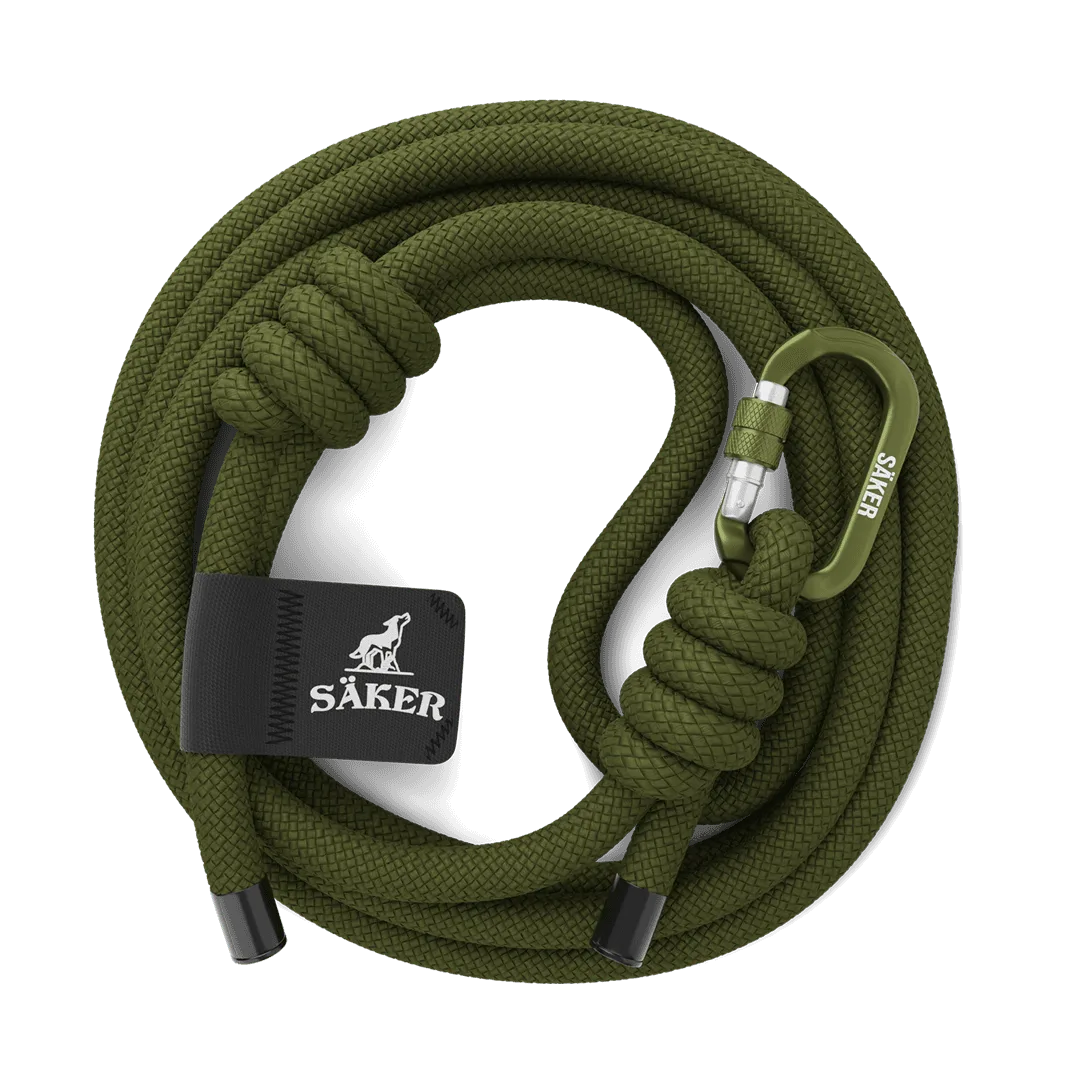
Trust™ Leash