Quick answer
Start with three to five sea life figures, name them out loud, then build one small scene where your child sorts, moves, and talks about each animal. Add one new figure or fact per session so ocean themed learning stays playful instead of turning into a lecture. Wild Safari sea life figures work best as hands-on props for sorting, matching, and pretend play, not as a stand-alone curriculum.
Sea animal toys earn their keep when they get handled, sorted, and talked about, not when they sit on a shelf. The fastest way to turn a handful of figures into real ocean themed learning is to give each session one clear job: name the animals, sort them, build a habitat, or tell a short story.
This guide walks through a simple sequence you can repeat with different figures. It works for a homeschool ocean unit study, a classroom center, or a rainy afternoon at the kitchen table. You do not need a worksheet or a screen, just a few figures, a tray, and a few minutes of your attention.
Set up a small, reachable ocean tray
Pick a shallow tray, a baking sheet, or a clear plastic tub. Add one or two textures, such as blue felt, a folded towel, or smooth pebbles, then place three to five sea life figures on top. Keep the setup low and reachable so your child can pick up each animal without asking for help. A small tray also limits the choices, which keeps young children focused instead of overwhelmed.
Rotate figures every few days rather than dumping the whole collection at once. A tray with five animals invites naming and sorting. A tray with thirty animals invites scattering. If you want a themed starting point, the Starfish - 192 pcs - Good Luck Minis® set gives you many small starfish for counting and grouping, while the larger figures stay in the tray for handling.
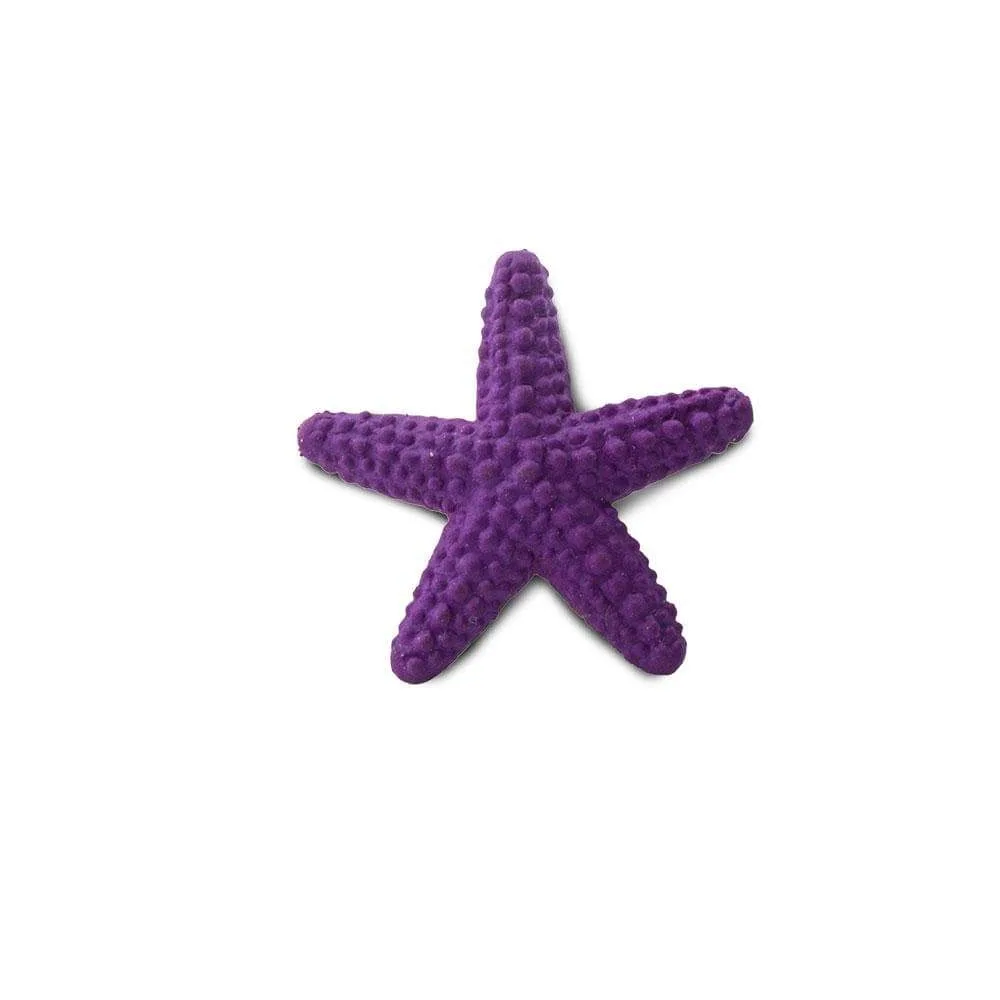
Starfish - 192 pcs - Good Luck Minis®
- Checkpoint: if your child starts throwing figures, the tray is probably too full or the session has run long enough.
Name and describe each figure out loud
Hold up one figure at a time and say its name clearly: sea star, shark, sea turtle, dolphin. Then add one observable detail, such as color, shape, or the number of legs or fins. Keep it to one sentence. Young children build vocabulary faster when they hear the same word paired with the same object again and again.
After you model it, hand the figure to your child and ask, "What do you notice?" Accept any answer, then repeat their words back with the correct term. If they say "star," you can answer, "Yes, a sea star. It has five arms." This small correction loop is where most of the learning happens.
- Common mistake: quizzing too early. Naming comes before testing.
Sort the animals into simple groups
Sorting turns sea animal toys into a thinking task. Start with two clear groups, such as animals with fins and animals with legs, or animals that live near the shore and animals that live in deep water. Let your child place each figure in a group and say why. If the reasoning is wrong but the sorting is consistent, that is still useful practice.
Once two groups feel easy, add a third. You can also sort by size, color, or whether the animal has a shell. Keep the categories visible with small paper labels or drawn symbols so your child can check their own work without you.
- Checkpoint: if sorting turns into a fight, reduce to two groups and one figure at a time.
Build a habitat scene together
A habitat scene gives figures a reason to move. Use a blue cloth for water, a brown cloth or felt strip for sand, and a few stones or blocks for rocks. Ask your child to place each animal where it belongs and explain the choice. A sea star might go on the sand or a rock, while a shark stays in open water.
This is also where you can introduce one honest limitation: a toy figure cannot show how an animal moves, hunts, or grows. Say that out loud. Then let your child demonstrate the movement with their hand. That gap between a still figure and a living animal is a good conversation, not a problem to hide.
- Practical tip: keep the scene up for a day so your child can return to it and rearrange it.
Add one real fact per session
Choose one fact that connects to a figure your child is already holding. For example, the Starfish - 192 pcs - Good Luck Minis® catalog notes that starfish is a common nickname for sea stars, that over 2,000 species exist, and that they can regrow lost limbs. That last detail is memorable because it is strange and concrete.
Say the fact once, then ask your child to show it with the figure. They might hide one arm under a cloth and pull it back out. One fact per session is enough. Stacking five facts into one sitting usually means none of them stick.
- Common mistake: turning the fact into a quiz. Let your child retell it in their own words instead.
Connect figures to books, art, and pretend play
Figures hold attention longer when they connect to something else. Read one ocean picture book, then bring out the matching figures. Or set out paper and crayons and let your child draw the animal they just handled. Pretend play works too: a puppet or a small boat can turn a tray of figures into a rescue mission.
If you want a second hands-on layer, the World Landmark TOOB® contains seven mini landmark figures including the Great Wall of China and the Colosseum. It is not an ocean set, but it pairs well with a wider "water and the world" theme if you are teaching about coasts, harbors, or travel. Keep the focus on one theme at a time so the tray does not become a junk drawer.
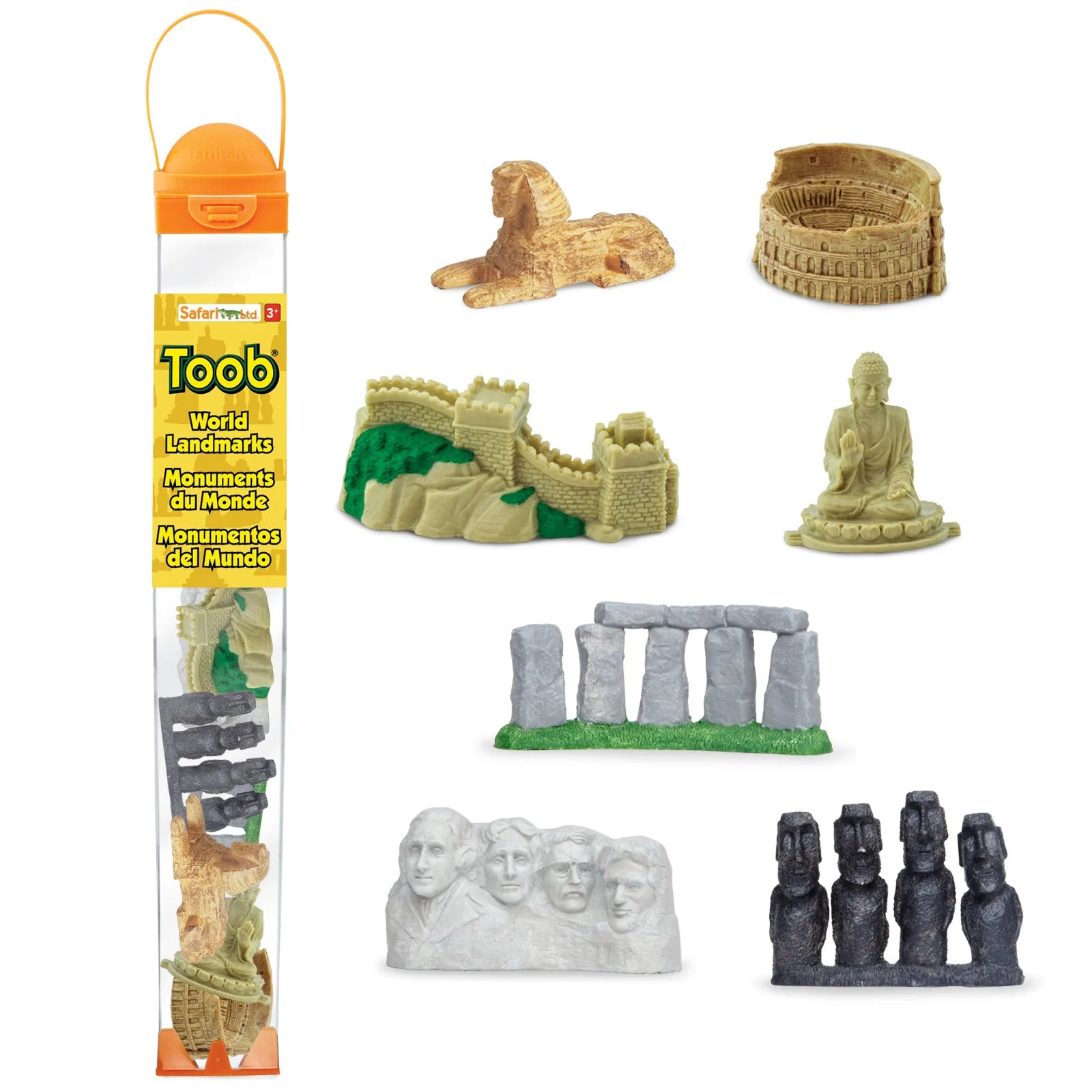
World Landmark TOOB®
- Checkpoint: if your child ignores the figures and only wants the book, follow the book. The figures can wait.
Store the set so it gets used again
A clear jar, a labeled zip bag, or a small basket keeps sea life figures visible and ready. Store them by theme rather than by size so your child can pull out the ocean set without digging. If you have a large collection, keep one small rotation out and the rest stored.
Wipe figures with a damp cloth after sensory play, especially if you used water, sand, or play dough. Let them dry fully before sealing them in a bag. Clean, dry figures last longer and are ready for the next session without a rescue mission.
- Practical tip: label the container with a simple drawing of a sea star so pre-readers can find it.
Your 6-step ocean learning routine
- Step 1: Set out 3 to 5 figures: Use a shallow tray and one or two textures. Keep the number small enough that every animal gets handled. Checkpoint: if the tray gets scattered, remove two figures and try again.
- Step 2: Name each animal out loud: Say the name, then one visible detail. Hand the figure over and let your child repeat or respond. Common mistake: testing before teaching. Name first, ask later.
- Step 3: Sort into two groups: Choose a clear rule such as fins versus legs, then let your child place each figure and explain the choice. Checkpoint: consistent sorting with imperfect reasoning is still progress.
- Step 4: Build a small habitat: Use cloth, stones, or blocks to mark water, sand, and rocks. Ask where each animal belongs and why. Say out loud that a figure cannot show movement or growth, then let your child act it out.
- Step 5: Add one real fact: Pick one detail tied to a figure in hand, such as sea stars regrowing lost limbs, and let your child show it. One fact per session beats five facts that blur together.
- Step 6: Store and reset: Wipe figures dry, return them to a labeled container, and keep only one small rotation within reach. Next step: swap in a new figure or two tomorrow and repeat the routine.
Figure facts that support the lesson
- Starfish - 192 pcs - Good Luck Minis®: Starfish is the common nickname for sea stars, a group with over 2,000 species, and they can regrow lost limbs. The regrowth fact is concrete and memorable, which makes it a strong single fact to introduce during a sorting or pretend-play session. A large count of 192 pieces also supports counting, grouping, and party or classroom use.
- World Landmark TOOB®: This TOOB® contains 7 mini historical landmark toy figurines, including Mount Rushmore, the Great Wall of China, the Buddha of Lantau, the Easter Island heads, the Colosseum, the Great Sphinx of Giza, and Stonehenge. Useful if you widen an ocean unit into a coasts, harbors, or world travel theme. It is a companion set, not a sea life set, so keep it in a separate rotation.
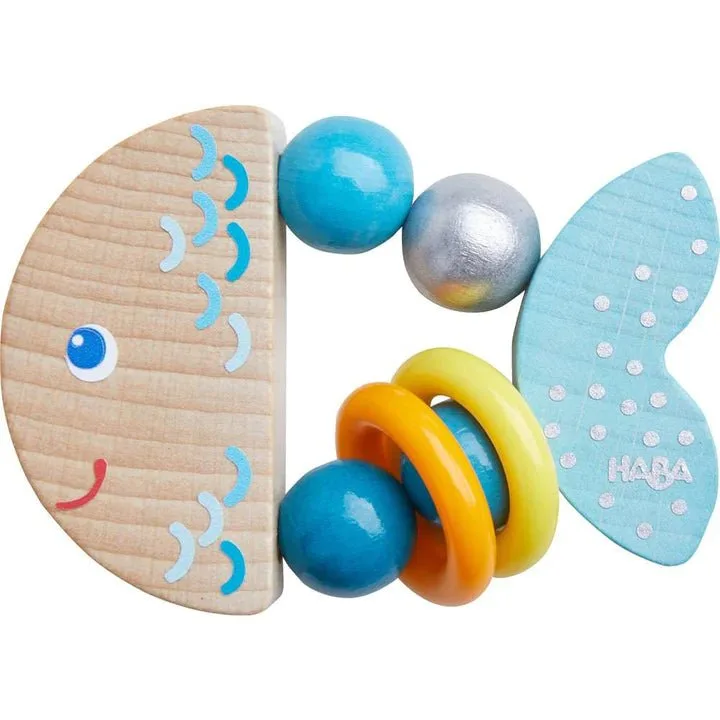
- Rattlefish Clutch Toy: This wooden clutching toy has a semicircle fish head with 4 wooden beads and a sparkly tail threaded on sturdy elastic, with orange and yellow plastic rings that make a subtle rattling noise when shaken. A good fit for younger siblings during an ocean unit study. It is listed for ages 6 months and up and measures 2.8 by 2.8 by 0.6 inches, so it stays safely in a baby's hands while older children work with figures.
Ocean themed learning does not need a big setup. A small tray, a few sea life figures, and one clear job per session give you naming, sorting, habitat building, and pretend play without turning the table into a classroom. Start with three figures today, add one fact, and let your child's questions lead the next session.