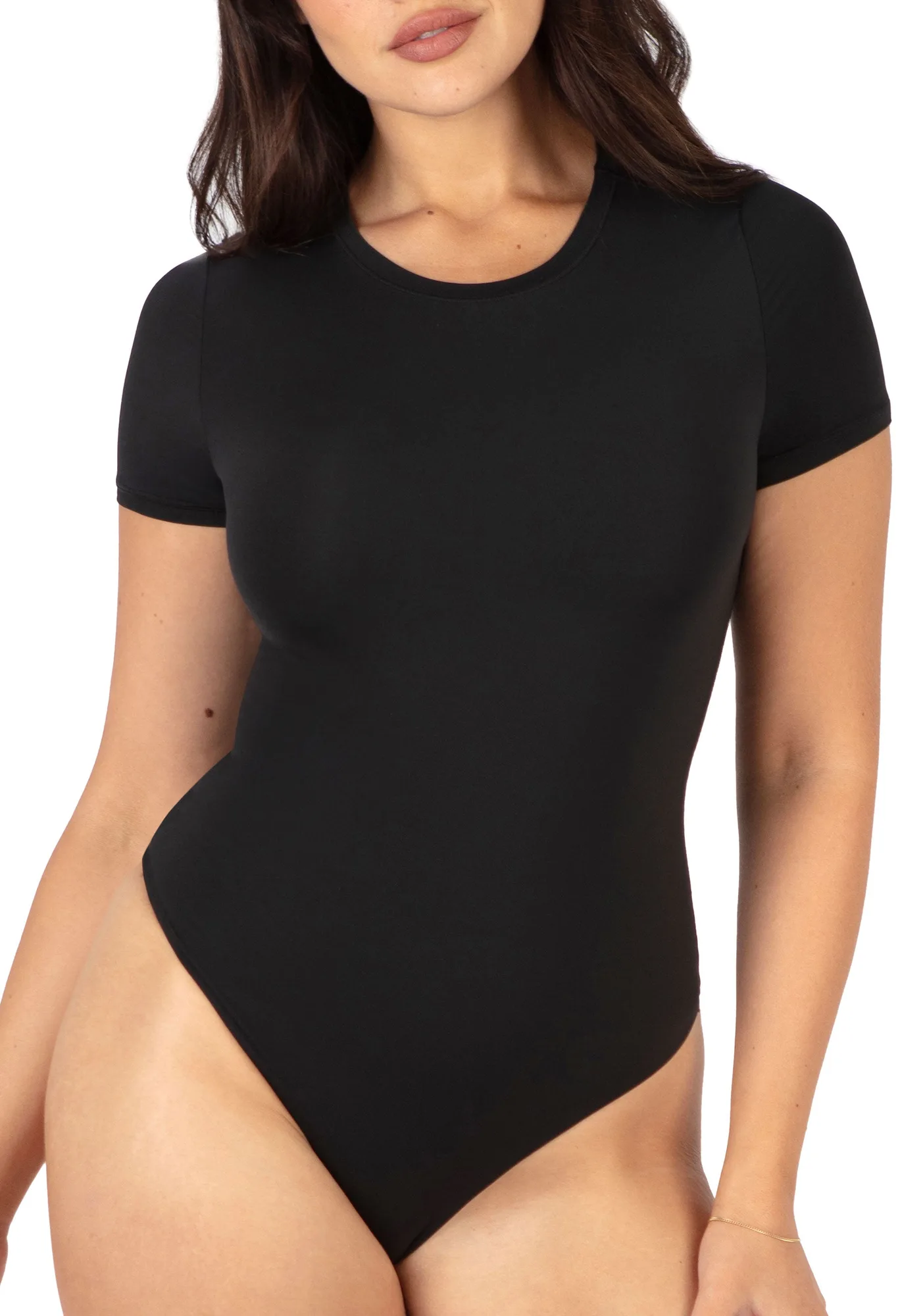
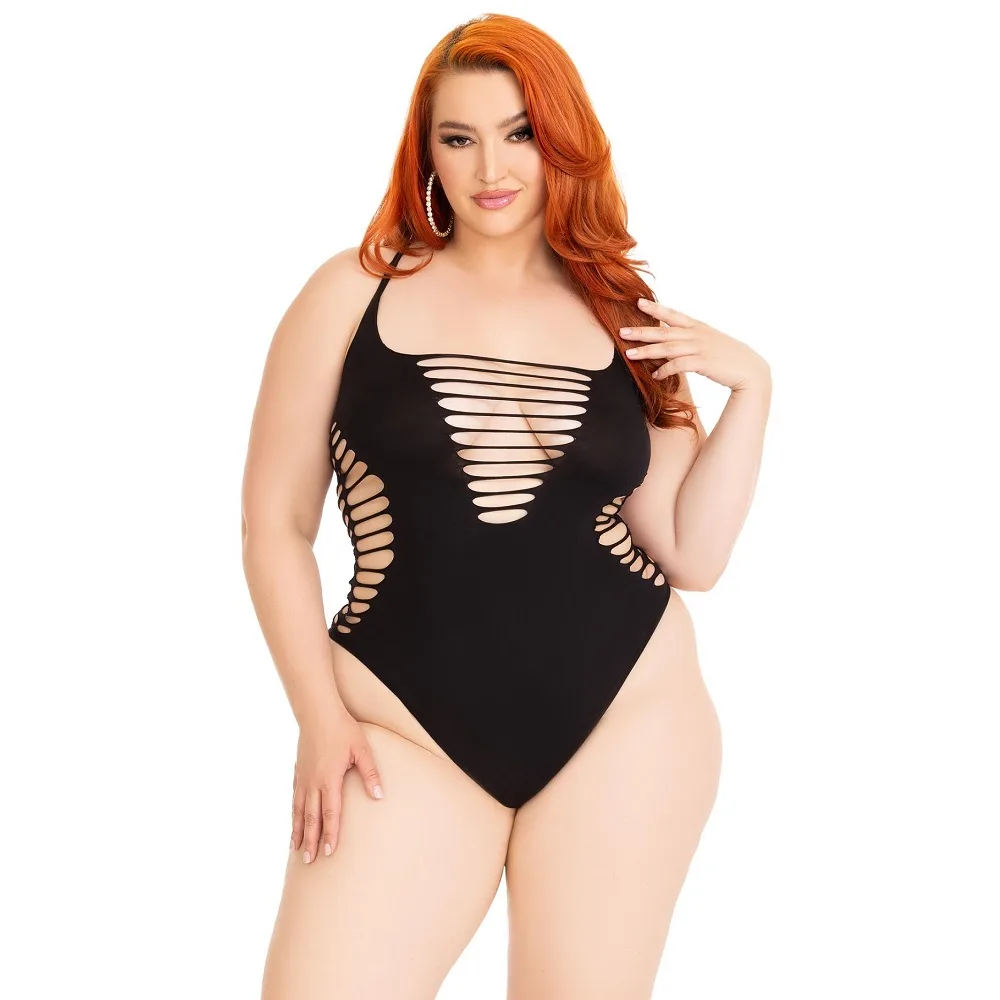
Quick answer
Start with a seamless thong that matches your skin tone, then check that the bodysuit's leg openings sit flat rather than cutting in. Smooth the fabric upward from the gusset to the shoulders before you dress, and choose trousers with a lined or thicker waistband. If the bodysuit still shows, the issue is usually the rise or the closure, not the fabric.
A bodysuit is one of the cleanest things you can wear under trousers, a skirt, or a slip dress. It stays tucked, never rides up, and gives a smooth line from shoulder to hip. The catch is that the same snug fit that makes it work can also broadcast every seam, edge, and fold underneath.
The fix is not to size up until it bags. It is to control three things: what you wear underneath, how the bodysuit's edges land on your body, and what you put over the top. This guide walks through the order that actually solves visible lines, with the mistake to avoid at each step.
Why bodysuits show lines in the first place
A bodysuit's job is to be invisible, but it has three pressure points: the leg openings, the side seams, and the crotch closure. Any of these can press into soft tissue and create a ridge under a fitted garment. Fabric weight matters too. A thicker cotton bodysuit will hold its shape but can read as a bump under thin jersey, while a very light microfibre disappears but shows every wrinkle if it is not smoothed.
The underwear you wear underneath is the biggest variable. A standard brief with elastic edges will almost always show through a bodysuit, no matter how good the bodysuit is. The second variable is rise: a bodysuit that sits too low will pull at the leg, and one that sits too high will bunch at the waist. Get those two right and most line problems disappear before you even put on trousers.
- Check the bodysuit against a light source before buying: if you can see your hand clearly through it, it will show every edge underneath.
- A bodysuit with a cotton-lined gusset is not automatically seamless; the lining is for comfort, not for line control.
Step 1: Choose a no-show thong as your base layer
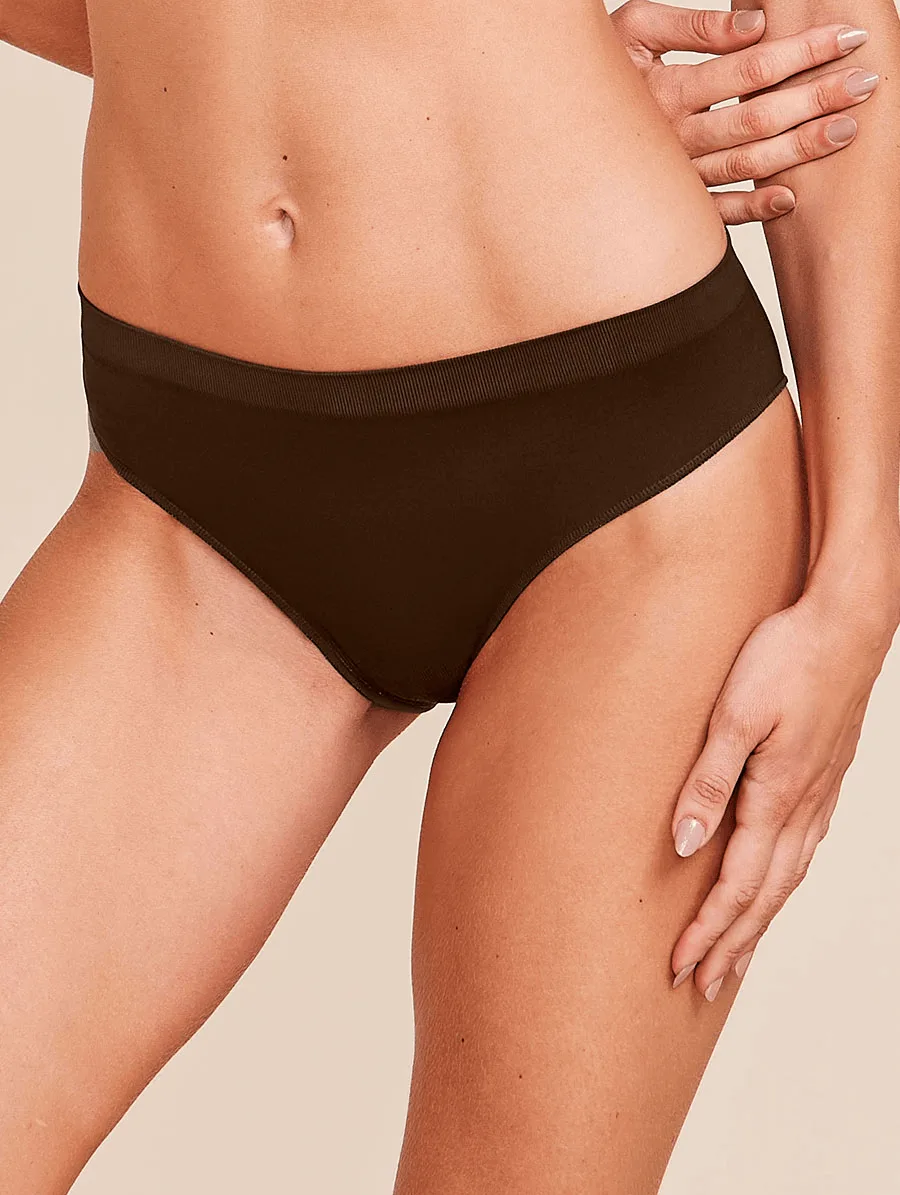
The single most effective change is swapping your usual brief for a seamless thong. A thong removes the leg-edge line entirely, which is the ridge that shows most under trousers. Look for a microfibre style with bonded or laser-cut edges rather than a stitched elastic trim. The Seamless Brazilian Thong is built this way: ultra-soft microfibre, a seamless construction to eliminate panty lines, and a low-rise bikini-cut thong shape with a cotton gusset. It runs small, so size up rather than relying on stretch.
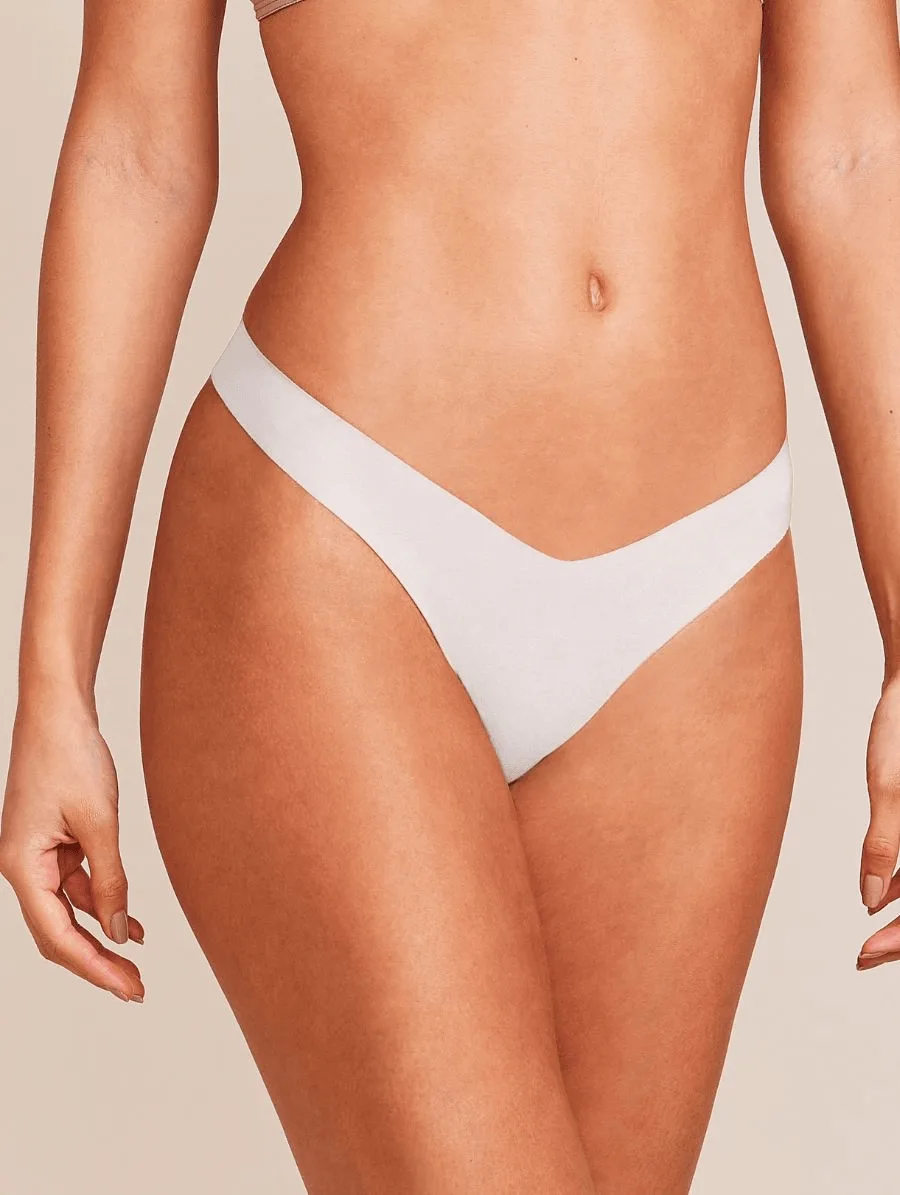
Seamless Brazilian Thong
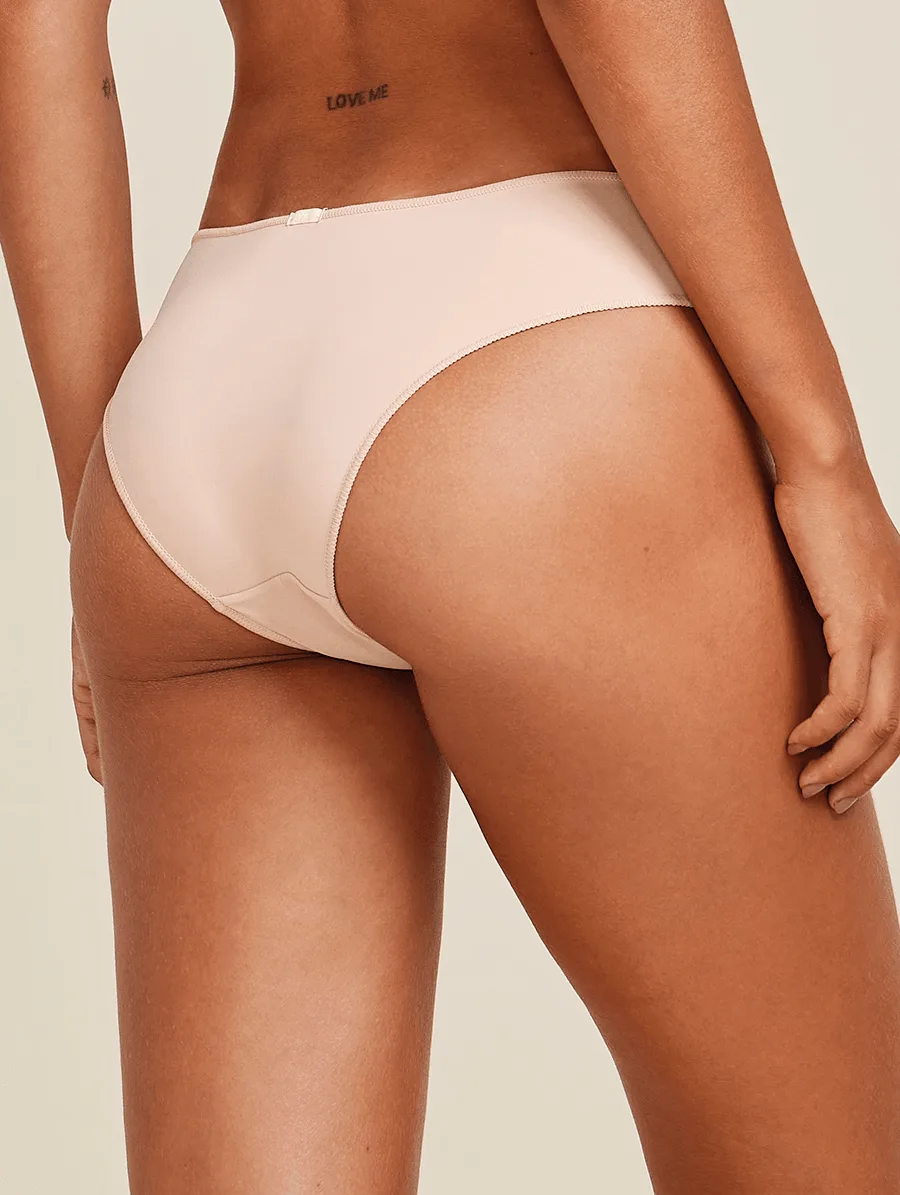
If you prefer a little more detail at the back, the Lace-Trim Brazilian Thong adds a delicate lace edge to a no-show microfibre body. The lace sits at the back edge, so it stays hidden under clothing while giving a softer finish than a plain thong.
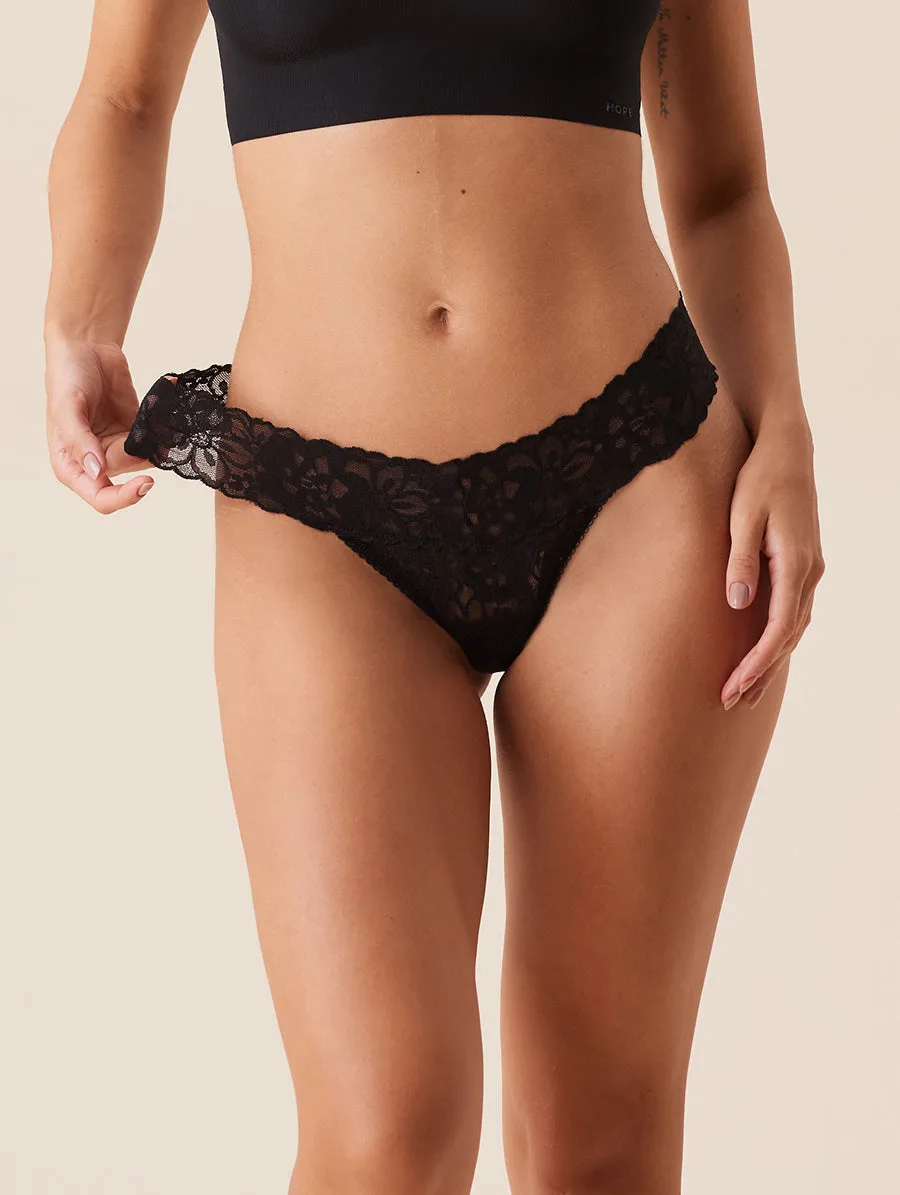
Lace-Trim Brazilian Thong
- Common mistake: choosing a thong with a visible elastic waistband. It will show as a horizontal ridge under a bodysuit.
- Checkpoint: put on the thong, then the bodysuit, then look at your back in a mirror under a fitted top. If you see a horizontal line, the waistband is the culprit.
Step 2: Match the thong's rise to the bodysuit's cut
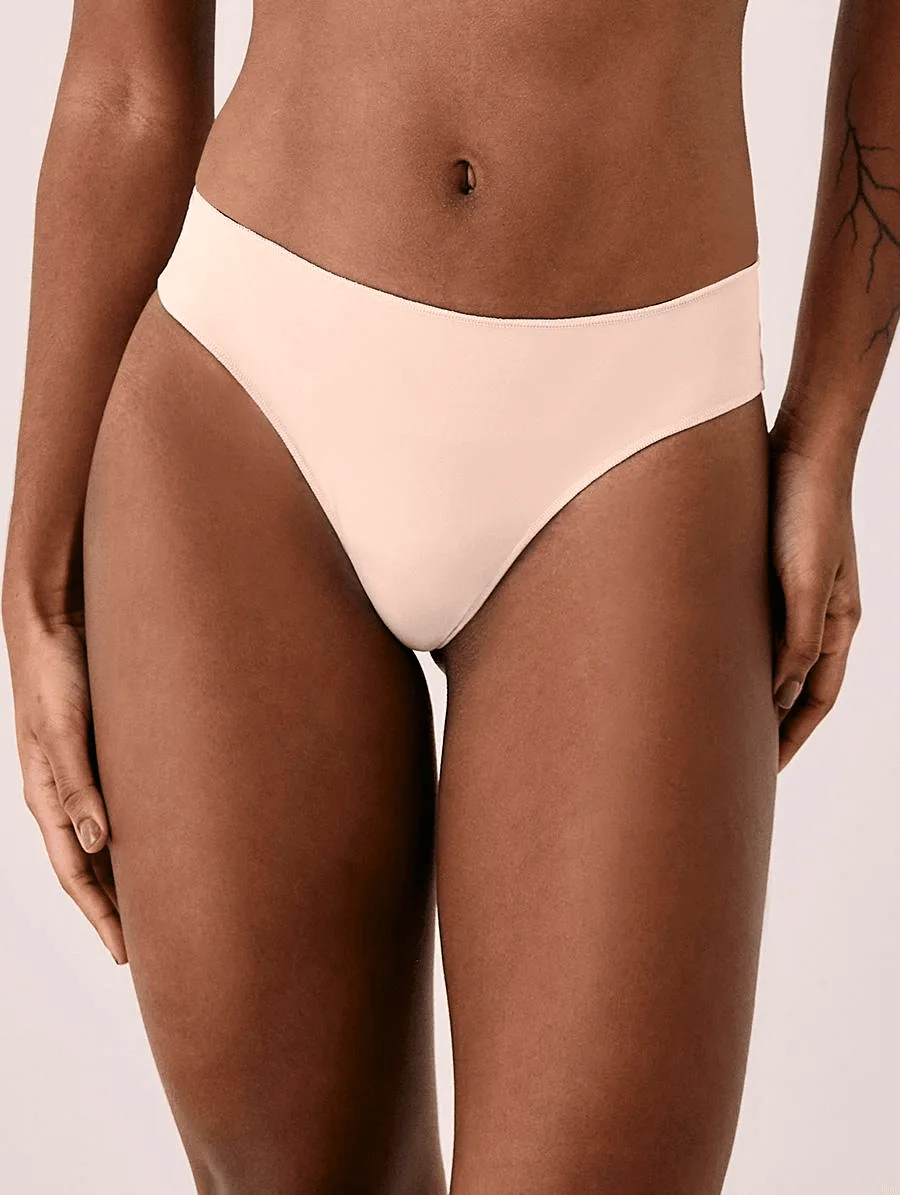
A low-rise thong under a high-waist bodysuit creates a gap where the bodysuit's gusset pulls away from the thong, and that gap shows as a fold. Match the two: a low-rise thong with a low-rise bodysuit, or a higher-cut thong with a high-waist style. The Wide Band Brazilian Thong sits in the middle with wider side bands that stay put and do not dig in, which makes it a good partner for bodysuits with a mid-rise leg.
If your bodysuit has a high waist and you want full coverage underneath, the https://hopelingerierty.com/products/everyday-high-waist-brief-light-9d429d67d0a98be867e9a30f-1492681Everyday High-Waist Brief — Light uses lightweight microfibre with wide, smooth sides and a comfortable mid-rise fit. It is not a thong, so it will show a leg edge under very thin trousers, but under a lined trouser or a skirt it stays flat.
- Common mistake: assuming all thongs sit at the same height. Check the product description for the rise before you buy.
- Checkpoint: bend forward and sit down. If the thong's back edge lifts away from the bodysuit, the rises do not match.
Step 3: Smooth the bodysuit from the gusset upward
Most people pull a bodysuit down over their hips and then adjust the straps. That traps a fold at the crotch or the lower back. Instead, fasten the closure first, then smooth the fabric upward from the gusset with flat hands, working from front to back and then up the sides. This pushes excess fabric toward the shoulders where it can be absorbed by the bodysuit's stretch rather than bunching at the hip.
Pay attention to the side seams. If they twist, the bodysuit will rotate slightly all day and create a diagonal line under a fitted dress. Straighten the seams so they sit directly on the side of your body, not toward the front or back.
- Common mistake: yanking the bodysuit up by the straps. That stretches the shoulder area and leaves the body fabric uneven.
- Checkpoint: run a finger along each side seam. It should feel like a straight vertical line, not a spiral.
Step 4: Check the leg openings for cutting
The leg opening is where a bodysuit most often betrays you. If the elastic or binding cuts into the crease where your leg meets your torso, it creates a visible indentation that shows through trousers as a curved line. This is a fit issue, not a fabric issue. A bodysuit that cuts in is usually too small in the body or has a leg opening designed for a different rise.
The Brazilian String Thong is a good example of a minimal leg line: slim string sides and smooth edges designed to sit gently without digging in. Worn under a bodysuit, it adds almost no bulk at the leg. If your bodysuit's own leg opening is the problem, look for one with a higher-cut leg or a softer binding.
- Common mistake: tightening the bodysuit to stop it riding up. That increases cutting at the leg and makes lines worse.
- Checkpoint: after 10 minutes of wear, press a finger along the leg opening. If you feel a raised ridge, the bodysuit is too tight there.
Step 5: Layer with the right outer fabric
Even a perfect bodysuit will show under the wrong outer layer. Thin, clingy jersey and unlined linen are the hardest to wear over any bodysuit because they transfer every texture underneath. Trousers with a lined waistband, a thicker ponte, or a structured skirt give you a buffer. If you want to wear a bodysuit under a thin dress, choose a bodysuit in a colour close to your skin tone rather than matching the dress; skin-tone base layers are less visible under light fabric than white or black.
For trousers specifically, check the waistband. A flat-front trouser with a clean waistband works well. A trouser with a thick belt or a gathered waist will press the bodysuit's fabric into a fold at the waist, which then shows as a horizontal line across the stomach.
- Common mistake: wearing a black bodysuit under white trousers. The contrast creates a grey shadow even if the fabric is seamless.
- Checkpoint: stand in direct light and look at your silhouette from the side. If you see a horizontal band at the waist, the trouser waistband is the issue, not the bodysuit.
Step 6: Do a final sit-and-stretch test before you leave
Lines often appear only when you move. Before you walk out, sit down, cross your legs, and reach forward. Then stand up and check the mirror again. This reveals whether the bodysuit's back rides up, whether the thong shifts, and whether the leg openings crease. If something moves, fix it now rather than tugging at it all day.
If the bodysuit passes the sit test but still shows a faint line under a specific pair of trousers, keep that combination for looser tops or add a light slip. Not every bodysuit works under every garment, and that is normal. The goal is a smooth line, not a perfect one.
- Common mistake: skipping the sit test because the standing mirror looks fine. Most visible lines appear when you sit.
- Checkpoint: if you have to adjust the bodysuit more than once in the first hour, the size or rise is wrong.
Your six-step line-free bodysuit routine
- Start with a seamless thong: Swap your usual brief for a microfibre thong with bonded or laser-cut edges. The Seamless Brazilian Thong is a good starting point, but size up because it runs small. Checkpoint: no horizontal ridge at the back under a fitted top.
- Match the rise: Pair a low-rise thong with a low-rise bodysuit, or a mid-rise thong like the Wide Band Brazilian Thong with a mid-rise bodysuit. Mismatched rises create a fold at the gusset. Checkpoint: the thong's back edge stays against the bodysuit when you sit.
- Smooth upward, not downward: Fasten the bodysuit closure first, then smooth the fabric up from the gusset to the shoulders with flat hands. Straighten the side seams so they sit on the side of your body. Checkpoint: side seams feel like straight vertical lines, not spirals.
- Check the leg openings: Press a finger along the leg opening after 10 minutes. If you feel a raised ridge, the bodysuit is cutting in. A minimal style like the Brazilian String Thong underneath adds no extra bulk. Checkpoint: no indentation at the leg crease.
- Choose the right outer layer: Wear lined trousers or structured fabrics over a bodysuit. Under thin dresses, choose a skin-tone bodysuit rather than matching the dress colour. Checkpoint: no horizontal band at the waist in side light.
- Do the sit-and-stretch test: Sit, cross your legs, and reach forward before you leave. Then stand and recheck the mirror. Fix any shifting now instead of tugging all day. Checkpoint: no more than one adjustment in the first hour.
Products that help you avoid visible lines
- Seamless Brazilian Thong: Ultra-soft microfibre fabric with a seamless construction to eliminate panty lines, a low-rise bikini-cut thong style, and a 100% cotton gusset lining. Runs small — size up. The seamless build removes the leg-edge ridge that shows most under a bodysuit, and the cotton gusset keeps it comfortable for all-day wear. Sizing up prevents the cutting that causes lines.
- Lace-Trim Brazilian Thong: Soft, breathable microfibre with a no-show, no-VPL finish and a delicate lace trim on the back edge. Cotton-lined gusset. The lace sits at the back, so it stays hidden under a bodysuit while adding a softer finish than a plain thong. The no-VPL microfibre body is the key feature for line-free layering.
- Brazilian String Thong: Ultra-light microfibre with slim string sides, smooth edges designed to sit gently without digging in, and a thong cut for minimal coverage and no visible lines. The string sides add almost no bulk at the leg, which is useful under a bodysuit with a high-cut leg opening where a wider band might show.
- Wide Band Brazilian Thong: Wide side bands for a secure, dig-free fit, a seamless no-show finish, and a cheeky Brazilian back with a cotton-lined gusset. The wider bands stay put without pressing in, so they work well under a mid-rise bodysuit where a narrow string might shift.
Visible lines under a bodysuit are almost always a layering problem, not a bodysuit problem. Fix the base layer first, match the rise, smooth the fabric upward, and test the whole outfit sitting down. Do that and the bodysuit does exactly what it should: disappear.