Quick Answer
Winterizing a 2-person tent means choosing a sheltered site, insulating the floor, managing condensation, and securing the tent with snow stakes. A cold-weather-specific tent, like the Kelty 2 Person Cold Weather Kit, simplifies this with a modular rainfly and cot compatibility.
Why Winterizing Matters
Cold weather camping demands more than just a warm sleeping bag. A tent that works in summer can become a condensation trap or a wind tunnel in winter. Winterizing your tent helps you stay dry, warm, and safe when temperatures drop.
The key differences are moisture management and heat retention. Your breath and body moisture condense on cold tent walls, which can drip on you and soak your gear. Proper venting and insulation are essential to prevent this.
A tent designed for winter, such as the Kelty 2 Person Cold Weather Kit, includes features like a modular rainfly and cold weather cover. But even with a specialized tent, you still need to set it up correctly to maximize its performance.
Trade-Offs: Ventilation vs. Warmth
It's tempting to seal every vent to keep warmth in, but that traps moisture inside. The trade-off is that some airflow is necessary to let condensation escape. You'll be warmer in the short term, but a wet sleeping bag will make you colder later.
Open the vents slightly, even in cold weather, to allow moisture to escape. Many winter tents have adjustable vents that let you fine-tune airflow. If your tent lacks adequate venting, consider leaving the door slightly ajar on calm nights.
Another trade-off: using a tent footprint or ground cloth adds insulation but can trap moisture underneath. Use a breathable footprint or ensure your tent floor is waterproof to avoid a wet base.
How to Winterize Your 2-Person Tent
- Choose a sheltered site: Look for a flat area protected from prevailing winds, such as near trees or a natural windbreak. Avoid low spots where cold air settles. Clear snow and ice to create a level base. Check for overhead hazards like dead branches or heavy snow loads on trees.
- Insulate the floor: Use a closed-cell foam pad or an insulated sleeping pad under your sleeping bag. A tent footprint adds a layer of protection. For extra warmth, place a blanket or reflective mat on the floor. Ensure your pad has a high R-value (3.5 or higher) for winter conditions.
- Vent condensation: Open the tent's vents and, if possible, leave the door slightly open on calm nights. Use a cloth to wipe condensation from the walls each morning. Avoid breathing inside your sleeping bag. If frost forms on the inner tent, increase ventilation next time.
- Secure with snow stakes: Replace standard stakes with longer snow stakes that bury deeper. Use deadman anchors (e.g., bury a stick or gear bag tied to the guyline) if the ground is too soft or icy. Ensure all guy lines are taut. Check stakes after a snowstorm; snow load can loosen them.
- Use the rainfly and cold weather cover: If your tent has a rainfly, attach it to block wind and snow. For tents like the Kelty 2 Person Cold Weather Kit, use the modular rainfly to create an awning for gear storage and added protection. If you're using a cot, attach the tent to it for a stable setup. Always test the rainfly fit before nightfall to avoid fumbling in the dark.
Tent Options for Winter
-
2 Person Cold Weather Kit Multicam: The Kelty 2 Person Cold Weather Tent Kit is a multipurpose tent that can be used on the ground, with or without the rainfly, and is designed for harsh winter conditions. This tent is built for winter use, so you can trust its materials and design to handle cold and snow, reducing the need for extra modifications.
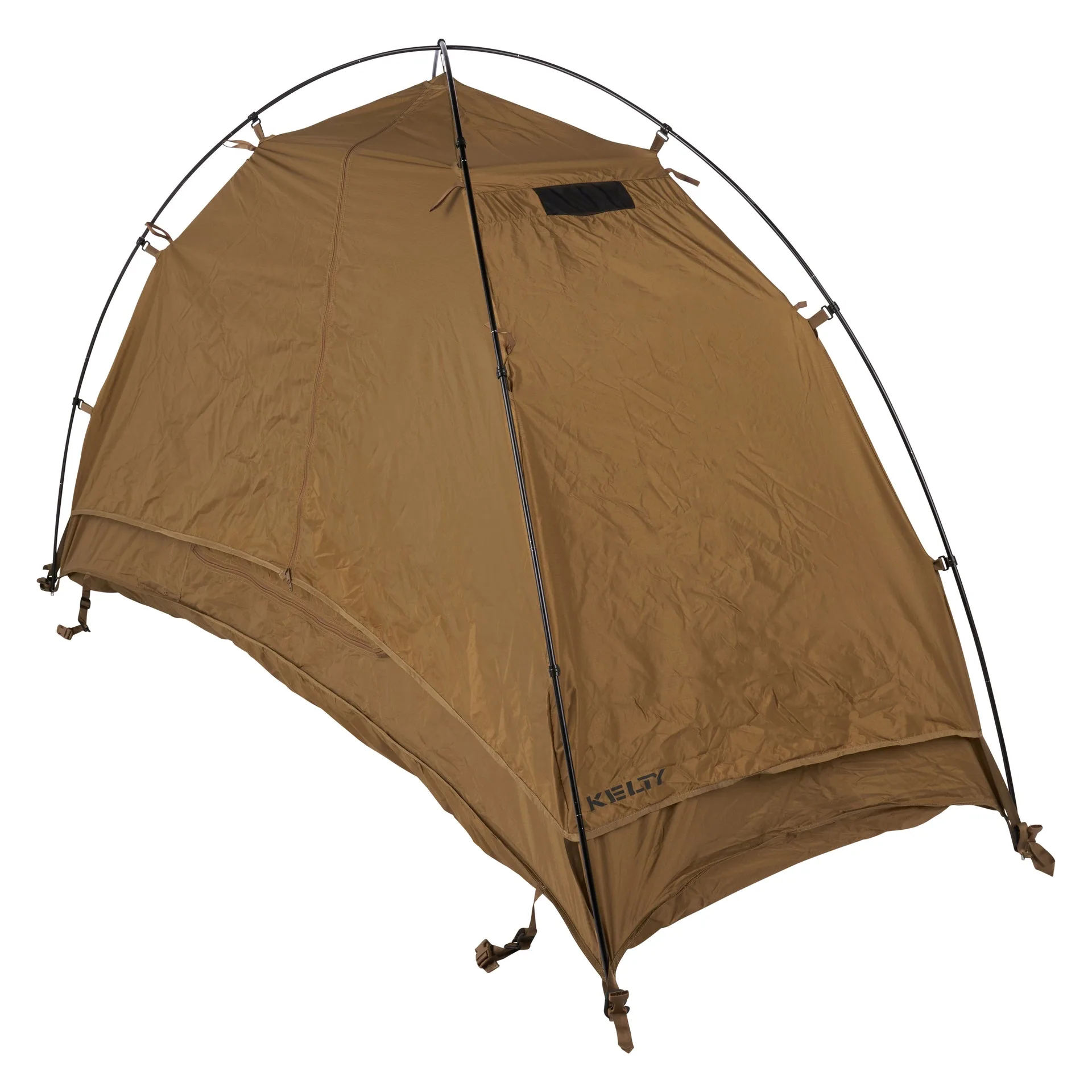
2 Person Cold Weather Kit Multicam
After winterizing your tent, do a test setup at home to ensure you know how to pitch it in the dark or in wind. This practice will make your first winter trip smoother and safer.