Quick Answer
Buy the Hoya HMC 58mm UV filter first if you need everyday lens protection and want to cut haze in bright outdoor shots. Choose the Hoya PRO ND 1000 58mm if your priority is creating long-exposure effects like silky waterfalls or blurred crowds.
Why Your First Filter Choice Matters
A 58mm filter is a common investment for many lens owners. The right one for you depends entirely on what you shoot most often. A UV filter is a passive protector that stays on your lens, while an ND filter is a creative tool you use selectively.
The Hoya HMC 58mm UV filter is a permanent, affordable layer that also reduces UV haze. The Hoya PRO ND 1000 58mm is a powerful, dark filter that blocks nearly all light for dramatic motion blur. They serve completely different jobs, so buying the wrong one first can leave you without the tool you actually need.
Trade-Off: Protection vs. Creativity
The biggest trade-off is between constant protection and occasional creative control. The UV filter is always useful: it protects your front element from dust, scratches, and splashes without affecting exposure. You can leave it on all the time.
The ND 1000 filter is a specialist. It reduces light by 10 stops, letting you use shutter speeds of several seconds even in daylight. This creates effects you simply cannot get otherwise, but it is not something you keep on your lens for everyday shooting. It is bulky, dark, and requires a tripod.
If you only buy one filter and you rarely shoot long exposures, the UV filter is the more practical first purchase. If you are serious about landscape or creative photography, the ND filter opens up a new style you cannot achieve with the UV filter.
How to Decide: 3 Simple Rules
- Rule 1: Start with protection if you shoot everyday scenes: If you mostly photograph family, travel, street scenes, or general outdoor shots, the Hoya HMC 58mm UV filter is the smarter first buy. It protects your lens and improves clarity in bright sun without changing your exposure. This is the safe, practical choice for most photographers.
- Rule 2: Choose the ND filter if you want creative motion blur: If you are specifically interested in long-exposure photography—smooth waterfalls, light trails, or blurred crowds—the Hoya PRO ND 1000 58mm is the tool you need. It is not a daily filter, but it is essential for that style. Pair it with a tripod and remote shutter for best results.
- Rule 3: Buy both if you can, but prioritize based on your style: If your budget allows, owning both gives you full flexibility. The UV filter stays on the lens for protection, and you swap in the ND filter when you want creative effects. If you can only buy one now, use rules 1 and 2 to decide.
Filter Details at a Glance
-
Hoya HMC 58mm UV (C) Lens Filter: The Hoya HMC 58mm UV (C) Lens Filter absorbs ultraviolet rays that often make outdoor photographs hazy and indistinct. It also serves as a permanent lens protector. This means you can leave it on your lens without affecting image quality, while keeping your glass safe from everyday wear.
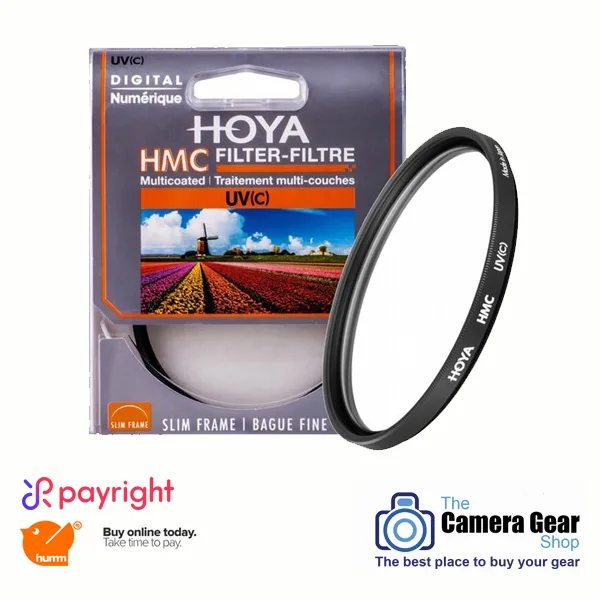
Hoya HMC 58mm UV (C) Lens Filter
-
Hoya PRO ND 1000 58mm Neutral Density Filter: The Hoya PRO ND 1000 58mm Neutral Density Filter is an extremely dark filter with a filter factor of 1000, which converts to a 10-stop reduction in light entering the lens. This extreme darkness lets you use very slow shutter speeds in bright conditions, creating blurred motion in waterfalls, clouds, or traffic that is impossible with a standard filter.
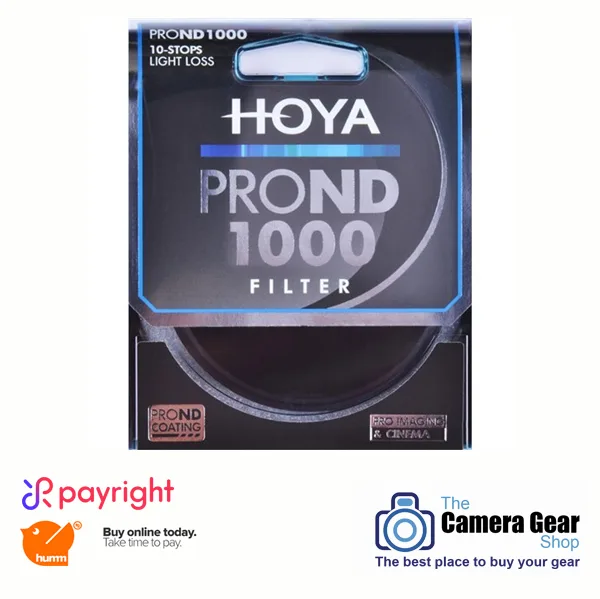
Hoya PRO ND 1000 58mm Neutral Density Filter
Who Should Buy Which?
Best for
- Everyday shooters who want lens protection and reduced haze
- Photographers on a budget who need one versatile filter
Not ideal for
- Those who already own a UV filter and want creative long-exposure effects (choose the ND filter)
- Photographers who only shoot long exposures and do not need constant lens protection