Quick answer
For wildlife observation where you need to see fine detail at a distance, image stabilised binoculars let you hold high magnification steady without a tripod. The Canon 18x50 IS gives you extreme reach at 18x, while the Canon 10x42L IS offers brighter optics and waterproofing for all-weather use.
Why image stabilisation matters for wildlife
Handholding binoculars at 10x or higher usually results in shaky views that make it hard to pick out a bird's plumage or an animal's markings. Image stabilisation cancels most of that hand tremor, so you see a steady image even when you're standing, breathing hard after a hike, or watching from a moving vehicle.
Trade-off: magnification versus portability
Higher magnification brings distant subjects closer, but it also narrows the field of view and makes the binoculars heavier. The Canon 18x50 IS is a larger, heavier unit that excels when you're set up in a hide or scanning open terrain. The Canon 10x42L IS is more compact and easier to carry on long walks, though you lose some reach.
Decision rules for choosing your wildlife binoculars
- Rule 1: Match magnification to your typical distance: If you mostly watch birds at feeders or animals in a nearby field, 10x is enough. If you scan distant mountain slopes or open water, 18x lets you see detail you'd miss at lower power. Be honest about the distances you actually observe.
- Rule 2: Prioritise brightness for low-light use: The Canon 10x42L IS has a larger exit pupil (4.2 mm) than the 18x50 (2.8 mm), so it delivers a brighter image in twilight. If you go out at dawn or dusk, the 10x42L IS is the better choice. Check the exit pupil number: bigger is better in dim light.
- Rule 3: Consider weather resistance needs: The Canon 10x42L IS is waterproof and has a resilient metallic outer layer. The Canon 18x50 IS is all-weather rated for use at sea or in maritime environments. If you expect rain or spray, pick the model with the appropriate seal. Waterproofing adds weight but protects your investment in wet conditions.
Product facts
-
Canon 18x50 IS Image Stabilising All Weather Binoculars: Canon 18x50 IS Powerful Ultra High Magnification All Weather Zoom Binoculars get you an outstanding 18x closer to your subject, with Porro prism II and Super Spectra coating for high resolution and clear colour rendition. If you need to identify a distant bird or animal at extreme range, the 18x magnification and all-weather build let you do it without a tripod, even in damp or maritime conditions.
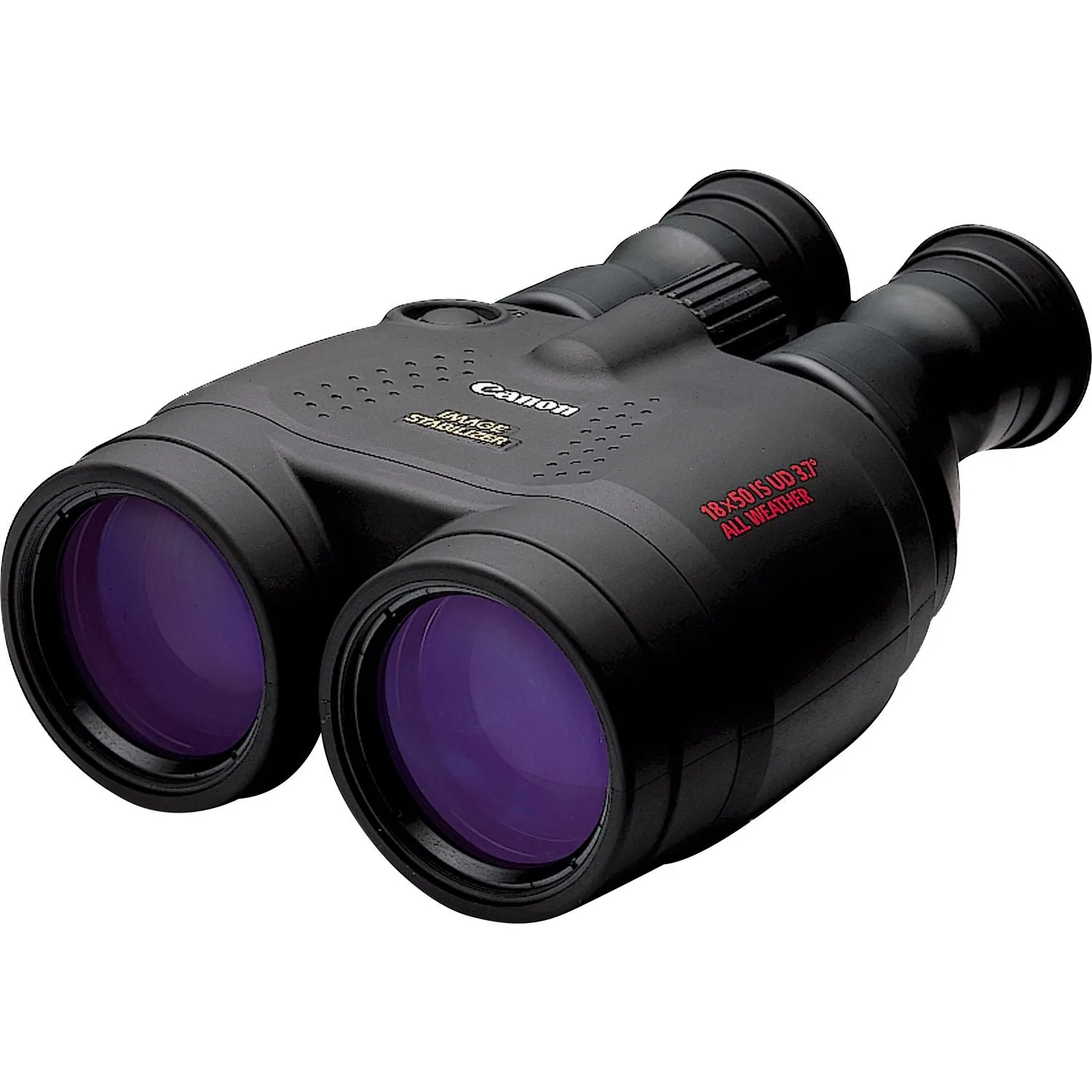
Canon 18x50 IS Image Stabilising All Weather Binoculars
-
Canon 10x42L IS Water Proof Binoculars: Canon 10x42L IS Bright L-Series Waterproof All Weather Portable Binoculars use Canon bright L-series optics for superb, focused, high-clarity images, with a large exit pupil that makes them great for stargazing. The 10x magnification is easier to hold steady, and the L-series optics deliver brighter views in low light, making this model a better choice for dawn/dusk wildlife watching and for users who also stargaze.
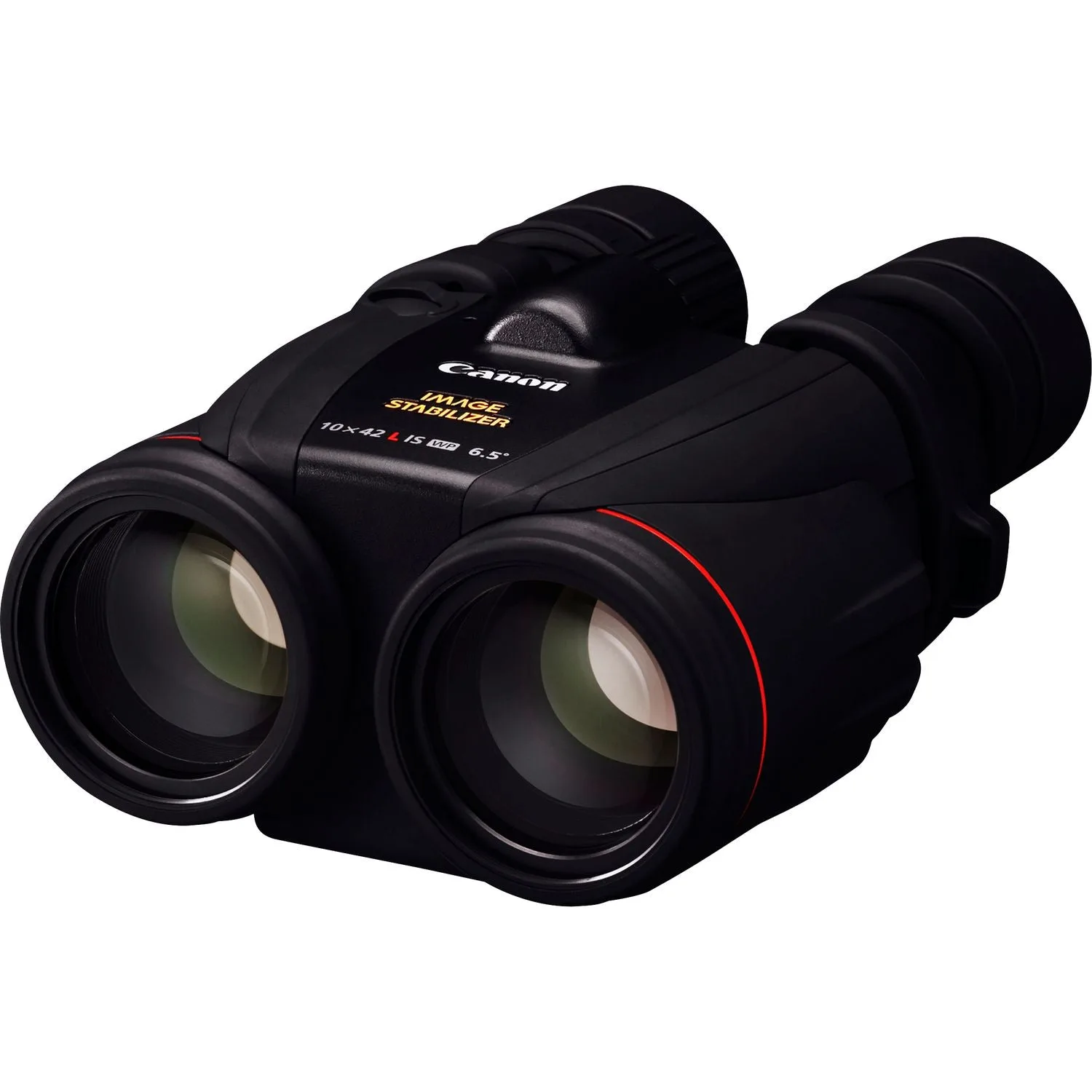
Canon 10x42L IS Water Proof Binoculars
Which binoculars fit you?
Best for
- Long-range wildlife watching from a hide or stationary position: Canon 18x50 IS
- All-day hikes, dawn/dusk observation, and multi-use (including stargazing): Canon 10x42L IS
Not for
- Ultra-light backpacking or pocket carry: both models are heavier than compact non-stabilised binoculars