Quick answer
Mushy Immi cup ramen almost always means the noodles steeped too long, sat in too much water, or started in a cup that wasn't hot enough. Pour boiling water to the fill line, cover, and start tasting about a minute before the package time. If the noodles are already soft, stop adding heat immediately and eat them rather than waiting.
Symptom check: what mushy actually looks like
Mushy noodles are not just soft. They lose their spring, clump together when you lift them, and the broth turns cloudy and starchy. If your noodles break apart when you stir or feel slippery rather than springy, you've crossed from tender into overcooked. That distinction matters because the fix is different for noodles that are merely soft versus noodles that have already released their starch into the broth.
- Soft but intact: pull them early, they will keep cooking in the hot broth.
- Clumping and slick: you've overcooked them; drain some liquid and eat right away.
- Cloudy, thick broth: starch has released; don't add more water, just stop the cook.
Cause 1: steep time runs past the noodle's limit
Cup ramen keeps cooking as long as it sits in hot water. The package time is a starting point, not a finish line. If you cover the cup and walk away for five or six minutes, the noodles keep absorbing water and softening the whole time. The reliable method is to set a timer for one minute less than the package direction, then taste a noodle. If it still has a slight bite, give it 30 more seconds and check again.
- Start tasting one minute before the package time.
- Use a timer, not your memory.
- Once the noodle is tender, eat it; do not let it sit.
Cause 2: too much water for the cup size
More water means more heat and more liquid for the noodles to absorb. If you fill past the line, the noodles sit in a deeper bath and soften faster while the broth turns weak. Use the fill line as your guide. If your cup has no line, start with about 1 cup (240 ml) of boiling water for a standard cup and adjust next time based on how the noodles feel. A kitchen scale or a measuring cup removes the guesswork.
- Fill to the line, not above it.
- No line? Start with 1 cup (240 ml) boiling water.
- Adjust by 2 tablespoons at a time on your next cup.
Cause 3: the cup or water wasn't hot enough
If the water isn't at a full boil or the cup is cold, the noodles sit in warm water and turn soft without cooking evenly. That leads to a mushy outside and a firm center, which people often misread as 'needs more time.' It doesn't. It needs hotter water. Boil fresh water, pour it directly into the cup, and cover immediately so the heat stays in. A cold cup from the fridge or a chilly room will pull heat out of the water before the noodles finish.
- Use water at a rolling boil, not just hot tap water.
- Cover the cup right after pouring.
- Let a refrigerated cup sit at room temperature for a few minutes first.
When to stop fixing and choose a different cup
If you've corrected the water volume, used boiling water, and still get mushy noodles every time, the issue may be the cup format itself for your routine. Some people prefer a firmer noodle than a standard steep can deliver. In that case, a cup with a thicker noodle or a different flavor base may suit you better. Don't keep forcing a method that doesn't match your texture preference.
- Try a different flavor or noodle style before giving up on cups.
- If you want a chewier bite, look for cups with thicker noodles.
- If you consistently overcook, switch to a bowl you can watch.
Diagnosis: match your symptom to the fix
- Noodles are soft and clumped, broth is cloudy: You steeped too long. Next time set a timer one minute under the package time and taste early. Stop the cook as soon as the noodle is tender.
- Noodles are mushy outside but firm in the center: The water or cup wasn't hot enough. Use a full rolling boil and cover immediately. Hotter water, not more time, is the fix.
- Noodles are soft and the broth tastes weak: You used too much water. Fill only to the line, or measure about 1 cup (240 ml) if there's no line. Less water keeps both texture and flavor in balance.
- You've fixed time, water, and heat but still get mush: The cup format may not match your texture preference. Try a different flavor or noodle style before deciding cups aren't for you. Change the product, not just the method.
Cup options and what they mean for texture
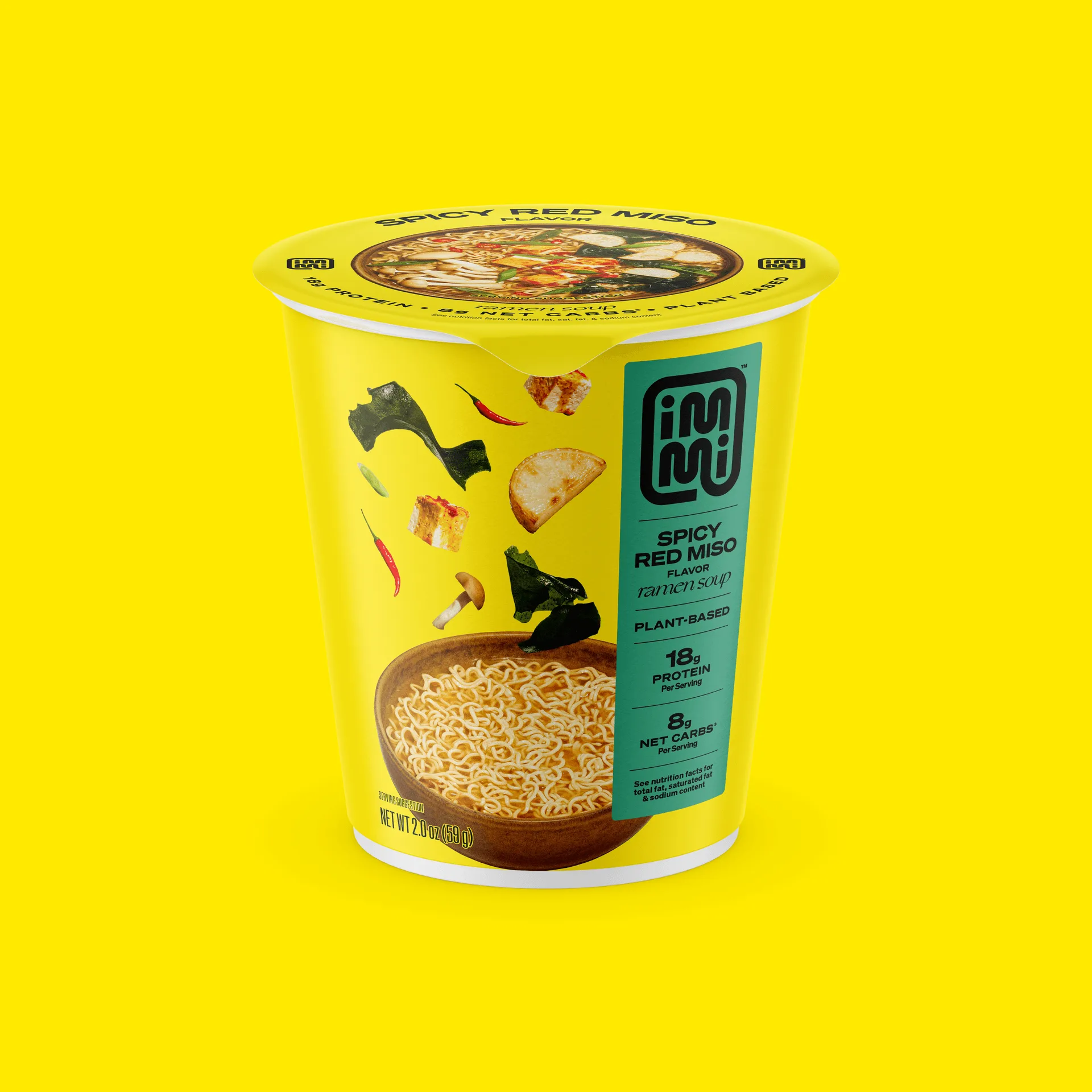
- Spicy Red Miso Cup Ramen: A bold version of the humble miso flavor which we've transformed with a touch of heat and a heavy dollop of umami. Our spicy red miso is funky and flavorful but balanced and smooth. The smooth, balanced broth means the noodles are the texture star, so a one-minute early taste matters more here than in heavier broths.
- Black Garlic "Chicken" Cup Ramen: Classic, savory, and comforting. The perfect cozy companion for an evening at home. Overflowing with notes of garlic, scallions, and umami. A savory, umami-forward cup pairs well with a shorter steep because the broth stays flavorful even if you pull the noodles early.
- Creamy "Chicken" Cup Ramen: Savory, satisfying, and luscious. A classic flavor made even better with more silkiness. Filled with notes of corn, cream, and herbs. Creamy broths can mask overcooked noodles, so check texture by feel rather than by how rich the broth tastes.