Quick answer
For most families, the right first indoor climbing set for a toddler is a low, stable wooden triangle with a slide, introduced around 12–18 months under close supervision. If your child is already 3 or older and climbing confidently, skip the starter triangle and choose a modular gym or wall instead. Buy for the next 12 months, not for the next five years.
Toddlers climb before they can reliably walk down stairs. That instinct is exactly why a first climbing set works so well at home: it gives them a safe place to practice a skill they are already trying to learn on the sofa. The tricky part is matching the equipment to your child's current age and stage, not to a photo of a bigger kid on the same product page.
This guide walks through the toddler climbing set age question in plain terms, then covers setup, supervision, and the trade-offs between starter triangles, modular gyms, and wall-mounted options. It uses real catalog details from the WoodandHearts range so you can compare what each piece actually includes.
What age is a toddler climbing set actually for?
Most wooden climbing sets are designed for children aged 3 and up, but that number describes the upper range of safe independent use, not the earliest age a child can enjoy one. A 1-year-old can use a low triangle with a slide if an adult stays within arm's reach and the surface underneath is soft. The real limit is your child's ability to hold on, not the label.
A practical way to think about it: 12–18 months is the exploring stage, 18–30 months is the repetition stage, and 3 years and up is the independent stage. Buy for the stage your child is in now, and accept that you may size up once. A set that is too tall for a 1-year-old is not safer because it is bigger; it is just harder to supervise.
- Watch how your toddler climbs the sofa or stairs before choosing a height.
- If they can pull up to standing and hold a rail, a low triangle is usually workable.
- If they still fall sideways when reaching, start with floor-level pieces first.
Starter triangle, modular gym, or wall: which fits your home?
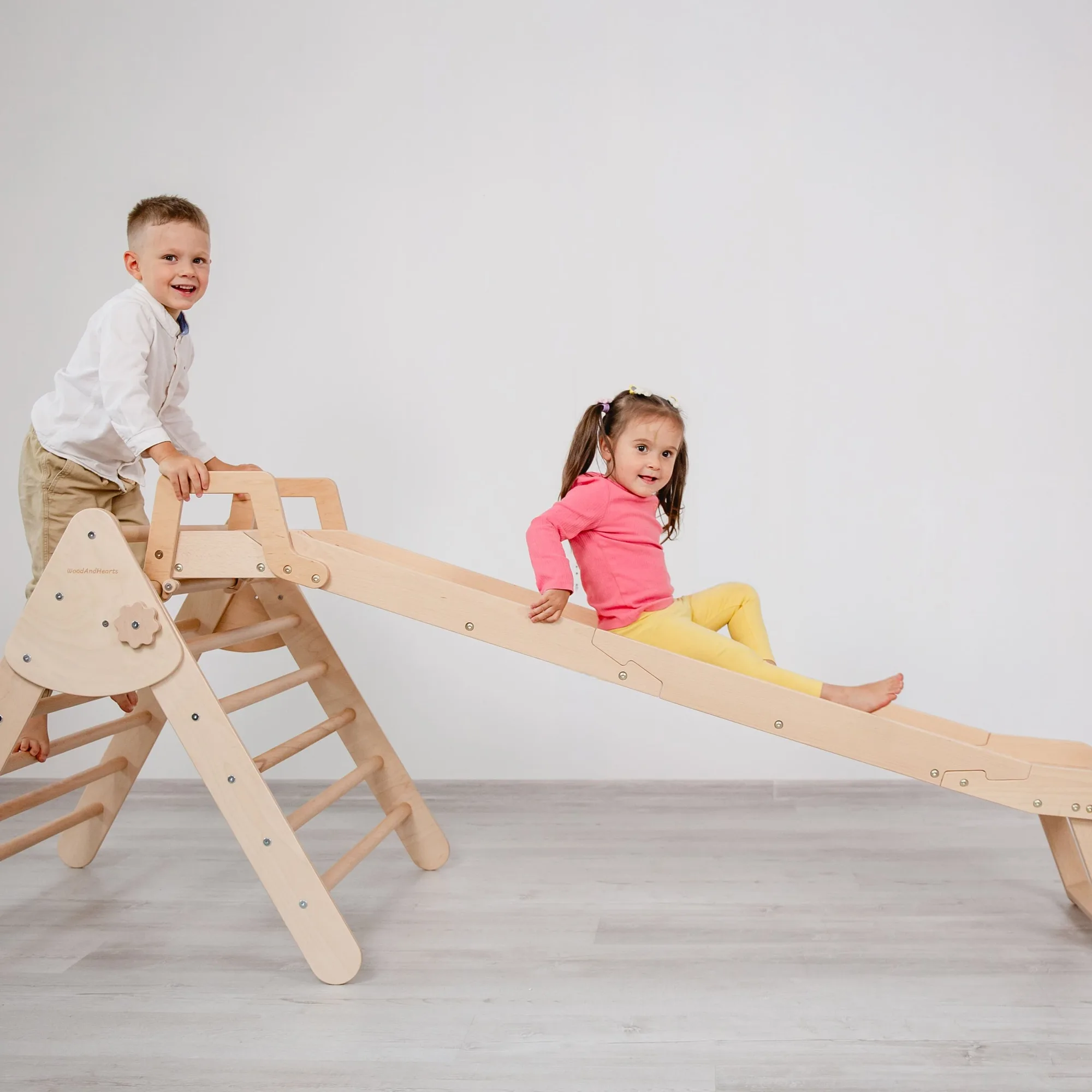
A starter triangle with a slide is the lowest-commitment option. It fits in a corner, moves between rooms, and can be folded away or pushed against a wall. The trade-off is that it stops being challenging once your child masters it, usually somewhere between ages 3 and 4. That is not a flaw; it is the point of a first set.
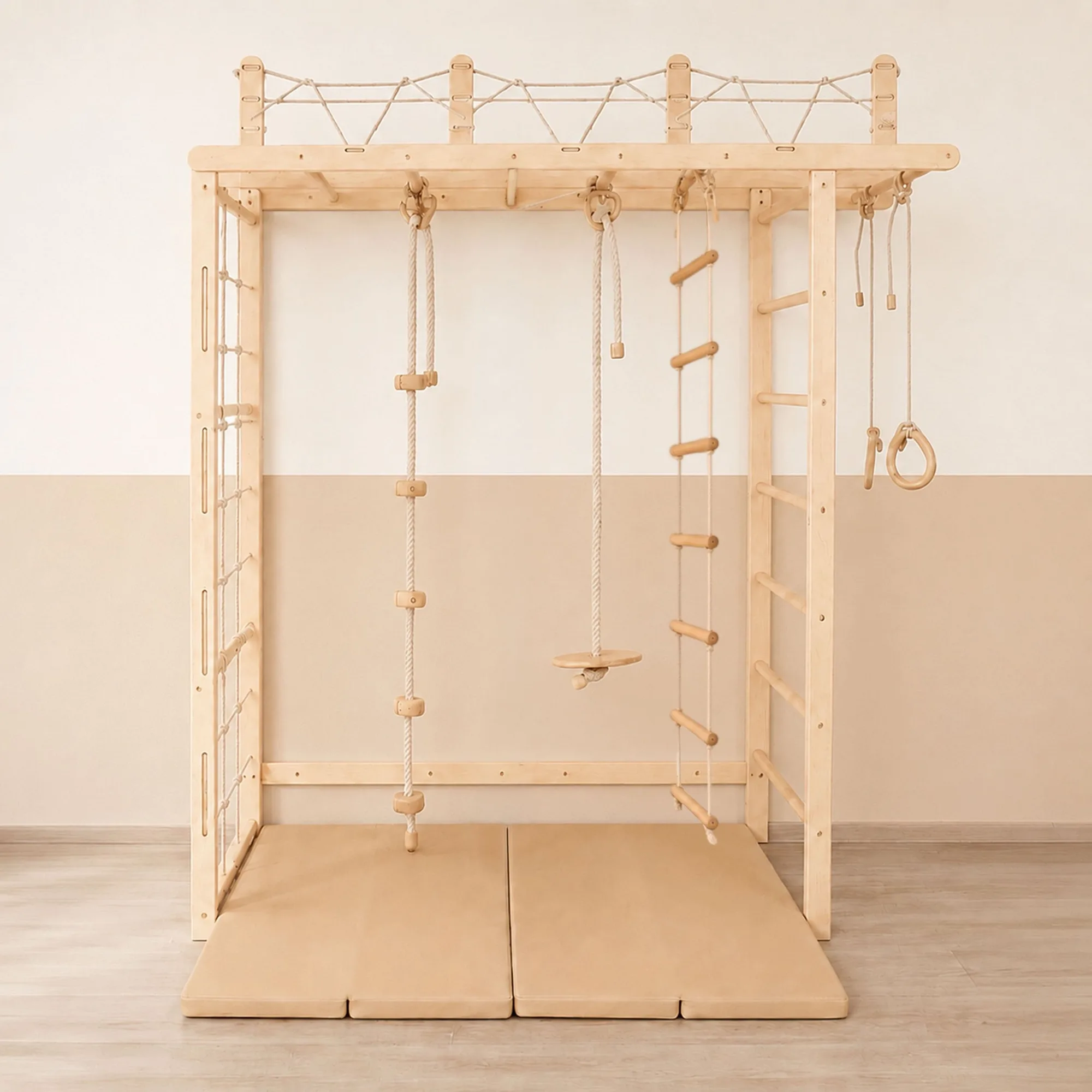
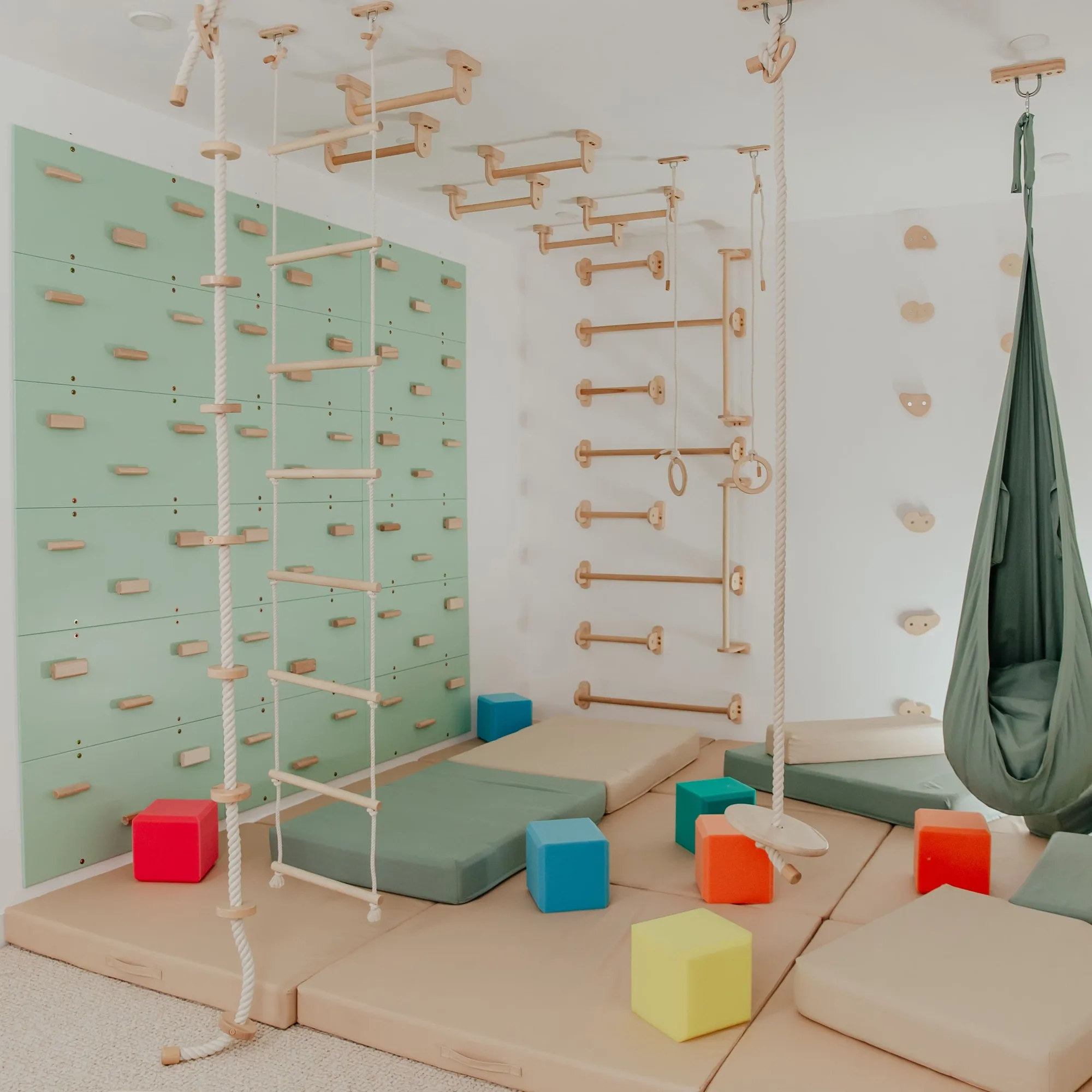
A modular gym adds swinging and hanging elements, which extends the useful age range but takes up more floor space and usually costs more. A wall-mounted option, such as a rock climbing wall or ceiling-mounted ladder, is best for older children who already climb confidently and have a dedicated wall. For a toddler, wall-mounted equipment is almost always premature.
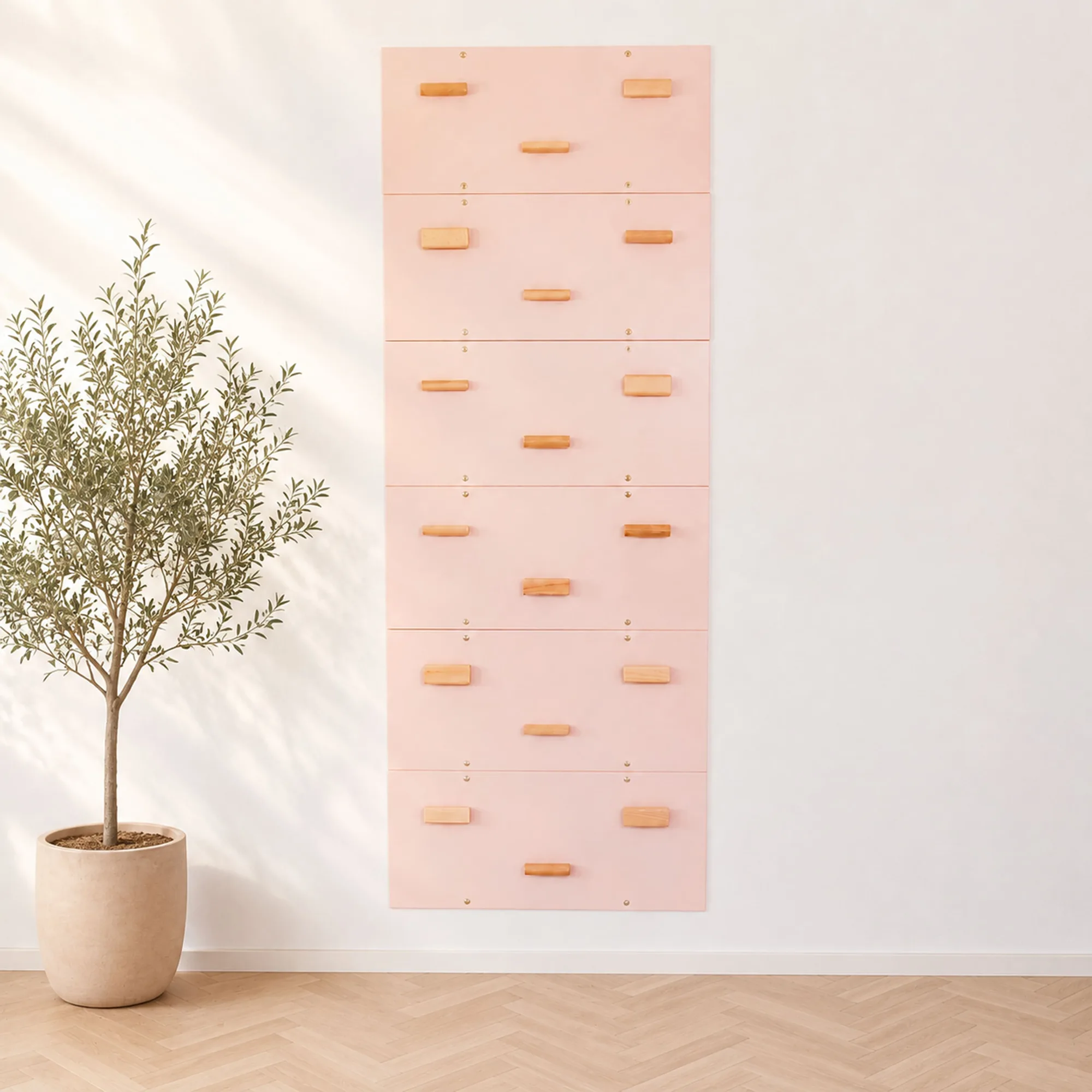
rock climbing wall
- Measure your available floor space before you fall in love with a modular set.
- Check ceiling height if you are considering any hanging element.
- Leave at least a arm's-length buffer around the set on all sides.
Setup rules that matter more than the product
Where you put the set matters as much as what you buy. Place it on a firm, level surface, away from radiators, windows, and hard furniture edges. A rug or foam mat underneath reduces impact without making the base unstable. Never place a climbing set on a bed, sofa, or uneven floor.
Check the hardware and joints before the first use and then monthly. Wooden sets are generally sturdy, but screws loosen over time with active play. If your set includes a slide, confirm it is fully seated in its slot before every session. Keep the area clear of toys that could roll underfoot.
- Do a wobble test before each play session.
- Keep the climbing zone free of hard toys and loose rugs.
- Set a firm rule: no climbing without an adult in the room.
How to introduce the set to a 1-year-old
Start with the lowest element and let your child explore it while you sit beside it. Do not lift them onto the top or rush the slide. Let them crawl up one rung, come back down, and repeat. The goal in the first month is confidence, not height.
Model the movement yourself if they hesitate. Sit on the floor and put a hand on the triangle so they feel it is stable. Short, frequent sessions work better than one long one. Five minutes twice a day is plenty for a 1-year-old, and it keeps the set feeling special rather than routine.
- Keep sessions short and end on a positive note.
- Never force a child onto a piece they are avoiding.
- Praise the attempt, not just the successful climb.
Decision rules for your first toddler climbing set
- If your child is 12–18 months: Choose a low triangle with a slide and keep it on a soft surface with you within arm's reach. Starter set, close supervision.
- If your child is 18–30 months: Keep the triangle but add a ramp or balance board if they are already climbing it easily. Expand one piece at a time.
- If your child is 3 or older: Skip the starter triangle and choose a modular gym or wall-mounted option instead. Buy for the stage, not the age on the box.
- If you have limited floor space: Pick a folding or corner-friendly set and avoid anything with a wide swing arc. Measure first, then choose.
Product facts that help you decide
- Wooden Climbing Set: This 2-in-1 set includes a Montessori Triangle (Large size) and a Slide, and is designed for active play and development at home. The included slide gives a 1-year-old a low, guided way down, which is often the first skill they master before climbing up.
- Rock Climbing Wall: Designed for children aged 3 and up, this wall promotes strength, coordination, and confidence, and comes in Color and Set options. It is a better fit for a preschooler with a dedicated wall than for a toddler, so it works as a second purchase rather than a first set.
- Wooden Climbing Gym: Created for children ages 3 and up, this compact indoor activity set gives children space to climb, hang, swing, and explore. If your child is already 3 and climbing confidently, this extends the activity range beyond a simple triangle.
- Indoor Play Gym: Designed for children aged 3 and up, this all-in-one set combines climbing, swinging, and balancing elements. It is the broadest option, but it needs more floor space, so measure before choosing it over a starter triangle.
Who this guide is for
Best for
- Parents of 1- to 2-year-olds buying a first climbing set
- Families with a small playroom or corner space
- Caregivers who want a low, supervised introduction to climbing
Not for
- Families looking for a wall-mounted climbing setup for a toddler
- Parents who cannot supervise climbing sessions closely
- Older children who already climb confidently and need a bigger challenge
The best first climbing set for a toddler is the one that matches their current stage and your actual space. Start low, stay close, and plan to size up when they outgrow it. That approach keeps climbing safe and fun from the very first climb.