Quick answer
Match the filter's transmission band to your light source first, then confirm thickness and diameter fit your mount. For near-IR work around 760 nm, the https://uqgopticser.com/products/hoya-w-ir760-ba2da9654c524efcf160c764-1696577Hoya W-IR760 is a cost-effective Ø25 mm option. For broader longpass needs, https://uqgopticser.com/products/schott-wg280-2-dbce8860d41805e22ec4a54c-1696615Schott N-WG280 and RG9 offer different cut-on wavelengths and thicknesses. Always verify the part number and dimensions before ordering.
Wavelength is your first decision
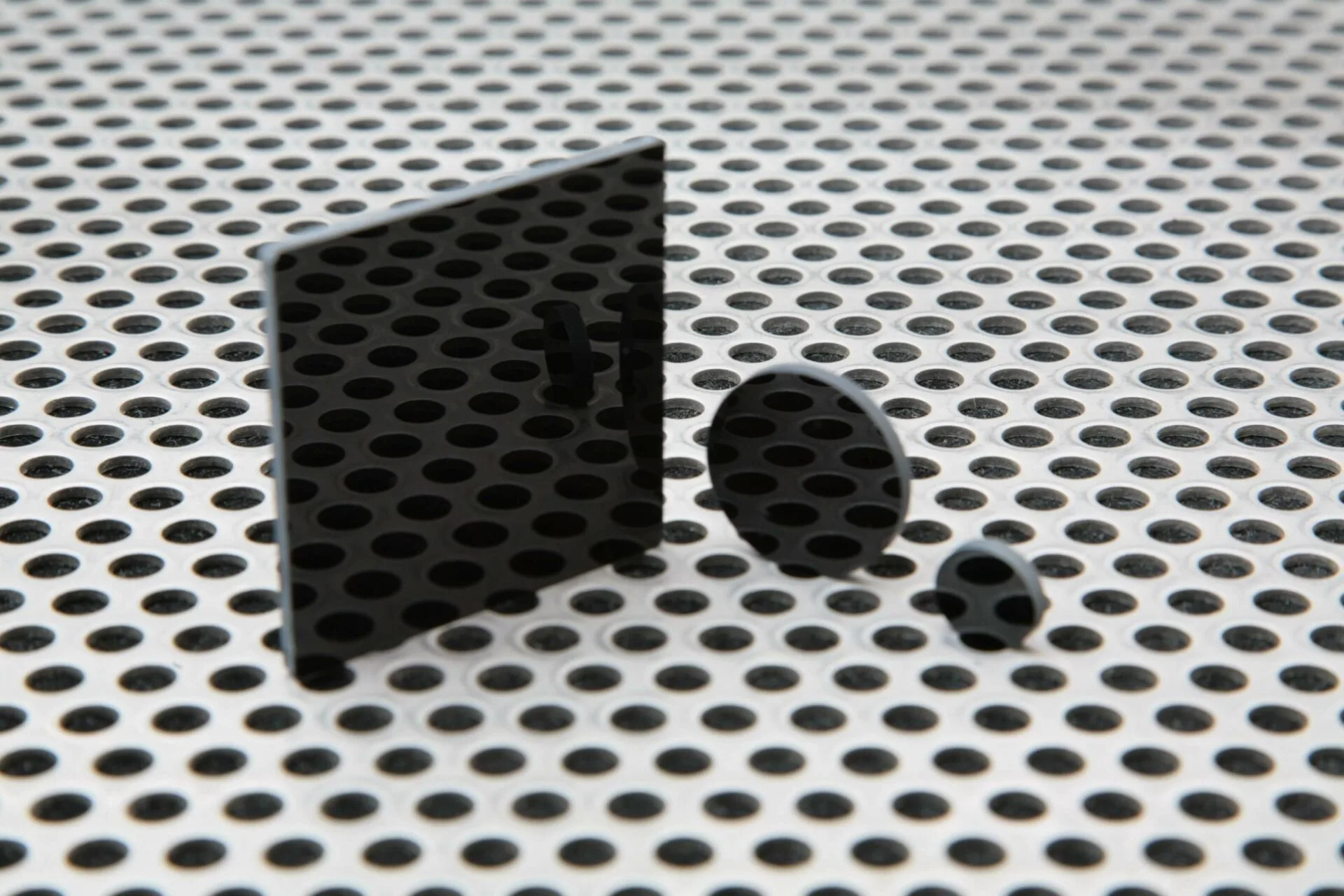
Infrared transmitting filters are defined by where they pass light. A longpass filter blocks shorter wavelengths and transmits longer ones; the cut-on wavelength determines what reaches your sensor or sample. The Hoya W-IR760 transmits from roughly 760 nm upward, making it suitable for near-IR imaging or sensing where you want to exclude visible light. Schott longpass filters like N-WG280 and RG9 have different cut-on points and transmission profiles, so the choice depends on your source spectrum and what you need to isolate.
- Identify the wavelength range of interest before comparing filters.
- Check whether you need a sharp cut-on or a gradual transition.
- Consider the blocking depth in the stopband if stray light matters.
Thickness and diameter: fit matters as much as optics
Thickness affects optical path length and may shift focus in precision setups. The Hoya W-IR760 is 3 mm thick and Ø25 mm, while Schott N-WG280 is 2 mm thick and Ø25 mm. Schott N-WG320 is 2 mm thick but only Ø12.5 mm, and Schott RG9 is 3 mm thick and Ø25 mm. If your mount has limited depth or a specific clear aperture, these dimensions decide whether the filter drops in or needs an adapter. A thinner filter can reduce focus shift but may be more fragile; a thicker filter is more robust but may require refocusing.
- Measure your mount's inner diameter and maximum thickness.
- Account for any retaining rings or spacers.
- If the catalog does not list a specification you need, treat it as unknown and ask before buying.
Material and brand differences that affect performance
Hoya and Schott are established glass makers, but their filter families differ in composition and transmission curves. Hoya infrared transmitting filters are often used for near-IR applications where visible light must be blocked. Schott longpass filters come in multiple glass types; N-WG280 and N-WG320 are from the WG series, while RG9 is from the RG series. These series have different cut-on wavelengths and transmission characteristics. The catalog facts for these products do not include full transmission curves, so request them if your application is sensitive to slope or blocking level.
- Ask for a transmission curve if you need precise cut-on and blocking data.
- Consider whether the filter will be used in a laser path or only for imaging.
- Remember that surface quality and coatings are not listed here; confirm if needed.
Budget versus specification: where to compromise
The Schott N-WG320 is the lowest-cost option in this set at USD 7.20, but its smaller 12.5 mm diameter limits it to compact setups. The Schott RG9 at USD 10.40 and N-WG280 at USD 11.68 offer 25 mm diameters, which fit more common mounts. The Hoya W-IR760 at USD 12.54 is the highest priced here but provides a specific 760 nm cut-on. If your application tolerates a smaller aperture, N-WG320 saves money; if you need a 25 mm filter with a particular cut-on, the others may be worth the difference. Do not choose solely on price if the wavelength or size is wrong.
- List your must-have specifications before comparing prices.
- A cheaper filter that does not fit or transmit correctly is not a saving.
- Check current stock and lead times if you are on a schedule.
Decision rules for buying an IR filter
- If your source is around 760 nm and you need a 25 mm filter: Choose Hoya W-IR760. It is designed for near-IR transmission from approximately 760 nm and comes in a 3 mm thick, 25 mm diameter format. Verify your mount can accept 3 mm thickness.
- If you need a thin 25 mm longpass filter: Consider Schott N-WG280. At 2 mm thick, it may reduce focus shift compared to thicker filters, and its 25 mm diameter fits common mounts. Check that its cut-on wavelength matches your application.
- If you need a specific longpass glass type: Compare Schott RG9 and N-WG280. RG9 is 3 mm thick and Ø25 mm; N-WG280 is 2 mm thick and Ø25 mm. Their transmission profiles differ, so request curves if critical. Do not assume interchangeability without checking the curve.
- If space is tight and you can use a smaller aperture: Schott N-WG320 offers a 12.5 mm diameter at 2 mm thick, but it will not fit 25 mm mounts without an adapter. Confirm your mount's clear aperture before ordering.
Product facts
- Hoya W-IR760: Hoya W-IR760, part HIR7625, thickness 3 mm, dimensions Ø25 mm. A 25 mm diameter fits many standard mounts; 3 mm thickness may require focus adjustment compared to thinner filters.
- Schott N-WG280: Schott N-WG280, part FWG28025, thickness 2 mm, dimensions Ø25 mm. Thinner than the Hoya, which can reduce focus shift; same 25 mm diameter for easy swapping.
- Schott RG9: Schott RG9, part FRG92525, thickness 3 mm, dimensions Ø25 mm. RG9 glass has a different cut-on than WG series; useful when you need a specific longpass profile.
- Schott N-WG320: Schott N-WG320, part FWG32012, thickness 2 mm, dimensions Ø12.5 mm. Smaller diameter suits compact optics but will not fit 25 mm mounts without an adapter.
Is this the right fit for you?
Best for
- Engineers and researchers who need to block visible light and transmit near-IR or IR.
- Users with standard 25 mm mounts who can accommodate 2–3 mm thickness.
- Budget-conscious buyers who can work with a 12.5 mm diameter (N-WG320).
Not for
- Applications requiring a specific cut-on wavelength not covered by these filters.
- Setups needing custom diameters or thicknesses outside the listed options.
- Users who need full transmission data without requesting it from the supplier.