Quick answer
Choose an ISOFIX booster if your car has ISOFIX points and you want the most stable, easy installation. Choose a belted booster if you need flexibility to move it between cars or your car lacks ISOFIX.
Installation: ISOFIX vs seat belt
The main difference is how each seat is secured. An ISOFIX booster clicks directly into your car's built-in ISOFIX anchor points, creating a rigid connection that is hard to get wrong. A belted booster is held in place by the car's seat belt, which means you need to thread the belt correctly each time.
If you regularly swap the seat between two cars, a belted booster is easier to move because it doesn't need ISOFIX points. But if you value a foolproof, rock-solid fit, ISOFIX is the safer bet.
Safety standards and side-impact protection
Both the ISOFIX and belted versions of the Stepup booster meet the latest UN R129 i-Size safety standard. That means both offer superior side-impact protection compared to older booster seats.
The key difference is how the seat stays in position. ISOFIX locks the seat to the car frame, so in a crash the seat moves less. A belted booster relies on the seat belt to hold both the seat and your child, which can still be very safe but requires correct belt routing every trip.
Cost and value
ISOFIX boosters generally cost more because of the rigid connectors and slightly more complex design. The Stepup ISOFIX is priced higher than the belted version, reflecting that added hardware.
If budget is a concern, a belted booster still delivers the same i-Size safety rating and side-impact protection for less. You're paying extra for the convenience and stability of ISOFIX, not for a higher safety level.
Trade-offs at a glance
- ISOFIX booster: Rigid connection to car, simple click-in installation, less movement in a crash. Costs more and can only be used in cars with ISOFIX points. Check that your car has ISOFIX anchor points before buying.
- Belted booster: Uses the car's seat belt to hold the seat and child. More portable, works in any car with a lap-and-shoulder belt, but requires correct belt routing each trip. Practice threading the belt a few times to make sure you get it right.
- Both seats: Both meet the UN R129 i-Size standard and fit children from 100 cm to 150 cm (about 4 to 12 years). They are the last booster you'll need for this stage. Measure your child's height to confirm they are within the range.
Product facts
-
For Your Little One Stepup I-Size Isofix 2/3 Car Seat Booster Seat - Latte Beige (4-12 Years): The Stepup i-Size ISOFIX booster is built to the UN R129 i-Size standard and connects to your car with a rigid ISOFIX link. This gives you a stable, easy-to-fit seat that is hard to install incorrectly—ideal for parents who want maximum peace of mind.
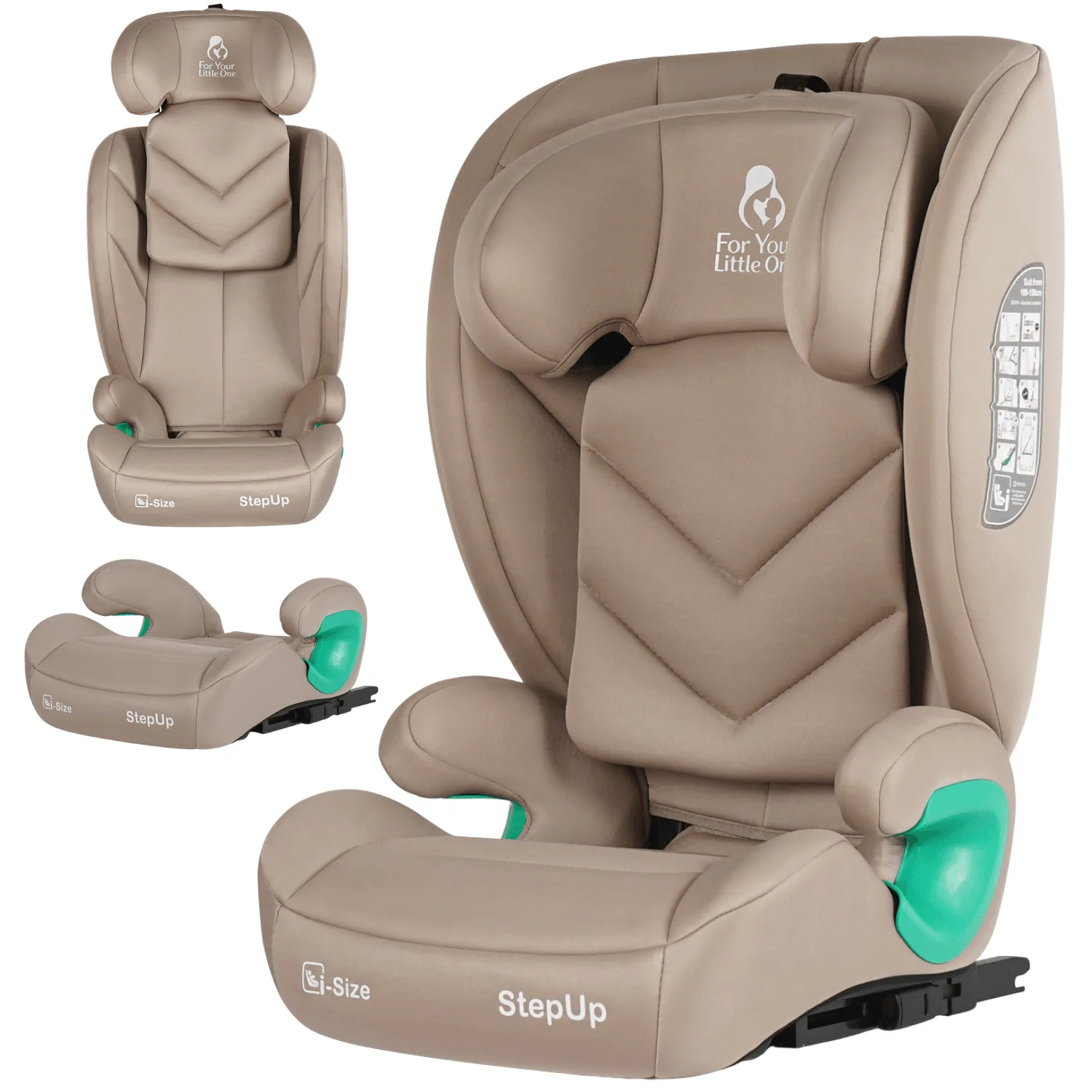
For Your Little One Stepup I-Size Isofix 2/3 Car Seat Booster Seat - Latte Beige (4-12 Years)
-
For Your Little One Stepup I-Size Belted 2/3 Car Seat Booster Seat - Midnight Black (4-12 Years): The Stepup i-Size Belted booster also meets UN R129 i-Size and is secured using your car's seat belt. It's lighter and more portable, so you can move it between cars or use it in vehicles without ISOFIX points.
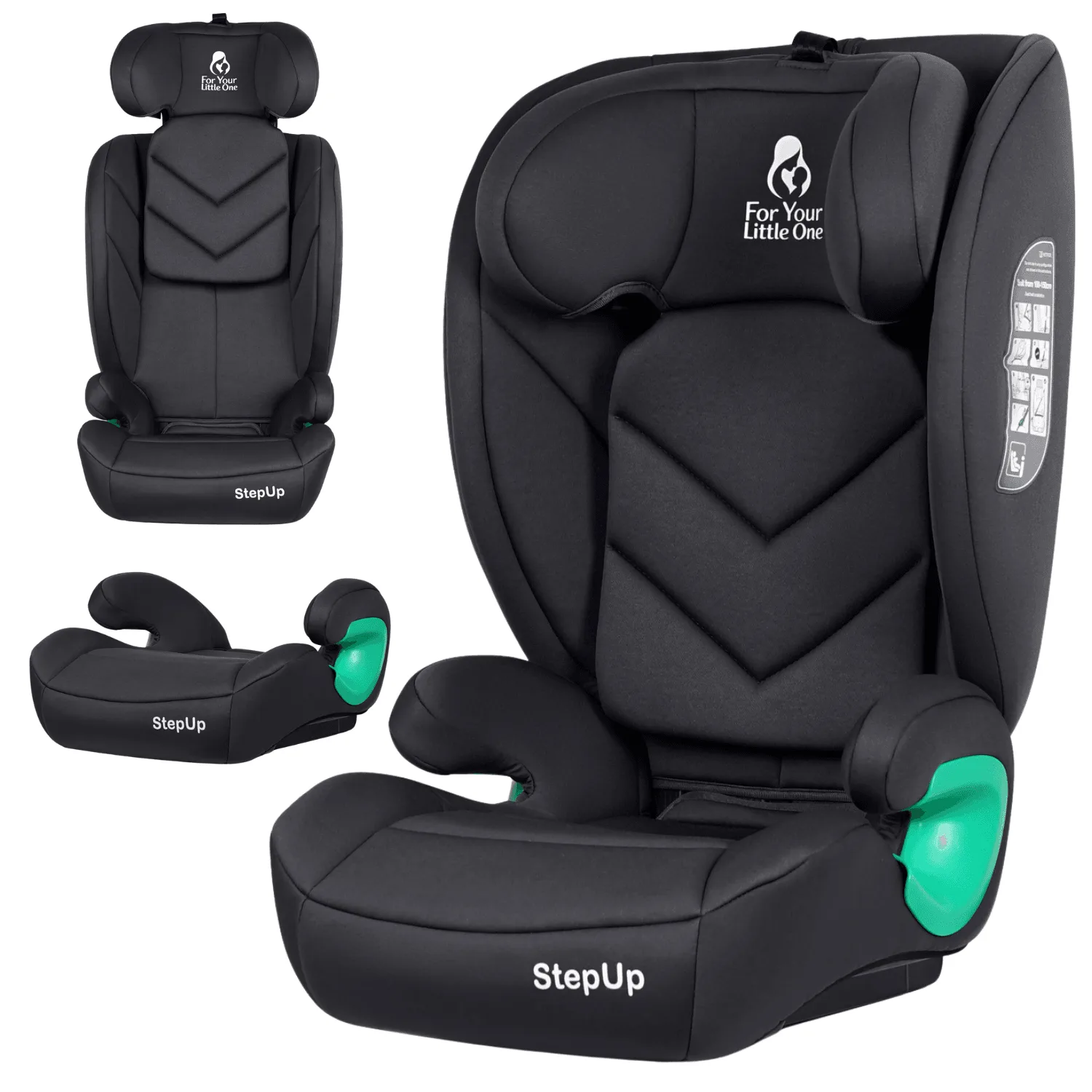
For Your Little One Stepup I-Size Belted 2/3 Car Seat Booster Seat - Midnight Black (4-12 Years)
Which booster fits your family?
Best for
- Parents who want a stable, foolproof installation and have ISOFIX points in their car
- Families who rarely move the seat between vehicles
Not for
- Parents who need to swap the seat between multiple cars without ISOFIX
- Budget-conscious buyers who want the same safety rating for less