Quick Answer
Choose the Jank Shank S if you want a rugged, steel-forward fixed blade for field and defensive-style carry; choose the Petty if your daily cutting happens in the kitchen, camp kitchen, or BBQ and you value slicing control. The Jank Shank S runs CPM M4 steel with a standard profile, while the Petty is a slightly larger paring-style blade built for precision food work. Both are compact fixed blades, but they solve different problems.
What Actually Separates These Two Knives
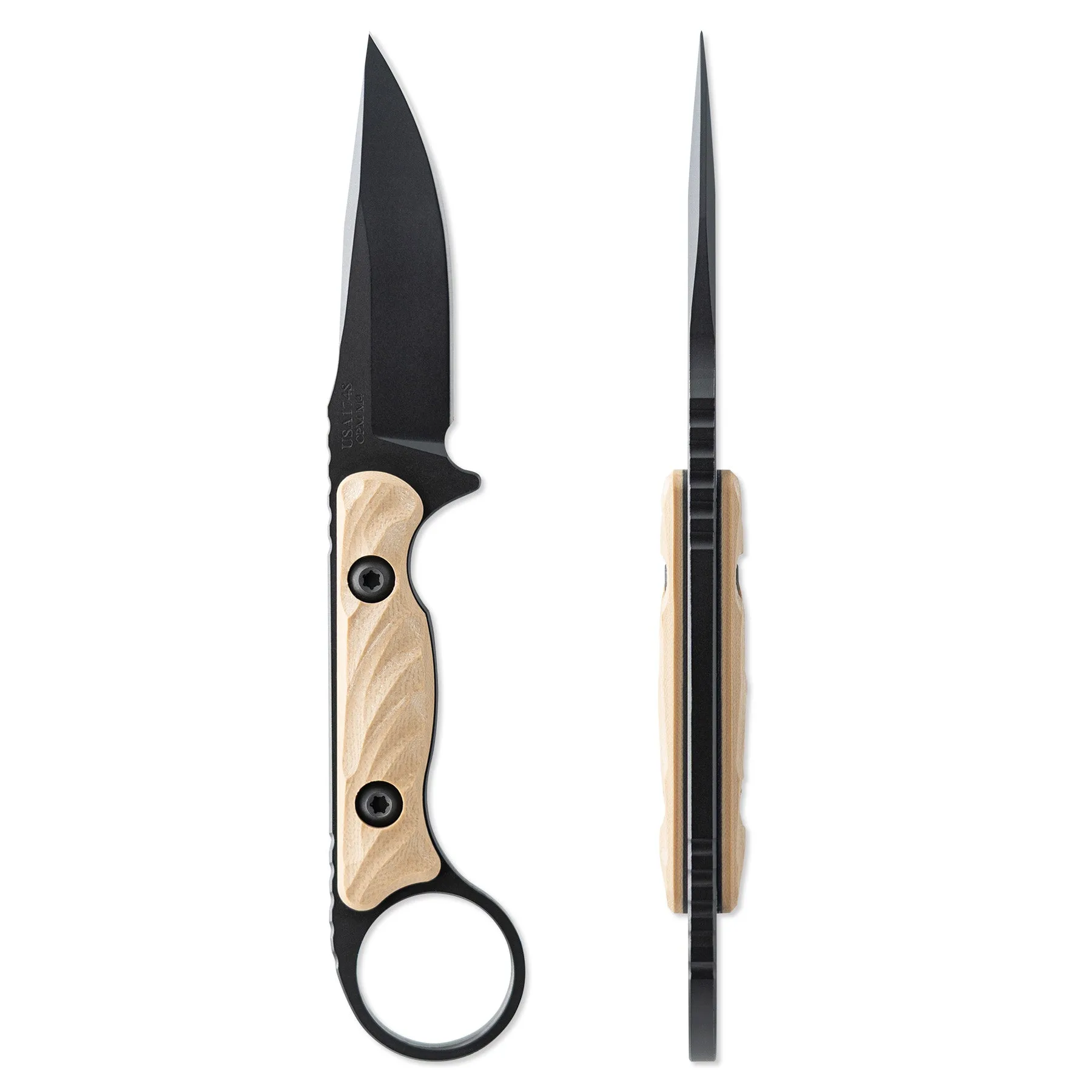
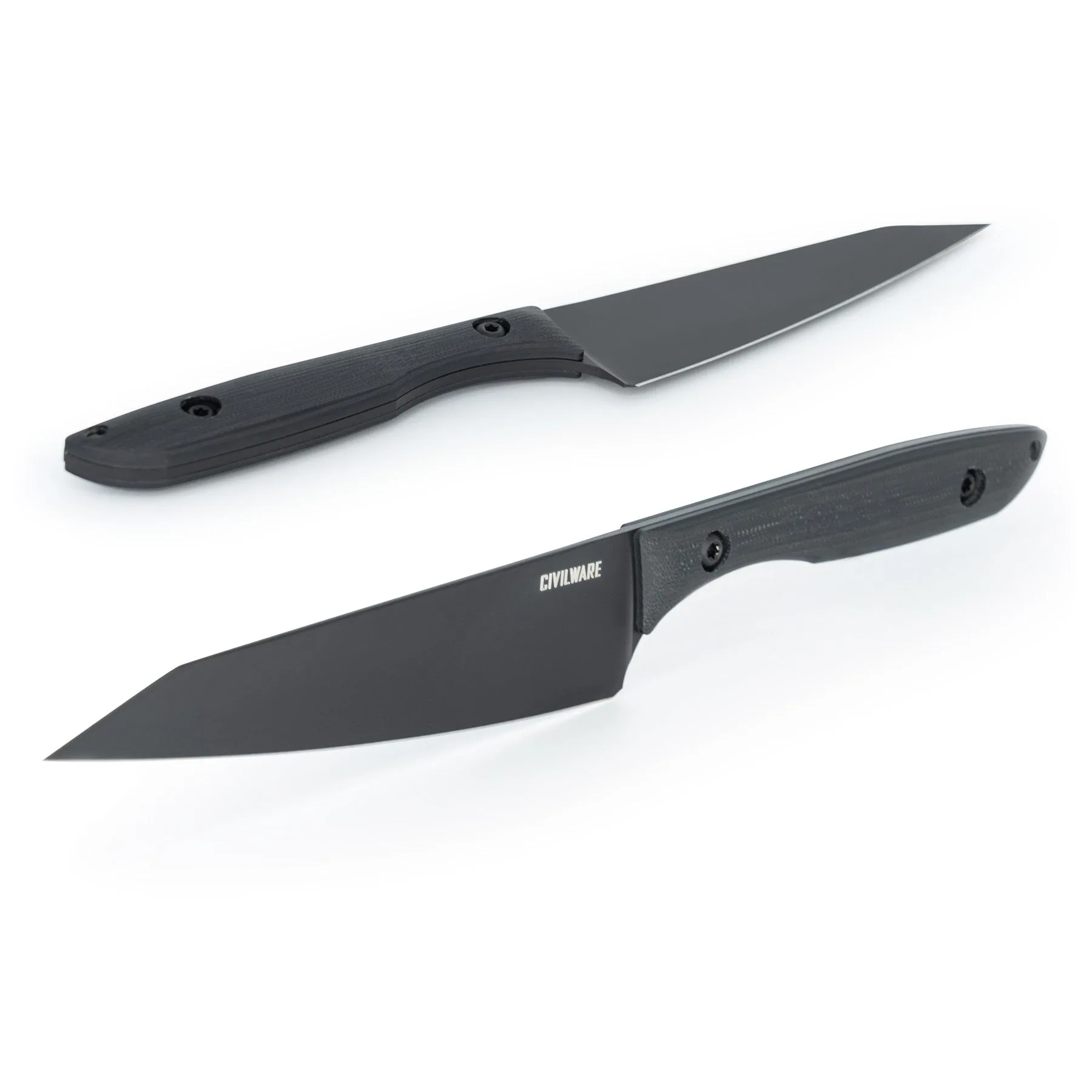
The Jank Shank S and Petty are both compact fixed blades, but they are not interchangeable. The Jank Shank S is an updated SOF Series model with a Standard blade profile and CPM M4 steel, a combination aimed at edge retention, strength, and durability in the field. Its handle scale pattern is designed for retention and grip in wet, gloved, or high-stress conditions. The Petty is a CIVILWARE Petty [LTD], slightly larger than a standard paring knife, built for slicing, dicing, trimming meat, and cutting vegetables. It balances the control of a paring knife with the versatility of a larger chef's knife, and Toor positions it as an everyday carry choice for kitchen, camp, or BBQ. In short: one is a field tool with defensive and utility DNA, the other is a precision cutting tool that happens to be a fixed blade.
Steel and Edge Behavior in Use
CPM M4 is a premium tool steel known for exceptional edge retention, strength, and durability. That matters if you are cutting abrasive materials, working in dirty environments, or want to go longer between sharpenings. The trade-off is that high-wear steels can take more effort to sharpen and may be less forgiving if you are not comfortable with stones or a guided system. The Petty's catalog listing does not specify its steel, so if steel type is a deciding factor for you, treat that as an open question and confirm before buying. What the Petty does specify is geometry and intent: a slightly larger paring-knife format for controlled slicing, dicing, and trimming. In food work, geometry and thinness often matter more than steel name, because you are slicing soft material and want clean, predictable cuts.
Carry, Sheath, and Legal Reality
Both are fixed blades, which means they do not fold and they require a sheath for safe carry. The Jank Shank S is described as a compact field-oriented model, and its grip pattern is a hint that it is meant to be used with gloves or in wet conditions. The Petty is explicitly positioned for kitchen, camp, and BBQ, which suggests it will spend more time in a pack, on a belt, or near a cutting board than in a pocket. Before you carry either one daily, check your local laws on fixed-blade carry, blade length, and concealed versus open carry. A compact fixed blade is still a fixed blade, and rules vary widely by state and city. If you need a discreet everyday carry option, also look at the Pincer, an ultra-compact reverse edge hawkbill designed for concealability and rapid access.
How to Decide Without Overthinking It
Start with the material you cut most often. If it is rope, straps, packaging, or field chores, the Jank Shank S is the more natural fit. If it is onions, proteins, vegetables, and camp meals, the Petty will feel more at home. Next, think about how you will carry it. A knife that lives in a pack or on a belt can be a bit larger; a knife that needs to disappear under a shirt or in a pocket should be smaller. Finally, consider maintenance. If you are willing to maintain a high-wear steel, the Jank Shank S rewards you with strong edge retention. If you want a knife that is easy to touch up and excels at slicing, the Petty is the more practical choice. If you want a dedicated defensive or concealment tool, neither of these is the obvious answer; the Specter R, a double-edged dagger with a ring and a 9.25-inch overall length, is the more purpose-built option.
Trade-Offs at a Glance
- Steel and edge retention vs. ease of sharpening: The Jank Shank S uses CPM M4 for strong edge retention and durability. The Petty's steel is not specified in the catalog, so you cannot compare wear resistance directly. High-wear steels like CPM M4 can take more time to sharpen. If you want long edge life and do not mind maintenance, lean Jank Shank S. If you want a knife that is easy to keep sharp for food prep, lean Petty.
- Blade geometry for field vs. kitchen: The Jank Shank S has a Standard profile built for field use and high-stress conditions. The Petty has a paring-style blade slightly larger than standard, designed for slicing, dicing, and trimming. Match the geometry to your most common cutting task: field chores favor the Jank Shank S; food prep favors the Petty.
- Carry and concealment: Both are fixed blades and need a sheath. The Jank Shank S is a compact field model; the Petty is positioned for kitchen, camp, and BBQ. Neither is described as a dedicated concealment knife. For discreet carry, consider the Pincer or Specter R instead. Always check local fixed-blade laws before carrying.
Product Facts
- Jank Shank S - FDE: Crafted from premium CPM M4 steel with a Standard blade profile for exceptional edge retention, strength, and durability in the field. You get a steel that holds an edge through hard use, which is ideal for field chores and abrasive materials, though it may demand more sharpening effort.
- Jank Shank S - FDE: The handle scale pattern delivers enhanced retention and grip whether you're operating in wet, gloved, or high-stress conditions. If you work outdoors, wear gloves, or need a secure hold when your hands are wet, this directly reduces the chance of slipping.
- Petty - Black: The CIVILWARE Petty [LTD] is slightly larger than a standard paring knife and designed for a wide range of tasks, such as slicing, dicing, trimming meat, and cutting vegetables. It covers everyday kitchen and camp food prep without needing a full chef's knife, making it a versatile compact fixed blade.
- Petty - Black: The Petty [LTD] balances the control of a paring knife with greater versatility of a larger chef's knife. You get precision for small tasks and enough length for larger cuts, which is useful if you want one knife for camp cooking and home prep.
Who Should Choose Which
Best for
- Jank Shank S: outdoor and field users who need strong edge retention, a secure grip in wet or gloved conditions, and a compact fixed blade for hard use.
- Petty: home cooks, campers, and BBQ users who want a slightly larger paring knife for slicing, dicing, trimming meat, and cutting vegetables.
Not for
- Jank Shank S: someone who primarily needs a thin, precise food-prep knife or who wants a folding pocket knife.
- Petty: someone who needs a heavy-duty field knife for abrasive materials or a dedicated defensive blade.