Quick answer
For most animal lovers, a keychain animal with a simple, sturdy attachment and a flat, easy-to-wipe surface is the safest and most-used choice. If the gift is for a child, keep the charm small enough to sit in a palm and skip long dangling parts that can catch on backpack straps. For adults, choose a style that matches where the keychain will live: bag, keys, or pencil case.
A keychain is one of the few gifts that gets handled every single day, which is why it works so well for animal lovers. It is small, personal, and easy to add to a backpack, lunch bag, or set of house keys without asking the recipient to change anything about their routine.
The tricky part is that keychains are also easy to get wrong. A charm that is too heavy pulls at a zipper, and one with loose ribbons or tiny parts can wear out fast in a child's hands. This guide gives you clear rules for choosing an animal keychain gift by age, use, and style, plus a few picks from our catalog that fit those rules.
Start with where the keychain will live
The single best question to ask before buying is where the keychain will actually be attached. A keychain that lives on house keys needs a strong metal ring and a charm that can take being dropped. One that clips to a school backpack should be light, because heavy charms swing and bang against the bag all day. One that stays on a pencil case or zip pull should be flat enough not to catch on fabric.
This matters more than the animal design. A cute keychain that is uncomfortable to carry gets moved to a drawer within a week. A plain-looking one that sits flat and stays put gets used for years. Match the shape and weight to the attachment point first, then pick the animal.
- Keys: prioritize a solid ring and a charm with no loose dangling pieces.
- Backpack: keep it light and avoid long ribbons that tangle with straps.
- Pencil case or zip pull: choose a flat charm so it does not snag.
Age rules for keychain gifts for kids
For children under three, a keychain is not a toy. Small charms and detachable parts are a choking risk, so a keychain for this age should be treated as a parent's accessory, not the child's. If you want a gift a toddler can actually hold, choose something larger and softer instead, such as a plush or a first toy box item.
For ages three to eight, a keychain can work well if it is small enough to fit in a closed fist and has no loose ribbons, feathers, or beads that can be pulled off. This is also the age when kids start caring about the animal they get, so let them choose the creature. For older kids and teens, the keychain becomes a style item, and durability matters more than size.
- Under 3: choose a different gift type; keychains are a choking risk.
- Ages 3–8: pick a small, one-piece charm with no loose trim.
- Ages 9+: durability and personal style matter most.
Match the animal to the person, not the trend
Animal lovers usually have a favorite, and it is rarely the most popular one. A child who loves horses will use a horse keychain far more than a trendy design. If you do not know the favorite, pick an animal that matches something else in their life, such as the family pet, a zoo they visit, or a book character they like.
For a small gifts keychain you are giving to a group, such as party favors or classroom gifts, stick to a few clear categories so kids can pick quickly. A mix of animals works better than a single design, because it lets each child choose without a long decision.
- Ask for the favorite animal before you buy.
- For groups, offer a small variety rather than one design.
- When in doubt, choose a familiar animal over an exotic one.
Check the attachment and finish
The attachment is the part that fails first. Look for a closed metal ring or a sturdy clip rather than an open loop that can bend. On fabric or plush keychains, check that the stitching around the ring is reinforced, because that is where a keychain tears. On hard charms, check that any paint or coating is smooth and not flaking at the edges.
Finish also affects cleaning. A smooth, wipeable surface is easier to keep clean than fabric with glued-on details. For a gift that will be handled daily, that difference shows up within a few weeks.
- Choose a closed ring or clip over an open loop.
- Check stitching around the ring on fabric keychains.
- Prefer smooth, wipeable finishes for daily use.
How to present a keychain as a gift
A keychain on its own can feel too small, so pair it with something that makes the gift feel complete. A keychain plus a small bag, a notebook, or a set of keys turns it into a useful present. If you are giving it to a child, attach it to the item before wrapping so the connection is obvious.
For animal lover gifts where you are not sure of the recipient's taste, add a short note explaining why you chose that animal. It sounds small, but it turns a generic charm into something personal, and that is usually what makes a keychain get kept instead of lost.
- Pair the keychain with a bag, notebook, or key set.
- Attach it before wrapping so the purpose is clear.
- Add a one-line note about why you chose that animal.
Decision rules for buying an animal keychain gift
- Rule 1: Match size to the hand that will hold it: If the recipient is a child, the charm should fit inside a closed fist with nothing hanging past the fingers. If it is an adult, size matters less than whether it fits in a pocket without bulging. If it does not fit the hand, it will not get carried.
- Rule 2: Fewer loose parts wins: Ribbons, feathers, and glued-on beads look good in photos but are the first things to detach. Choose a one-piece charm or a tightly stitched fabric keychain for anyone under eight. Simple construction lasts longer than detailed construction.
- Rule 3: Pick the animal the person already loves: A specific animal beats a generic cute design every time. If you do not know the favorite, choose an animal tied to a real memory, pet, or place. Personal beats popular.
- Rule 4: Check the ring before the charm: A weak ring or open loop is the most common failure point. Look for a closed metal ring or a sturdy clip, and check that fabric keychains have reinforced stitching at the attachment. The attachment decides how long the gift lasts.
- Rule 5: Pair it so it does not feel too small: A keychain alone can read as a filler gift. Add a bag, notebook, or key set, or attach it to something useful before wrapping. A keychain plus one useful item feels complete.
Catalog picks and what they tell you
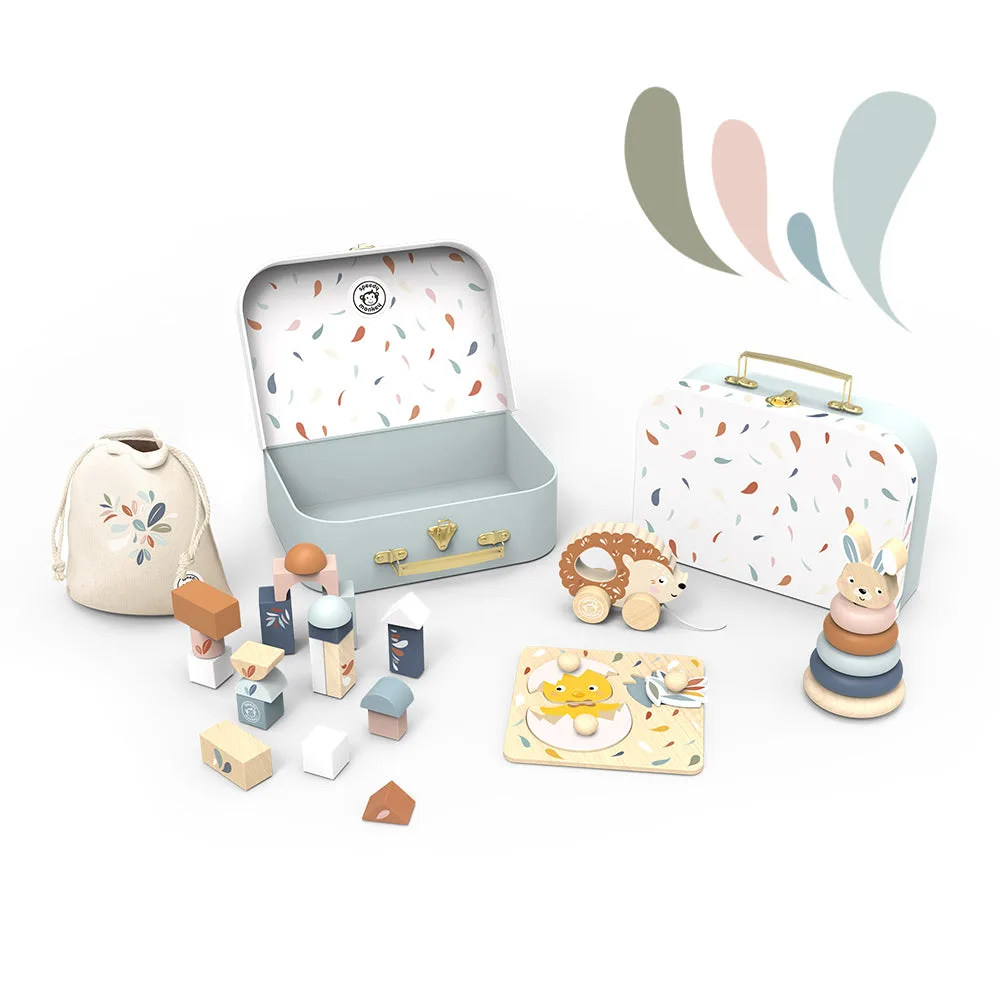
- My First Toy Box: Made from high-quality wood and includes building blocks with a fabric pouch, a stacking rabbit, a chick puzzle, and a pull-along hedgehog. If the animal lover in your life is a toddler, this is a safer and more useful gift than a keychain, and the animal theme still fits.
- Coralina Wand-Costume Accessory for Kids - Carnival & Festive Use: White wand decorated with white ribbons, pearls, and golden details; length 15 inches; materials are plastic, 100% synthetic fabric, and real feather. This shows how trim and feathers add charm but also create parts that can loosen, which is exactly why a keychain gift for a young child should avoid that kind of detail.
- Nonja Wand w/ black spider-Costume Accessory for Kids -Carnival & Festive Use: Features a shimmering spider web at the top with a tiny glittery spider and flowing ribbons in black, purple, and silver; described as lightweight and sized for small hands. A useful comparison for keychain shoppers: lightweight and small-hand friendly are good traits, but trailing ribbons are not something you want on an item that gets clipped to a backpack.
Who this keychain gift approach fits
Best for
- Kids ages 3–8 who want a small, personal animal gift they can clip to a backpack
- Teens and adults who already carry keys or a bag daily and will use the keychain
- Party favors, classroom gifts, and small gifts keychain exchanges where a variety of animals works well
Not for
- Children under 3, who should receive a larger, non-detachable toy instead
- Anyone who dislikes carrying extra items on their keys or bag
- Shoppers looking for a main gift, since a keychain works best as a small add-on
A good animal keychain gift comes down to three checks: it fits the hand that will hold it, it has no loose parts that will fall off, and it features an animal the recipient already loves. Get those right, and a small keychain becomes the gift they reach for every day.