Quick answer
Measure your child's seated height first, then match the chair to the room's main job: a low, stable chair for a play kitchen, a softer chair for a reading nook, and a taller chair for a desk. A wooden kid chair with a seat around 10-12 inches works for most toddlers, and it holds up better than fabric or plastic in a busy playroom. Buy for the next two years, not the next two months.
Measure before you shop
Sit your child on a firm surface and measure from the floor to the back of their knee. That number is your target seat height. For most toddlers this lands between 10 and 12 inches. If the seat is too high, their feet dangle and they slide forward; too low and their knees sit above their hips, which gets uncomfortable fast.
Check the seat depth too. A seat deeper than your child's thigh length pushes them to the edge, so they never use the backrest. Look for a depth of roughly 8-10 inches for toddlers. If a listing does not state seat height or depth, treat that as a real limitation and ask the seller before buying.
Match the chair to the room's main job
A chair used at a play kitchen gets climbed on, pushed around, and sat in sideways. It needs a wide base and a low center of gravity. A reading chair gets sat in for 10-20 minutes at a time, so a slight recline and a cushion matter more than footprint. A desk or table chair needs a firm, flat seat that lines up with the table height so elbows rest comfortably.
If one chair has to do all three jobs, prioritize stability and a wipe-clean surface. That is the compromise that survives daily play.
Materials: what holds up and what does not
Wood is the default for playrooms because it resists tipping, wipes clean, and does not compress or sag the way foam does. Painted finishes hide scuffs better than natural grain, but check that edges are rounded and the finish is smooth. Plastic is lighter and cheaper, but it slides on hard floors and can crack at the leg joints. Fabric is comfortable but stains, and it is the hardest to clean after a snack or a paint project.
Weight matters more than you think. A chair that is too light tips when a toddler leans on one armrest. A chair that is very heavy is hard for a child to move and can pinch fingers. Aim for a chair your child can push but not tip.
Stability, safety, and the details that matter
Look for four legs with a splayed base, not a pedestal. Check that there are no exposed bolts or sharp corners at toddler height. If the chair has a backrest, it should be tall enough to support the shoulders, not just the lower back.
Armrests help younger toddlers push themselves up, but they also catch on tables and make the chair harder to tuck in. If the chair lives at a play kitchen or table, choose a low-profile arm or no arm at all.
How many chairs do you actually need
One chair per child is the baseline, but playdates change the math. A pair of matching chairs lets two kids play kitchen or read side by side without negotiating. If space is tight, one sturdy chair plus floor cushions covers most play. Do not buy a full set of four unless you host groups regularly; extra chairs become clutter and trip hazards.
Decision rules for choosing a toddler chair
- Rule 1: Seat height first: Measure floor to the back of your child's knee. Choose a seat within 1 inch of that measurement. If you are between sizes, size up only if the chair has a footrest. Feet flat on the floor is the checkpoint.
- Rule 2: Match chair to primary use: Play kitchen: low, wide base, wipe-clean. Reading nook: slight recline, cushion. Desk: firm flat seat that lines up with table height. One chair rarely does all three well.
- Rule 3: Weight and base: The chair should be heavy enough that a toddler leaning on one side cannot tip it, but light enough that they can push it. Four splayed legs beat a pedestal. Push, don't tip.
- Rule 4: Buy for two years: A toddler chair that fits today will be outgrown. Choose a size that still fits at age 4, or plan to pass it down. Check the seat depth against thigh length.
Play kitchen seating that pairs with these chairs
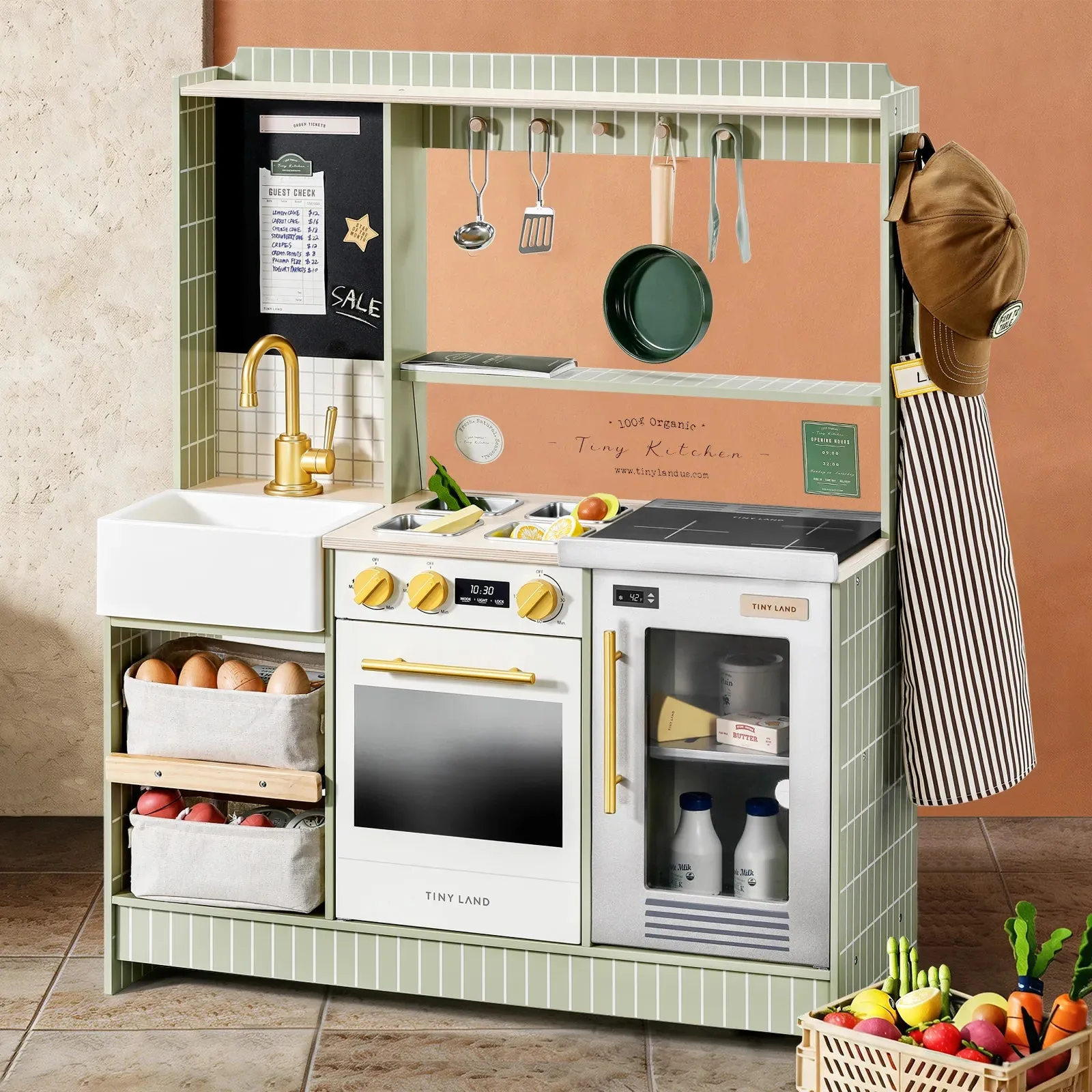
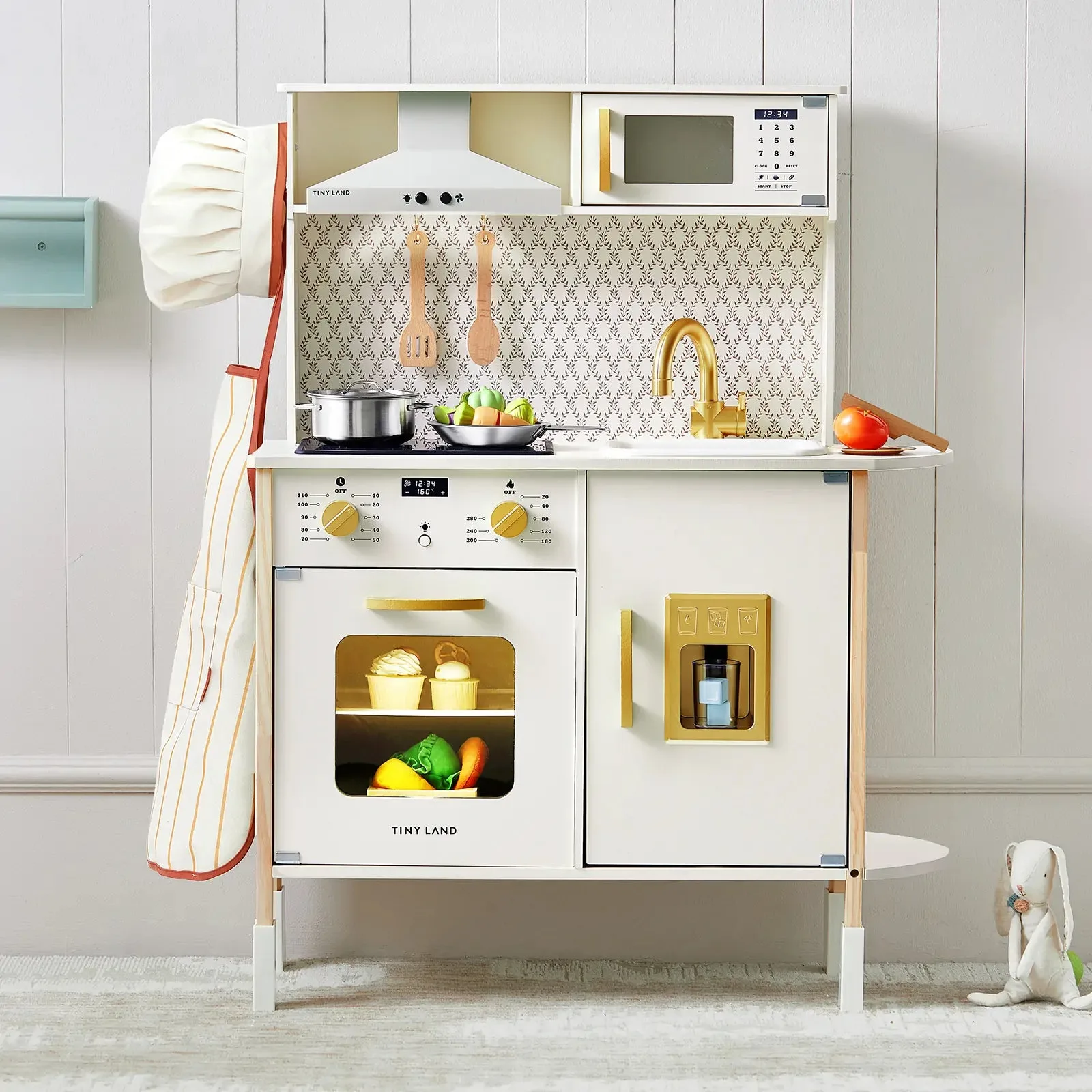
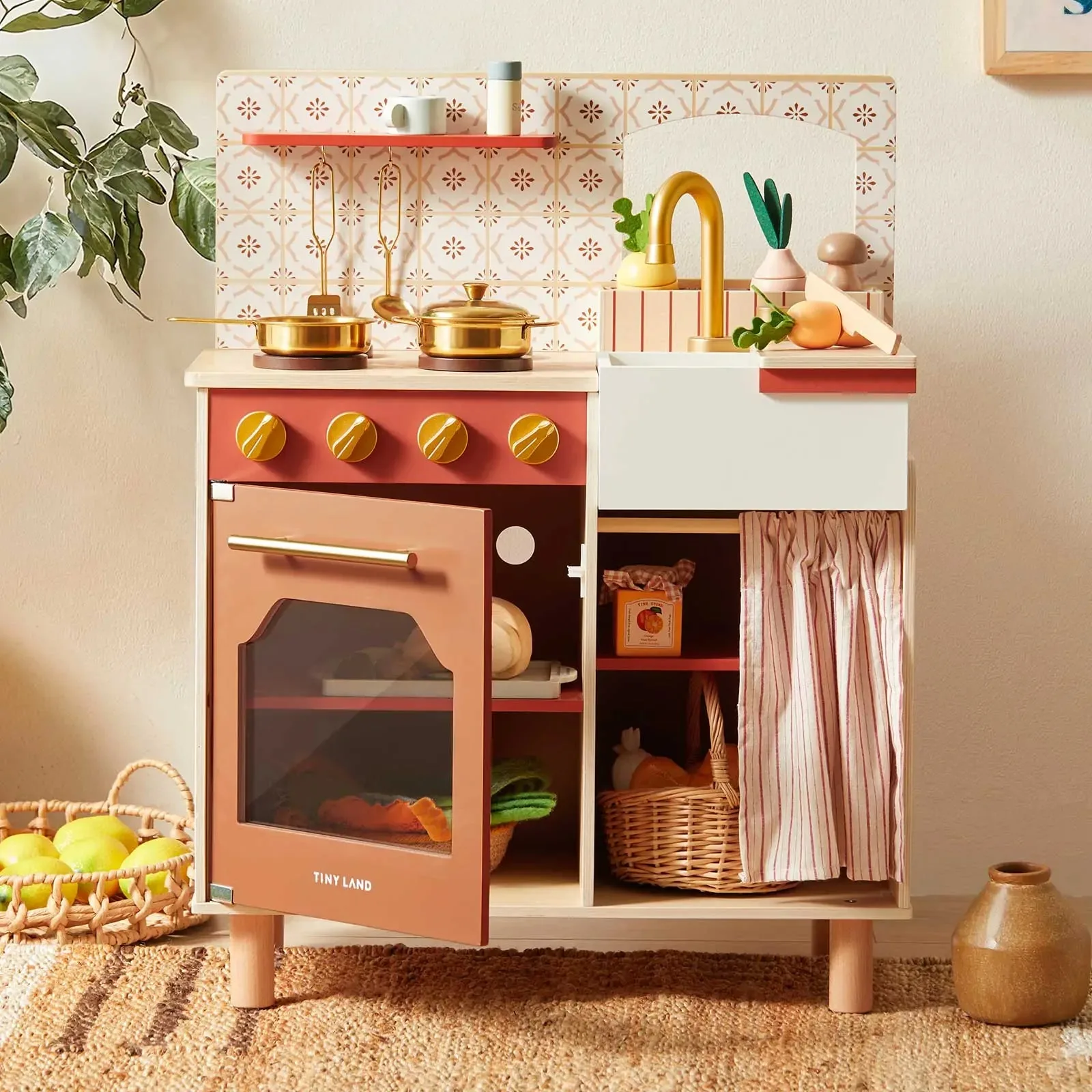
- Tiny Land® Wooden Play Kitchen for Toddlers - Honey Kitchenette Pretend Cooking Set: Tiny Land® Wooden Play Kitchen for Toddlers - Honey Kitchenette Pretend Cooking Set features knobs that click when turned and comes with a storage box with a removable lid. A low, stable toddler chair placed at this kitchen lets kids sit and turn the clicking knobs at a comfortable height instead of standing and leaning.
- Tiny Land® Play Kitchen Accessories – Children’s Coffee Maker: Wooden Kids Play Coffee Maker Set: Tiny Land® Play Kitchen Accessories – Children’s Coffee Maker: Wooden Kids Play Coffee Maker Set has a side knob that clicks when turned and is designed for barista-style role play. A chair that fits the play kitchen counter makes café play more comfortable and keeps the coffee maker within reach for sitting toddlers.
- Tiny Land® Play Kitchen Accessories – Play Kitchen Fridge: Wooden Cabinet Refrigerator for Kids: Tiny Land® Play Kitchen Accessories – Play Kitchen Fridge: Wooden Cabinet Refrigerator for Kids is a cabinet-style fridge that adds storage for play food, pots, and kitchen items. If the fridge sits next to the play kitchen, leave enough floor space for a chair to pull in and out without blocking the cabinet door.
Who this chair is for
Best for
- Toddlers who need a stable seat at a play kitchen or low table
- Playrooms that need wipe-clean, tip-resistant seating
- Families who want a wooden chair that can be passed down
Not for
- Children over 5 who need a taller desk chair
- Rooms where the chair must fold flat for storage
- Kids who need a high chair with a safety harness