Quick Answer
For a beginner, prioritize a lightweight frame with an adjustable seat that lets your child place both feet flat on the ground. Look for a bike that weighs no more than 30% of your child's weight so they can easily control it.
Why Seat Height and Weight Matter Most
A balance bike's primary job is to let a toddler learn balance and steering without the complexity of pedals. The most critical fit factor is seat height: your child should be able to sit comfortably with both feet flat on the ground and knees slightly bent. This gives them the confidence to stop and start using their feet.
Weight is the second biggest factor. A heavy bike is hard for a small child to lift, turn, or carry. A good rule of thumb is to choose a bike that weighs 30% or less of your child's body weight. Lighter bikes are easier to maneuver and less intimidating for beginners.
Tire Type: Air vs. Foam vs. Plastic
Balance bikes come with three main tire types. Air tires (pneumatic) offer the best traction and shock absorption on pavement, gravel, or grass, but they require occasional inflation. Foam tires are puncture-proof and maintenance-free, making them a good choice for smooth, hard surfaces. Plastic tires are the most affordable but provide the least grip and a bumpier ride.
For a first balance bike used primarily on sidewalks or driveways, foam tires strike a good balance between comfort and convenience. If your child will ride on varied terrain, air tires are worth the small maintenance trade-off.
Build Quality and Safety Features
Look for a sturdy steel or aluminum frame that can withstand drops and bumps. Steel is heavier but very durable; aluminum is lighter and rust-resistant. Hand brakes are not essential for beginners—most toddlers will use their feet to stop—but a limited steering stop (prevents the handlebars from turning 90 degrees) can reduce tip-overs.
Ensure there are no sharp edges, pinch points, or small parts that could come loose. A padded seat adds comfort for longer rides. Radio Flyer's My 1st Balance Bike, for example, is built with the trusted quality of Radio Flyer and designed specifically for toddlers learning to ride.
Your Balance Bike Decision Rules
- Seat Height Check: Adjust the seat so your child can sit with both feet flat on the ground and knees slightly bent. The inseam measurement should be 1-2 inches less than the bike's minimum seat height.
- Weight Limit: The bike should weigh no more than 30% of your child's weight. Weigh your child and compare it to the bike's listed weight. A lighter bike is always better for a beginner. If the bike is too heavy, your child will struggle to control it and may lose interest.
- Tire Choice: Choose foam tires for smooth, hard surfaces like sidewalks and driveways. Choose air tires if your child will ride on grass, gravel, or uneven pavement. Plastic tires are only suitable for very flat indoor use.
- Test the Steering: Turn the handlebars to check for a steering limiter (stops the front wheel from turning sideways). This prevents sudden tip-overs. Also make sure the grips are secure and comfortable for small hands. A steering limiter is a safety feature worth looking for on a first bike.
- Check for Adjustability: Look for a tool-free adjustable seat and handlebars so the bike can grow with your child. A bike that adjusts by 2-3 inches in seat height will last for at least one to two years of use.
Product Spotlight
-
My 1st Balance Bike: Sturdy balance bike design encourages natural balance development. Ideal for toddlers learning to ride. Built with the trusted quality of Radio Flyer. This bike is purpose-built for beginners, so you don't have to worry about unnecessary features or poor build quality. Its lightweight design and low seat height help toddlers gain confidence quickly.
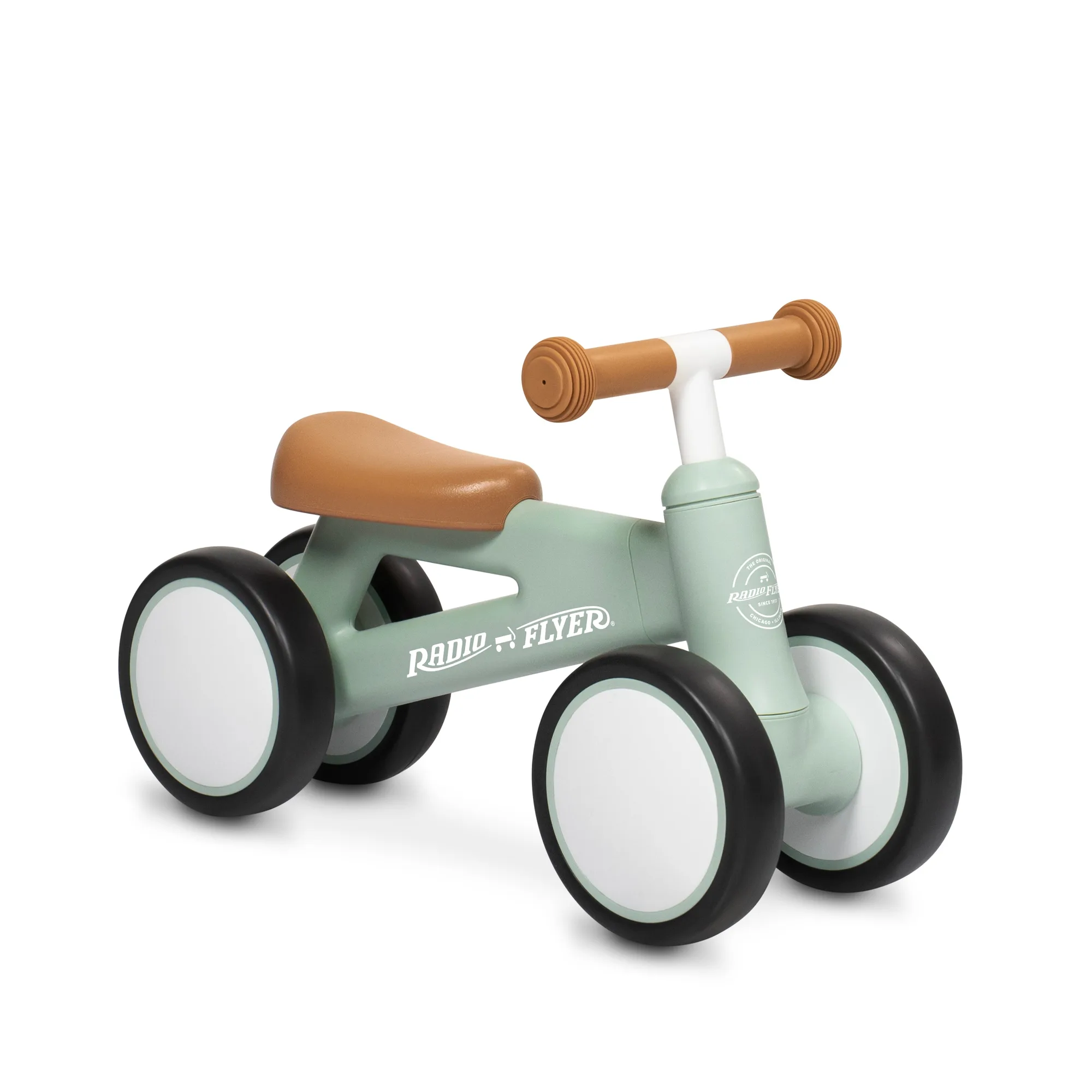
My 1st Balance Bike
Is a Balance Bike Right for Your Child?
Best For
- Toddlers aged 18 months to 4 years who are ready to learn balance and steering
- Parents who want a lightweight, no-pedal bike that builds confidence before transitioning to a pedal bike
Not For
- Children who already ride a pedal bike with training wheels and are comfortable balancing (a pedal bike without training wheels may be a better next step)
- Families who need a bike that can be used on very long rides or rough off-road trails (a balance bike is for short, neighborhood riding)