Quick answer
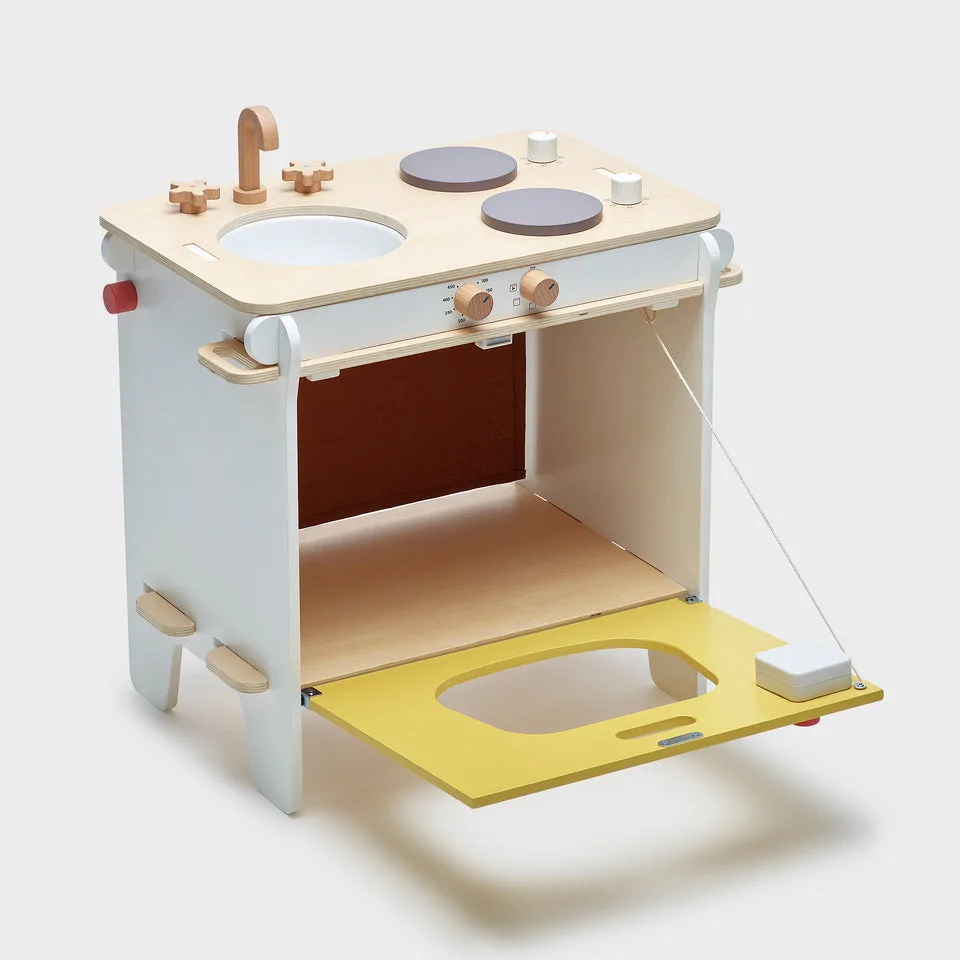
Place the play kitchen against a wall in a corner, not across a walkway, and keep the pretend food, pans and dolls within one arm's reach so your child can cook and clean up without help. Measure the footprint first: the Kids' play kitchen is 18.7 x 12.2 x 21.26 inches (47.5 x 31 x 54 cm) and arrives fully assembled, so plan a spot that size before it arrives.
Measure the corner before you move anything
A play kitchen fails in a small room when it is squeezed between a door and a shelf. Clear a floor patch at least 20 x 14 inches (51 x 36 cm) so the kitchen sits flat, then add 18 inches (46 cm) of open floor in front for a child to stand and turn. If the room is tighter than that, angle the kitchen into a corner and use the wall as the back of the play area. Check that the tallest shelf or wall art leaves 6 inches (15 cm) above the counter so nothing blocks the play surface.
Set the kitchen at the right height for the child
The play surface of the Kids' play kitchen sits at about 21 inches (54 cm) from the floor. That suits most children from 18 months through early school age, but a toddler who is still unsteady may do better with the kitchen on a low, stable rug rather than directly on hard flooring. Avoid stacking the kitchen on a stool or box to raise it. If your child is unusually tall for the counter, keep the kitchen at floor level and add a small step stool beside it instead of lifting the whole unit.
Choose a storage system that matches how children tidy
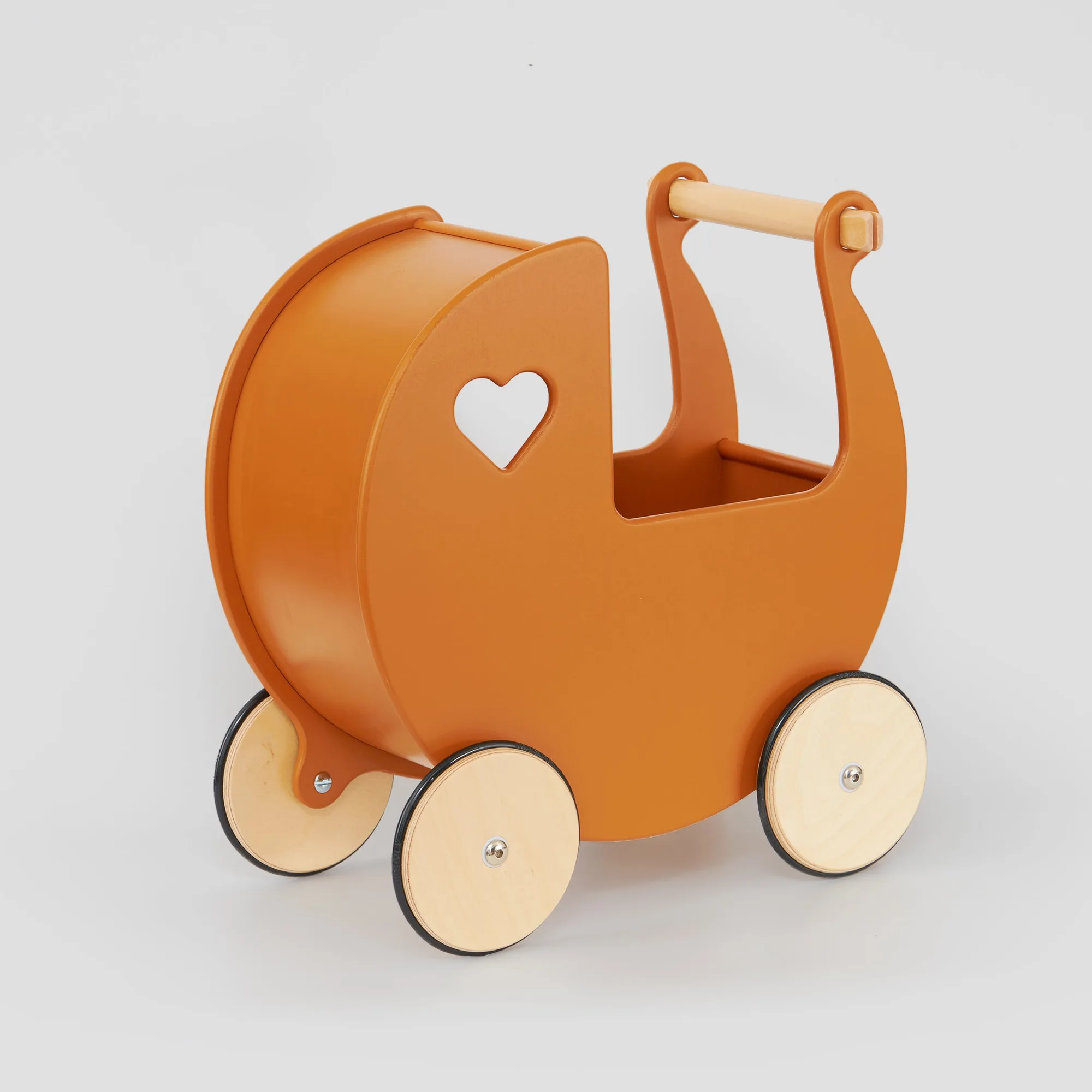
Children under five usually sort by size and colour, not by category, so bins beat labelled shelves. Use one shallow bin for play food, one for pans and utensils, and one for dolls or soft toys. The Traditional Doll Stroller Brown folds into the same corner as a push-along toy, but if floor space is tight, park it under the kitchen counter or beside the wall rather than in the middle of the room. Keep the heaviest items in the lowest bin so a child can lift it without tipping.
Rotate play kitchen accessories instead of displaying everything
A small playroom looks cluttered when every accessory is out at once. Keep two or three play kitchen accessories on the counter and store the rest in a closed box out of sight. Swap the box every week or two so the play kitchen feels new again. This also reduces the number of pieces that end up on the floor, which makes the end-of-day reset faster for you.
Make cleanup part of the play routine
A play kitchen with a defined home is easier to reset than one that migrates around the room. Set a two-minute tidy timer after play, with your child returning food to the food bin and pans to the pan bin. If a doll or soft toy like Doll Cari lives near the kitchen, give it a named spot on a shelf or in the stroller so it does not get lost among the play food. Consistency matters more than perfection here.
Your play kitchen setup steps
- Clear and measure the corner: Empty the corner and mark a 20 x 14 inch (51 x 36 cm) footprint for the kitchen, leaving 18 inches (46 cm) of floor in front for your child to stand. Checkpoint: the kitchen should not block a door, drawer or walkway.
- Place the kitchen against the wall: Slide the assembled kitchen into the corner so the back and one side touch a wall, keeping the play surface free of nearby shelves. Mistake to avoid: pushing the kitchen so far into the corner that your child cannot reach the far side of the counter.
- Add one bin per toy type: Set out a food bin, a pan bin and a soft toy bin within arm's reach of the kitchen, with the heaviest bin on the floor. Checkpoint: a child should be able to reach every bin without climbing.
- Park larger toys deliberately: Give the Traditional Doll Stroller Brown a fixed spot under the counter or beside the wall rather than letting it drift into the middle of the room. Mistake to avoid: leaving the stroller in the walkway, where it becomes a trip hazard.
- Rotate accessories weekly: Keep two or three play kitchen accessories on the counter and store the rest in a closed box, swapping the contents every week or two. Checkpoint: the counter should stay mostly clear so your child has space to play.
- Reset with a two-minute tidy: After play, return food to the food bin, pans to the pan bin and dolls to their shelf or stroller spot. Next step: if the room still feels crowded, remove one bin or one large toy for a week and see whether play improves.
Product facts that shape your setup
- Kids' play kitchen: The Kids' play kitchen is made of bass plywood, measures 18.7 x 12.2 x 21.26 inches (47.5 x 31 x 54 cm), and requires no assembly. You can plan the exact corner footprint before delivery and place it the same day, with no tools or half-built parts taking up space.
- Traditional Doll Stroller Brown: The Traditional Doll Stroller Brown is a Danish-designed wooden stroller and comes with free bedding. It is a natural companion to a play kitchen, but its footprint means it needs a dedicated parking spot under the counter or against the wall.
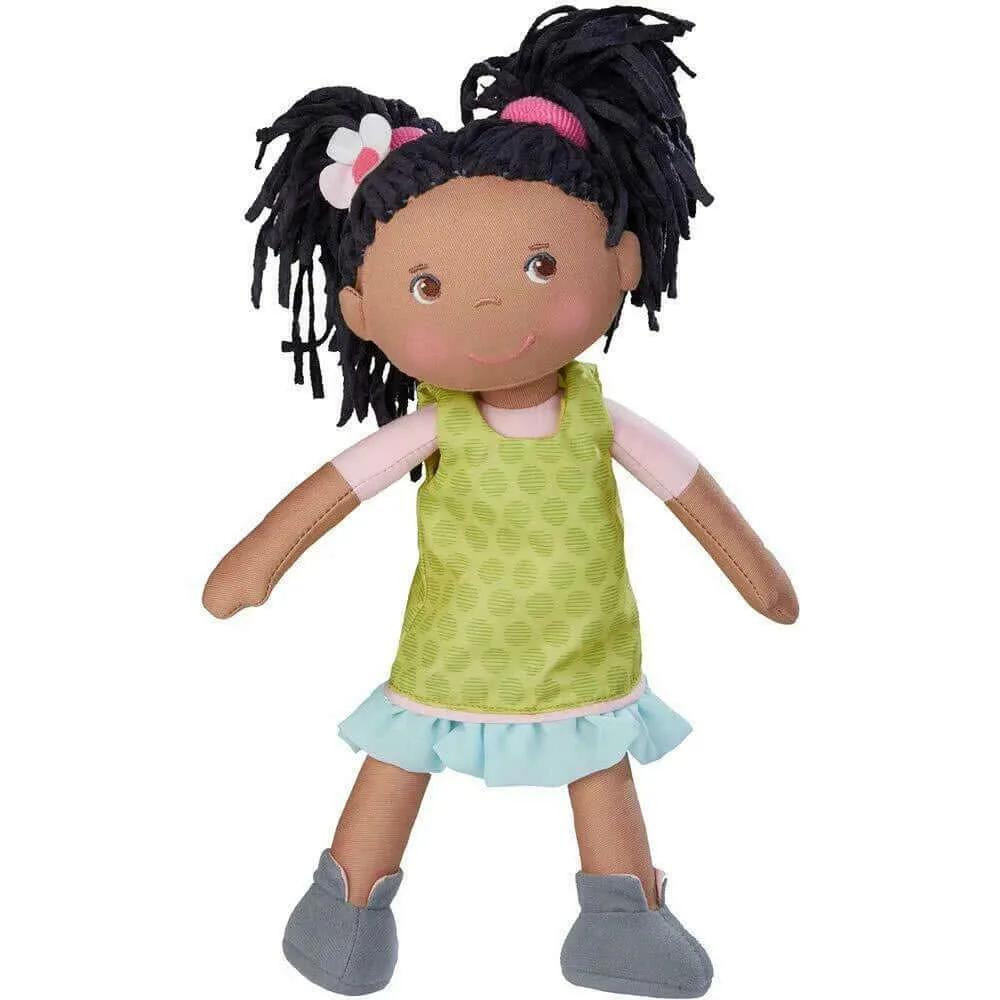
- Doll Cari: Doll Cari is a 12-inch HABA soft doll with an embroidered face, dark brown eyes and black chenille hair. A soft doll can sit on a kitchen shelf or in the stroller without adding hard-edged clutter, and its size makes it easy to store in a small bin.