Quick answer
If you bake cookies or cakes often and want to knead dough, a KitchenAid stand mixer is the better long-term buy. If you mostly blend soups and sauces and only mix small batches, the KitchenAid Hand Blender in white-76112">white-76097">white-76092">white-76083">White costs far less and stores easily. Many home cooks end up with both, but start with the one that matches your most frequent task.
What each machine actually does
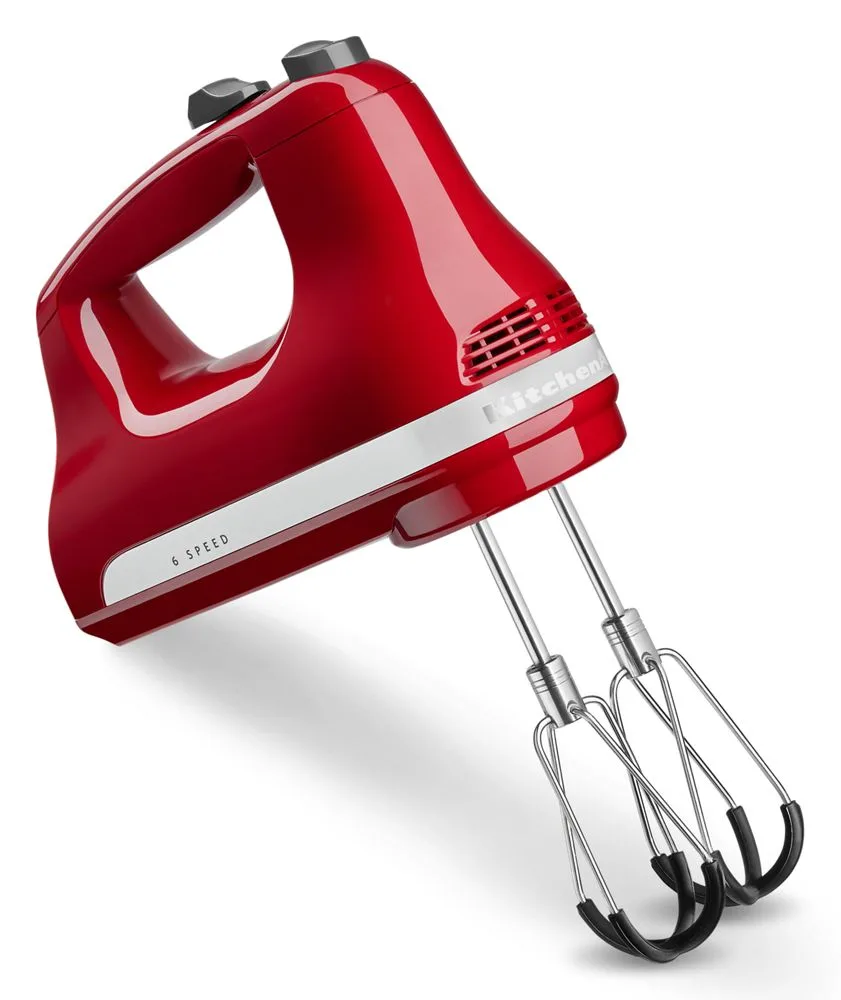
A stand mixer locks the bowl in place and does the work while you add ingredients, which is why it handles stiff cookie dough and cake batter without you holding a running motor. A hand blender is built for blending soups, sauces, and smoothies in the pot or cup, and it can mix small, soft batches, but it is not designed to knead bread or cream butter for a long time. The KitchenAid Hand Blender in White is a compact tool for everyday blending, while the Empire Red and Cherry Tomato stand mixers are countertop appliances for mixing, kneading, and whipping.
Cost and counter space trade-off
The hand blender is the lower-cost, lower-commitment option at a catalog price of USD 52.49, and it takes up a drawer rather than counter space. Stand mixers cost more, with the Empire Red at USD 310.49 and the Cherry Tomato at USD 329.99, and they need a permanent spot on the counter to be worth it. If you have limited storage or you are not sure how much you will bake, the hand blender lets you start without a large outlay. If you already know you bake weekly, the stand mixer's price is spread over years of use.
Which mixer for cookies and cakes
For cookies, the stand mixer's hands-free operation matters because stiff dough can stall a hand blender and tire your arm. For cakes, either can work if you are making a single small layer, but a stand mixer gives you steadier speed and lets you pour ingredients with one hand. The trade-off is cleanup and setup time: a hand blender is faster to rinse, while a stand mixer's bowl and beaters take a few minutes. If you bake in small batches a few times a month, a hand blender plus a bowl and whisk can cover you. If you bake for holidays or sell baked goods, the stand mixer is the practical choice.
Attachment and expansion potential
Stand mixers accept attachments through the hub, which can turn the machine into a pasta roller, grinder, or spiralizer over time. The Onyx Black Attachment Hub fits most KitchenAid stand mixer models except 6, 7, and 8 quart models with chrome knobs, so check your model before buying attachments. Hand blenders generally do not have this expansion path, which is a real limitation if you want one appliance to do more than blend. If you plan to add attachments later, choose a stand mixer that matches the hub's compatibility.
Trade-offs at a glance
- Upfront cost: Hand blender: USD 52.49. Stand mixers: USD 310.49 to USD 329.99. Choose the hand blender if you want to test how often you blend before committing to a stand mixer.
- Counter space: Hand blender stores in a drawer; stand mixers need permanent counter space to be convenient. Small kitchens often do better with a hand blender and a mixing bowl.
- Batch size and dough: Stand mixers handle stiff cookie dough and cake batter hands-free; hand blenders are best for small, soft batches. If you knead bread or make large batches, a stand mixer is the safer buy.
- Expansion: Stand mixers accept hub attachments; hand blenders do not. The Onyx Black Attachment Hub fits most models except 6, 7, and 8 quart models with chrome knobs. Buy a stand mixer only if you want the option to add attachments later.
Products in this comparison
- White: KitchenAid Hand Blender in White, catalog price USD 52.49 (comparison price USD 69.99). Lowest-cost way to blend soups, sauces, and smoothies; stores in a drawer and suits small batches.
- Empire Red: KitchenAid Empire Red Stand Mixer, catalog price USD 310.49 (comparison price USD 449.99); versatile for various recipes and mixing needs. A countertop workhorse for cookies, cakes, and kneading, with a bold finish that stays on display.
- Cherry Tomato: KitchenAid Cherry Tomato Stand Mixer, catalog price USD 329.99 (comparison price USD 499.99); designed for mixing, kneading, and whipping with ease. Same stand-mixer capability in a cheerful color; the higher price buys the finish, not extra mixing functions.
- Onyx Black Attachment Hub (Fits all models except 6, 7, and 8 Qt models with chrome knobs): Onyx Black Attachment Hub, catalog price USD 3.24 (comparison price USD 4.99); fits all stand mixer models except 6, 7, and 8 quart models with chrome knobs. Only relevant if you buy a stand mixer and later add attachments; verify your model before ordering.
Which should you buy?
Best for
- Bakers who make cookies, cakes, or bread weekly and want hands-free mixing and kneading
- Cooks who want one countertop appliance that can expand with attachments
- Anyone who values a bold finish like Empire Red or Cherry Tomato on display
Not for
- Small kitchens with no counter space to spare
- Shoppers who mainly blend soups and sauces and rarely bake
- Anyone not ready to spend over USD 300 on a mixer