Quick Answer
The best positive training book helps you read your dog's body language and apply that understanding to everyday training. Pat Miller's Positive Perspectives 2 is a standout choice for its clear, real-life examples and focus on communication first.
Why Body Language Matters in Training
Many training books jump straight to commands, but effective positive reinforcement starts with understanding what your dog is already telling you. A book that teaches you to interpret subtle signals—like a lip lick, a stiff tail, or a soft blink—gives you a foundation for every interaction. Without this skill, you may miss signs of stress or confusion, making training slower and less enjoyable for both of you.
The trade-off is that books focusing on body language often spend less time on specific trick training or problem-solving protocols. If you need a quick fix for a specific behavior, you might need a separate resource. But for building a long-term, trusting relationship, this approach is invaluable.
Real-Life Examples vs. Theory
A positive training book that relies on abstract concepts can be hard to apply in real life. Look for one that uses real-life scenarios—like a dog who pulls on leash, greets guests too enthusiastically, or is nervous at the vet. These examples make it easier to adapt the advice to your own dog's personality and your daily routine.
The downside is that no single book can cover every possible situation. You may need to combine principles from the book with your own observation and, occasionally, guidance from a professional trainer for unusual challenges.
How to Choose Your Positive Training Book
- Check the author's approach: Look for a certified, force-free trainer with a clear philosophy. Pat Miller is a world-renowned positive trainer, so her book is built on proven, humane methods. Avoid books from authors who promote outdated dominance or punishment-based techniques.
- Look for body language coverage: The best books teach you to recognize stress signals and calming signals. This knowledge prevents you from pushing your dog too hard and helps you build trust. If a book doesn't mention body language, it may skip a critical foundation step.
- Prefer real-life examples: Books with case studies or step-by-step scenarios are easier to apply. Positive Perspectives 2 uses real-life examples to explain how to adjust training for different dogs and situations. Abstract theory alone can leave you guessing how to handle your own dog's unique quirks.
- Consider the format: Do you learn best from reading, or do you need photos and diagrams? Some books are text-heavy; others include illustrations. Choose what keeps you engaged. A book you actually read and use is worth more than a perfect one you never open.
Featured Book
-
Positive Perspectives 2: Know Your Dog, Train Your Dog: A must have for any dog-owner, Positive Perspectives 2 – Know Your Dog, Train Your Dog will teach you how to interpret your dogs body language, and show you how to apply it for effective training. This means you learn to read your dog's signals before you start training, which helps you choose the right moment and method for each exercise, reducing frustration.
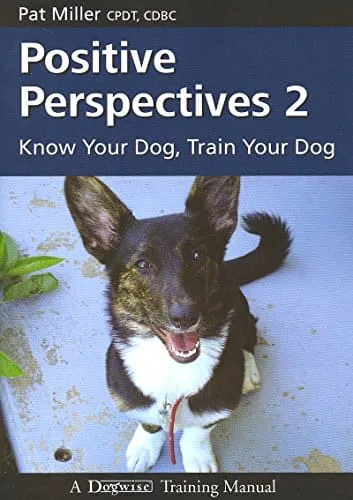
Positive Perspectives 2: Know Your Dog, Train Your Dog
Is This Book Right for You?
Best for
- New dog owners who want to start with a solid understanding of their dog's communication
- Owners who prefer a gentle, relationship-first approach over quick fixes
- Anyone frustrated by training books that skip the 'why' behind the behavior
Not ideal for
- Owners who need a quick, step-by-step protocol for a single serious behavior problem (e.g., aggression) without learning the underlying theory
- Experienced trainers looking for advanced technical content beyond basic positive reinforcement