Quick answer
Choose an L-shape cat scratcher that combines sturdy construction, safe materials, and a size that matches your cat's stretching habits. Prioritize corrugated cardboard with high-density fibers and non-toxic glue for durability and safety.
Why shape matters for scratching behavior
Cats scratch to mark territory, stretch muscles, and maintain claw health. An L-shape design offers both a horizontal and a vertical surface, which appeals to cats that like to stretch upward as well as those that prefer a flat scratch. This dual-angle approach can reduce furniture damage more effectively than a single-plane pad.
Material quality and safety trade-offs
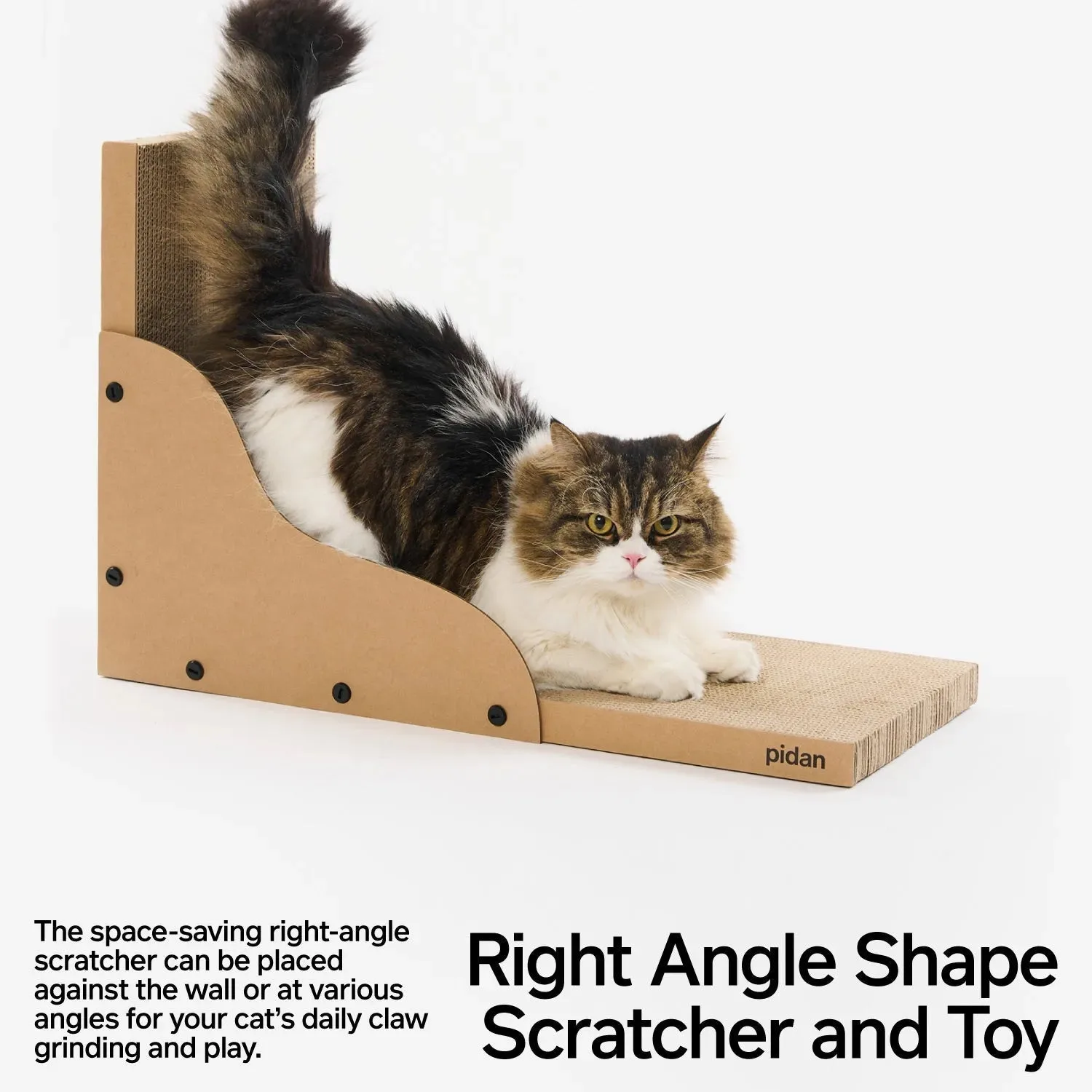
Not all corrugated cardboard is equal. Lower-density cardboard may shed debris quickly and wear out in weeks. High-density virgin wood pulp cardboard, like the A-grade material used in the pidan L-Shape Cat Scratcher, resists scratching and deformation longer. The glue matters too—water-soluble, non-toxic adhesives are safer if your cat chews the edges. Avoid products with strong chemical smells or unknown bonding agents.
Stability and size considerations
An L-shape scratcher must stay put during vigorous use. Lightweight models may slide or tip, frustrating your cat and reducing effectiveness. Look for a base wide enough to support the vertical panel. Size should match your cat's full stretch length—most adult cats need at least 60 cm (24 in) of vertical scratching surface. The pidan L-Shape Cat Scratcher measures 60x40x26 cm, offering a solid footprint for medium to large cats.
Your L-shape cat scratcher decision rules
- Check the cardboard density: Look for 'A-grade corrugated' or 'high-density virgin wood pulp' in the description. Denser cardboard lasts 2-3 times longer than thin, flimsy alternatives.
- Verify glue safety: Prefer products that explicitly state 'non-toxic' or 'water-soluble glue.' Avoid any scratcher with a strong chemical odor—it indicates unsafe adhesives.
- Match size to your cat's stretch: Measure your cat from nose to tail while stretching. The vertical panel should be at least as long. A 60 cm panel works for most domestic cats. If your cat is extra large or a Maine Coon, look for a taller option.
- Test stability before buying: If shopping in-store, gently push the scratcher to see if it wobbles. Online, check reviews for mentions of tipping or sliding on hard floors.
- Consider replacement inserts: Some L-shape scratchers sell replacement cardboard inserts. This extends the product's life and reduces waste over time.
Product spotlight
-
pidan L-Shape Cat Scratcher: Made from high-proportion virgin wood pulp, A-grade corrugated base paper and A-grade kraft paper that passed multiple tests, ensuring peace of mind. This means the scratcher resists shedding and deformation longer than standard cardboard pads, giving you more value per purchase.
pidan L-Shape Cat Scratcher
Who should buy an L-shape cat scratcher?
Best for
- Cats that scratch both horizontally (on floors) and vertically (on walls or furniture)
- Households with limited floor space—L-shape fits in corners efficiently
Not ideal for
- Cats that exclusively scratch tall vertical posts (a tall sisal post may be better)
- Homes with multiple large cats that may need a larger, multi-level scratching tree