Quick answer
For a classroom unit on western Canada exploration, La Vérendrye offers an accessible, child-friendly entry point, but you'll need to supplement with other explorer sources to cover broader Canadian history.
Why La Vérendrye stands out for younger readers
La Vérendrye's story is often taught through children's literature, making it easier for elementary students to grasp. The book focuses on his journeys through the Canadian West, presenting historical content in a narrative style that keeps young readers engaged.
Compared to primary-source documents or adult biographies of other explorers, this approach reduces cognitive load and helps students build a mental map of exploration without getting lost in complex terminology.
Trade-off: regional focus vs. national scope
While La Vérendrye is central to western Canada exploration, other explorers like Jacques Cartier or Samuel de Champlain are more relevant for eastern or central Canadian history. If your unit covers all of Canada, you'll need to balance La Vérendrye with resources on those figures.
The book's regional focus is a strength for a dedicated western unit but a limitation for a survey course. Consider your curriculum's geographic emphasis before committing.
Trade-off: source accessibility vs. depth
Children's literature like this book provides a clear, engaging narrative, but it may not offer the depth of primary sources or scholarly analysis. For older students or those ready for critical thinking, you might supplement with excerpts from La Vérendrye's journals or maps.
The trade-off is between approachability and rigor. For younger grades, the book is ideal; for high school, you may need additional materials to challenge students.
How to choose your explorer focus
- La Vérendrye for western Canada: Use this book as your main text when your unit centers on the Prairies or the fur trade route. It's written for children, so it works well for grades 3-6 read-alouds or independent reading. Check your curriculum map: if western Canada is a core theme, this book can anchor your unit.
- Other explorers for eastern or national coverage: If you need to cover Cartier, Champlain, or the Arctic explorers, plan to bring in separate resources. This book won't cover those regions, so you'll need to supplement. Build a resource list that pairs this book with at least one other explorer source to avoid gaps.
- Combining sources for a balanced unit: Use this book as the narrative spine, then add primary-source excerpts or map activities to deepen analysis. This balances accessibility with historical thinking skills. For older students, add a journal excerpt or map activity to push beyond the story.
Product spotlight
-
La Vérendrye, explorateur de l'Ouest canadien: This children's book offers a thoughtful introduction to La Vérendrye's journeys through the Canadian West, written in a clear and engaging style suitable for young readers. It gives you a ready-made, age-appropriate resource to introduce western exploration without simplifying the story into a list of dates.
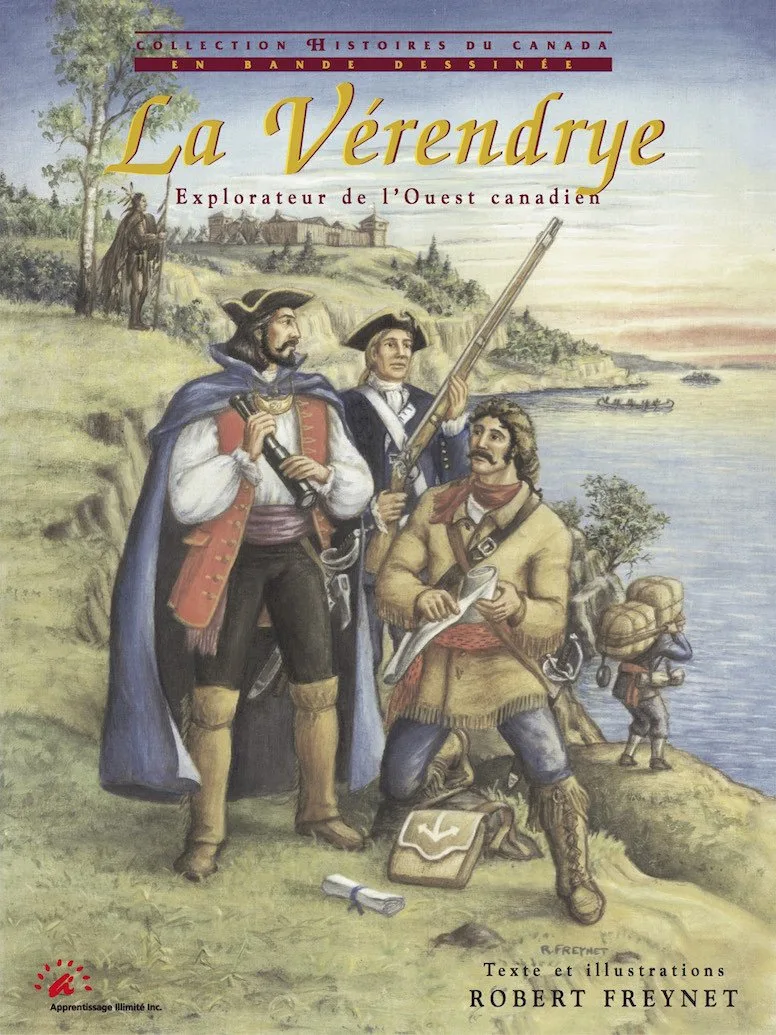
La Vérendrye, explorateur de l'Ouest canadien
Who should choose this approach
Best for
- Elementary teachers introducing western Canada exploration with a focus on storytelling
- French immersion classrooms looking for an accessible French-language resource
Not for
- High school courses requiring primary-source analysis or in-depth historiographical debate
- Units that need equal coverage of eastern or Arctic explorers