Quick answer
Most lingerie fit problems come down to band size, not cup size. If a lace bra feels too tight, try a larger band with a smaller cup; if the band rides up, go down a band size. Adjust straps last, after the band sits level and snug.
A lace bra that digs in or a band that climbs your back all day can make even the prettiest piece unwearable. The good news: most of these issues are fixable without replacing your whole drawer.
This guide walks through the most common lingerie fit problems, what actually causes them, and the specific fix to try first. If a fix doesn't work after one or two adjustments, we'll tell you when to stop and switch sizes or styles instead.
Why lace bras feel tighter than smooth-cup bras
Lace has less stretch than smooth microfiber or molded cups, so a lace bra that matches your usual size can feel restrictive even when the measurements are correct. The rigid structure is part of what makes lace look beautiful and hold its shape, but it leaves less room for error.
If your lace bra feels tight but a smooth-cup bra in the same size feels fine, the issue is usually the band, not the cups. Try the bra on with the band fastened on the loosest hook first. If it still digs in, size up in the band and down in the cup to keep the same volume.
- Fasten on the loosest hook when new — the tighter hooks are for later, as the band relaxes.
- If the band leaves red marks that last more than an hour after removing the bra, it's too tight.
- Lace with French seams or rigid trim has less give than stretch lace; size accordingly.
Bra band riding up: the most misdiagnosed fit problem
A band that rides up in the back almost always means the band is too large — not too small. When the band is loose, the weight of the cups pulls it upward, especially if the straps are tightened to compensate. Tightening the straps makes it worse, not better.
The fix: go down one band size and up one cup size (for example, from 34B to 32C). The band should sit level all the way around your ribcage and stay put when you raise your arms. If it still rides up after sizing down, the style may not suit your torso length — a longline or wider-band bra often solves it.
- Test the band: it should stay level when you lift your arms overhead.
- You should be able to fit two fingers under the band, no more.
- If sizing down feels too tight in the cups, the cup size needs to go up, not the band.
Cups that gap, wrinkle, or cut in
Gapping at the top of a lace cup usually means the cup is too large or the shape doesn't match your breast shape — not that you need a smaller band. Lace cups are less forgiving of shape mismatches than molded cups because they don't conform the same way.
If the cup cuts into the top of your breast, it's too small. If it wrinkles or gapes, it's too large or the wrong shape. Try a half-cup or balconette style if you have shallow upper fullness, or a full-cup style if you need more coverage. If two cup sizes both gap or cut in, the bra's shape is the problem, not the size.
- Check the center gore: it should lie flat against your sternum, not float.
- If the underwire sits on breast tissue instead of behind it, the cup is too small.
- Lace cups with vertical seams suit fuller shapes; seamless lace suits rounder shapes.
Straps that slip, dig, or leave marks
Straps are the last thing to adjust, not the first. If you tighten straps to fix a riding band, you'll get shoulder grooves and still have a band that climbs. Set the band first, then adjust straps just until they stay put without pressing into your shoulders.
Slipping straps are often a sign the band is too loose, not that the straps are too long. If the band is correct and straps still slip, look for a style with convertible or criss-cross straps, which stay in place better on narrow or sloped shoulders.
- Straps should lie flat, not twist or roll.
- If straps leave deep marks, loosen them — the band should be doing the support work.
- Convertible straps help if you have sloping shoulders.
When to stop adjusting and choose a different style
If you've tried two band sizes and two cup sizes and the bra still digs, rides, or gaps, the style is wrong for your body — not the size. Lace bras vary widely in band height, cup depth, and wire shape, and no amount of adjusting will fix a structural mismatch.
At that point, switch to a different silhouette: a longline for a riding band, a balconette for gapping cups, or a wireless lace bralette if wires are the problem. A bra that fits correctly should feel secure without being noticeable.
- Two size attempts is the limit — after that, change the style.
- Bring your measurements to a fitter if you're between sizes.
- Comfort is the final test: if you're aware of the bra all day, it doesn't fit.
Fit diagnosis: symptom, cause, fix, stop point
- Lace bra too tight: Lace has less stretch than smooth fabric, so a correct-size lace bra can still feel restrictive. Try one band size up and one cup size down to keep volume the same. If two band sizes still dig in, the cup shape or wire is the issue — switch styles, not sizes.
- Bra band riding up: Almost always a band that's too large, not too small. Size down one band and up one cup, and stop tightening the straps to compensate. If the band still climbs after sizing down, try a longline or wider-band style.
- Cups gaping or cutting in: Gaping means the cup is too large or the wrong shape; cutting in means it's too small. Test the center gore — it should lie flat against your sternum. If two cup sizes both fail, the bra's silhouette doesn't match your shape. Try a balconette or half-cup.
- Straps slipping or digging: Adjust straps only after the band is level and snug. Slipping straps usually signal a loose band, not long straps. If straps still slip with a correct band, choose convertible or criss-cross straps.
Lace pieces that work with these fixes
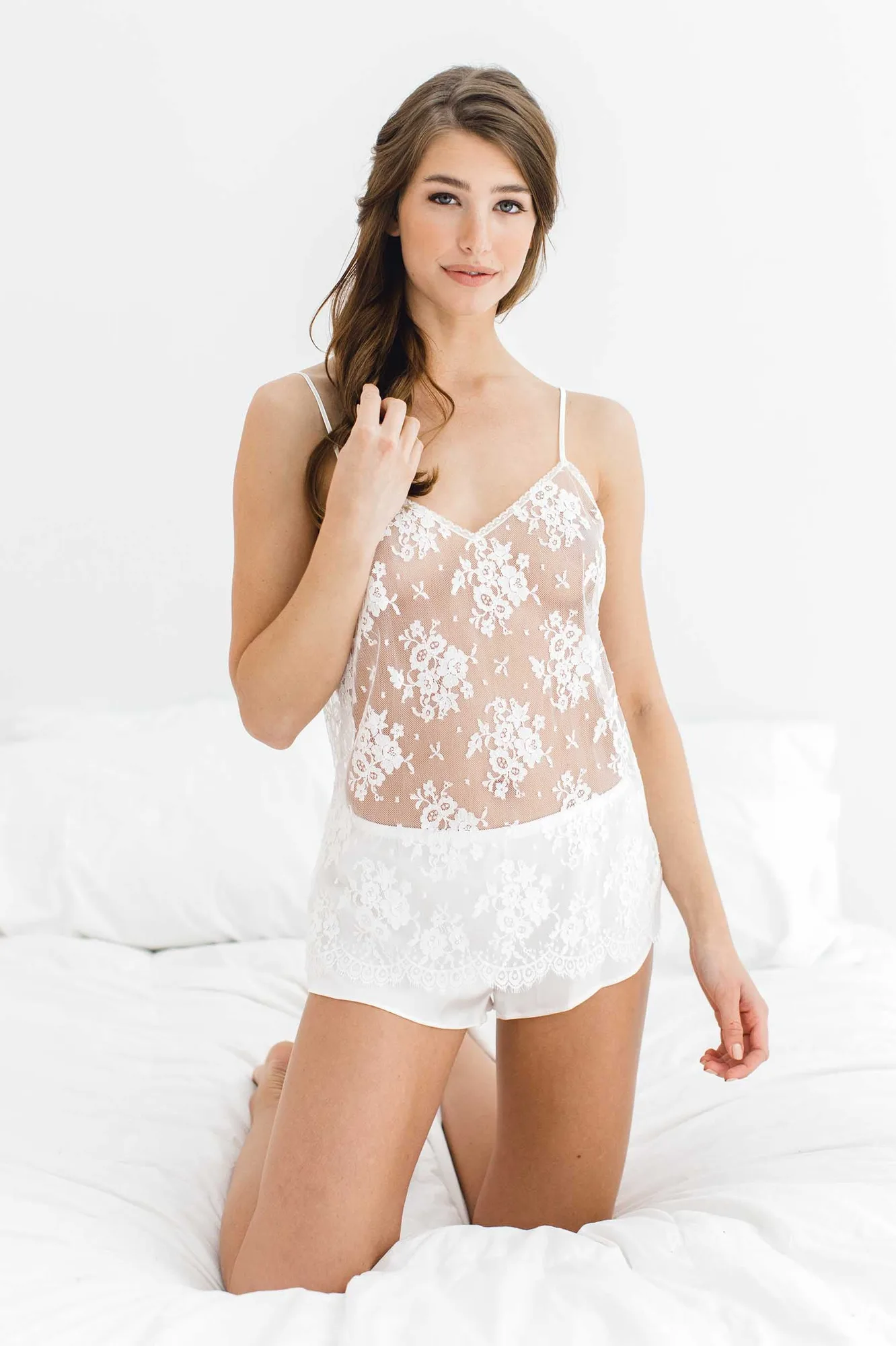
- Olympia French Lace Camisole Tank Top Cami in Ivory or Black: Cut from fine French lace with a lace-trimmed V-neckline and thin adjustable silk straps, available in Size and Color. Adjustable silk straps let you fine-tune tension without digging, and the cami shape skips band-fit issues entirely if wires are your problem.
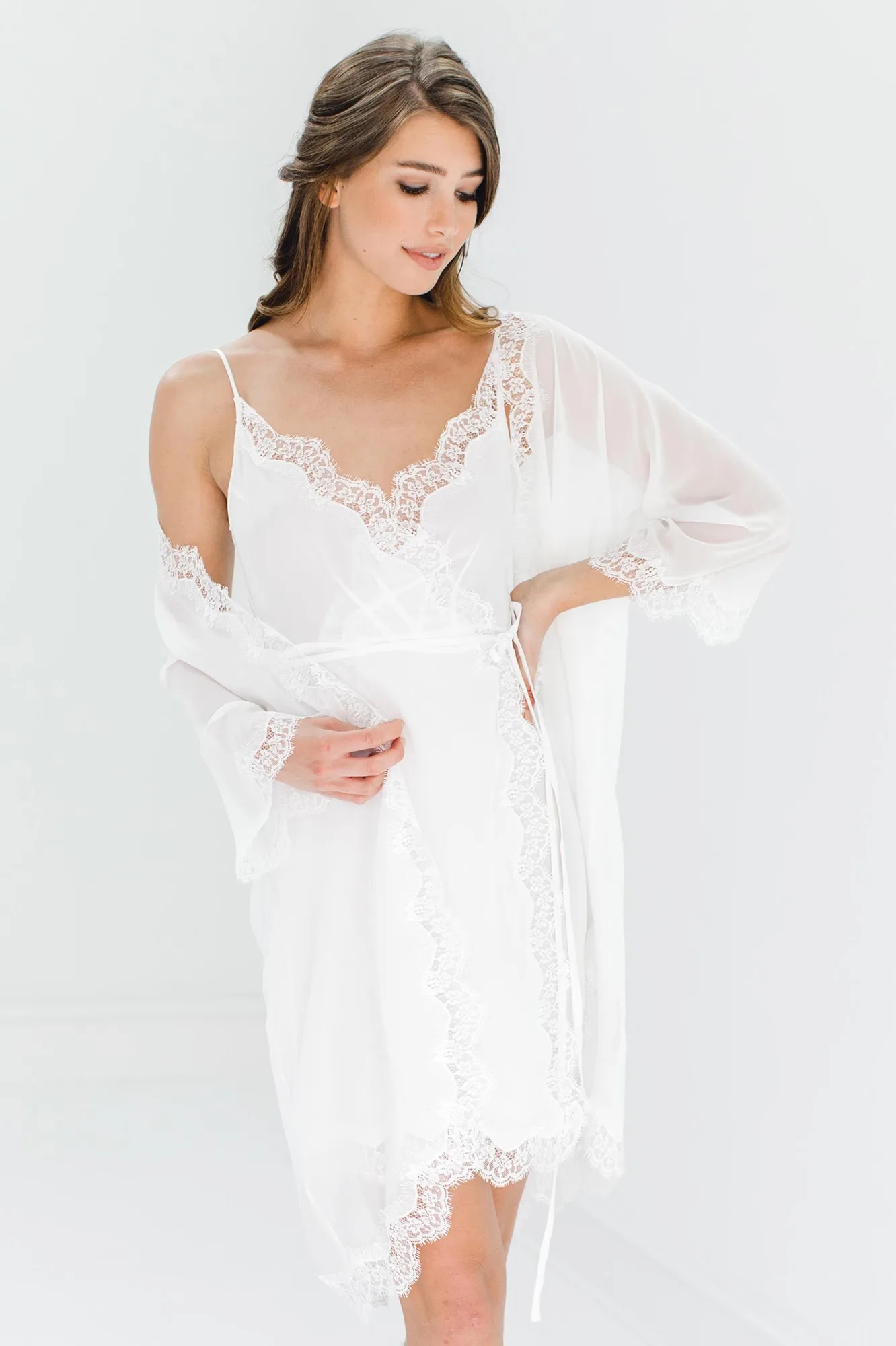
- Boudoir Bridal Lace Robe in Ivory: Handmade in soft Chantilly lace with floral scalloped edges along the hem and flared sleeves, finished with a satin belt, available in Color and Size. A soft Chantilly lace layer over a fitted bra adds coverage without adding pressure, useful when you're between sizes or breaking in a new bra.
- Lille Silk Chiffon and lace kimono robe in Ivory: Made from silk chiffon with French lace trim along the neckline, hem, and sleeves, with delicate French seams and a silk tie, available in Color. Lightweight silk chiffon won't compress a bra band the way heavier fabrics can, so it's a comfortable option if you're still dialing in fit.
Start with the band, then the cup, and adjust straps last. If two size attempts don't fix it, the style is wrong — switch silhouettes instead of forcing a fit that will never feel right.