Quick answer
For most quilters, a straight grid layout is the safest first layer cake quilt because it needs no extra cutting and finishes at a predictable size. Choose a medallion layout when you want a focal center and are willing to do more trimming, or a strip-pieced layout when you want a woven look and don't mind cutting your 10-inch squares into strips first.
A layer cake gives you 10-inch squares that are already cut and color-coordinated, so the layout you choose decides how much cutting, trimming, and fabric waste you take on. The three options below use the same stack of squares but produce very different quilts.
This comparison looks at grid, medallion, and strip-pieced layouts using supplied fabric and tool facts. Treat the size numbers as planning estimates, not fixed patterns, and always test one block before you cut the whole stack.
Grid layout: the predictable starting point
A grid layout sews your 10-inch squares together in straight rows and columns. A 6 x 7 grid uses 42 squares and finishes near 57 by 67 inches before borders, while a 5 x 5 grid uses 25 squares and finishes near 47 by 47 inches. Because every square is the same size, seams line up easily and you can add sashing later if you want more separation between prints.
The trade-off is visual repetition. A plain grid can look flat if your squares are similar in value, so mix light, medium, and dark prints deliberately. This layout also uses the fewest tools: a rotary cutter, a mat, and a square ruler for checking edges are enough.
- Count your squares before you sew: a 6 x 7 grid needs 42, so one standard layer cake plus a few extras covers it.
- Press seams to one side and alternate direction row by row to keep intersections flat.
Medallion layout: a focal center with more trimming
A medallion layout places one square or a small pieced center in the middle and builds rings of squares around it. This is where a 10-inch square quilt pattern earns its keep, because the center block sets the scale for every ring. You will usually trim some squares to fit the ring math, which adds cutting time.
The trade-off is effort versus impact. Medallion layouts look intentional and less repetitive than a grid, but they demand more planning and produce more offcuts. Keep those offcuts for a pieced backing or a small matching pillow so the fabric still earns its place.
- Sketch the rings on graph paper first; changing ring width after cutting wastes fabric.
- Use a square ruler to true up each ring unit before joining, since small errors compound outward.
Strip-pieced layout: a woven look from cut squares
A strip-pieced layout cuts your 10-inch squares into strips, sews them into long bands, and then joins the bands. The result reads as a woven or bargello-style design rather than a block grid. This option uses the same fabric as a grid but changes the cutting plan completely, so decide before you trim anything.
The trade-off is cutting time and seam management. You gain movement and a more modern look, but you lose the simplicity of sewing whole squares. Long bands can stretch, so pin carefully and consider starching your fabric before cutting.
- Label your strip sets by row number as you sew to avoid mixing up the sequence.
- Sew a test band first to check your seam allowance before cutting the whole layer cake.
Layout size chart: what to expect before borders
Use this quick layer cake quilt size chart as a starting estimate. A 4 x 4 grid of 10-inch squares uses 16 squares and finishes near 37 by 37 inches. A 5 x 5 grid uses 25 squares and finishes near 47 by 47 inches. A 6 x 7 grid uses 42 squares and finishes near 57 by 67 inches. These numbers assume a standard quarter-inch seam and no sashing.
Sashing, borders, and binding change the final size, so add those after you settle the layout. If you are short on squares, a medallion or strip layout can stretch a smaller stack further than a strict grid because it uses partial units.
- Measure your finished seam allowance on a test block; a scant quarter-inch can shift the total by an inch or more.
- Write your final dimensions on a note before quilting so you can size the backing correctly.
Layer cake vs charm pack projects: which precut fits your plan
Layer cakes and charm packs solve different problems. A layer cake gives you 10-inch squares, which suit large-scale prints and fast grid quilts. A charm pack gives you smaller squares, which suit scrappier patterns and more intricate layouts. If your chosen layout depends on big focal squares, a layer cake is the better starting point.
The trade-off is flexibility versus speed. Charm packs let you play with many prints in a small area, but they need more piecing for the same finished size. Layer cakes move faster but show fewer prints per square inch, so choose based on whether you want speed or variety.
- Match your layout to your precut: don't buy a layer cake for a pattern built on charm squares unless you plan to cut it down.
- Keep one charm pack on hand for accent blocks inside a layer cake grid.
Layout trade-offs at a glance
- Grid layout: No extra cutting and predictable sizes, but it can look flat without deliberate value contrast. Best first layer cake quilt for beginners or anyone short on time.
- Medallion layout: Strong focal point and less repetition, but ring math requires trimming and creates offcuts. Choose this when you want a statement center and can plan the rings before cutting.
- Strip-pieced layout: Modern woven look with movement, but you cut every square into strips and manage long, stretchy bands. Pick this when the design matters more than speed and you are comfortable with strip piecing.
- Layer cake vs charm pack: Layer cakes finish faster with larger focal squares; charm packs offer more prints per inch but need more piecing. Match the precut to the layout, not the other way around.
Fabric and tools that support these layouts
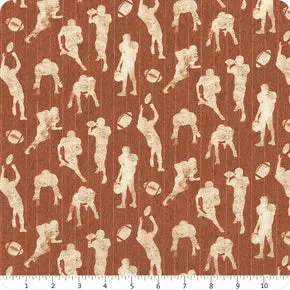
- Benartex Touchdown - Kick Off Rust 1/2 yd: Warm and bold, the Kick Off Rust print from the Touchdown collection by Benartex Fabrics brings a rich, earthy rust tone to your sports-themed sewing projects. This 100% quilting cotton pairs beautifully with the greens and neutrals in the Touchdown collection for a cohesive, game-day look. A strong rust tone works well as the focal center in a medallion layout or as a value anchor in a grid, where it keeps similar prints from blending together.
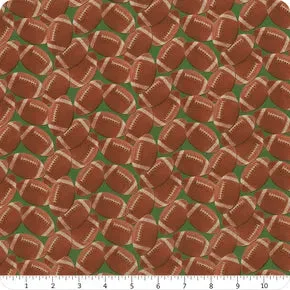
- Benartex Touchdown - Footballs Leather/Green 1/2 yd: Game day ready, the Footballs Leather/Green print from the Touchdown collection by Benartex Fabrics showcases leather-textured football graphics on a vibrant green background. This 100% quilting cotton is perfect for sports quilts, bags, and fan-favorite sewing projects. A busy novelty print like this reads best in a grid layout with solid or low-volume squares around it, rather than in a strip-pieced design where the graphics get cut apart.
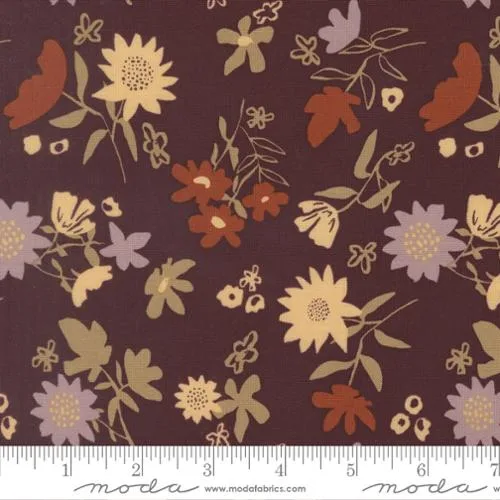
- Moda Windfall - Merlot 1/2 yd: Rich and sophisticated, the Merlot colorway from the Windfall collection by Stephanie Sliwinski for Moda Fabrics brings deep, wine-inspired hues to your sewing projects. This luscious 100% quilting cotton is perfect for quilts, table runners, and any project that calls for depth and elegance. Deep, saturated fabrics like Merlot add contrast in a medallion ring or as sashing between grid squares, which helps a simple layout look more considered.
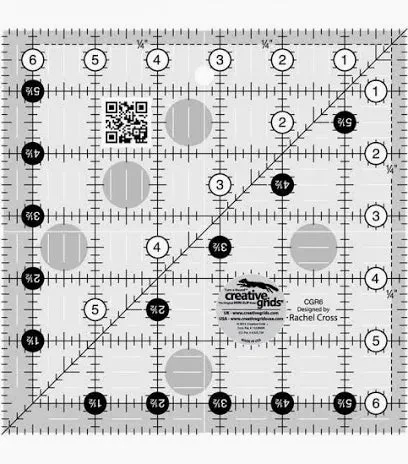
- Creative Grids Quilt Ruler 6-1/2in x 6-1/2in Square – CGR6: A quilting staple, the Creative Grids Quilt Ruler 6-1/2in x 6-1/2in Square (CGR6) is one of the most-reached-for rulers in any sewing room. Perfect for squaring up blocks, cutting squares, and trimming half-square triangles. 6-1/2" x 6-1/2" square — a versatile everyday quilting ruler. Non-slip surface keeps fabric firmly in place while cutting. Clearly marked grid and diagonal lines for accurate cuts. If your layout involves trimming half-square triangles or squaring up units after piecing, this ruler size handles those jobs without wrestling a larger ruler.
Which layout fits your project?
Best for
- A first layer cake quilt where you want a predictable finished size and minimal cutting
- Showcasing large-scale or novelty prints that should stay whole
- Quilters who want a quick top from one layer cake plus a few extra squares
Not for
- Quilters who want a complex, scrappy look and are happy to do more piecing
- Projects where every print must appear many times in a small area
- Anyone who has not yet tested seam allowance on a sample block
Pick the layout that matches your time and cutting comfort: grid for speed, medallion for a focal center, strip-pieced for movement. Whichever you choose, test one block and confirm your seam allowance before you cut the whole layer cake.