Quick answer
Dress for the pace you and your dog will actually run, not the temperature on the thermometer. Start with a thin moisture-wicking base layer, add a light insulated mid layer, and finish with a wind-resistant shell you can open or remove. For the lower body, canicross-specific tights and thin socks work better than general winter running gear because they are built for belt pressure and ankle support.
Why canicross layering is different from normal winter running
In canicross, your hands stay busy with the belt and line, and your dog sets part of the pace. That changes what you can adjust mid-run. Zips you cannot reach, layers you cannot remove without stopping, and thick socks that bunch inside tight shoes all become problems. Build a system you can manage with gloves on, and treat your dog's comfort as part of the same system rather than a separate decision.
Match layers to the run, not the forecast
A short, hard interval session generates far more heat than an easy 90-minute trail run. Before you choose layers, decide the session type, the likely trail surface, and how exposed the route is. If you will stop to untangle lines or wait at crossings, add a layer you can put back on quickly. If the run is continuous and intense, start slightly cold so you do not overheat in the first 10 minutes.
Keep the dog's layer independent from yours
Your dog may run warmer or colder than you depending on coat type, age, and how hard they are pulling. Do not assume that because you need three layers, your dog needs a jacket, or the reverse. Check the dog's ears, armpits, and behavior at the start and after the first few kilometers. If your dog is shivering, slowing, or lifting paws, adjust their layer separately from your own.
Your cold-weather canicross layering steps
- Step 1: Choose a thin base layer: Pick a moisture-wicking base layer that sits close to the skin without feeling tight across the shoulders. Avoid cotton, which holds sweat and turns cold when you slow down. Checkpoint: you should be able to reach forward and squat without the fabric pulling at your neck or waist.
- Step 2: Add light insulation only where you need it: A thin fleece or light synthetic mid layer adds warmth without bulk. If your core runs warm, use a vest instead of a full mid layer so your arms can vent. Checkpoint: if you are already warm standing still, remove the mid layer before you start.
- Step 3: Add a wind-resistant shell you can open: Choose a shell with a front zip and, ideally, pit zips or a back vent. Wind protection matters most on exposed fields and ridgelines, but you need to dump heat on climbs. Checkpoint: practice opening the main zip with your gloves on before you run.
- Step 4: Use canicross-specific tights for the lower body: General winter tights can work, but a belt changes the pressure points. Canicross tights are shaped for running with a belt, which reduces rubbing and readjustment mid-run. Checkpoint: after fitting the belt, check that the waistband is not rolled down or pinched.
- Step 5: Choose thin socks with ankle support: Thin socks keep your shoe fit consistent when you add thicker layers elsewhere. Extra ankle support helps on icy or rooty trails where your foot may roll. Checkpoint: there should be no bunching at the heel or toes when you push off.
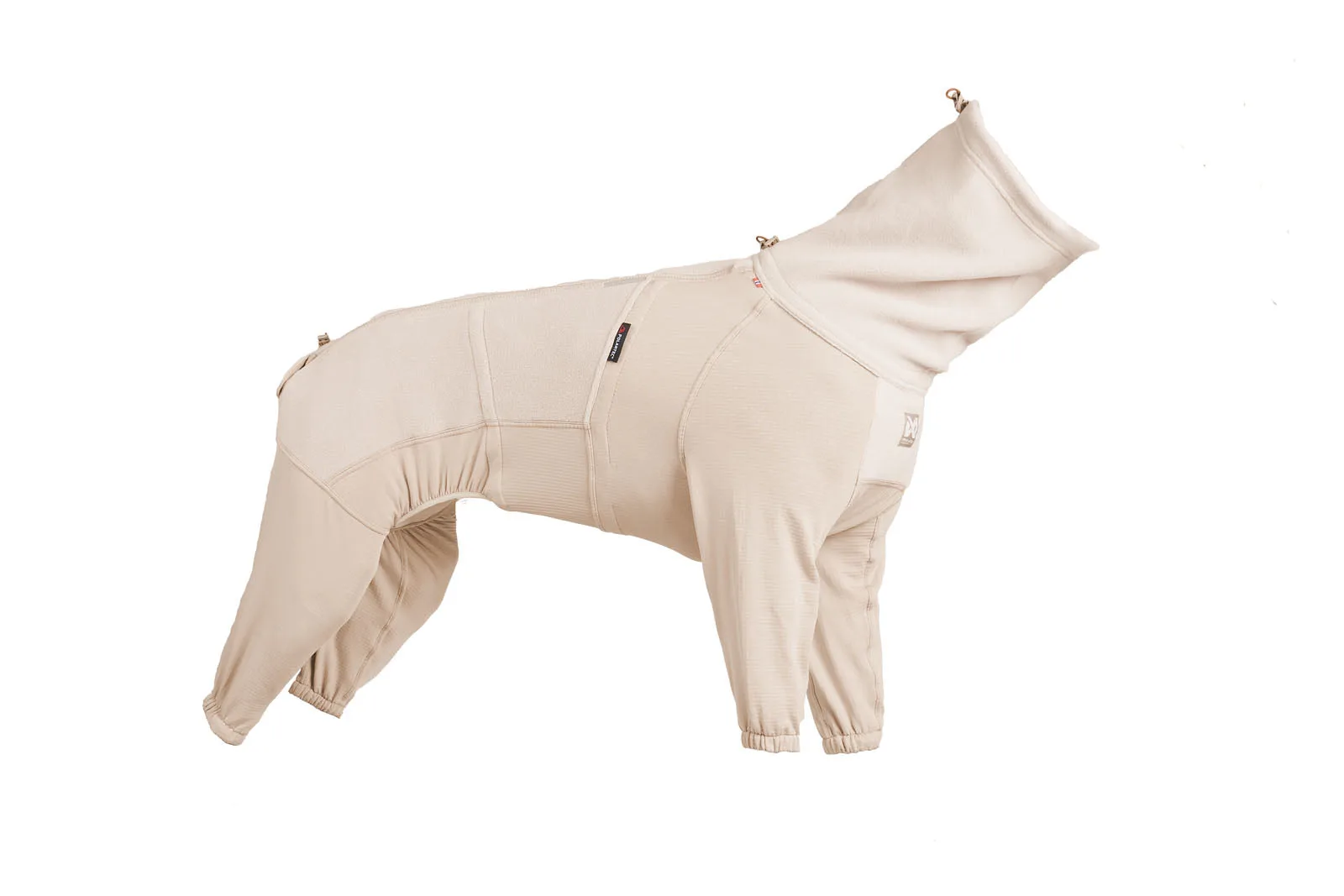
- Step 6: Fit the dog's layer to the dog, not to you: If your dog wears a jacket, put it on before the harness and check that it does not restrict shoulder movement or rub under the chest. Short-coated, older, or low-body-fat dogs often need more coverage than thick-coated dogs. Checkpoint: after five minutes of running, feel your dog's ears and body; adjust if they are shivering or panting heavily.
- Step 7: Carry one adjustable layer and plan your stop points: A lightweight, packable layer you can tie around your waist or stuff in a belt pocket gives you options if the weather shifts or you have to stop. Decide in advance where you can safely pause to add or remove it. Checkpoint: if you finish a run with a soaked base layer, you started too warm.
Canicross gear built for layered cold runs
- CaniX long tights men's: Running tights developed specifically for canicross, with unique features to ensure optimum comfort also when running with a belt. A belt sits across the hips and lower back, so general running tights can dig in or slide. Canicross-specific tights reduce that friction on cold, long runs.
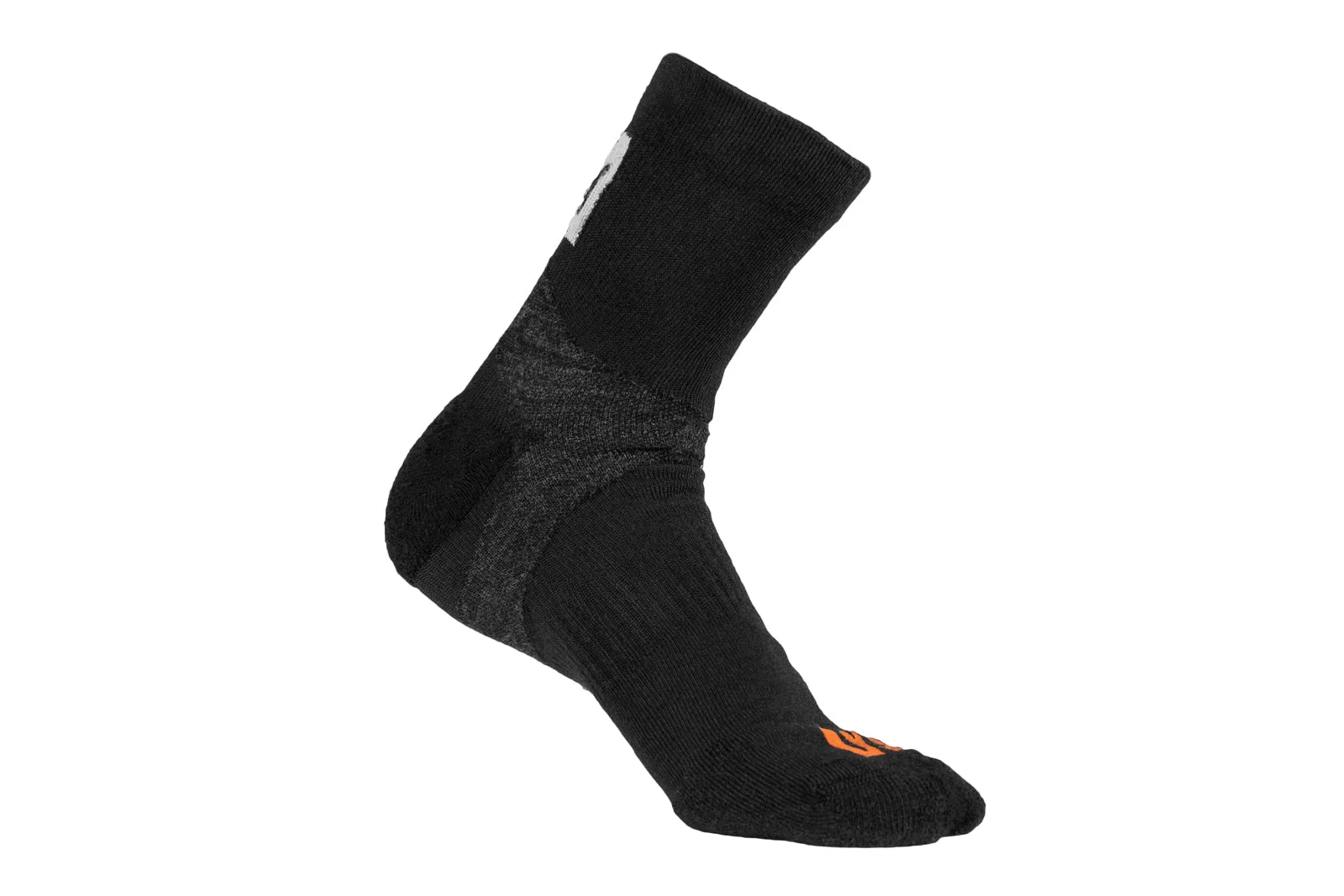
- CaniX socks: Thin and lightweight socks developed specifically for canicross with extra support around the ankles. Thin socks leave room in your shoes for cold-weather fit, while ankle support helps on uneven winter trails where foot placement is less predictable.