Start With the Trackless Idea
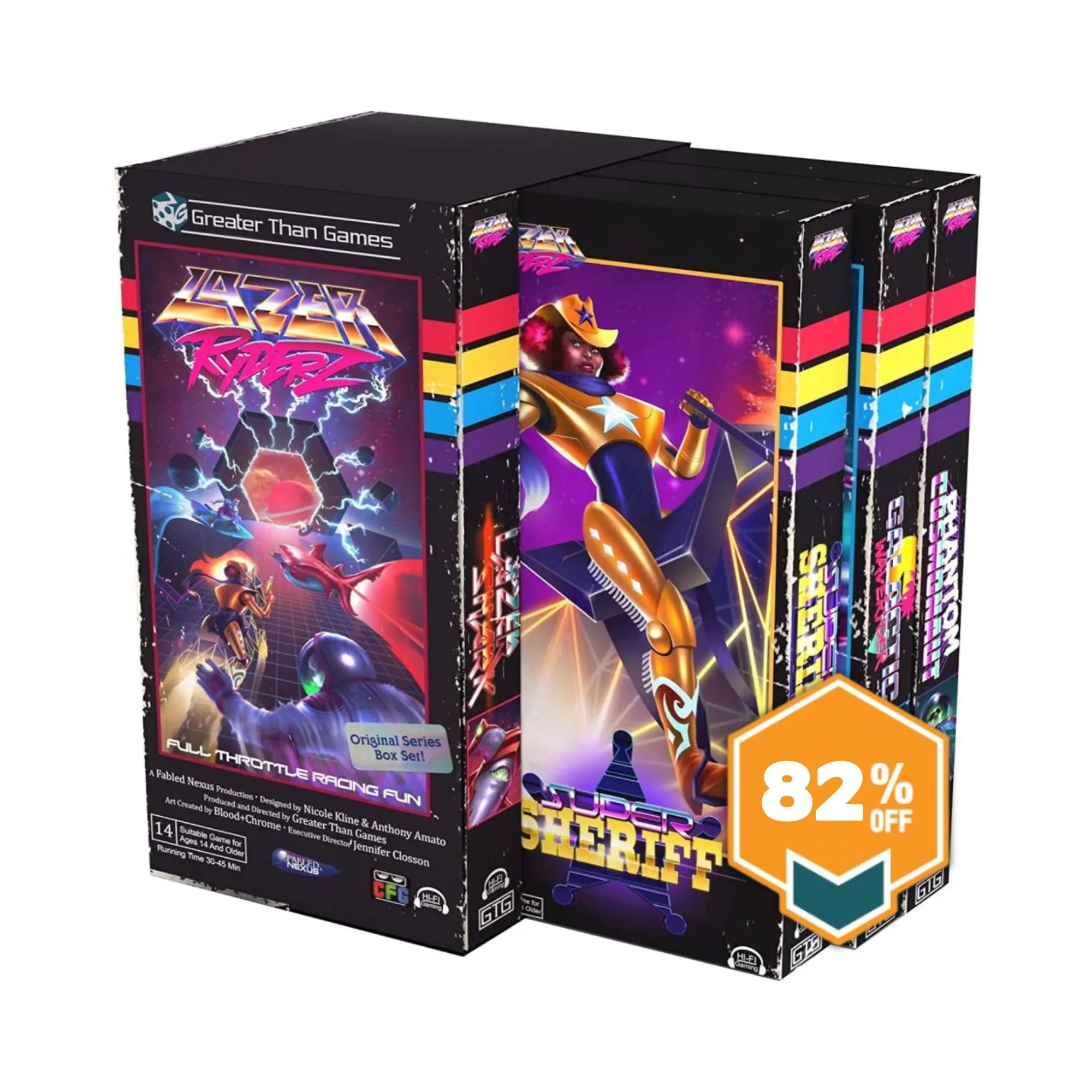
Lazer Ryderz is a racing board game for up to 4 players, but there is no fixed track printed on a board. Instead, each player builds a lazer path from pre-formed punchboard pieces, placing them according to speed and desired direction. That single design choice shapes everything about how the game feels: you are not following a route, you are creating one.
The catalog describes the game as trackless racing with light push-your-luck, area denial, and strategy elements. For a beginner, that means your first game is less about memorizing a long rulebook and more about understanding how speed and direction choices affect the path you leave behind.
What the Catalog Confirms Before You Set Up
-
Lazer Ryderz: Lazer Ryderz is a trackless racing game for up to 4 players with light push-your-luck, area denial, and strategy elements. Knowing the player count and the mix of luck and strategy helps you decide whether this fits your group before you open the box.
Lazer Ryderz
-
Lazer Ryderz: Players construct their lazer paths with various pre-formed punchboard pieces that are placed according to speed and desired direction. This is the core activity of the game, so setup and first-turn decisions revolve around sorting and placing those pieces.
A Practical Setup for Your First Race
The supplied catalog does not include a full setup sequence, so treat these as sensible starting points rather than official rules. Check the rulebook in your box for the exact procedure.
- Sort the punchboard pieces: Separate the pre-formed punchboard path pieces so every player can reach them easily. Since paths are built from these pieces, keeping them organized will save time during play.
- Confirm your player count: Lazer Ryderz supports up to 4 players. Decide before setup whether you are playing with 2, 3, or 4 so you can arrange seating and piece access accordingly.
- Give each player space to build: Because each player constructs a lazer path, leave room around the play area for path pieces to extend outward. A crowded table can make placement awkward.
- Agree on a starting direction: The catalog says pieces are placed according to speed and desired direction. Before the first turn, make sure everyone understands how they will choose a direction, using the rulebook as the authority.
How a Turn Works in Broad Strokes
The catalog does not provide a turn-by-turn sequence, but the described mechanics point to a clear rhythm you can expect. Use this as a mental model, then confirm details in the rulebook.
- Choose speed and direction: The catalog states that path pieces are placed according to speed and desired direction. Your turn likely begins with deciding how fast and where you want to go.
- Place your path pieces: You extend your lazer path using the pre-formed punchboard pieces. The shape and orientation of those pieces determine the route you create.
- Weigh the push-your-luck element: Lazer Ryderz includes light push-your-luck. That suggests moments where you decide whether to play it safe or take a risk for a better position.
- Watch for area denial: Area denial is listed as a mechanic, so your path choices may affect the space available to other players. Keep an eye on how your route interacts with theirs.
Beginner Tips for Your First Few Games
These tips follow from the mechanics the catalog confirms. They are not official strategy advice, but they can help you avoid common first-game frustrations.
- Keep your first path simple: With trackless racing, it is tempting to build an ambitious route. Start with straightforward placements so you can see how speed and direction interact before adding complexity.
- Treat push-your-luck as a dial, not a switch: The game includes light push-your-luck, so you do not need to gamble on every turn. Use risk selectively once you understand how the path pieces behave.
- Pay attention to other players' paths: Area denial means your opponents' choices can affect your options. Glancing at their paths before you place your own pieces can reveal crowded or open directions.
- Play the first game to learn, not to win: Because the catalog does not supply a full rules sequence, your first game is partly a walkthrough. Expect to consult the rulebook and focus on understanding the flow.
What the Catalog Does Not Confirm
The supplied product information does not include a listed age range, play time, component count, or detailed warnings. It also does not provide a full setup or turn sequence. Those details may be in the rulebook or on the box, but they are not confirmed here.
That absence is not a reason to avoid the game. It simply means you should check the physical product or the rulebook for specifics like recommended age and play length before you plan a game night around it.