Quick answer
Most leather bag color fading comes from UV light, dryness, friction, or dye transfer, not from age alone. Move the bag out of direct sun, clean it with a pH-neutral leather cleaner, and condition with a product made for your leather finish. If the color is uneven, patchy, or the surface feels powdery, stop DIY treatment and use a leather specialist.
A bag that looked rich and even last summer can look flatter by autumn, especially on the side that faces the window. That change is often leather bag color fading, and it rarely happens all at once. It builds through repeated exposure to light, heat, friction, and moisture, plus whatever the leather absorbs from the world around it.
The useful question is not whether the color changed, but why. Once you know whether you are looking at UV damage, dryness, surface wear, or dye transfer, you can choose the right response. This guide walks through symptoms, likely causes, corrective action, and the point where you should stop treating the bag yourself.
How to tell fading from patina, dryness, or transfer
Patina is a deepening and softening of color that develops evenly as leather ages, and many people prize it. Fading is a loss of depth that usually shows up unevenly: the top edge, the front panel, or the side that faces a window looks lighter than the rest. Dryness looks dusty or slightly chalky and may feel rough. Dye transfer looks like a stain or a shadow of another color, often picked up from dark denim or a coated strap.
Check the bag in daylight rather than indoor lighting. Compare a hidden area, such as the inside of the flap or the back panel, with the most exposed area. If the difference is a soft, even shift across the whole bag, you are likely seeing normal aging. If one zone is clearly lighter or patchy, treat it as fading and work through the causes below.
- Photograph the bag in daylight before you treat it so you can compare results honestly.
- Test any cleaner or conditioner on a hidden area first and wait 24 hours.
Cause 1: UV light and sun damage
Leather bag sun damage is the most common driver of uneven fading. UV light breaks down the dyes and oils near the surface, and heat accelerates the process by drying the leather. A bag left on a car seat, a windowsill, or a sunny hallway can shift noticeably within a single season, even if it is never rained on. The side that faces the light fades first, which is why the front of a carried bag often looks lighter than the back.
Prevention is mostly about placement. Store bags in a dust bag inside a cupboard rather than on an open shelf near a window. When you carry the bag, rotate which side faces outward if you can. For long trips, keep it in the dust bag in the boot rather than on the parcel shelf. There is no topical product that makes leather fully UV-proof, so shade and rotation do more than any spray.
- Keep bags at least a metre away from windows and radiators.
- Use the supplied dust bag for storage, not just for travel.
Cause 2: Dryness and loss of surface oils
Dry leather looks lighter because the surface scatters light instead of reflecting it evenly. Central heating, air conditioning, and repeated wet-dry cycles pull moisture out of the fibres. A bag that feels stiff, looks slightly dusty, or shows fine surface lines is often dry rather than permanently faded. This is the one cause where conditioning can genuinely restore depth, because you are replacing what was lost rather than reversing pigment damage.
Clean first, then condition. A pH-neutral leather cleaner removes the grime that blocks conditioner from absorbing. Apply a small amount of conditioner with a soft cloth, work it in evenly, and buff off the excess. Do not over-condition: once a season is usually enough for a bag in regular rotation, and more often can leave a sticky surface that attracts dirt.
- Condition after cleaning, never before.
- If the leather feels tacky after buffing, you used too much.
Cause 3: Friction, abrasion, and edge wear
Color loss at the corners, along the flap edge, and where the strap meets the body is mechanical, not chemical. Rubbing against clothing, tables, and car doors wears through the top finish and exposes the lighter layer beneath. This type of leather handbag color loss is localised and usually has a soft, slightly fuzzy edge rather than a clean colour change.
You can slow it down by checking that the bag is not overfilled, which forces the edges to rub. Keep the strap adjusted so the bag sits where it is not constantly knocking against a hip or a desk. For minor edge wear, a matching edge paint or a specialist cream can blend the area, but deep abrasion that has removed the surface layer is a repair job, not a care job.
- Do not overfill: a bag that bulges rubs its own edges.
- Address corner wear early, before the fibres underneath are exposed.
Cause 4: Dye transfer and chemical exposure
Dark denim, new coats, and printed fabrics can transfer dye onto lighter leather, which reads as a colour change even though the bag's own dye is intact. Hand sanitiser, perfume, and some cleaning sprays can also lighten or streak the surface. If the discolouration has a shape that matches a pocket or a strap, suspect transfer rather than fading.
Blot transfer early with a dry cloth, then use a leather cleaner formulated for the finish. Do not scrub, and do not reach for household solvents or magic erasers, which strip the finish and create a much worse light patch. If the transfer has been sitting for weeks or has bonded with the finish, a professional clean is the safer route.
- Let hand sanitiser dry fully before touching the bag.
- Avoid storing light bags against dark fabrics.
When to stop and use a specialist
Stop DIY treatment if the colour is patchy across a large panel, if the surface feels powdery or cracks when flexed, or if a previous product has left a sticky or dark residue. These point to finish or pigment damage that needs re-colouring or refinishing, which is skilled work. Attempting it at home usually makes the patchiness worse and can reduce what a professional can recover.
Also stop if the bag is a limited or embellished design where the finish is part of the look. Crystal-set or metallic-finished bags can be damaged by ordinary conditioners, and the safest advice is to have them assessed rather than treated. A specialist can tell you whether a refresh is realistic or whether the honest answer is to enjoy the patina.
- Patchy, cracked, or powdery surfaces need a professional, not a cream.
- Embellished or metallic finishes should not be conditioned at home.
Fading diagnosis: symptom, cause, action, stop point
- Even, all-over softening of colour: This is usually patina from normal aging and handling, not damage. Clean gently and condition once a season to keep the leather supple. No corrective colour work needed; keep up routine care.
- One side or panel noticeably lighter: Almost always UV and heat exposure. Move the bag out of direct light, rotate how you carry and store it, and condition to restore surface oils. If the lighter area still looks bleached after conditioning, the pigment has changed and a specialist should assess it.
- Dusty, stiff surface with fine lines: Dryness rather than fading. Clean with a pH-neutral cleaner, then condition lightly and buff off the excess. Reassess after 24 hours; if it is still chalky, the finish may be compromised.
- Lighter corners and flap edges: Friction and abrasion have worn the top finish. Reduce overfilling, adjust the strap, and treat minor edge wear with matching edge care. Deep abrasion that exposes the fibres underneath is a repair, not a care task.
- Patchy, cracked, or powdery surface: Finish or pigment damage, sometimes made worse by a previous product. Stop applying anything and take the bag to a leather specialist. DIY treatment at this stage usually reduces what a professional can recover.
Cambridge Satchel details that affect colour care
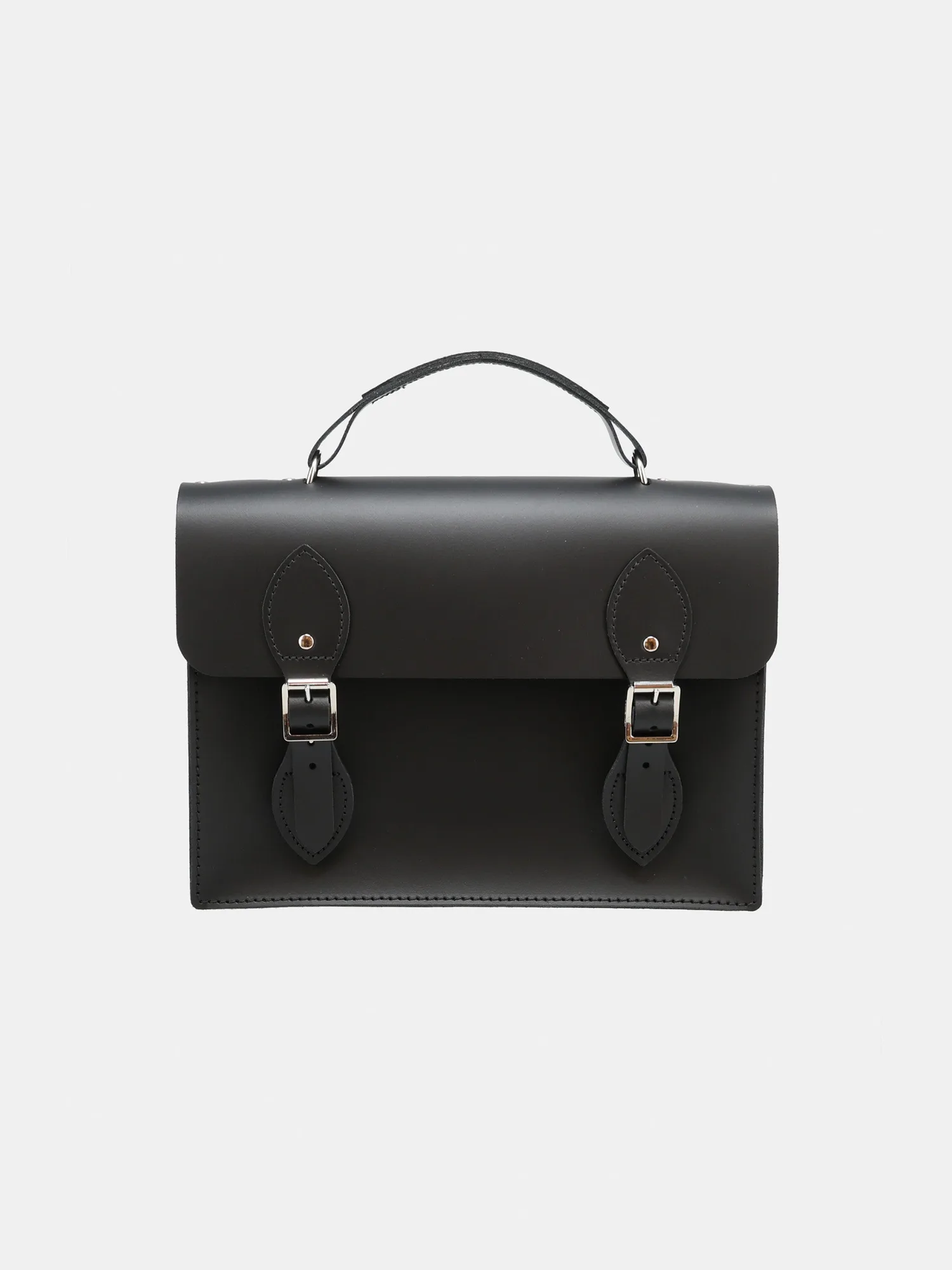
- The Flâneur - Black: The Flâneur Bag is defined by its boxy silhouette, softly rounded edges, and reinforced top handle, and it can be carried by hand or worn crossbody using the adjustable, detachable leather strap. The reinforced top handle and strap attachment points are the areas that rub most, so check them first for edge wear and colour loss before treating the panels.
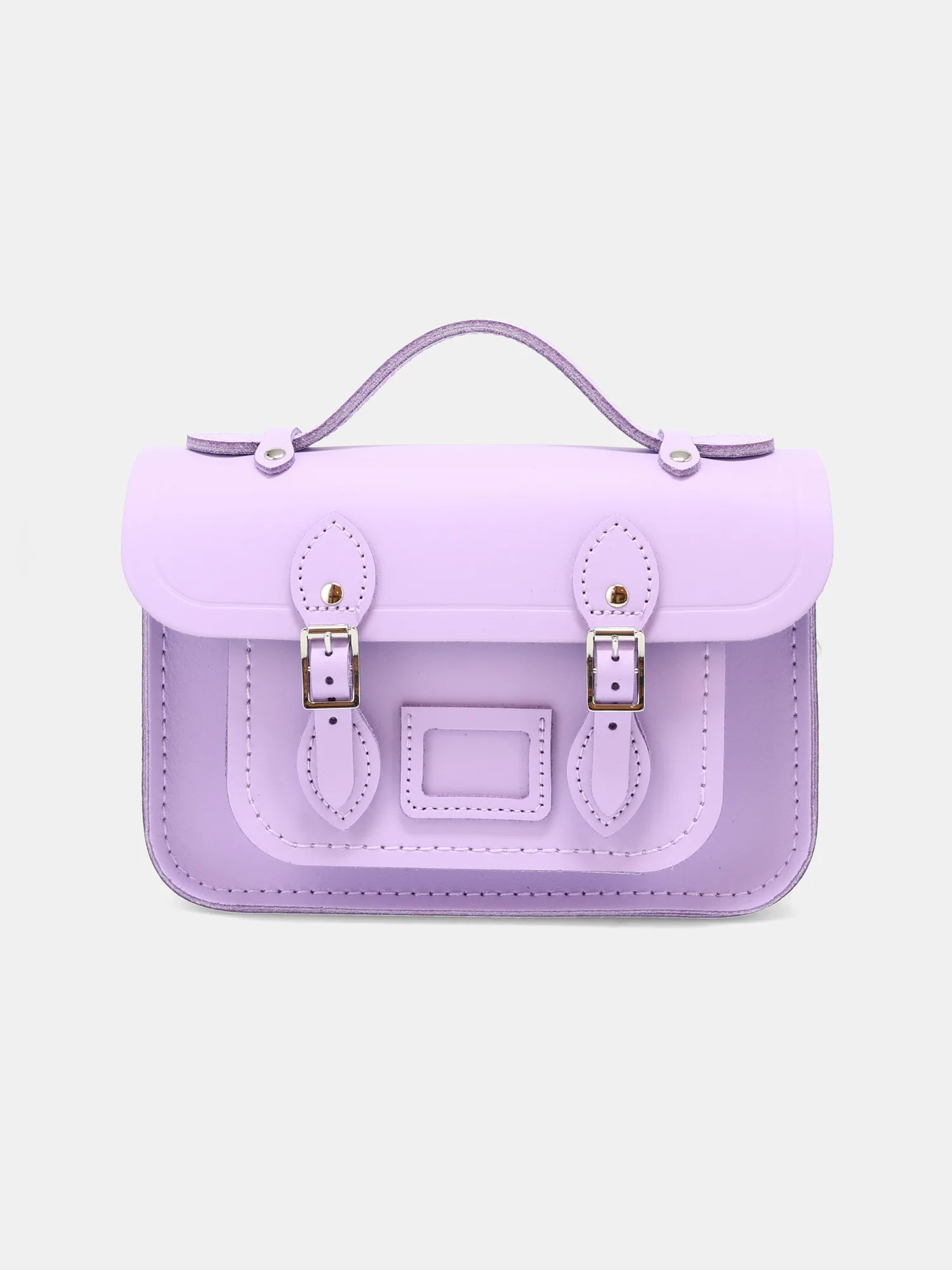
- The Mini - Lavender: This smaller version of the Satchel has a top handle and a detachable, adjustable shoulder strap, magnetic closures, a front pocket, and it includes a protective dust bag. Pale colours like lavender show dye transfer and UV fading sooner than dark ones, so store it in the supplied dust bag and keep it out of direct sun.
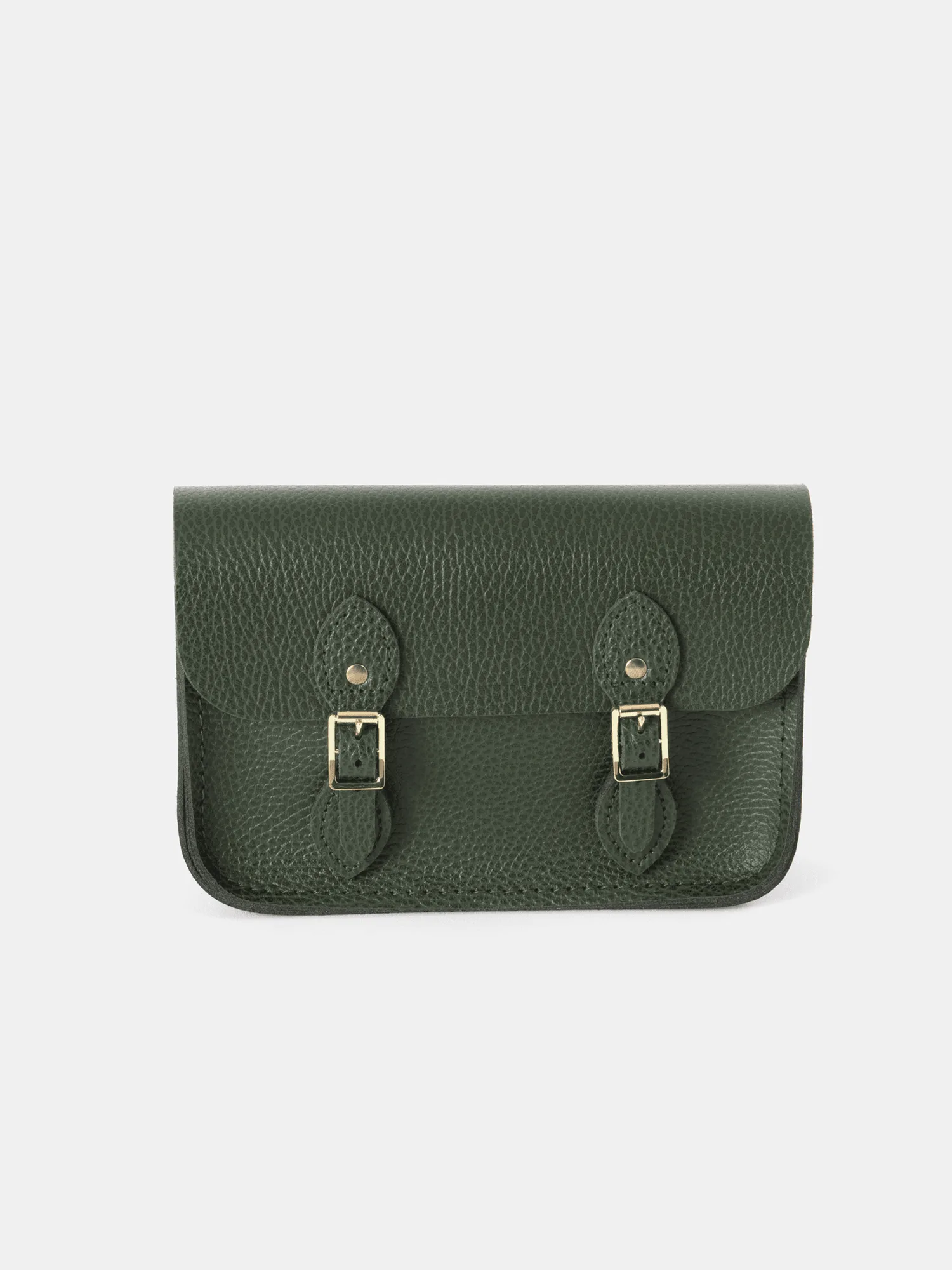
- The Little One - Racing Green Celtic Grain: This petite version captures all the details of the classic design in a compact size, with a top handle, adjustable shoulder strap, magnetic closures, and a protective dust bag. A smaller bag is often carried by the top handle, which concentrates friction on one area; rotate how you carry it to spread wear.
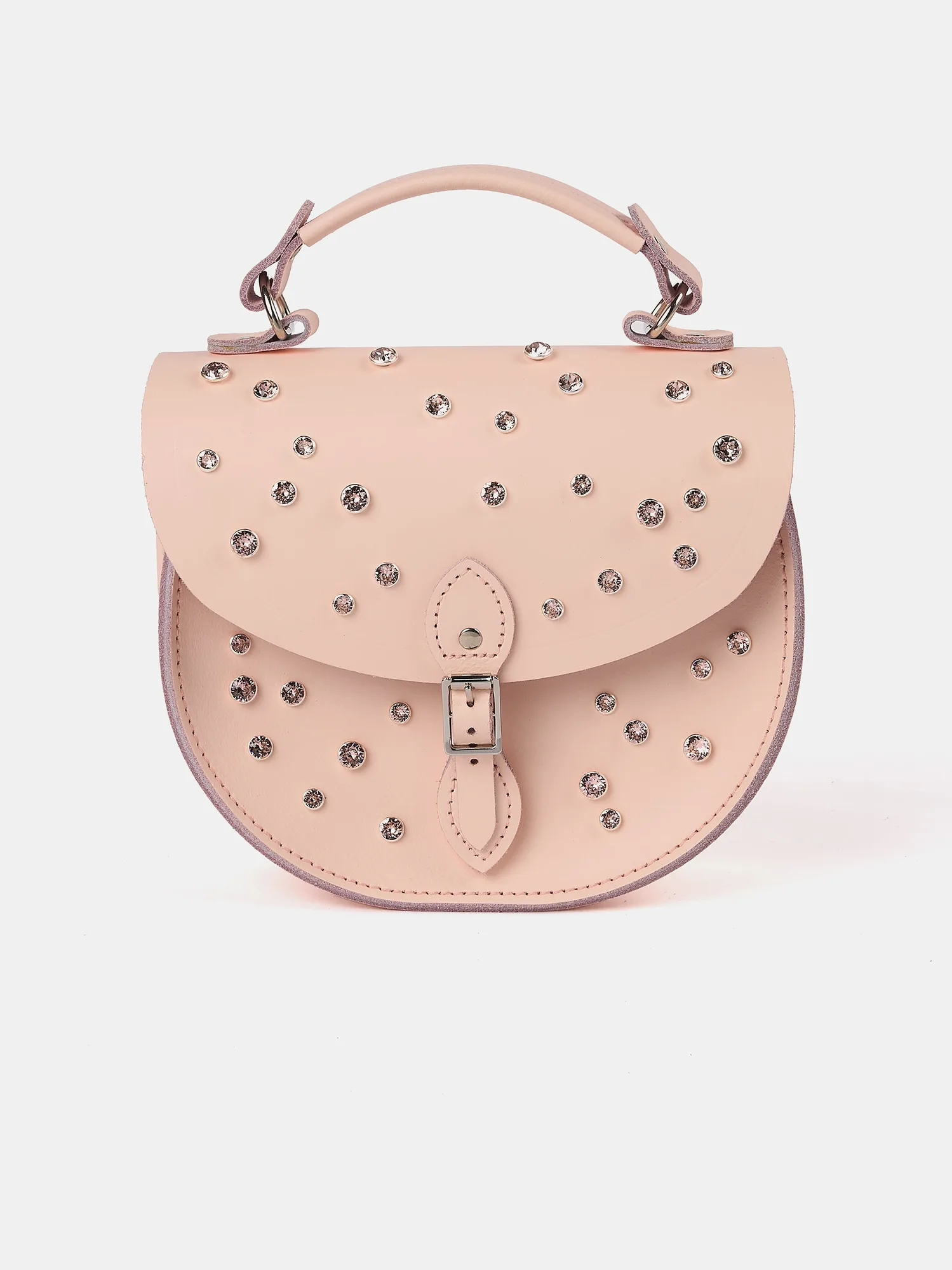
- The Isla - Cloud Pink with Swarovski® Crystals: This limited-edition circular design is adorned with precision-cut brilliant Swarovski® Crystals, with silver hardware and intricate detailing. Embellished, limited-edition finishes should not be conditioned at home; if the colour looks uneven, have it assessed rather than treated.
Fading is easier to prevent than to reverse, and most of the prevention is placement: shade, rotation, a dust bag, and a light conditioning routine. Treat the cause you actually see, stop before you make a patch worse, and let a specialist handle pigment and finish damage. That approach keeps a Cambridge Satchel looking cared for rather than overworked.