Quick answer
Choose a leather wallet by carrying method first, then match card slots and closure to that size. If you carry it in a front pocket, stay compact and skip a bulky bill section. If you carry a tote or crossbody, a trifold with more slots and a zipper keeps cards and cash organized without stretching the leather.
Most wallets fail for one boring reason: they are the wrong size for where you actually keep them. A wallet that feels fine in a tote can bulge in a front pocket, and a slim card case can leave receipts and coins with nowhere to go. This leather wallet buying guide walks through size, card slots and closure so you can pick once and use it for years.
You do not need a long list of features. You need a wallet that closes flat, holds the cards you use weekly, and matches how you pay. The sections below give decision rules, fit guidance, and real BOSTANTEN examples so you can compare options without guessing.
Start with size: how you carry decides everything
Measure your pocket, bag slip or crossbody compartment before you shop. A wallet that is too tall will not sit below the pocket line, and one that is too wide will not slide past a zipper. If you carry in a front pocket, aim for a compact shape that stays under about 4.7 inches wide and 4 inches tall. If you carry in a tote or crossbody, a larger trifold or clutch-style wallet is fine because the bag holds the bulk.
This is the core of any wallet size guide: size is not about status, it is about where the wallet lives. A compact wallet forces you to edit cards, which keeps it thin. A large wallet lets you carry receipts, a phone or a checkbook, but it will feel heavy in a pocket. Decide the carrying spot first, then filter by dimensions.
- Front pocket: choose a compact bifold or small zip wallet.
- Back pocket: choose a flat bifold with no bulky coin pocket.
- Tote or crossbody: a trifold or wristlet clutch works well.
- If you switch bags often, pick one size that fits the smallest bag you use.
Card slots: count weekly cards, not total cards
Count the cards you use in a normal week: ID, one or two bank cards, transit card, maybe an insurance card. That number is your real card slot target. Extra slots are useful for travel or loyalty cards, but every filled slot adds thickness. A wallet with 13 to 20 slots only stays slim if you leave some slots empty or rotate cards.
Slot layout matters as much as slot count. An ID window saves you from pulling your license out at checkout, and a rear zipper pocket keeps coins or a key from scratching cards. If you rarely carry cash, a card-forward design with two bill pockets is enough. If you carry cash and receipts, look for a bill section that fits folded notes without forcing the closure.
- Count weekly cards first, then add two spare slots for travel.
- An ID window speeds up checkout and reduces card handling.
- A zipper pocket protects coins, keys and small receipts.
- More than 20 slots usually means a wallet meant for a bag, not a pocket.
Closure: snap, zipper or button
Closure decides how the wallet behaves when it is full. A snap closure is quick to open and keeps a trifold flat, but it has a fixed capacity: once the snap will not close, the wallet is overstuffed. A zipper closure wraps the whole wallet, so cards and coins stay put even if you drop it, but it adds a little bulk and takes an extra second to open. Button closures on compact wallets keep the shape flat and are easy to use one-handed.
Match closure to your risk. If you carry the wallet loose in a tote, a zipper is the safer choice because nothing can slide out. If the wallet lives in a pocket and you open it many times a day, a snap is faster. Whatever you choose, test that the closure meets without force when the wallet holds your normal load. A closure that fights back will wear the leather and stretch the shape.
- Snap: fast access, best for trifolds and pocket carry.
- Zipper: most secure, best for totes and travel.
- Button: keeps compact wallets flat and slim.
- If the closure strains when full, remove cards or choose a larger wallet.
Leather, lining and hardware: what to check in person
Look at the leather surface, the lining and the zipper. Top grained leather, wax oil leather and vegan leather all behave differently. Grained and wax oil leathers tend to develop a nicer look with use, while vegan leather is easier to wipe clean but may not age the same way. A durable fabric lining protects cards from rubbing, and brand hardware plus a smooth zipper suggests the wallet will open without snagging.
Check the stitching at the corners and along the bill pocket, because those are the stress points. RFID blocking is a useful extra if you carry contactless cards, but it is not a substitute for a closure that stays shut. If a listing does not state a dimension or material, treat that as a missing detail and ask before buying rather than assuming.
- Run the zipper back and forth before buying.
- Press the snap or button to feel if it engages cleanly.
- Check corner stitching, the first place a wallet wears out.
- If a key spec is missing, ask the seller instead of guessing.
Decision rules for choosing your wallet
- Rule 1: Pick the carrying spot before the wallet: Front pocket means compact and flat. Back pocket means a slim bifold with no coin bulge. Tote or crossbody means a trifold or clutch with more slots and a zipper. If a wallet does not fit your smallest bag or pocket, keep looking.
- Rule 2: Match card slots to weekly use: Count the cards you use weekly, add two spare slots, and ignore the rest. An ID window and a rear zipper pocket are worth more than extra empty slots. A wallet with 13 to 20 slots only stays slim if you leave some slots empty.
- Rule 3: Choose closure by how you carry: Snap for fast pocket access, zipper for loose-in-bag security and travel, button for compact wallets that need to stay flat. If the closure strains when full, the wallet is overstuffed or the wrong size.
- Rule 4: Verify three specs before buying: Check the stated dimensions, the leather or lining material, and the closure type. If any of those are missing from the listing, ask the seller. Missing specs are a decision limitation, not a reason to guess.
BOSTANTEN examples that show the trade-offs
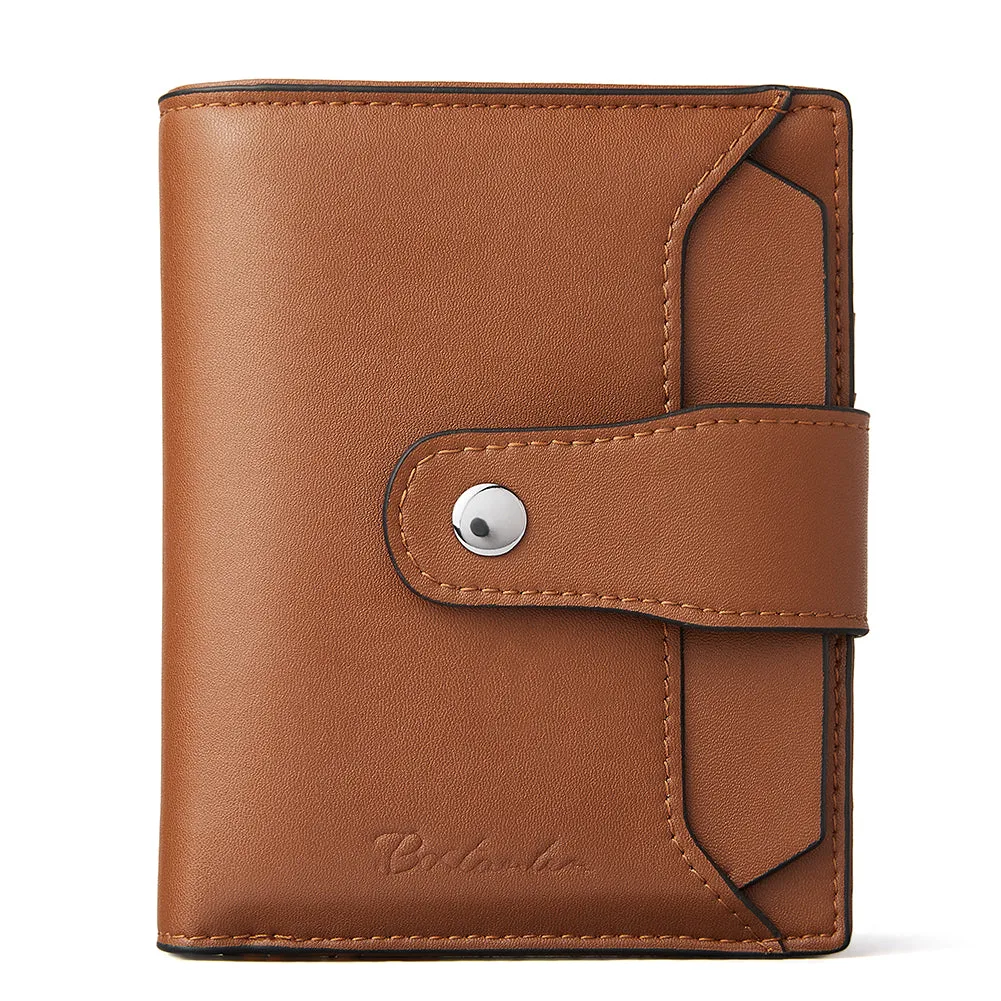
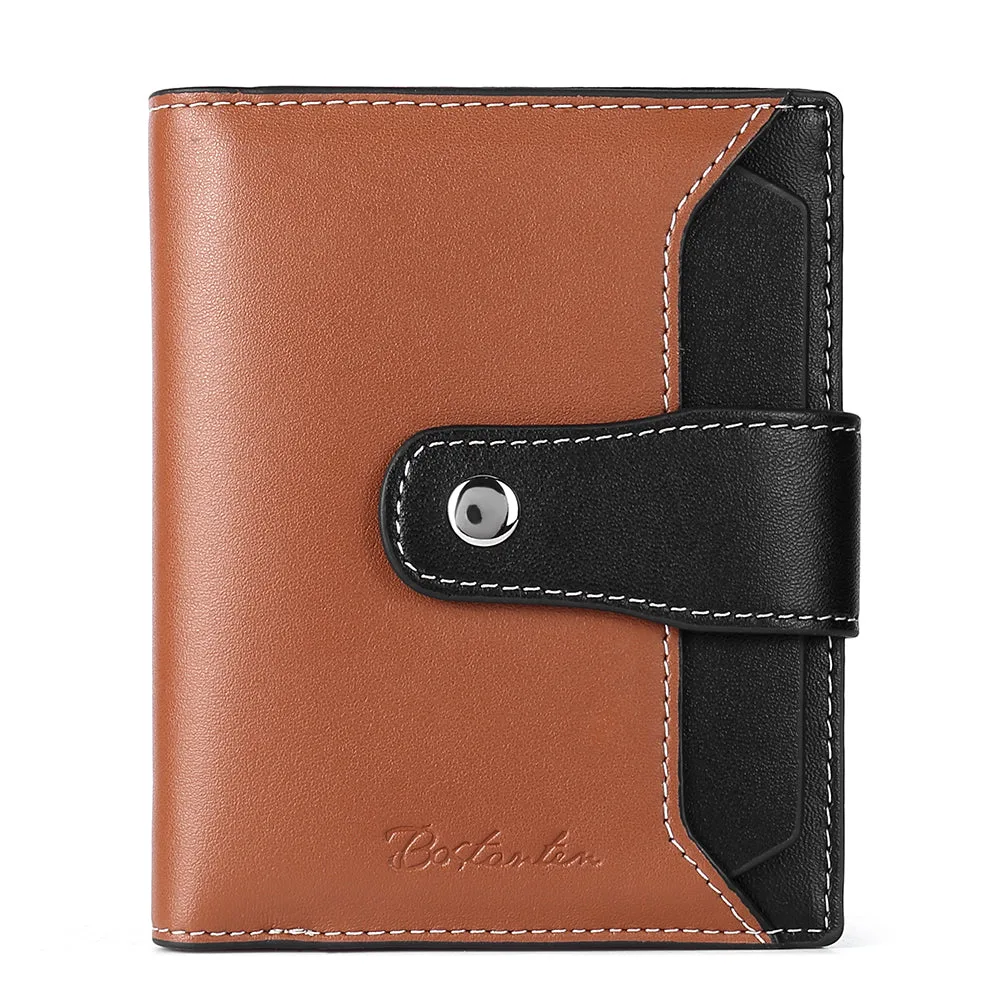
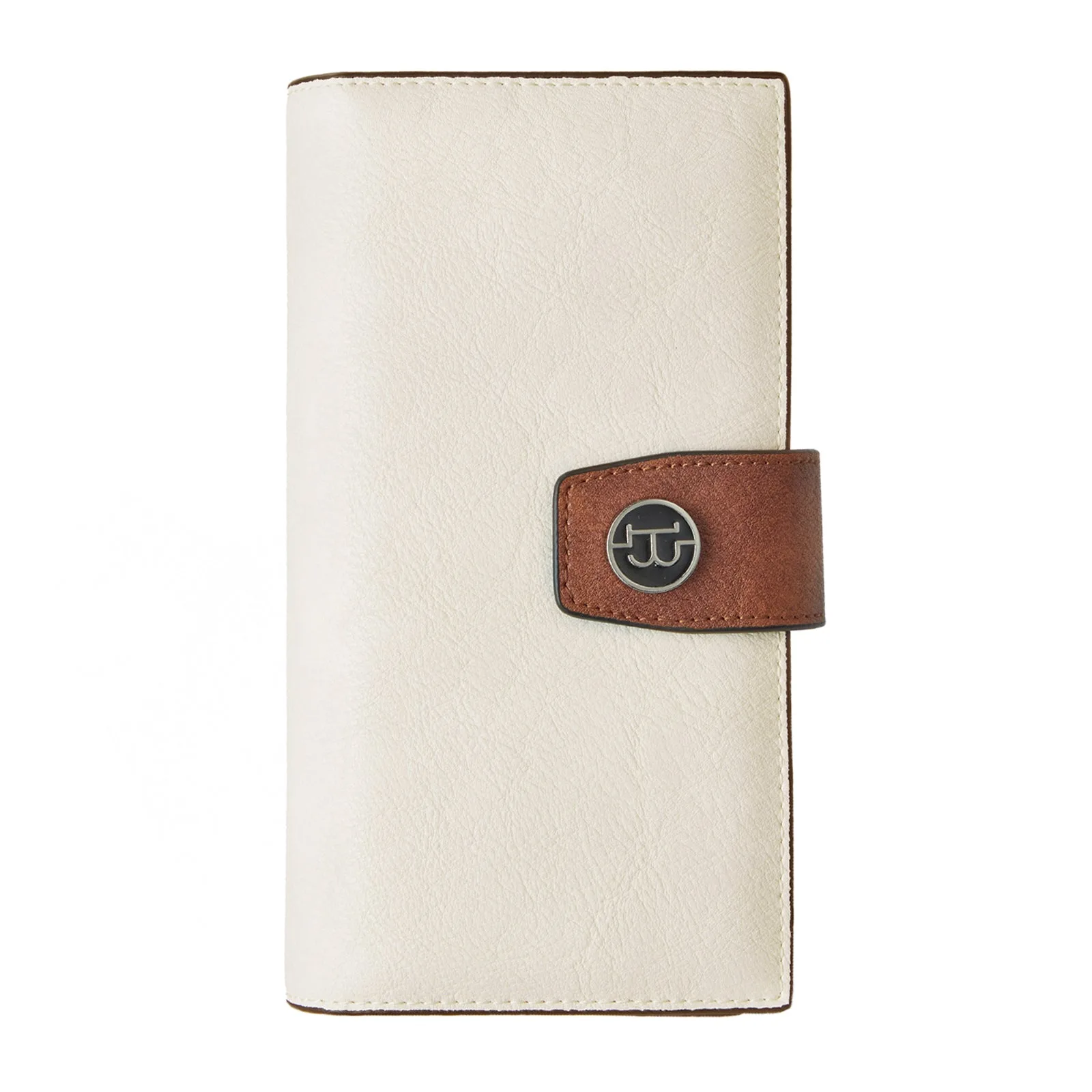
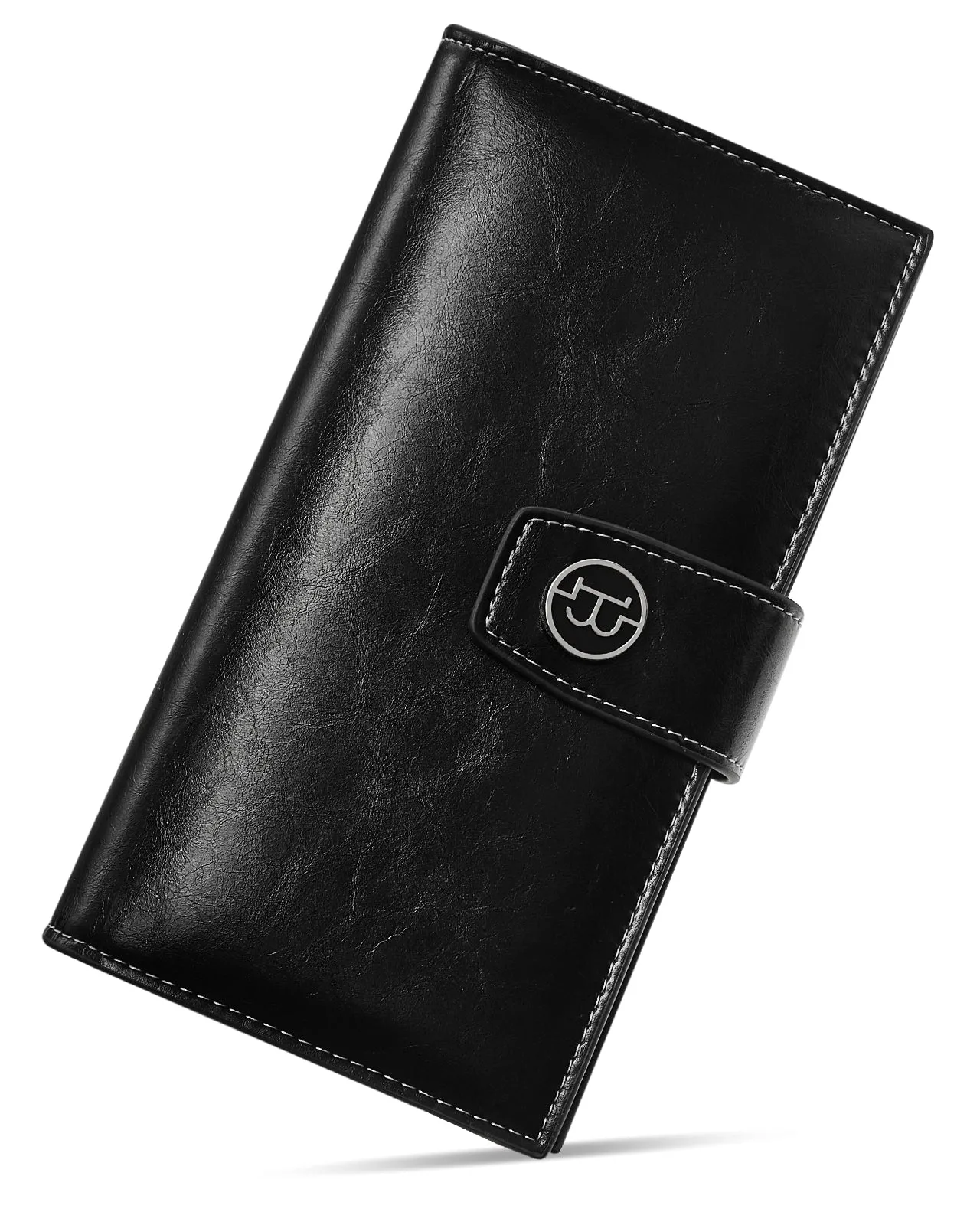
- https://bostantenhgv.com/products/bostanten-womens-leather-wallets-rfid-blocking-large-ca-ac8b0b64d6e9b576db14c9bb-1535310BOSTANTEN Womens Leather Wallets RFID Blocking Large Capacity Trifold Card Holder Ladies Phone Clutch: Made of top grained leather with durable fabric lining, brand hardware and an SBS zipper; features a snap closure with 20 card slots, 2 bill pockets, 1 ID window slot, 1 interior snap pocket and 1 rear zipper pocket. A good match if you carry a tote or crossbody and want one wallet for cards, cash and a phone. The 20 slots and rear zipper add organization, but the size and trifold build make it a bag wallet, not a front-pocket wallet.
- Lnna Small Wallet Zippered Checkbook Cover — ID Window: Made of high quality cowhide genuine wax oil leather, measures 4.72" x 3.93" x 0.78" in, and uses two button closures designed to stay closed and flat when stuffed. The stated dimensions and flat button closure make this the compact choice for a coat pocket or small crossbody. It is the better pick when you want to avoid a bulky wallet, but the smaller bill section means you should carry fewer cards and less cash.
- Luna RFID Genuine Leather Wallet: Made of high quality cowhide genuine wax oil leather or durable vegan leather, compact enough for a coat pocket or crossbody bag, with two button closures designed to keep it closed and flat when stuffed. Useful when you want a slim, RFID wallet that still closes flat. Because the listing distinguishes leather production, confirm which material version you are ordering before checkout.
Who each wallet style fits
Best for
- Commuters who carry a tote or crossbody and want cards, cash and a phone in one trifold
- Travelers who want a zipper closure and RFID blocking for contactless cards
- Minimalists who carry a compact wallet in a coat pocket or small bag and want it to stay flat
Not for
- Front-pocket carriers who want a thin, barely-there wallet
- People who carry very few cards and no cash, who should choose a card case instead
- Anyone who needs a checkbook-sized wallet but refuses to carry a larger bag
Choose the carrying spot first, then card slots, then closure. That order keeps a leather wallet slim, useful and long-lasting, whether you pick a compact button wallet or a large trifold for your bag.