Quick answer
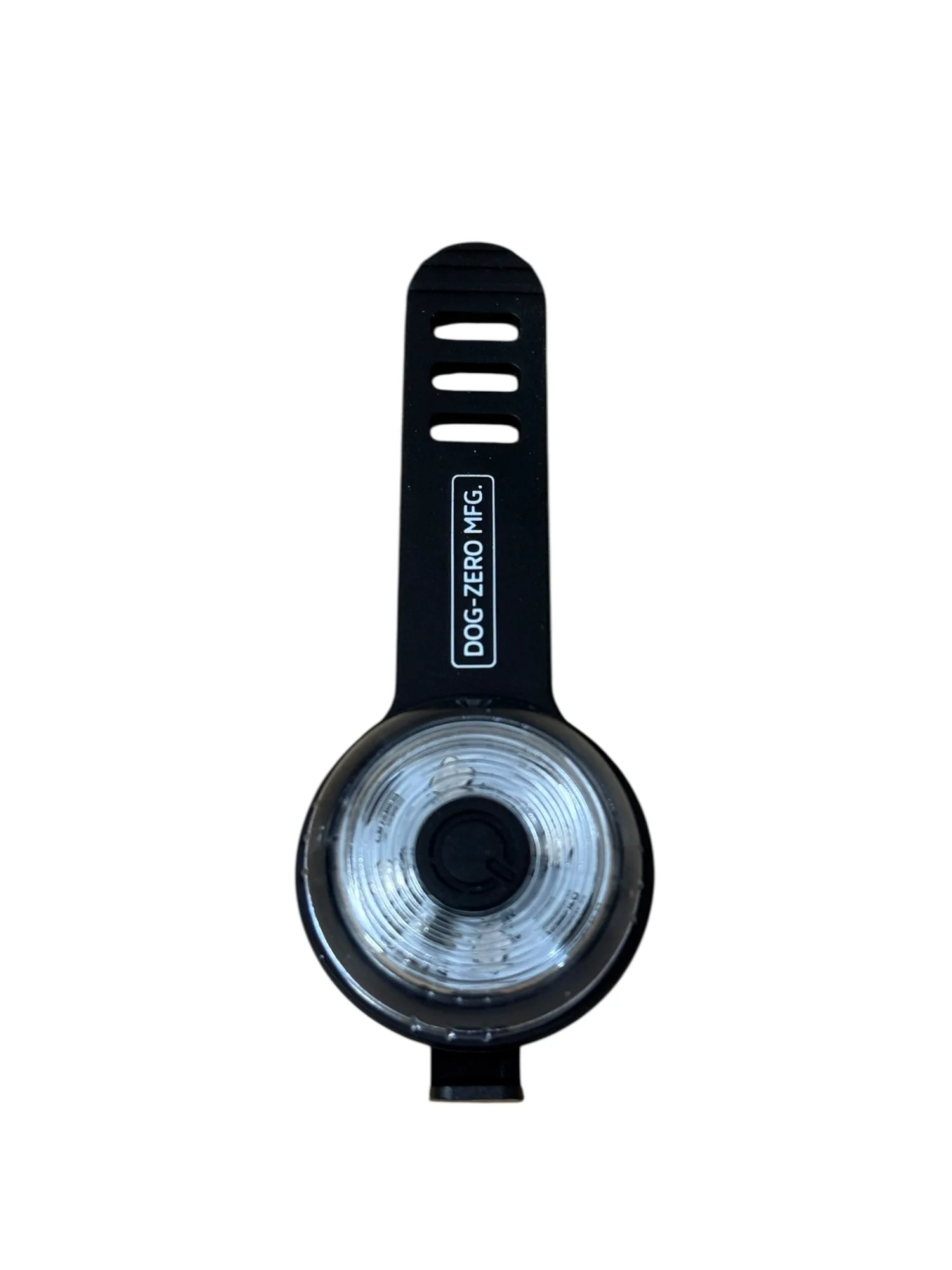
Clip an IPX6-rated LED pet safety light to your dog's collar, harness, or leash before every low-light walk, then add reflective dog gear on the parts of your dog that face traffic. The light is the active layer drivers notice first; reflection is the passive backup. Charge it after each walk and test the glow from 10–15 steps away before you leave.
What changes about a walk after dark
In daylight, drivers identify your dog by shape and movement. After dark, a dark-coated dog can disappear against pavement, grass, or a parked car until it is already close. A small light changes the physics of that encounter: instead of relying on your dog being recognized, you are giving drivers a moving point of light to notice early. That is why night walk dog safety starts with visibility gear, not with training or route changes alone.
Where to mount the light for the most useful angle
Mount the light high on the back of the collar or on the top of a harness so the glow is not blocked by the chest or legs. A 360° light is the most forgiving because it does not need to face a specific direction, but you still want it clear of long fur, dangling tags, or a leash that crosses the same spot. If your dog wears a harness with a handle, the handle area is often a stable, high-visibility mounting point.
Layer reflective dog gear instead of relying on one item
A light tells drivers something is there; reflective trim tells them how wide your dog is. Reflective dog gear works when headlights hit it, which covers the moments when a light is dim, turned off, or pointed away. Put reflective material on the side of your dog that faces traffic on your usual route. If you walk on the left side of the road, that means the right side of the dog — and the reverse if you walk on the right.
How to check visibility before you commit to the route
Before you leave the driveway, walk 10–15 steps away and turn around. You should be able to see the light clearly without squinting, and it should not be hidden by your dog's body when they turn. Repeat the check from the side and from behind. This two-minute habit catches a dead battery, a loose clip, or a light that has rotated into the fur before you are on a road with traffic.
Battery and weather habits that keep the light working
Recharge the light after every walk or keep a spare charged unit in your treat pouch. Water resistance is not the same as unlimited water exposure, so check the charging port cover after rain, snow, or a swim. If the light dims noticeably, swap or recharge it rather than finishing the walk on a weak glow. The catalog does not list a battery-replacement procedure for every model, so follow the instructions included with your specific light.
Night walk visibility routine: 6 steps
- Charge and test the light before the walk: Plug in the LED pet safety light after the previous walk, or keep a second charged unit ready. Press the button and confirm the glow is bright, not dim or flickering. Checkpoint: if the glow is weak, swap in the spare rather than hoping it lasts.
- Clip the light high and centered: Attach it to the back of the collar or the top of the harness, away from tags, fur, and the leash path. Tug gently to confirm the clip is secure. Common mistake: mounting it on the chest, where legs and fur block the light.
- Add reflective trim on the traffic side: Put reflective dog gear on the side of your dog that faces oncoming traffic. If you walk on the left, that is the dog's right side. Checkpoint: reflective material should be visible from the side, not just from behind.
- Do the 10-step visibility test: Walk 10–15 steps away, turn around, and look for the light. Repeat from the side and from behind. If you cannot see the light clearly at that distance, fix the mount or charge before you leave.
- Walk facing traffic and keep the dog on the traffic side of you: On roads without a sidewalk, position yourself between your dog and the traffic lane, and keep the dog close on a short leash. Common mistake: letting the dog range ahead, where the light is farther from you and harder to control.
- Recheck the light at the halfway point: Pause once during the walk and glance at the light. If it has rotated, dimmed, or been covered by the leash, correct it before continuing. Next step: recharge or swap the battery when you get home, not the next morning.
Product facts that matter for night walks
- LED Pet Safety Light: IPX6-rated LED Pet Safety Light clips onto any collar, harness, or leash and throws a 360° glow visible to drivers from up to 50 m / 165 ft away. The 360° output means you do not have to aim the light at traffic, and the 50 m visibility gives drivers more time to react than a reflective tag alone.
- Julius-K9 Color & Gray® Collar with Handle, Safety Lock and Interchangeable Patch: Julius-K9 Color & Gray® Collar with Handle, Safety Lock and Interchangeable Patch has a sturdy top handle and double safety lock. The top handle gives you an instant grab point if your dog lunges or you need to move them off the road quickly, and the safety lock reduces the chance of the collar opening during a sudden pull.
- KOKO SmartTag: KOKO SmartTag combines digital identification with location support, and anyone who finds your pet can hold an NFC-enabled phone near the tag to view your pet's profile. If your dog slips out of sight in the dark, a finder can read your contact details without needing an app or a phone call to a vet.