Quick answer
Tarot decks use symbolic imagery and archetypal stories to invite interpretation, while Lenormand decks rely on direct, everyday meanings and card combinations. For beginners, Lenormand is often more concrete and easier to memorize, but tarot offers deeper narrative flexibility. Your choice depends on whether you prefer clear, literal answers (Lenormand) or open-ended, reflective readings (tarot).
Structure and deck size
A standard tarot deck has 78 cards divided into the Major Arcana (22 cards) and Minor Arcana (56 cards). Lenormand decks traditionally have 36 cards, though extended versions like the Autumn Fields Lenormand include 45 cards. The extra cards in an extended Lenormand deck add nuance without changing the core system.
Reading style and meaning
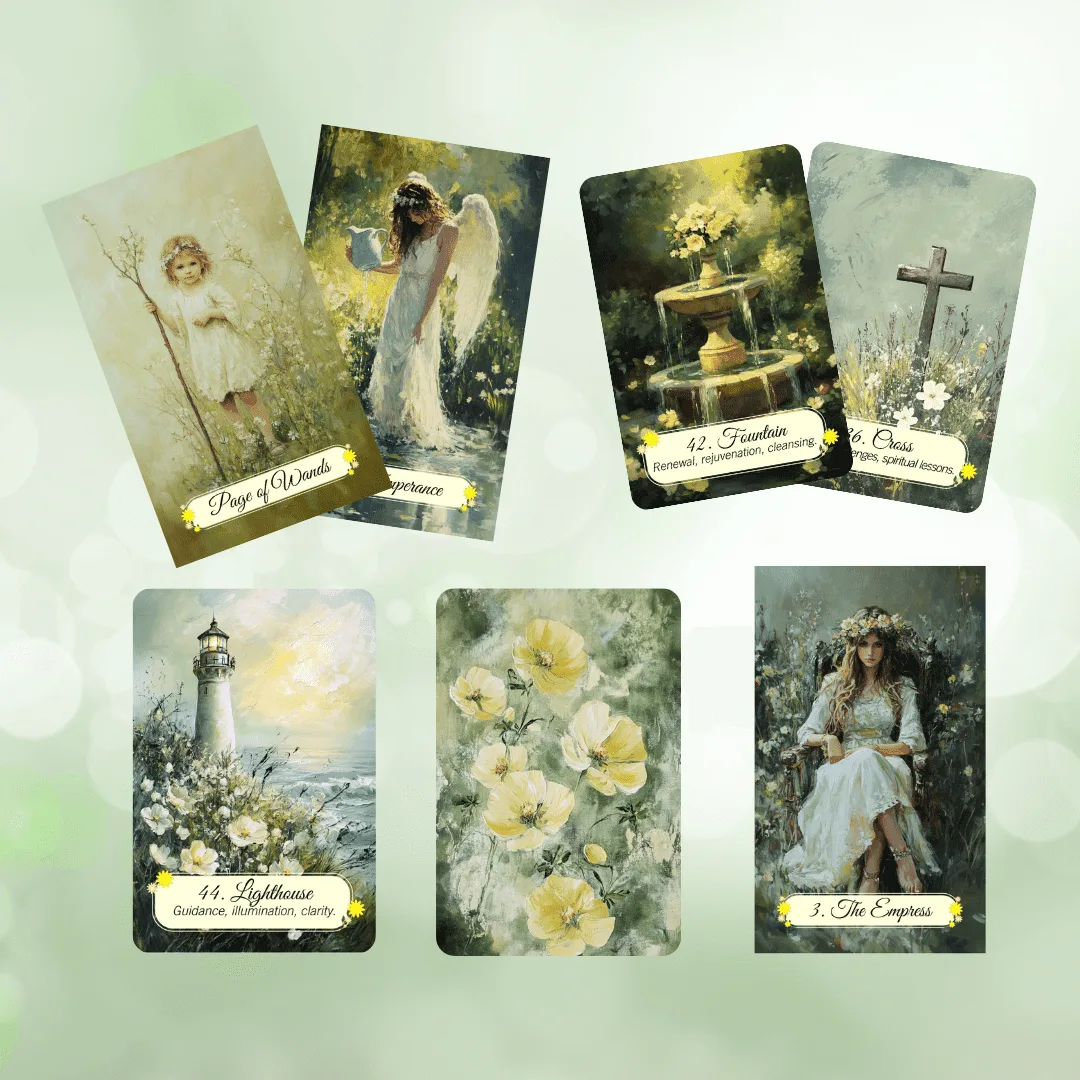
Tarot readings often rely on the reader's intuition and the symbolic story each card tells. Lenormand readings are more literal: each card has a fixed meaning, and the interpretation comes from how cards pair together. Some Lenormand decks, such as the Autumn Fields Lenormand and the Spring Glade Tarot & Lenormand Bundle, print the meaning directly on the card, which removes the need for memorization and makes them beginner-friendly.
How they work together
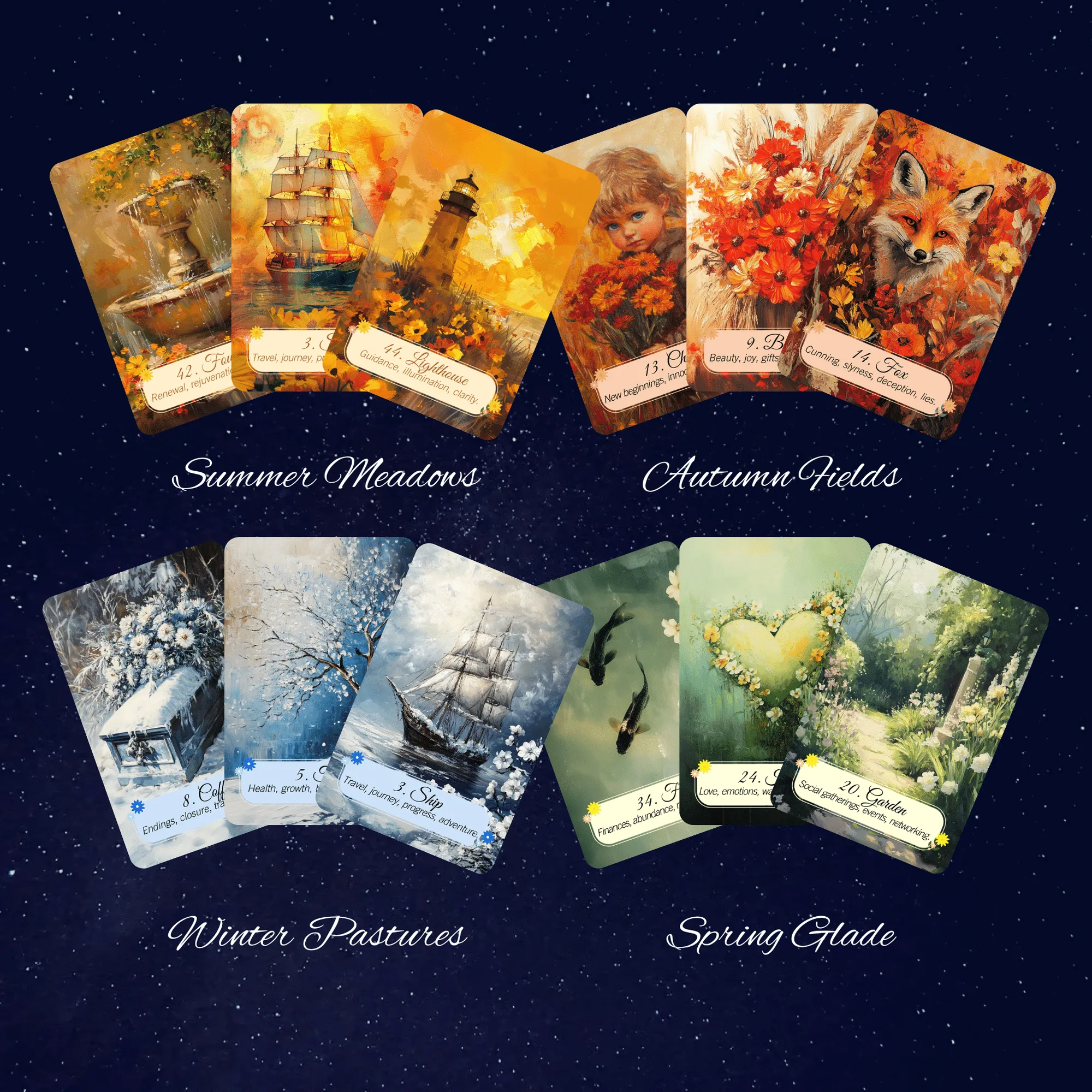
Because Lenormand and tarot use different logic, they can complement each other in a single reading. Many readers use tarot for big-picture themes and Lenormand for specific, practical questions. The Spring Glade Tarot & Lenormand Bundle is designed with a matching aesthetic so both decks feel cohesive when used together. The Four Seasons of Tarot – Lenormand Collection offers four seasonal Lenormand decks that follow the same painterly style, making it easy to switch between seasons or combine with a tarot deck.
Trade-offs at a glance
- Tarot: rich symbolism, steeper learning curve: Tarot rewards intuition and storytelling, but beginners often feel overwhelmed by 78 cards and multiple interpretations. You'll need to develop your own relationship with each card. Best if you enjoy open-ended reflection and are willing to spend time learning.
- Lenormand: direct answers, easier start: Lenormand cards have fixed meanings and rely on card pairs. Decks with printed meanings (like the Autumn Fields Lenormand) let you start reading immediately without memorization. Ideal for concrete questions and readers who prefer clarity over ambiguity.
- Using both together: Many experienced readers combine tarot for themes and Lenormand for specifics. Bundles like the Spring Glade Tarot & Lenormand Bundle make this practical with matching artwork. A good middle path if you're curious about both systems.
Real deck examples
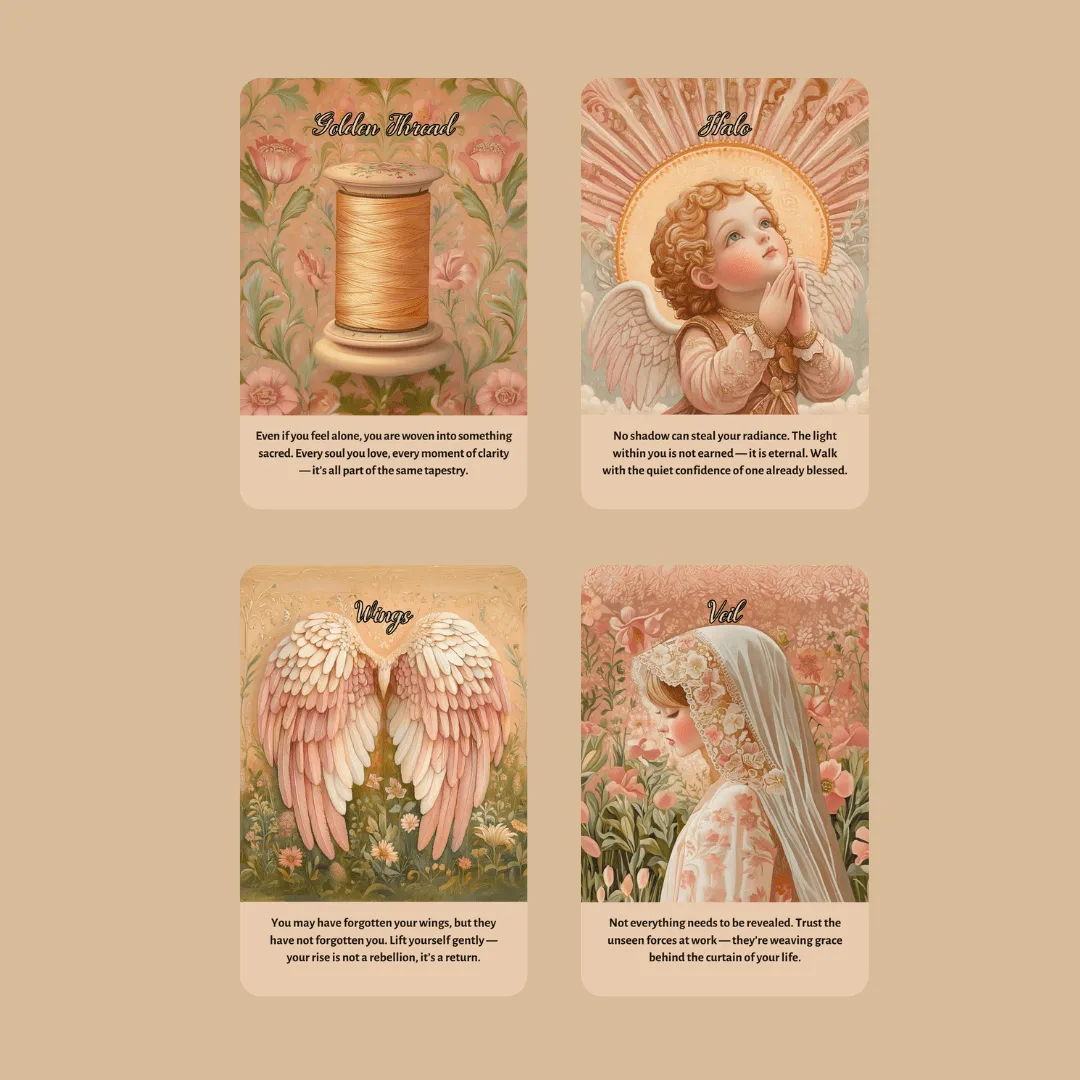
- Spring Glade Tarot & Lenormand Bundle 🌱 A gentle 2-deck set for fresh insights, spring renewal, and friendly guidance: The Spring Glade Tarot and Lenormand bundle brings together a tarot deck and a 45-card Lenormand deck with the same aesthetic. The Lenormand deck can also be used as Oracle cards because the meaning is written on the card. This bundle lets you explore both systems side by side without buying separate decks. The printed meanings remove the memorization barrier for Lenormand newcomers.
- Four Seasons of Tarot – Lenormand Collection 🍃 A four-deck Lenormand set that follows the turning wheel of the year in painterly beauty: The Four Seasons of Tarot Collection includes four Lenormand decks (Summer Meadows, Autumn Fields, Winter Pastures, Spring Glade) that capture each season in oil-painting style. If you enjoy seasonal themes and want to build a Lenormand library, this collection gives you variety while keeping a consistent visual language. Each deck works independently or as part of a set.
Which deck fits you?
Choose Lenormand if you
- Want clear, literal answers to practical questions
- Prefer a smaller deck with concrete meanings
- Like having the meaning printed on the card for quick reference
Choose tarot if you
- Enjoy storytelling, symbolism, and open interpretation
- Are ready to invest time in learning a larger system
- Want a deck that supports deep psychological or spiritual exploration