Quick answer
Most infinity focus failures come from one of three things: the adapter is too thick for the lens mount's flange distance, the lens's own focusing mechanism can't reach its infinity hard stop, or the adapter was seated incorrectly. Check the mount seating first, then test at the lens's infinity mark; if it still won't reach, you need a thinner adapter, a shim removal, or an adapter with a built-in helicoid that can compensate for back focus.
Symptom: The Lens Focuses Past Infinity or Stops Short
Two opposite symptoms point to the same underlying issue. If the lens focuses past infinity, the adapter is too thin, letting the lens sit closer to the sensor than the mount was designed for. If it stops short of infinity, the adapter is too thick. Both are flange distance problems, and both are measurable without special tools.
Test in daylight at a distant, high-contrast target like a building edge or antenna. Set the lens to its infinity mark and check whether the image snaps into focus before or after that mark. If it never snaps, the adapter is too thick for that lens and camera combination.
Cause: Flange Distance Mismatch, Not a Defective Adapter
Every mount system has a specified flange distance, the gap between the lens mount and the sensor. An adapter must add exactly the difference between the two systems. When that difference is off by even a fraction of a millimeter, infinity focus shifts. This is a design constraint, not a manufacturing defect, and it is why some adapter and lens pairings work better than others.
A second cause is the lens itself. Some vintage lenses rely on a hard infinity stop that can drift with age or temperature. Before blaming the adapter, test the lens on its native body if you still have one, or try a different lens of the same mount on the same adapter. If only one lens fails, the lens is the variable.
Corrective Action: Adjust, Shim, or Swap
Start with the simplest fix: remove the adapter and reseat it. A partially engaged bayonet or a bit of grit on the mount flange can add enough thickness to kill infinity focus. Clean both mounts with a dry cloth and click the adapter fully into place until you hear or feel the lock.
If reseating does not help, check whether your adapter has a focusing helicoid. A helicoid lets you move the lens group forward and backward, which corrects minor back focus errors and adds macro capability. Turn the helicoid ring while watching focus at infinity; if the lens now reaches infinity, you have solved it without shims.
For adapters without a helicoid, shimming is the next option. Shims are thin rings placed between the adapter and the lens mount. Adding a shim increases the distance, which helps a lens that stops short of infinity. Removing a shim, if the adapter has one, helps a lens that focuses past infinity. Shims require patience and a clean workspace because a single layer of tape can be too thick.
When to Stop and Choose a Different Adapter
Stop adjusting if the lens cannot reach infinity even with the helicoid fully extended or with the thinnest available shim. At that point the adapter's base thickness is wrong for your combination, and no amount of adjustment will fix it. You need an adapter designed specifically for that lens mount to that camera mount.
Also stop if you are forcing the helicoid or mount. Threads and bayonets are precision parts; if it takes unusual pressure to turn, something is misaligned. Return or exchange the adapter rather than risk damaging the lens or camera.
If you shoot with multiple vintage mounts, consider an adapter with a built-in helicoid and drop-in filters. It gives you one tool that corrects back focus across several lenses and adds light control without stacking filters on the lens.
Infinity Focus Diagnosis Checklist
- Reseat and clean the mount: Remove the adapter, wipe both mounts, and click it fully into place until the lock engages. If infinity returns, the problem was seating, not the adapter.
- Test with a second lens of the same mount: If only one lens fails, the lens is the variable; if all lenses fail, the adapter is too thick. This separates a lens fault from a flange distance problem.
- Adjust the helicoid, then shim: Turn the helicoid ring to correct back focus; if there is no helicoid, add or remove shims to change the adapter thickness. If the lens still cannot reach infinity, the adapter's base thickness is wrong for your combination.
- Choose a different adapter: When adjustment fails, switch to an adapter designed specifically for your lens mount to camera mount, preferably one with a helicoid. Stop adjusting before you force threads or risk damaging the mount.
Adapters That Address Infinity Focus Directly
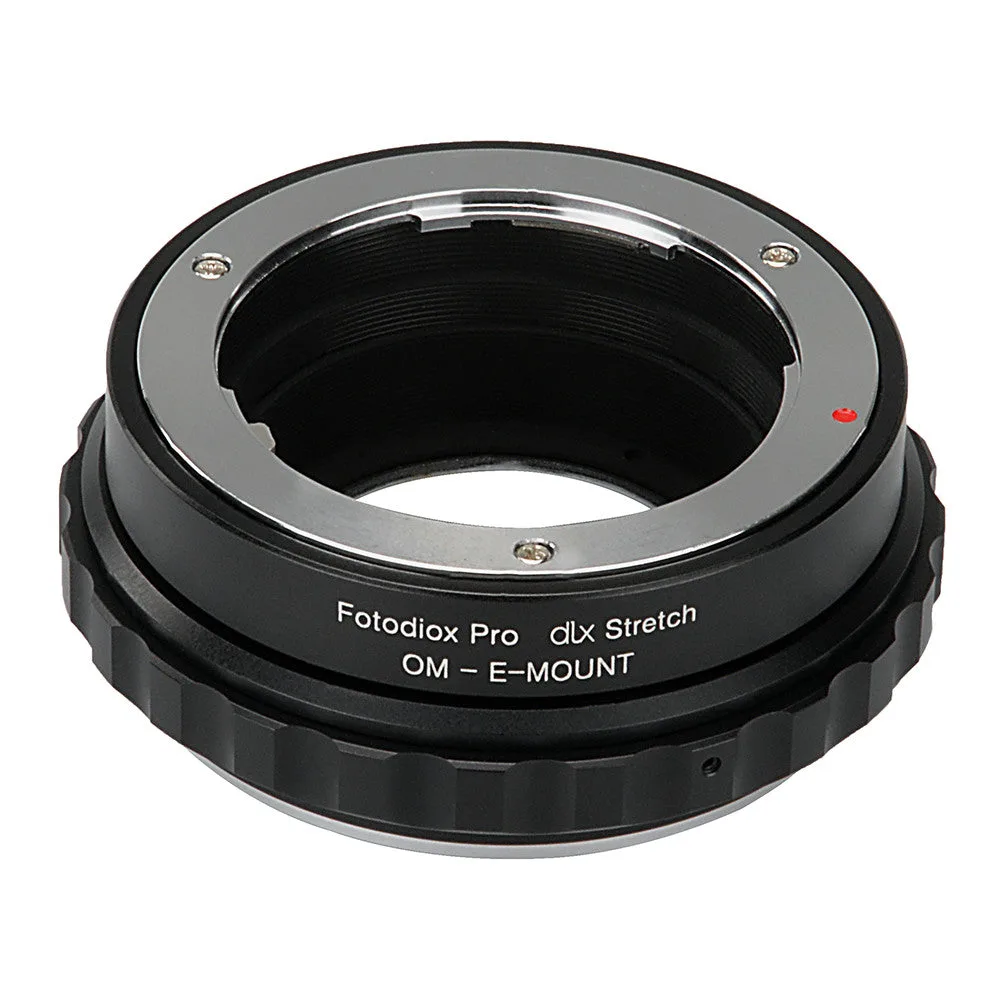
- Fotodiox DLX Stretch Lens Adapter - Olympus Zuiko (OM) 35mm SLR Lens to Sony Alpha E-Mount Mirrorless Camera Body with Macro Focusing Helicoid and Magnetic Drop-In Filters: Mounts Olympus Zuiko (OM) 35mm SLR lenses to Sony E-mount mirrorless cameras with infinity focus or beyond guaranteed; built-in focusing helicoid provides macro focus and correction for back focus. The helicoid is the corrective action for a lens that stops short of infinity, and the guaranteed infinity focus means you are not relying on shims for this specific pairing.
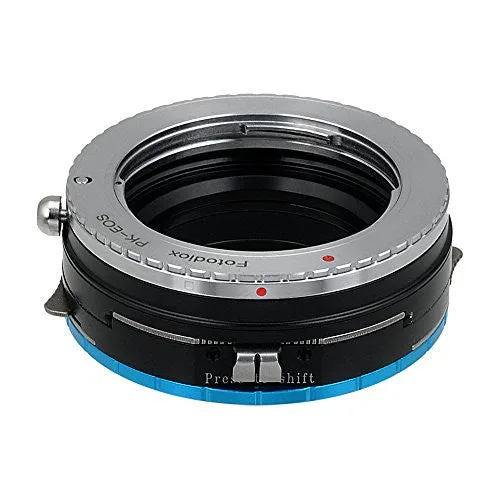
- Fotodiox Pro Lens Mount Shift Double Adapter - Pentax K Mount (PK) SLR Lens to Fujifilm Fuji X-Series Mirrorless Camera Body: Mounts Pentax K Mount (PK) SLR lenses to Fujifilm X-series mirrorless cameras and allows the lens to shift 9mm in each direction and rotate 360 degrees. If your infinity problem is paired with a need for perspective control, this adapter solves both without adding a separate shift mechanism.