Quick Answer
Read the care label before you wash anything, because the symbols tell you the maximum heat and agitation a garment can take, not just a suggestion. As a rule, hand wash or use a delicate cycle in cold water for bras, and only tumble dry on low if the label shows a tumble dry symbol with one dot or a line underneath. When in doubt, err on the gentler side.
Lingerie care labels look like a secret code, but they are really just a set of limits: how hot the water can be, whether a machine can touch the fabric, and whether heat is allowed at all. Once you know the five basic symbol families, you can sort a whole drawer in under a minute.
This guide answers the questions we hear most often about bra care instructions, from whether you can machine wash bras to what tumble dry underwear symbols actually permit. It is written for the fabrics and constructions you will find in everyday lingerie, including lace, mesh, microfibre and cotton.
How to Read the Five Main Symbol Families
Every laundry symbol on a care label belongs to one of five groups: a washtub for washing, a triangle for bleaching, a square for drying, an iron for heat, and a circle for dry cleaning. The shape tells you the method, and the marks inside or underneath tell you the intensity. A washtub with a number means the maximum water temperature in Celsius. A washtub with a hand inside means hand wash only. A washtub with a cross through it means do not wash at all.
The drying square is the one most people misread. A square with a circle inside means tumble drying is allowed. A circle inside the square with one dot means low heat, two dots mean medium, and three dots mean high. A line underneath the square means dry flat, and a line inside the square near the top means line dry. If the whole square has a cross through it, do not tumble dry or line dry the item in a way that adds tension.
- Washtub with a hand: hand wash only, usually in cool water with a gentle detergent.
- Washtub with a cross: do not wash, which is rare for lingerie but common for some structured or bonded pieces.
- Square with a circle and one dot: tumble dry low, which is the only tumble setting most lingerie should ever see.
- Iron with one dot: low heat, and only if the fabric is not lace, mesh or a moulded cup.
Can You Machine Wash Bras?
Yes, many everyday bras can go in a machine, but the details matter more than the yes or no. A bra with moulded cups, underwire, or delicate lace holds its shape best when washed in a mesh bag on a cold, gentle cycle with a low spin. The bag stops straps from tangling around other garments, and the low spin reduces the pulling that distorts cups and stretched elastics over time.
Skip the machine entirely for bras with heavily structured cups, visible embellishment, or a label that shows a hand wash symbol. If the label shows a washtub with a hand inside, that is the manufacturer telling you the construction will not survive agitation. Hand washing those pieces in cool water with a mild detergent takes a few minutes and protects the fit you paid for.
- Hook the bra closed before washing so the hooks do not snag lace or mesh.
- Use a mesh laundry bag for any bra with underwire, moulded cups or lace.
- Never wring or twist a bra to remove water; press it gently between towels instead.
Hand Wash vs Machine Wash Lingerie: Which Should You Choose?
Choose hand washing for anything with lace, mesh, silk, moulded cups, or a high elastane content, and for any garment you want to keep looking new for years rather than months. Choose a machine delicate cycle for sturdy cotton knickers, socks, and simple soft-cup bras that carry a machine wash symbol. The real dividing line is not price, it is construction: the more shaping and the finer the fabric, the gentler the wash should be.
If you do machine wash, use cold water, a mild detergent, and the shortest gentle cycle your machine offers. Avoid fabric softener on anything stretchy, because it coats the fibres and reduces the elastic recovery that keeps knickers and bra bands snug. For hand washing, fill a basin with cool water, add a drop of mild detergent, soak for a few minutes, then rinse until the water runs clear.
- Hand wash: lace, mesh, moulded cups, silk, and anything with a hand wash symbol.
- Machine wash on delicate: cotton knickers, socks, and simple soft-cup bras with a machine symbol.
- Always separate lights and darks, and wash lingerie with similar weights so nothing gets crushed.
What Do Tumble Dry Symbols Mean for Underwear?
A tumble dry symbol with one dot means low heat is acceptable, and that is the highest setting most knickers and bras should ever receive. Heat is the main enemy of elastic, so even when low tumble drying is allowed, air drying flat or hanging will extend the life of the garment. If the square has a cross through it, do not put that item in the dryer at all.
For anything with lace, mesh or a moulded cup, treat the label as a ceiling rather than a target. Air dry those pieces flat on a towel or hang them by the band, never by the straps, because wet straps stretch under their own weight. Socks and plain cotton briefs are the most forgiving items in the drawer and can usually handle low tumble drying if the label permits it.
- One dot in the tumble dry circle: low heat only.
- Square with a cross: air dry instead, flat or line dried away from direct sun.
- Never tumble dry moulded cups or lace on any heat setting.
Decoding the Remaining Symbols: Bleach, Iron and Dry Clean
The triangle covers bleach. An empty triangle means bleach is allowed, a triangle with two diagonal lines means oxygen bleach only, and a crossed triangle means no bleach. For lingerie, the safest default is no bleach at all, because chlorine breaks down elastane and can yellow white lace. If you need to brighten whites, use an oxygen-based product sparingly and only when the label allows it.
The iron symbol uses dots for temperature: one dot for low, two for medium, three for high. Most lingerie should never be ironed, and lace, mesh and moulded cups should be kept away from an iron entirely. The circle symbol covers dry cleaning; a circle with a letter inside gives the cleaner specific instructions. If you see a crossed circle, do not dry clean the item.
- Crossed triangle: no bleach, which is the right call for almost all lingerie.
- One-dot iron: low heat only, and only on plain cotton or microfibre that is not lace or mesh.
- Circle with a cross: do not dry clean; wash according to the washtub symbol instead.
Care Label Cheat Sheet
Washtub with a hand inside
Hand wash only in cool water with a mild detergent, then rinse until clear and press water out between towels. If you see the hand, do not put the item in a machine, even on a delicate cycle.
Square with a circle and one dot
Low tumble drying is permitted, but air drying flat or hanging by the band is still the safer choice for elastic and lace. One dot is a ceiling, not a recommendation.
Square with a cross
Do not tumble dry or line dry in a way that adds tension; lay the item flat on a towel instead. Air drying flat is the default for bras and lace knickers.
Crossed triangle
No bleach, including chlorine and oxygen bleaches, because both can damage elastane and delicate fibres. Treat a crossed triangle as your standard for all lingerie.
One-dot iron
Low heat only, and never on lace, mesh or moulded cups, which can melt, glaze or lose their shape. When in doubt, skip the iron and let the garment dry smooth.
Care Labels on Real Pieces
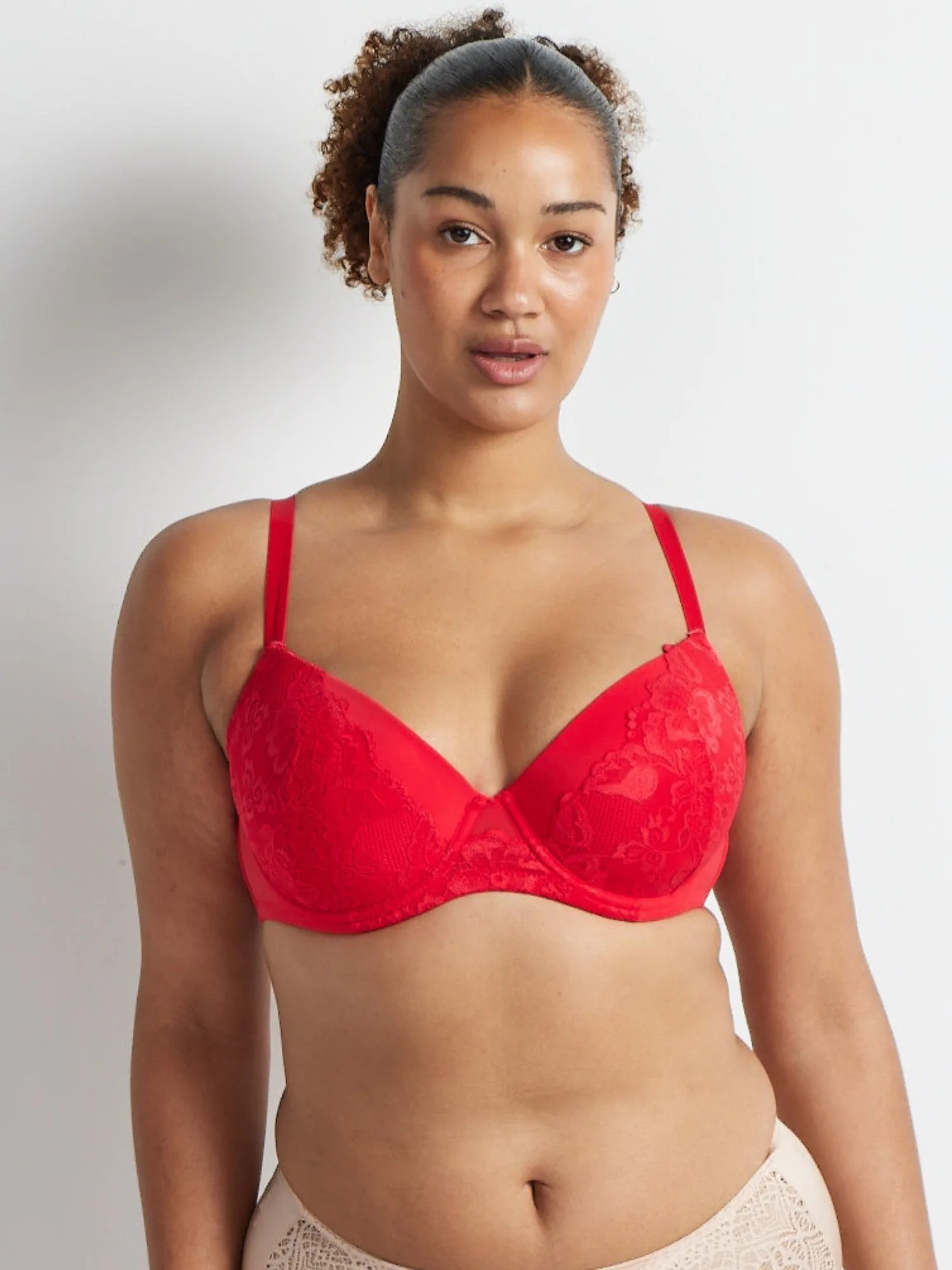
- Brazilian Full Figure Contour Bra: Designed for D-E cup sizes in signature Brazilian lace with full coverage moulded cups, a plunge neckline, wide adjustable straps and three hook-and-eye closures. Moulded cups and lace are the two features most likely to distort in a machine, so this is a hand wash or mesh-bag delicate cycle piece, and it should be air dried flat rather than tumble dried.
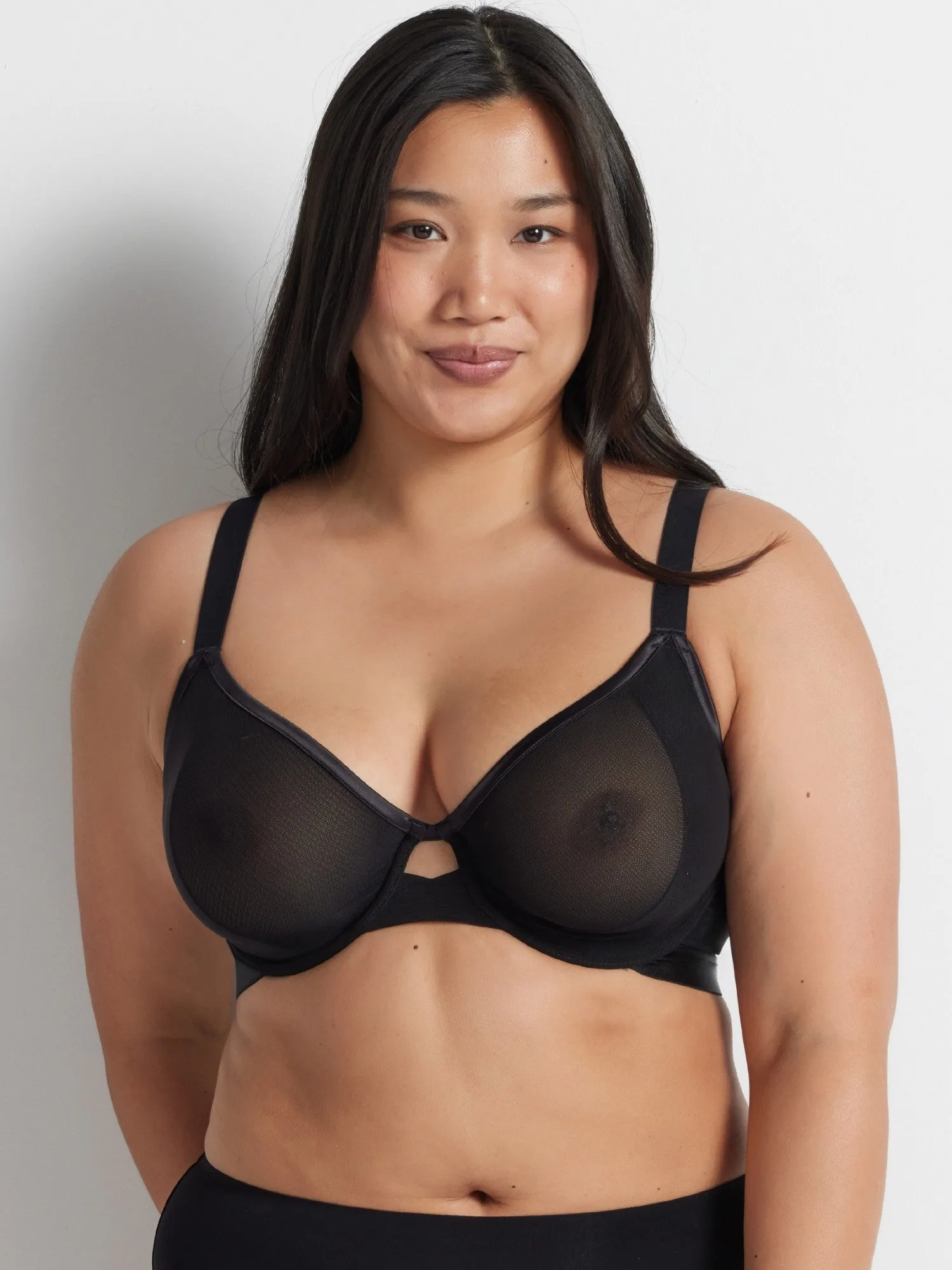
- Hold Up Neo Mesh Underwire Bra: Designed for D-G cups with unpadded moulded cups in double-lined mesh, satin binding, a keyhole detail, wide wings, padded underwire and adjustable straps. The padded underwire and double-lined mesh hold their shape well but still dislike heat, so keep the wash cool and skip the dryer to protect the wire casing and the mesh.
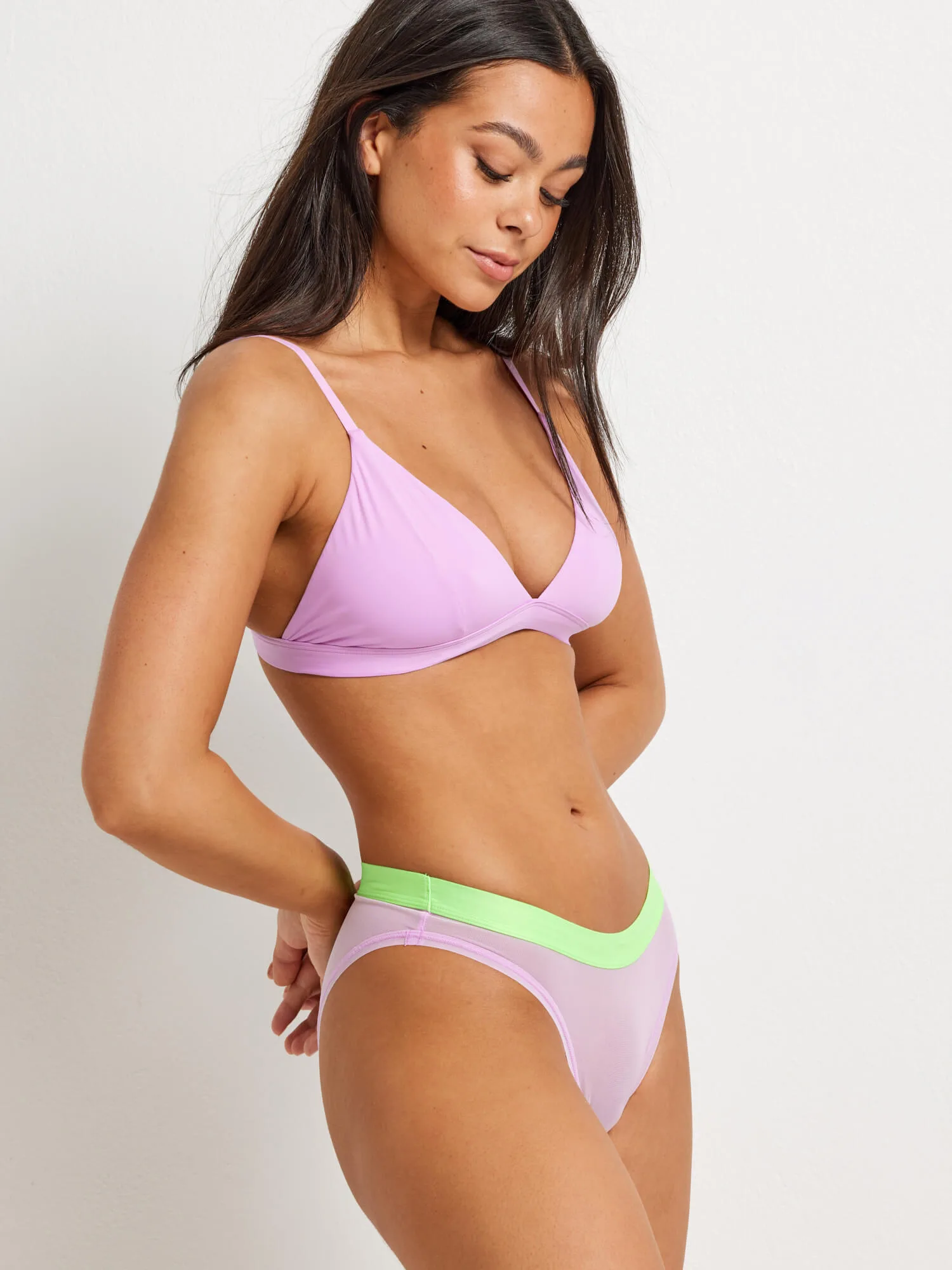
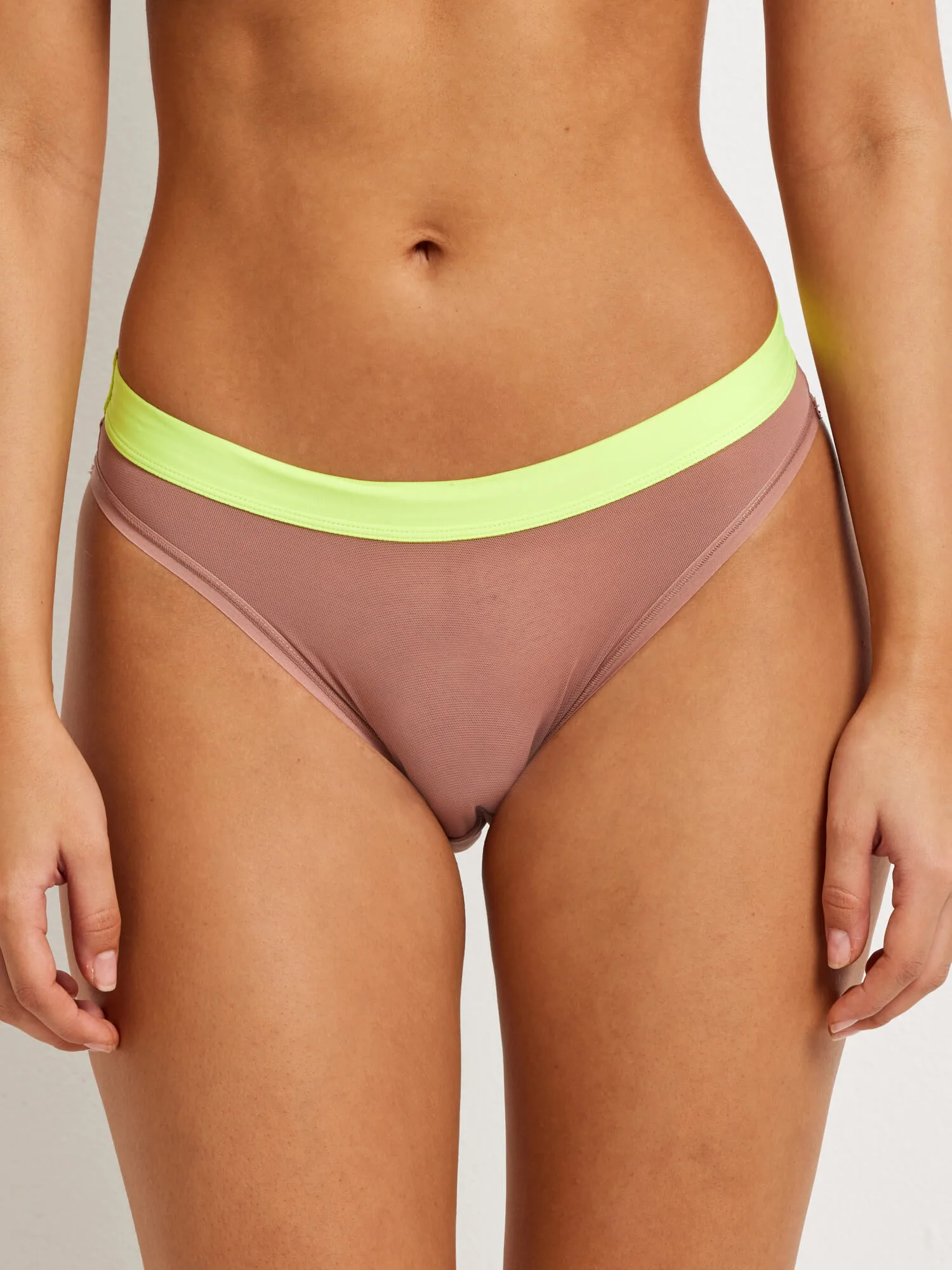
- https://kayserlingeriepkj.com/products/be-you-high-cut-mesh-brief-jacaranda-neon-nellow-7ddc66b8dba05bae2096dae9-1345571https://kayserlingeriepkj.com/products/be-you-high-cut-mesh-brief-clay-neon-yellow-73eb73031496a98e3372f1c8-1345602Be You High Cut Mesh Brief: Made with soft mesh fabric, a wide folded waistband, a mid-rise waist, a high-cut leg line and sheer organza elastic. Sheer mesh and fine elastic are quick to snag and stretch, so wash this brief in a mesh bag or by hand and air dry it flat to keep the waistband and leg line intact.
- Smooth All Over Lace Hi Cut: Combines delicate lace panels with soft micro, a high-cut brief shape, front and back lace panels, smooth flat leg lamination and a 100% cotton gusset. Lace panels plus bonded leg lamination mean heat and agitation are the risks, so a cool hand wash and flat air drying protect both the lace and the smooth finish.
Care symbols are not a test you can fail; they are a set of limits that tell you how much heat and agitation a garment will tolerate. Read the label once, sort your lingerie into hand wash and machine delicate piles, and air dry anything with lace, mesh or moulded cups. That small habit is what keeps bras supportive and knickers snug long after the first wash.