Quick answer
Use liquid Marseille soap as a mild hand and body wash at full strength, then dilute it for light cleaning tasks like counters, floors, and delicate fabrics. A good starting point is one tablespoon of soap per cup of warm water for surfaces, and a few drops per basin for washing. Always test on a hidden spot first and avoid mixing it with bleach or acidic cleaners.
Why liquid Marseille soap works in more than one place
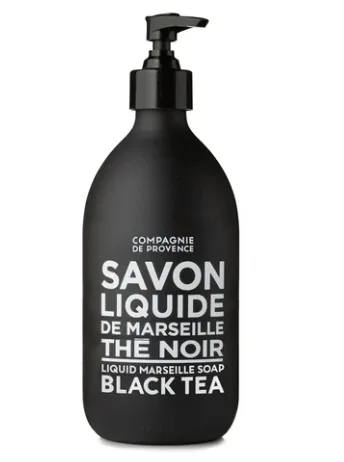
Liquid Marseille soap is built on a traditional soap base known for mildness, which is why it feels gentle on skin yet still lifts everyday grime. That same quality makes it useful in the kitchen, bathroom, and laundry area, as long as you match the dilution to the job. The black tea scent in the Liquid Marseille Soap Black Tea adds a soft aroma without turning your cleaning routine into a perfume counter.
One practical limitation: because Marseille soap is not a disinfectant, it cleans but does not sanitize. For high-risk areas like cutting boards after raw meat, use a dedicated sanitizer after washing. For routine cleaning, it is a solid, gentle option.
A simple dilution guide for common tasks
Dilution is where most people go wrong. Too strong, and you leave a film; too weak, and the soap cannot lift oils. Start with these ratios and adjust by one teaspoon at a time.
For a general surface spray, combine 1 tablespoon of liquid Marseille soap with 1 cup of warm water in a spray bottle. For floors, use 2 tablespoons per gallon of warm water. For hand-washing delicates, add 1 teaspoon to a basin of cool water. For dishwashing by hand, a few drops on a sponge is enough for a small load.
- Countertops and tile: 1 tbsp per 1 cup warm water
- Floors: 2 tbsp per 1 gallon warm water
- Delicates: 1 tsp per basin of cool water
- Hand dishes: a few drops on a wet sponge
How to use it as a gentle body wash
The liquid format makes it easy to use directly on a washcloth or hands. Wet your skin, apply a small amount, and work into a light lather. Rinse thoroughly. Because the formula is mild, it is a reasonable choice for daily showers, but if you have very dry or sensitive skin, follow with a moisturizer while skin is still damp.
Avoid getting the soap into your eyes. If it happens, rinse with cool water. Also, do not add essential oils directly to the bottle unless the label says the formula is unscented and suitable for customization; the black tea version is already scented.
Using it for dishes and kitchen cleanup
For hand-washing dishes, liquid Marseille soap cuts grease well enough for everyday plates and glasses. Fill the sink with warm water, add a few drops of soap, and wash as usual. For baked-on food, let pans soak for five minutes before scrubbing.
One mistake to avoid: using too much soap. Excess suds take longer to rinse and can leave a faint taste on glassware. Start with less and add more only if the water feels flat. Also, do not use it in a dishwasher unless the manufacturer explicitly says it is safe; most liquid soaps create too much foam for dishwashers.
Cleaning surfaces without leaving a dull film
Marseille soap can leave a streaky residue on sealed stone, so use it sparingly on granite, marble, or quartz. For those surfaces, a pH-neutral stone cleaner is safer. On painted walls, sealed wood, and laminate, a diluted spray works well. Wipe with a damp cloth, then dry with a clean towel to avoid water spots.
If you notice streaks, you are likely using too much soap or not rinsing enough. Reduce the ratio and wipe twice with clean water. A microfiber cloth helps pick up residue better than a paper towel.
Step-by-step: how to use liquid Marseille soap beyond the sink
- Step 1: Choose your task and dilution: Decide whether you are washing hands, body, dishes, or surfaces. Use the dilution guide above. For a first try, start weaker than you think you need. Checkpoint: if you see heavy suds, you likely added too much soap.
- Step 2: Test on a hidden spot: Before using on any surface or fabric, apply a small amount of diluted soap to an inconspicuous area. Wait a minute, then wipe dry. Check for discoloration or dullness. Checkpoint: if the surface looks dull or streaky after drying, do not use it there.
- Step 3: Apply and agitate gently: For skin, lather with hands or a cloth. For dishes, use a sponge. For surfaces, spray or wipe with a damp cloth. Avoid abrasive scrubbers on delicate finishes. Checkpoint: let the soap sit for 30 seconds on greasy spots before scrubbing.
- Step 4: Rinse or wipe clean: Rinse skin and dishes thoroughly with warm water. For surfaces, wipe with a clean damp cloth, then dry with a towel to prevent streaks. Checkpoint: if a film remains, repeat with plain water only.
- Step 5: Store and label your diluted mix: If you pre-mix a spray bottle, label it with the date and ratio. Use within one week for best results. Do not store diluted soap in direct sunlight. Checkpoint: discard if the mixture looks cloudy or smells off.
Product facts
- Liquid Marseille Soap Black Tea: Liquid Marseille soap with a classic black tea scent, traditional soap base known for mildness, convenient liquid format for everyday use. The mild base makes it suitable for hands and body, while the liquid format lets you dilute it easily for cleaning tasks without grating bar soap.