Quick answer
Choose the Fun Time Clock if you want a learning tool that teaches time-telling, or the Looney Kaleidoscope if your child craves visual exploration and color play.
What each panel offers
The Fun Time Clock features movable hour and minute hands that point to large numbers and Roman numerals, making it a hands-on way for children to learn traditional clock reading. It requires no assembly and mounts easily to any wooden play structure.
The Looney Kaleidoscope creates a vibrant display of color when pointed toward light. Rotating the end cap produces dynamic moving patterns, and it attaches to any wooden play structure with the included mount and hardware.
Key differences at a glance
The main difference is purpose: one panel focuses on educational skill-building (telling time) while the other offers open-ended sensory play (color patterns). The Fun Time Clock is a static learning tool; the Looney Kaleidoscope relies on light and movement for its effect.
Both attach to standard wooden swing sets, so installation is similar. Neither requires batteries or ongoing supplies.
Trade-offs at a glance
- Learning value: Fun Time Clock teaches a concrete skill (telling time) with movable hands and dual numeral systems. Looney Kaleidoscope offers open-ended sensory exploration without a specific learning outcome.
- Play engagement: Looney Kaleidoscope provides ever-changing visual patterns that can hold attention during solo play. Fun Time Clock is more interactive when a parent or peer asks the child to set a time.
- Durability and maintenance: Both panels attach securely to wooden play structures. The kaleidoscope has a rotating end cap that could wear over time; the clock has no moving parts beyond the hands.
Product facts
-
Fun Time Clock: The clock comes with movable hour and minute hands that point to large, easy-to-read numbers and Roman numerals. This lets children practice setting the time themselves, turning play into a practical learning moment.
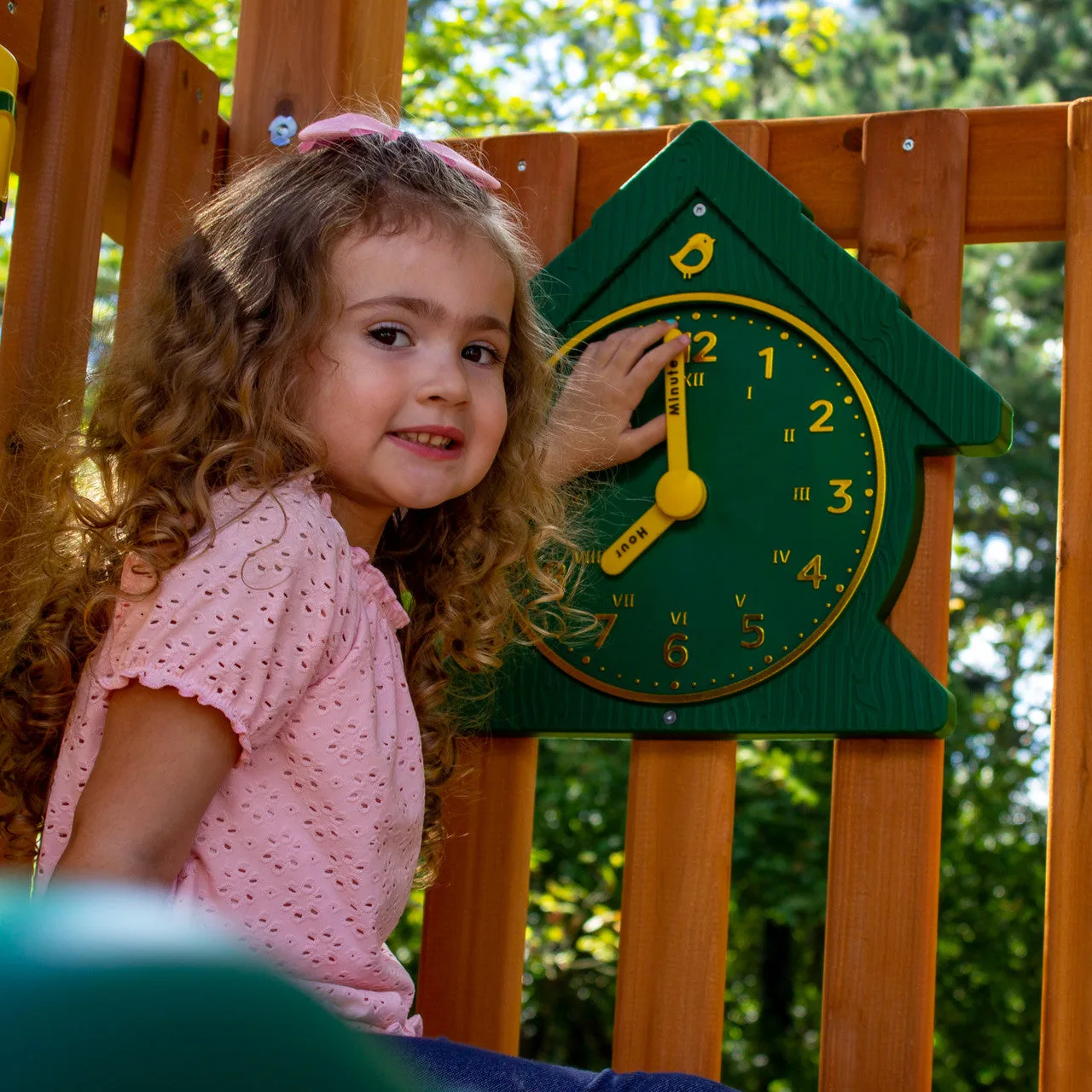
Fun Time Clock
-
Looney Kaleidoscope: Point the kaleidoscope toward light to see a vibrant color display; rotate the end cap to change patterns. It encourages observation and cause-and-effect thinking as kids experiment with light and movement.
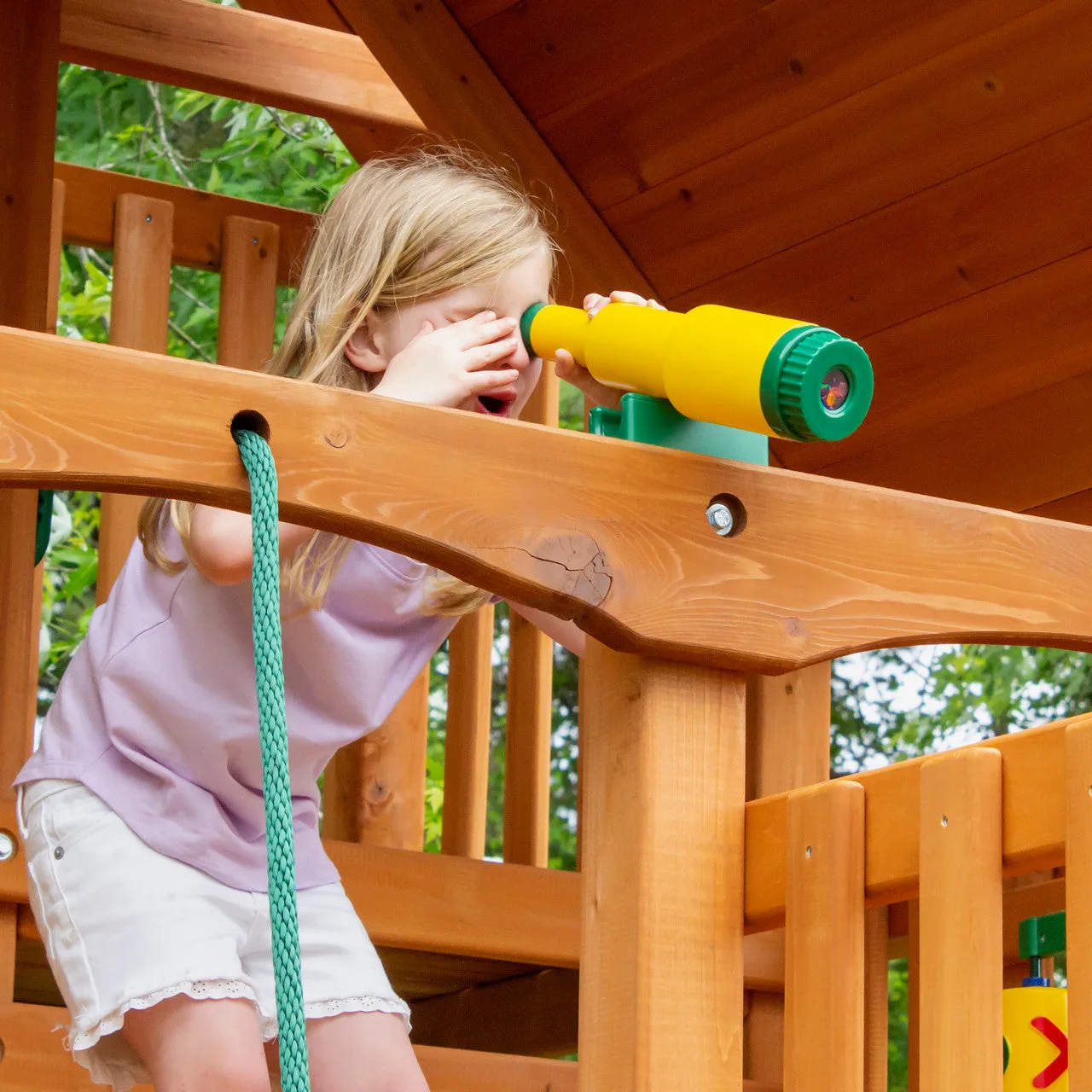
Looney Kaleidoscope
Which panel fits your child?
Best for
- Parents who want a play panel that doubles as a teaching tool for time-telling
- Children who enjoy structured, skill-based activities
Not ideal for
- Children who prefer open-ended, visually stimulating sensory play
- Families seeking a purely decorative or low-interaction panel