Quick Answer
Use a front-clip harness like the Crosscheck™ Dog Harness to gently redirect your dog's attention when they pull, then reward loose leash walking with consistent steps.
Why a Front-Clip Harness Helps with Loose Leash Walking
Front-clip harnesses work by attaching the leash at the dog's chest, so when your dog pulls, the harness gently turns them back toward you rather than letting them drag forward. This interrupts the pulling motion without causing discomfort and gives you a chance to redirect their focus.
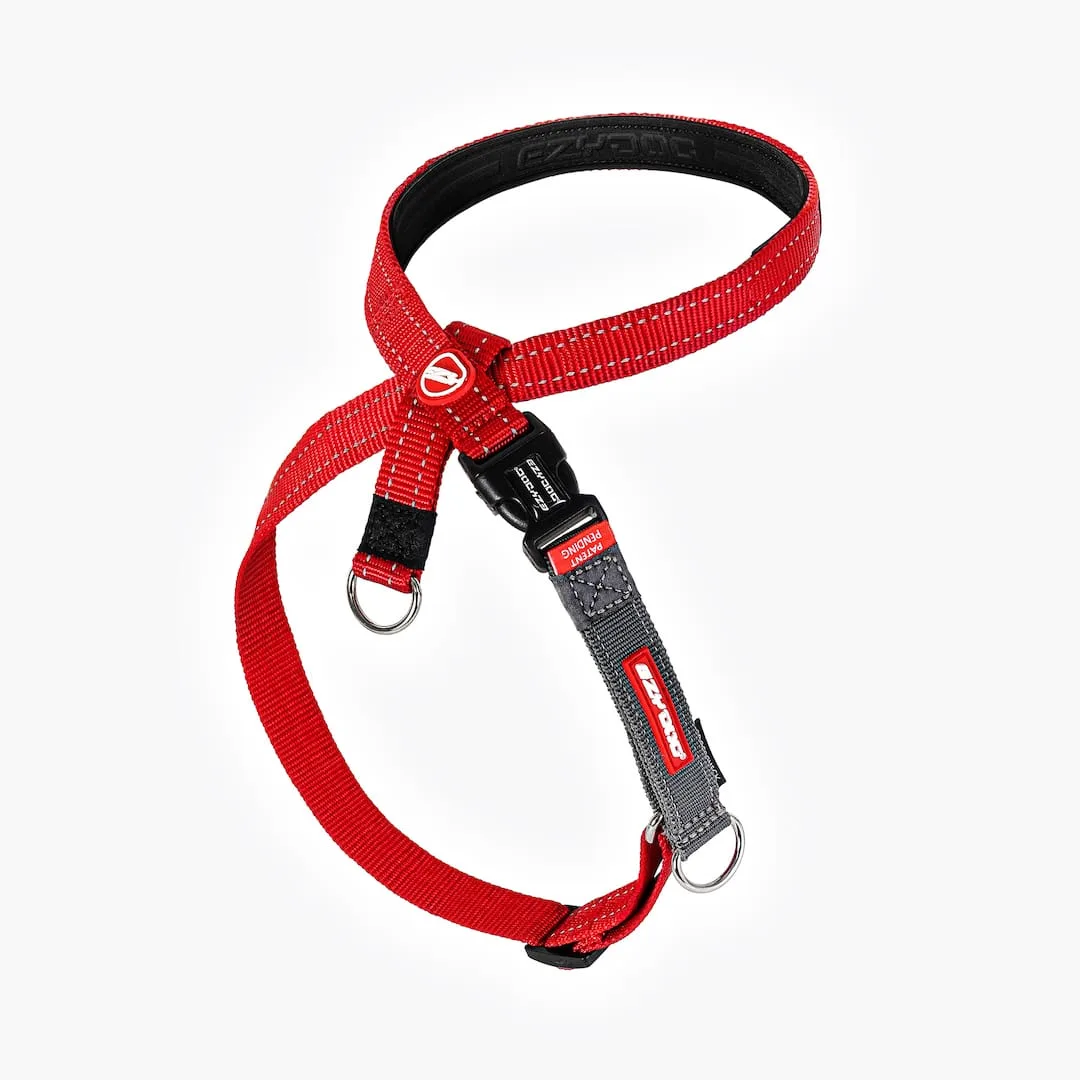
The Crosscheck™ Dog Harness uses a limited-slip system around the girth (not the neck) to request attention as the dog begins to pull. This humane design helps teach your dog that pulling leads to a gentle correction, while loose leash walking earns them forward movement.
Common Mistakes That Slow Progress
Many owners yank the leash or keep constant tension, which teaches the dog to pull against pressure. Instead, aim for a relaxed arm and a loose leash at all times. Another mistake is rewarding the dog only after they stop pulling—reward the moment the leash slackens, even if it's for one second.
Don't skip the setup: make sure the harness fits snugly (you should be able to fit two fingers under the straps) and that the front ring is centered on the chest. An ill-fitting harness can rub or allow the dog to twist out of it.
Step-by-Step Loose Leash Walking Training
- Step 1: Set Up the Harness Correctly: Clip the leash to the front D-ring on your dog's chest. Adjust the straps so the harness is snug but not tight—you should be able to slide two fingers under any strap. The front ring should sit flat on the sternum. A loose or twisted harness reduces the redirecting effect.
- Step 2: Start in a Low-Distraction Area: Practice indoors or in a quiet backyard. Hold the leash with a relaxed arm and let it hang in a slight J-shape. Stand still and wait for your dog to look at you or create slack in the leash. The moment the leash goes loose, mark with a word like 'yes' and reward with a small treat at your side. Reward the slack, not the stop—timing is everything.
- Step 3: Add Movement and Change Direction: Take a step forward. If your dog pulls and the leash tightens, stop moving and stand still. Do not pull back. Wait until your dog turns back or the leash loosens, then mark and reward. After a few successes, change direction abruptly so your dog learns to watch you rather than forge ahead. If you keep walking while the leash is tight, you're rewarding the pull.
- Step 4: Gradually Increase Distractions: Once your dog walks loosely in quiet areas, move to a sidewalk or park with mild distractions (e.g., one other dog at a distance). Repeat the same pattern: stop when the leash tightens, reward when it slackens. Shorten sessions to 5–10 minutes to keep your dog focused. Progress too fast and your dog may regress—go back to a quieter spot if needed.
- Step 5: Fade the Treats but Keep the Marker: After your dog reliably walks with a loose leash, start rewarding every other correct step, then every third. Keep using the verbal marker ('yes') to confirm the behavior. Eventually, replace treats with praise or a quick game of tug. Never stop rewarding entirely—random reinforcement keeps the behavior strong.
Recommended Gear for Loose Leash Training
-
Crosscheck™ Dog Harness: The Crosscheck Harness functions like a martingale collar but requests attention around the dog's girth rather than its neck. This gentle redirection helps your dog learn to walk beside you without the choking sensation of a collar, making training more comfortable and effective.
Crosscheck™ Dog Harness