Quick answer
For most people, a soft-bristled manual toothbrush is the safest and most effective choice. Medium and hard bristles can damage gums and enamel over time, especially if you brush aggressively. Choose soft unless your dentist specifically recommends otherwise.
Choosing a manual toothbrush seems simple, but the bristle hardness can make a big difference to your oral health. Soft, medium, and hard bristles each have their own trade-offs, and picking the wrong one might do more harm than good.
In this comparison, we break down the differences between soft, medium, and hard toothbrush bristles, look at what dentists typically recommend, and help you decide which type fits your needs. We'll also highlight a natural option that combines effective cleaning with gentle care.
Soft Bristles: The Gentle Choice
Soft bristles are the most commonly recommended by dental professionals. They are flexible enough to clean along the gumline without causing irritation, making them ideal for people with sensitive gums, receding gums, or those prone to enamel wear.
Soft bristles are also a great choice for children and anyone who tends to brush too hard. They effectively remove plaque when used with proper technique, and they reduce the risk of damaging your gums or exposing sensitive roots.
- Best for: sensitive gums, enamel concerns, children, and most adults.
- Look for: a toothbrush with soft, rounded bristle tips for extra gentleness.
Medium Bristles: A Middle Ground?
Medium bristles offer a balance between soft and hard, providing a slightly firmer feel while still being somewhat flexible. Some people prefer them because they feel like they are cleaning more thoroughly, but they can still be too abrasive for many mouths.
If you have healthy gums and no sensitivity, medium bristles might work, but they require careful brushing technique to avoid gum recession. Many dentists advise against medium bristles because the added stiffness does not significantly improve plaque removal and increases the risk of damage.
- Best for: those who find soft too gentle, but only with a light touch.
- Caution: medium bristles can irritate gums if you brush vigorously.
Hard Bristles: The Risky Option
Hard bristles are the stiffest and most abrasive. They are sometimes marketed for tough stain removal, but they are rarely recommended by dental professionals. The stiff bristles can wear down enamel and cause gums to recede, leading to tooth sensitivity and other problems.
Unless your dentist specifically recommends a hard brush for a particular reason, it is best to avoid them. Even with a gentle technique, hard bristles can be too harsh for most people, and the long-term risks outweigh any potential benefits.
- Best for: very few people; only under professional guidance.
- Risk: enamel erosion, gum recession, and increased sensitivity.
What About Bristle Material and Design?
Beyond hardness, the material and design of the bristles matter. Most toothbrushes use nylon bristles, but some natural options use plant-based materials. The shape of the bristles, such as multi-height or angled designs, can also affect how well they clean.
For example, the Naturally Clean Soft Toothbrush (Twin Pack) from Tom's of Maine features an angled neck and multi-height bristles designed for effective cleaning. Its handle is made from renewable castor oil plants and is recyclable through a TerraCycle program, making it a thoughtful choice for eco-conscious shoppers.
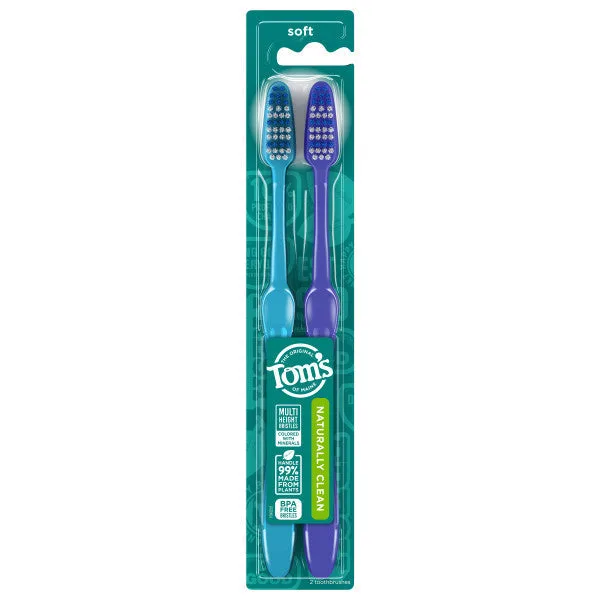
Naturally Clean Soft Toothbrush (Twin Pack)
- Consider: BPA-free materials and recyclable handles for sustainability.
- Tip: Replace your toothbrush every 3 months or sooner if bristles fray.
Trade-offs at a glance
- Soft bristles: Gentle on gums and enamel, ideal for most people, but may feel less effective to some. Best overall choice for daily use.
- Medium bristles: Firmer feel, but can irritate gums if used with pressure. Use with caution and a light touch.
- Hard bristles: Risky for enamel and gums, not recommended for most. Avoid unless advised by a dentist.
Product facts: natural toothbrush options
- Naturally Clean Soft Toothbrush (Twin Pack): The handle is made from renewable castor oil plants and is recyclable through the TerraCycle collection program. It features an angled neck and mineral-colored, multi-height bristles for effective cleaning. It is BPA-free and free of artificial colors. This soft-bristled toothbrush combines gentle cleaning with sustainable materials, making it a great choice for those who want effective oral care without compromising on environmental values.
- Fluoride-Free Antiplaque & Whitening Spearmint Toothpaste: This natural toothpaste is designed to help fight plaque and gently whiten your smile, delivering a refreshing spearmint taste. It is fluoride-free for a natural approach to oral hygiene. Pairing a soft toothbrush with a fluoride-free toothpaste can be part of a natural oral care routine, especially for those who prefer to avoid fluoride.
Which bristle type fits you?
Best for
- People with sensitive gums or enamel concerns – soft bristles are gentle and effective.
- Children and seniors who need a softer touch to protect delicate oral tissues.
Not for
- Those who brush aggressively or have receding gums – even soft bristles can cause damage if used too forcefully.
- People looking for maximum stain removal – hard bristles are not a safe solution; consider professional cleaning instead.
Choosing the right toothbrush bristle type is a simple but important decision for your oral health. Soft bristles are the safest bet for most people, and natural options like the Naturally Clean Soft Toothbrush (Twin Pack) offer effective cleaning with eco-friendly materials. Remember to brush gently, use proper technique, and replace your toothbrush regularly. Explore our range of natural oral care products to find the perfect fit for your smile.