Quick answer
Play Math Rush 3 in short, low-pressure rounds and treat it as a cooperative puzzle, not a test. Set up the deck, model one round slowly, then let kids call the sequence while you keep time. The goal is fluent fraction, decimal, and percentage thinking, so correct reasoning matters more than raw speed at first.
What Math Rush 3 asks players to do
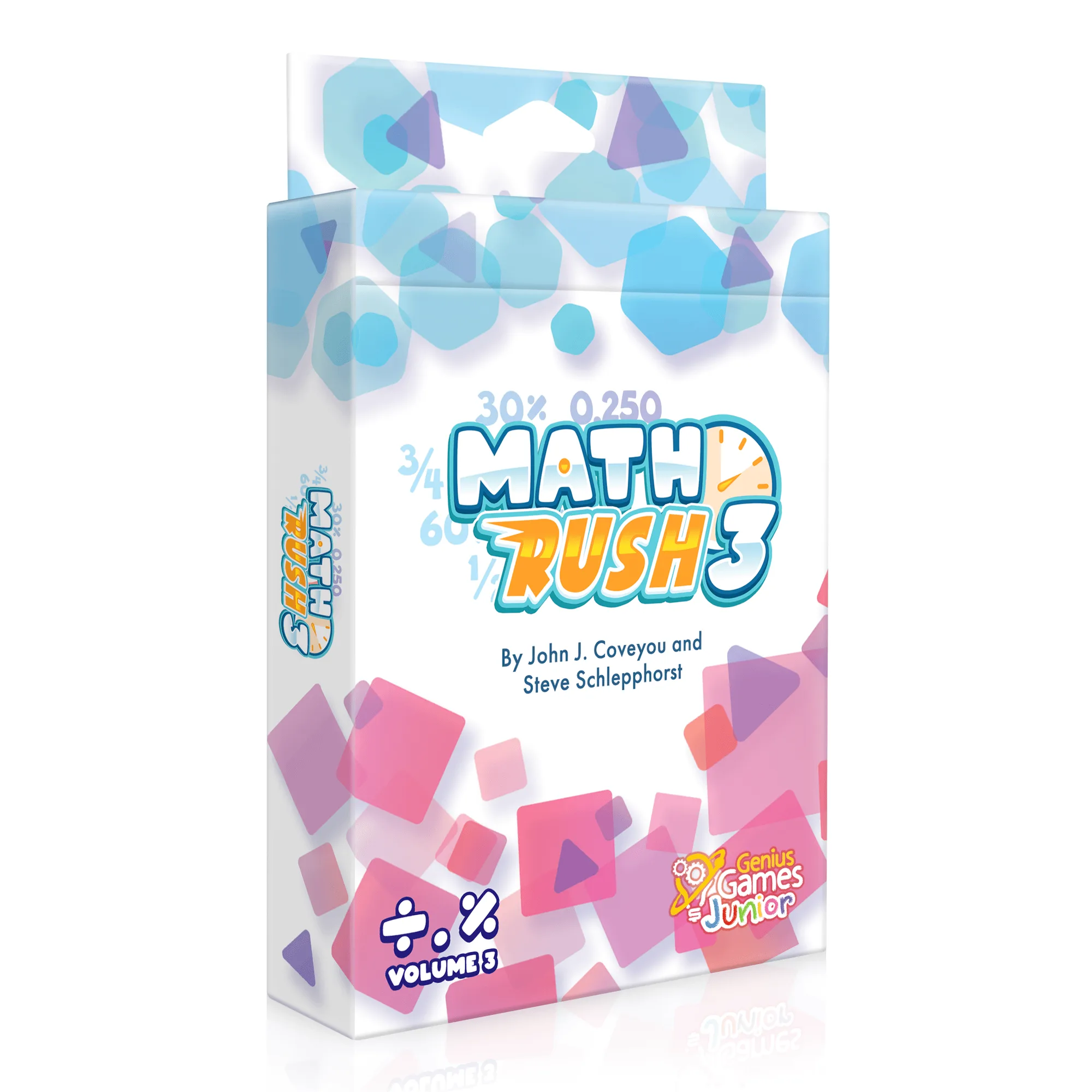
Math Rush 3 is a real-time cooperative sequencing game for 1 to 5 players, ages 8 and up, with a 15-minute play time. The math concepts are fractions and decimals, and the game is built around balancing strategy and speed across three rounds. Because it is cooperative, everyone works toward the same outcome rather than competing against each other, which makes it easier for a parent to coach without turning the table into a quiz.
Set up a table that supports quick thinking
Clear the table except for the deck and a small discard area. Keep a pencil and scrap paper within reach so a player can convert a fraction to a decimal on paper instead of freezing. If you are playing with a younger child, sit beside them rather than across the table so you can see the cards they are considering and prompt without grabbing.
Teach the first round without a timer
Run one full practice round with no time pressure. Lay out a few cards and ask your child to explain why one card should come before another. The sequencing is the lesson: they are comparing values across fractions and decimals, so hearing them say 'one half is the same as zero point five' out loud confirms they are reading the numbers correctly. Once they can sequence a small set calmly, add the timer.
Coach during play instead of correcting after
In a cooperative game, a quiet prompt mid-round keeps the team moving. Try questions like 'Which is closer to one whole?' or 'Can you turn that fraction into a decimal?' rather than announcing the answer. If a player places a card incorrectly, pause the round, let them find the error, and resume. This keeps the mental math card game feeling like teamwork rather than evaluation.
Adjust difficulty for different ages
For a new 8-year-old, start with fewer cards and a longer time limit, then shorten the limit as they get comfortable. For an older or more confident player, deal the full set and keep the standard time. Because the game supports 1 to 5 players, you can also play solo to practice, or pair a stronger player with a younger one so they think through the sequence together.
How to run a Math Rush 3 session step by step
- Step 1: Pick the right moment: Choose a 15-minute slot when your child is fed and not already tired. The game is real-time, so a rushed or grumpy start makes the speed feel stressful instead of fun. Checkpoint: if they are melting down before you deal, play later.
- Step 2: Deal a smaller first hand: For the first few sessions, remove some cards so the sequence is shorter. This lets your child succeed at reading fractions and decimals before the timer adds pressure. Common mistake: starting with the full deck and the standard timer on day one.
- Step 3: Model one round out loud: Play a round yourself, narrating your comparisons: 'Three quarters is zero point seven five, so it goes after one half.' Then hand the cards to your child and let them try the same thinking. Checkpoint: they can explain one comparison in their own words.
- Step 4: Start the timer and stay quiet: Once the round begins, resist calling out answers. If the team stalls, ask a guiding question about which value is larger, then let them place the card. Common mistake: turning coaching into correcting, which makes the cooperative game feel like a test.
- Step 5: Debrief one card after the round: Pick a single card from the round and ask how they figured it out. One focused conversation sticks better than reviewing every card. Next step: add more cards or shorten the time limit next session.
Product facts
- Math Rush 3: Fractions, Decimals & Percentages | A Cooperative Time-Based Educational Math Flash Card |STEM Game to Master Mental Math Skills: Type of Game: Real Time Cooperative, Sequencing; Ages 8+; Players 1-5; Time 15 mins; Math Concepts: Fractions, Decimals. The cooperative, real-time format means parents can coach during play, and the 15-minute length fits a homework-night window.