Quick Answer
Use measuring spoons for small amounts (under 1/4 cup) and measuring cups for larger volumes. For dry ingredients, use nested dry cups; for liquids, use a clear liquid measuring cup with a spout.
Why Size Matters
Measuring spoons are designed for small quantities—typically from 1/4 teaspoon up to 1 tablespoon. Measuring cups cover larger volumes, starting at 1/4 cup and going up to 1 cup or more. Using the right tool for the amount you need ensures you're not guessing with a tiny spoon when you need a full cup, or vice versa.
Dry vs. Liquid: The Real Difference
Dry measuring cups are meant to be filled to the brim and leveled off, giving you an exact volume of ingredients like flour, sugar, or oats. Liquid measuring cups have extra headspace to prevent spills and a spout for pouring. Using a dry cup for liquid can lead to spills and inaccurate measurements, while using a liquid cup for dry ingredients often leaves too much room for error.
Accuracy in Baking
Baking relies on precise ratios. A small error in measuring can affect texture and rise. For dry ingredients, spoon into the cup and level with a straight edge. For liquids, place the cup on a flat surface and check at eye level. This habit improves consistency no matter which tools you own.
Decision Rules: Cups vs. Spoons
- Under 1/4 cup: Use measuring spoons. They provide the precision needed for small amounts like baking powder, salt, or spices. If you often halve recipes, make sure your spoon set includes 1/8 teaspoon and 3/4 teaspoon.
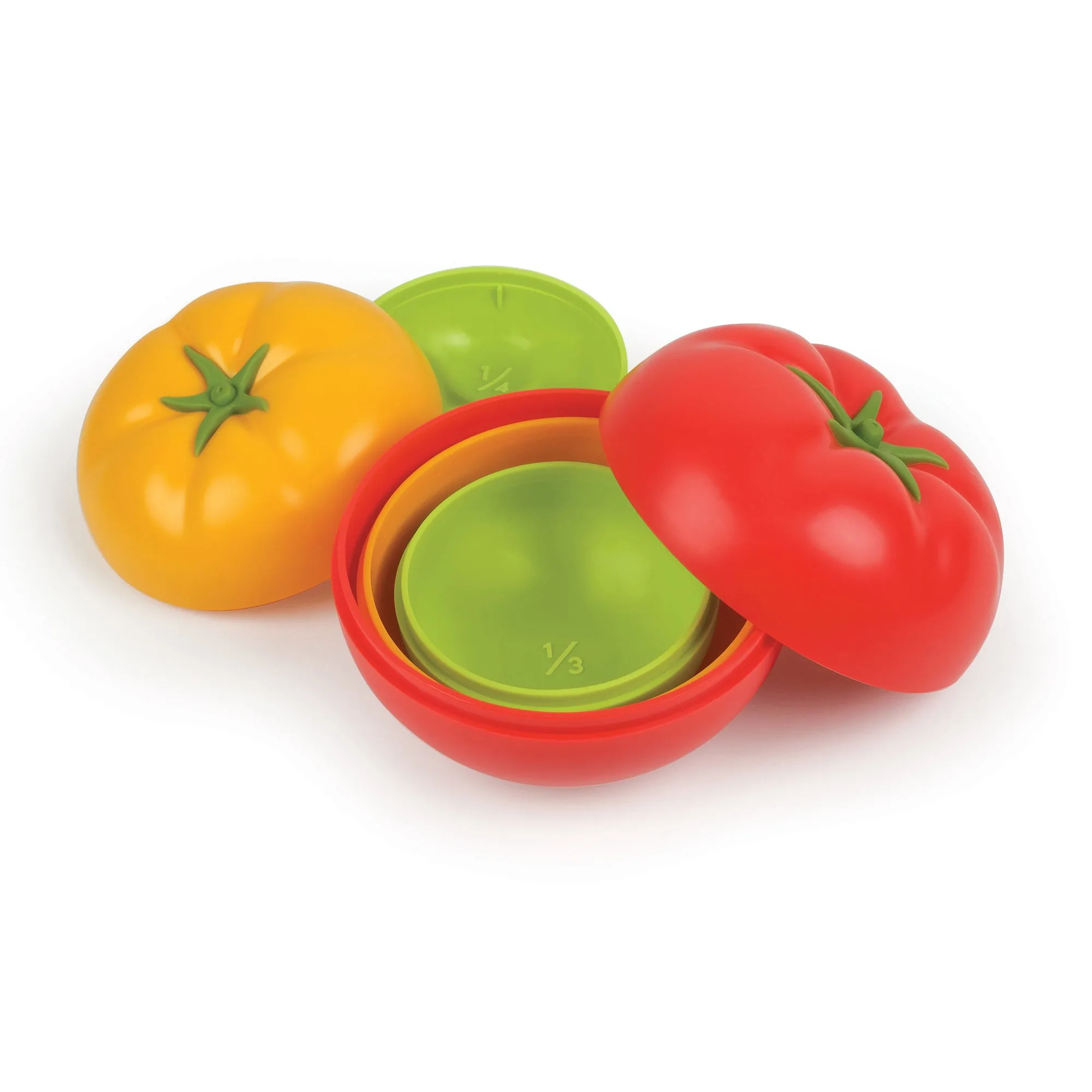
- 1/4 cup to 1 cup dry ingredients: Use dry measuring cups. Fill to the brim and level off for accuracy. Nesting sets like HOME GROWN save space and keep measurements handy.
- Liquids: Use a clear liquid measuring cup with a spout. Check at eye level for accurate reading. If you don't have a liquid measuring cup, use a dry cup only for non-sticky liquids and fill to the brim without spilling.
Product Spotlight
-
HOME GROWN: The HOME GROWN measuring cups are a nesting set of six standard dry measurements, from 1/4 to 1 cup, shaped like heirloom tomatoes. This set covers all the common dry volumes you'll need for baking and cooking, and the nesting design keeps your drawer organized.
HOME GROWN
Who Should Choose What
Best for
- Bakers who need precise dry measurements and want a space-saving set
- Anyone who wants a fun, whimsical addition to their kitchen that also functions well
Not for
- Those who primarily measure liquids and need a clear liquid measuring cup with a spout
- Cooks who require extremely precise weight-based measurements and prefer a kitchen scale