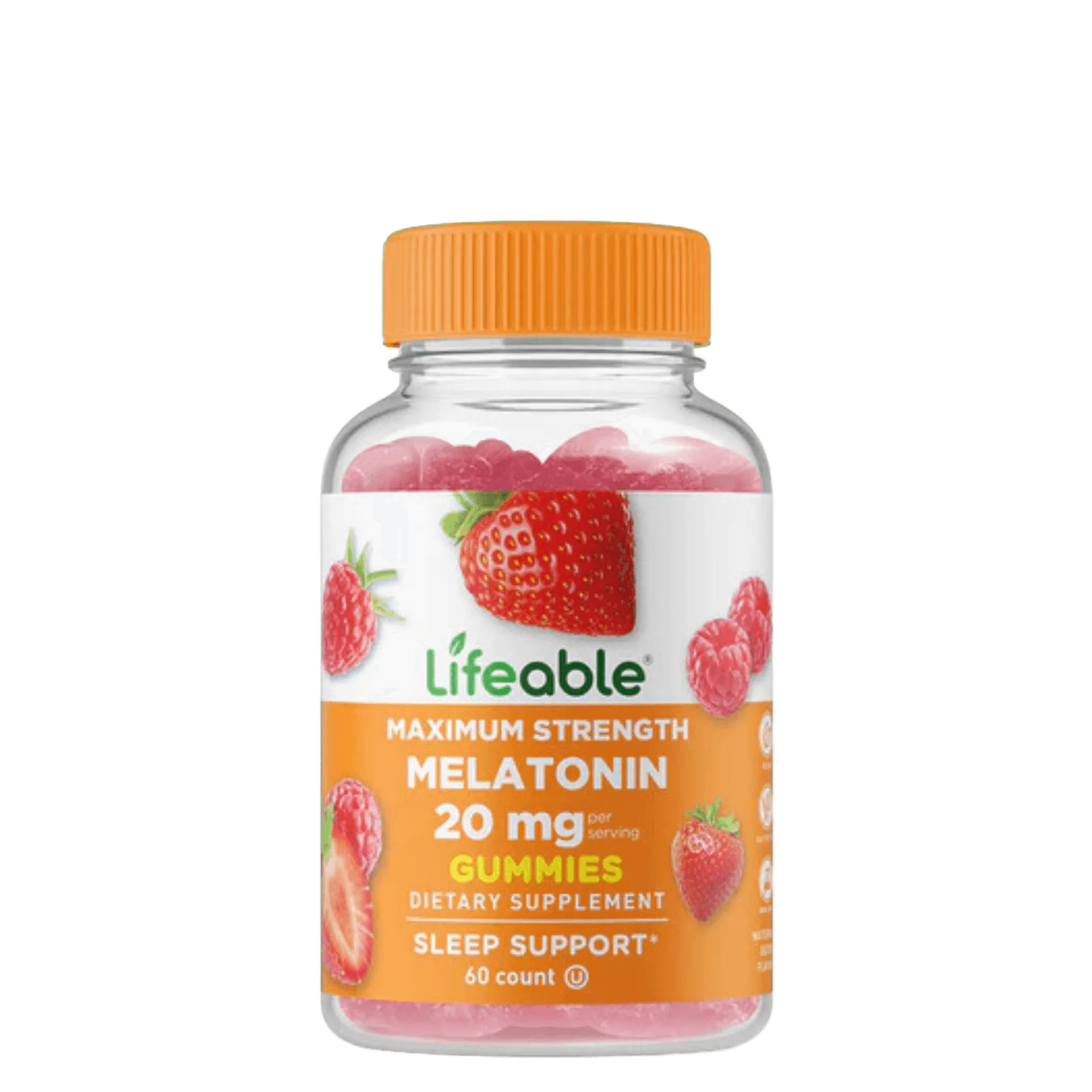
Quick answer
A 20 mg melatonin gummy is a high dose, so treat it as a deliberate choice rather than a default starting point. Most adults who use melatonin for occasional sleep trouble do better starting lower and only moving up with a clinician's input. If you already use a 20 mg product, take it about 30 to 60 minutes before your target bedtime and keep the timing consistent.
Why 20 mg Counts as a High Dose
Melatonin doses sold in gummy form range from under 1 mg to 20 mg and beyond, and the jump between those numbers is large. A 20 mg gummy sits at the high end of that range, which is why it is usually discussed as a specific choice for adults rather than a general starting dose. If you are asking how much melatonin should I take, the honest answer is that it depends on your goal, your age, and what a clinician has advised. For occasional jet lag or a one-off rough night, many people use far less. For ongoing sleep concerns, a 20 mg gummy is not a substitute for addressing the cause.
Timing: When to Take Melatonin Gummies
Melatonin works with your body clock, so timing matters as much as the number on the label. Take a gummy roughly 30 to 60 minutes before the bedtime you actually want, not the time you get into bed after scrolling. If you take it too early, you may feel drowsy while still trying to finish tasks. If you take it too late, it can push your sleep window later instead of earlier. Keep the time consistent night to night so your routine stays predictable.
What the Label Does and Does Not Tell You
Gummy labels list the melatonin amount per gummy, but they do not tell you how your body will respond. Two people can take the same 20 mg gummy and have very different experiences. The catalog facts for the Melatonin 20 mg Gummies note that melatonin can be used to treat delayed sleep phase and circadian rhythm sleep disorders in the blind and provide some insomnia relief. That is a specific clinical context, not a promise that a high dose will fix ordinary sleeplessness. If your sleep problem is persistent, the label cannot replace a conversation with a clinician.
Who Should Be Careful With High Dose Melatonin Gummies
High dose melatonin gummies are generally aimed at adults, and they are not a casual option for children. If you are pregnant, nursing, taking blood thinners, sedatives, or other medications, or managing a health condition, check with a clinician before using a 20 mg product. Also consider that a gummy is still a dose: it is easy to take one more than intended because it tastes like candy. Store the bottle out of reach of kids, and do not stack a 20 mg gummy with other sleep aids without medical guidance.
Melatonin 20 mg Gummies FAQ
Can I start with a 20 mg gummy?
A 20 mg gummy is a high dose, so it is not the usual first step for occasional sleep trouble. Many adults start lower and adjust only with a clinician's input. If you have not used melatonin before, ask a clinician before making 20 mg your starting point.
How long before bed should I take it?
About 30 to 60 minutes before the bedtime you actually want. Taking it earlier can leave you drowsy during evening tasks, and taking it later can shift your sleep window the wrong way. Set a consistent nightly time and treat it as part of your wind-down, not an afterthought.
Is a 20 mg gummy safe every night?
That depends on why you are using it and what else you take. The catalog facts describe melatonin use in specific sleep-disorder contexts, which implies medical guidance for ongoing use. If you need it nightly for more than a short stretch, talk to a clinician instead of simply continuing.
Why does the same dose affect people differently?
Melatonin interacts with your individual body clock, medications, and sleep habits, so a 20 mg gummy will not feel the same to everyone. The label gives the amount per gummy, not a personal response prediction. Judge by your own experience and a clinician's advice, not by someone else's dose.
Product facts
- Melatonin 20 mg Gummies: Melatonin 20 mg Gummies are listed with the note that melatonin can be used to treat delayed sleep phase and circadian rhythm sleep disorders in the blind and provide some insomnia relief. This tells you the product is positioned around specific sleep-timing issues, not general relaxation, so it fits best when your sleep problem is about timing or a clinician has recommended melatonin.