Quick answer
Choose metal when you want a miniature that survives handling and storage with minimal fuss, and choose resin when you want finer surface detail, lighter weight, and easier conversion work. If you paint and display more than you play, resin usually wins. If you game often and transport your army in a case, metal's toughness is worth the extra weight.
Most hobbyists who ask about metal vs resin miniatures are really asking one question: which material will I regret buying less? The honest answer depends on how you handle your models, how much detail you care about, and how much assembly work you enjoy.
Both materials appear across the Victoria Miniatures range, from single-piece resin characters to multi-part kits. The differences show up in durability, detail capture, assembly, painting, and price, so it helps to compare them on the jobs you actually do rather than on reputation alone.
Durability: where metal earns its keep
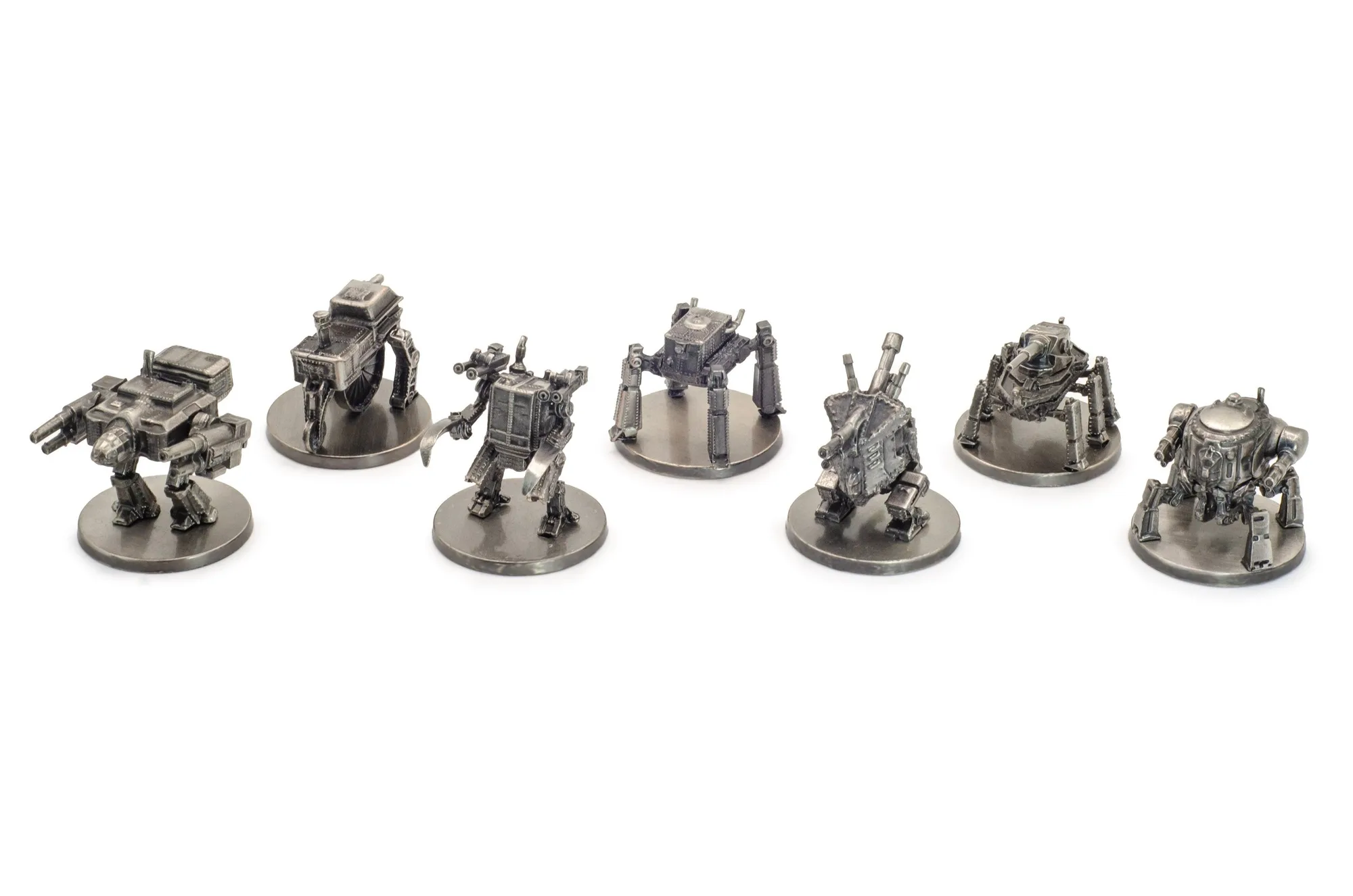
Metal miniature durability is the main reason veteran gamers still swear by it. A metal figure resists the gradual bending and flexing that thinner resin parts can suffer in a crowded carry case, and it holds a paint job through repeated handling. The trade-off is weight: a metal army is heavier to carry and a dropped metal model can chip paint or bend a thin weapon more permanently than resin would.
Resin is lighter, which makes storage and transport easier on your back and your foam. It is also more brittle at thin points, so a long rifle barrel or a delicate banner can snap if it takes a direct hit. Neither material is indestructible; the question is which failure mode you can live with.
- Store metal models in foam with deeper cutouts so weight does not crush neighbours.
- Support thin resin parts with a pin at the joint, not just glue.
Detail and surface quality
Resin miniature detail is usually the sharper of the two. Resin captures fine texture, small facial features, and crisp undercuts that metal moulds struggle to reproduce consistently. That is why character pieces and display models are so often cast in resin, and why painters who work with glazes and fine highlights tend to prefer it.
Metal holds detail well too, especially on larger surfaces, but fine edges can soften over a long production run. If your priority is a face that reads clearly under a magnifier, resin has the edge. If your priority is a model that survives a decade of gaming nights, metal's toughness offsets a little lost crispness.
Assembly and conversion work
Metal figure assembly typically means pinning and gluing with a strong two-part adhesive, because metal parts are heavy and a butt joint will not hold. That is more work up front, but metal takes paint stripper and reposing well, so a second-hand metal model can be rebuilt almost indefinitely.
Resin figure assembly is often faster. Multi-part resin kits can be test-fitted before glue, and lighter parts need less pinning. Resin also cuts and sands more easily for conversions, though resin dust requires a mask and wet sanding. If you enjoy sculpting and reposing, resin is the friendlier material; if you want a model that stays put once built, metal rewards the extra pinning effort.
- Wash resin parts in warm soapy water before assembly to remove release agent.
- Score metal joints with a file before gluing to give the adhesive more grip.
Painting and priming differences
Metal takes primer well and holds it firmly, which makes it forgiving for beginners. You can strip and repaint a metal model repeatedly without damaging the surface. The downside is weight in the hand during long painting sessions, and the risk of paint chipping at hard edges if you skip a varnish.
Resin accepts primer and paint smoothly and is light enough to hold comfortably for hours. It can, however, show mould release residue if you skip washing, and that residue causes paint to bead or flake. Prime resin in thin coats and seal the finished model with varnish, especially on thin parts that flex.
Cost, availability, and what you actually get
Price differences between metal and resin usually reflect production method rather than quality. Metal casting has higher tooling costs and is often used for smaller runs or classic ranges, while resin casting suits detailed character pieces and modular kits. Neither material is inherently premium; a well-cast metal figure can beat a poorly cast resin one.
Availability matters too. Some ranges are only offered in one material, so the choice is made for you. Where both exist, compare the specific model rather than the material label, and check what is included: a multi-part kit with a base is a different value proposition from a single-piece casting.
Trade-offs at a glance
- Durability vs weight: Metal resists bending and survives handling better, but a metal army is heavier to carry and a dropped model can chip or bend permanently. Resin is lighter and easier to transport but more brittle at thin points. Choose metal for frequent gaming and travel; choose resin for display and lighter storage.
- Detail vs production consistency: Resin captures finer surface detail and crisper undercuts, which suits character pieces and display painting. Metal holds detail well but fine edges can soften over long production runs. If a face or texture must read clearly, resin usually wins; if you want a workhorse model, metal is fine.
- Assembly effort vs conversion freedom: Metal needs pinning and strong adhesive but can be stripped and reposed repeatedly. Resin often test-fits and assembles faster, and cuts and sands more easily for conversions, though resin dust needs a mask and wet sanding. Pick metal for a build-once model; pick resin if you enjoy reposing and sculpting.
- Painting and priming: Metal takes primer firmly and can be stripped and repainted many times. Resin paints smoothly and is light to hold, but needs washing first to remove release agent and benefits from varnish on thin parts. Wash resin before priming; varnish both materials if the model gets handled.
- Cost and availability: Price reflects production method, not quality. Some ranges exist in only one material, and value depends on what is included, such as a base or multiple parts. Compare the specific model and its contents rather than the material label.
Material in practice: two examples
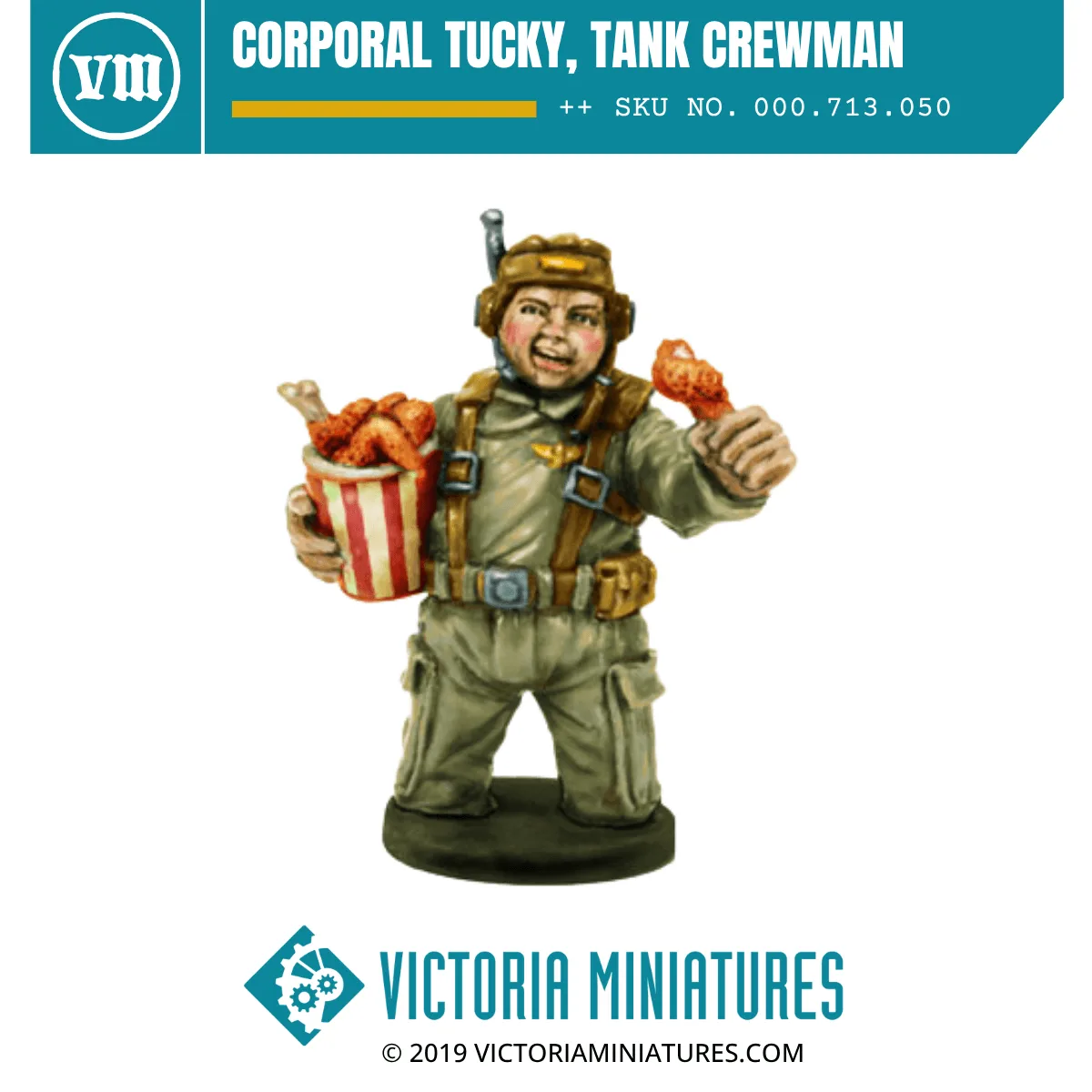
- Corporal Tucky, Tank Crewman.: Single-piece resin miniature designed to fit in the open turret hatch of popular sci-fi tanks. A one-piece resin casting means no assembly and no pinning, so it is a low-effort way to add a character to a vehicle crew.
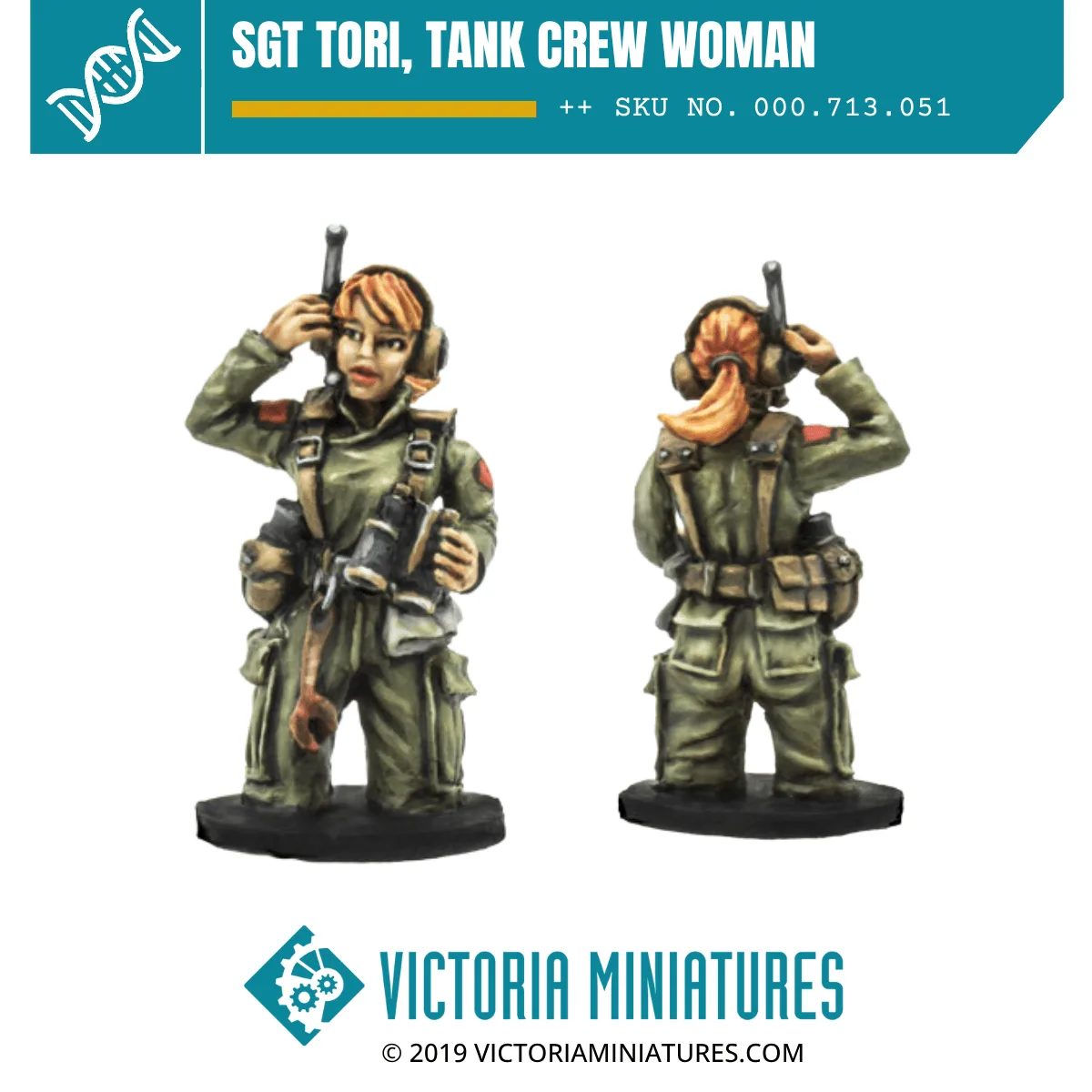
- Sgt Tori, Tank Crew Woman.: Includes a body and a left arm with binoculars, designed to fit in the open turret hatch of popular sci-fi tanks. Two-part resin gives you a pose choice and a separate arm to position, which is more flexible but needs a clean glue joint.
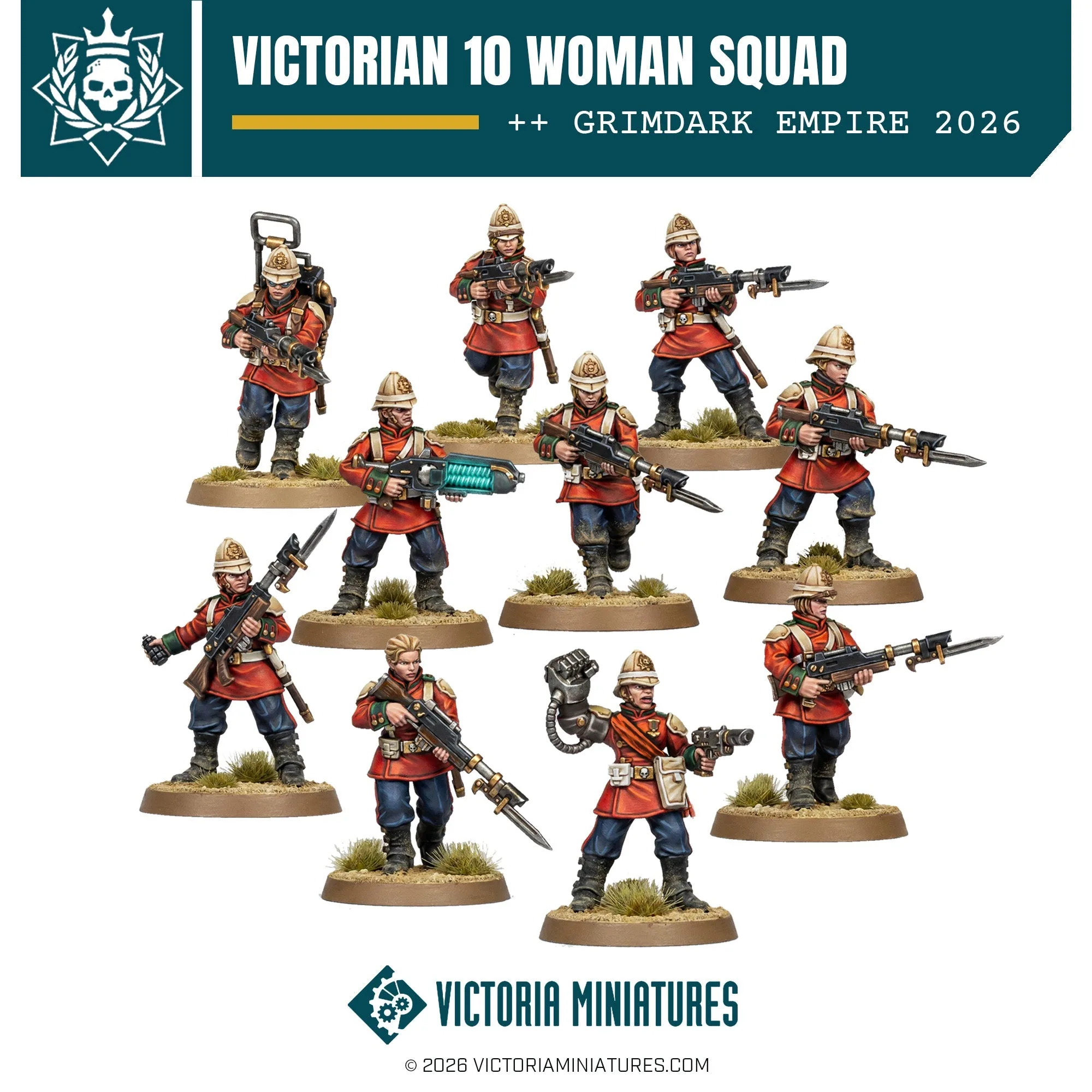
- Victorian 10 Woman Squad: Fully modular, push-together Grimdark troops presented on a high-density Snap Tray for simple identification and removal, with minimal cleanup and brush-away supports. Modular resin kits let you test-fit before gluing, which is the fastest way to learn how resin assembly differs from a single-piece metal casting.
- Grog Ard'Nogg Ogre Veteran: Multi-part resin miniature supplied with a 40mm round plastic slotta base, sculpted by Bobby Jackson. A larger multi-part resin model shows where lighter weight helps most, and the included base means you can assemble and prime without sourcing extra parts.
Which material fits your collection?
Best for
- Gamers who transport armies often and want models that survive handling with less repair work.
- Hobbyists who prefer a build-once model and do not mind pinning and using two-part adhesive.
- Collectors who want to strip and repaint older models repeatedly over the years.
Not for
- Painters who prioritise the sharpest fine detail and lightest models for long painting sessions.
- Hobbyists who convert and repose heavily and want parts that cut and sand easily.
- Anyone who wants the fastest possible assembly with minimal pinning.
There is no universal winner in the metal vs resin miniatures debate, only a material that fits how you build, paint, and store your models. Match the material to your habits, and check the specific kit contents before you buy, because what is included often matters more than the label on the box.