Quick answer
Choose resin miniatures when you want crisp detail, lighter models, and easier conversions, and you are comfortable with multi-part assembly and gentle handling. Choose metal miniatures when you want heft, simple one-piece durability, and a traditional feel that survives tabletop knocks. Neither material is better overall; the right pick depends on whether you value detail and customization or weight and resilience.
Most hobbyists do not pick a material in the abstract. You pick it when you are standing in front of a kit, deciding whether to add it to a project. The material affects how the model assembles, how it feels in your hand, how it paints, and how it survives a game night.
This comparison looks at resin and metal side by side using real kits from Victoria Miniatures. Both materials appear in the catalog, so the trade-offs are concrete rather than theoretical. The goal is not to crown a winner, but to help you match the material to the way you build, paint, and play.
What each material actually is
Resin miniatures are cast in a liquid resin that cures into a hard, lightweight solid. In the Victoria Miniatures catalog, resin kits are described as hand cast in high quality resin, and some are noted as 3D prints. Resin captures fine surface detail well and keeps the model light, which matters when you are carrying a full army.
Metal miniatures are cast in metal alloy, traditionally a tin-lead or tin-based mix. They feel heavier and cooler in the hand, and a single-piece metal model can be dropped without snapping at the ankles. Metal is the older tradition in the hobby, and many long-time painters still prefer its weight and balance.
- Resin: lighter models, sharp detail, usually multi-part.
- Metal: heavier models, durable in one piece, often simpler to assemble.
Detail and conversion potential
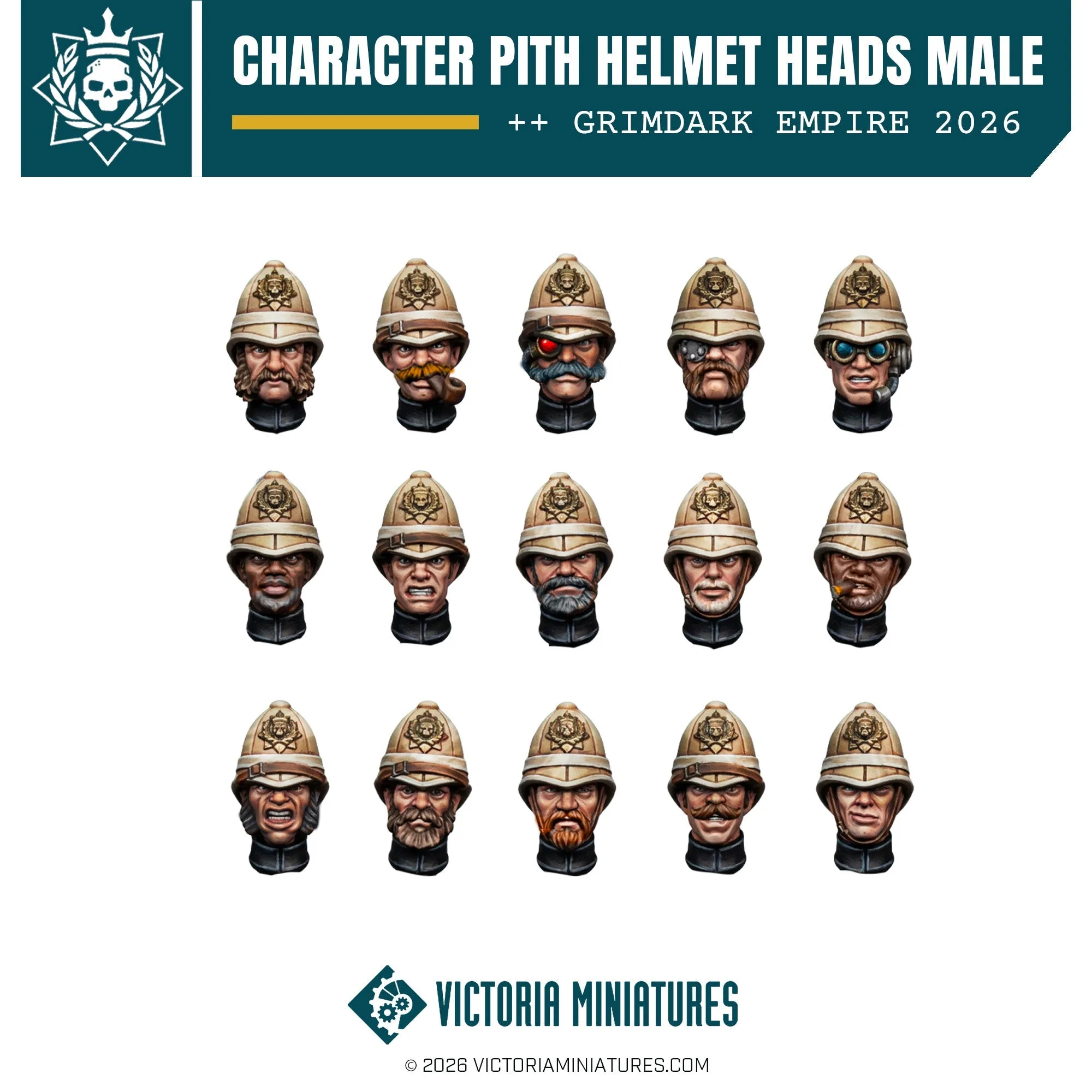
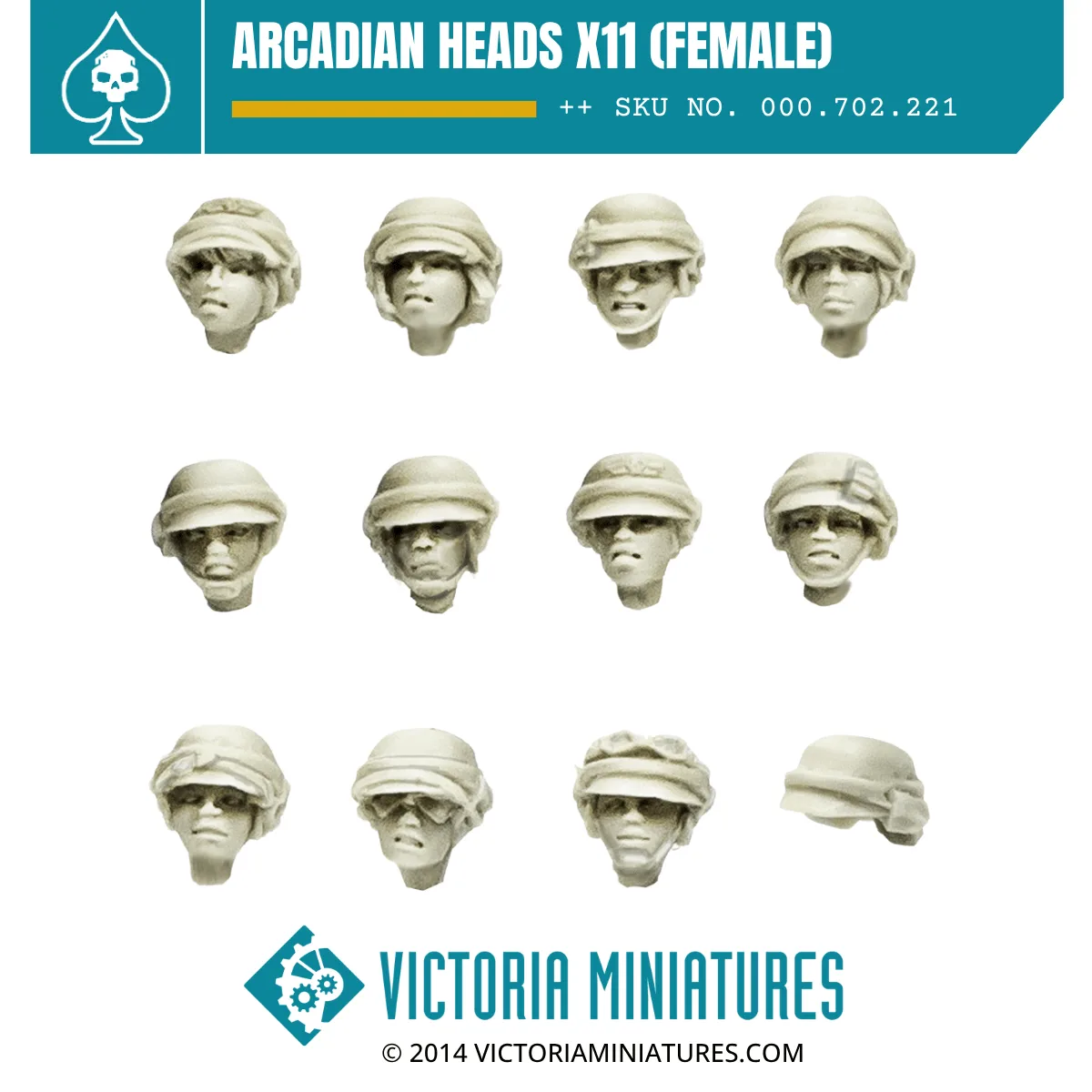
Resin generally holds finer detail than metal. Small features like uniform trim, facial structure, and layered gear come through more cleanly because the mold can capture shallow relief without the metal cooling and shrinking. That is why resin is common for characterful heads and torsos, such as the Female Dress Uniform Torsos or the Arcadian Heads x10 (Male), which are designed to swap onto compatible bodies.
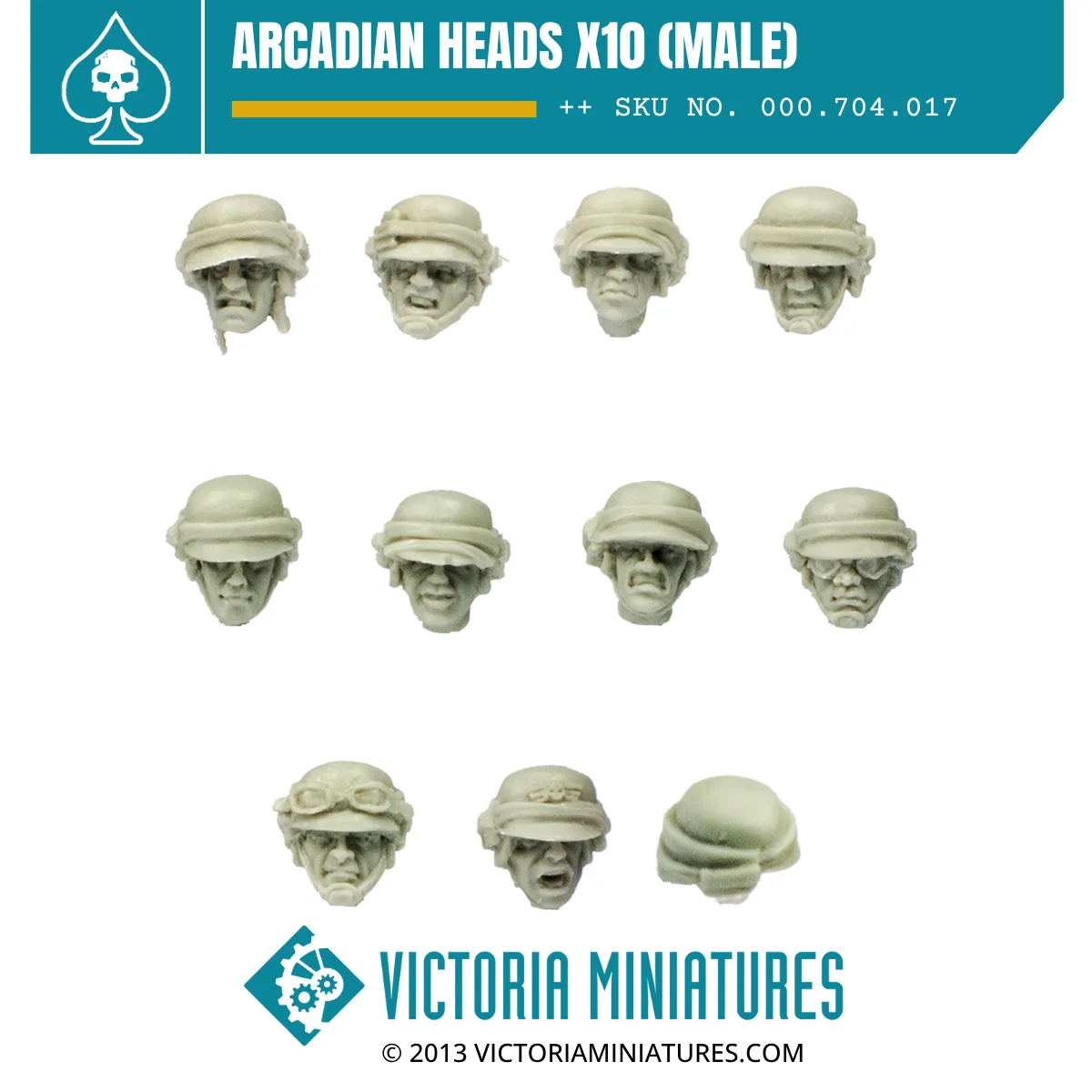
Arcadian Heads x10 (Male)
Metal holds detail too, but the limits of casting and weight mean very fine undercuts are harder to achieve. Where metal shines is in simple, sturdy shapes. If you want to reposition arms, swap heads, or build a unique squad, resin is usually the more forgiving starting point because it cuts and sands more predictably.
- Resin rewards conversion work with cleaner cuts and easier sanding.
- Metal is better for models you want to keep as-is.
Assembly, weight, and handling
Resin kits are frequently multi-part, and the Victoria Miniatures listings are honest about it: multi part miniatures require some skill to assemble and are recommended for experienced hobbyists. That means you should expect to clean mold lines, test-fit joints, and use super glue rather than plastic cement. The payoff is a lighter model that puts less strain on bases and movement trays.
Metal models are heavier, which can make them feel more substantial but also more top-heavy on a small base. A metal figure may need pinning at weak joints, and it can chip paint if it falls. Resin is lighter and less prone to paint chipping from its own weight, but thin resin parts can snap if handled roughly.
- Resin: plan for cleanup and super glue; handle thin parts with care.
- Metal: plan for pinning heavy joints; expect a weightier model.
Durability and transport
For transport, resin has the edge in weight. A case full of resin models is noticeably lighter than the same number of metal models, which matters if you carry an army to a store or tournament. The trade-off is that resin can break at thin ankles or weapon shafts if it is packed loosely.
Metal resists bending and snapping in one-piece form, but heavy metal models can dent or chip paint when they collide. A foam tray or magnetic base helps either material. If you want the simplest transport experience, a single-piece metal figure is hard to beat; if you want a lighter case, resin wins.
- Use foam or magnets for both materials to prevent paint damage.
- Pack resin parts with extra padding around thin limbs.
Painting and finishing
Resin takes primer well after a warm soapy wash to remove mold release. Its smooth surface shows brush strokes if you thin paint poorly, but it also accepts fine detail work cleanly. Metal also needs washing and priming, and its weight can make it easier to hold steady while painting, which some hobbyists find helpful.
One practical difference: metal can chip paint more easily when it knocks against other models, so a varnish layer is a good habit. Resin is less prone to impact chipping but can suffer from paint flaking if the surface was not cleaned properly. In both cases, preparation matters more than the material itself.
- Wash resin and metal parts before priming.
- Varnish metal models to reduce paint chipping.
Cost and kit composition
The catalog shows that resin kits can pack a lot of value into a single purchase. The Arcadian Guard 10 Man Squad is a resin kit described as packed with character and containing plenty of extra bits to customize your troops, including 10x Male Arcadian Heads, 10x Male Flak armor torsos, 10x Universal Rifle Arms, and a Kill Team Special Weapons sprue. That kind of multi-part flexibility is typical of resin.
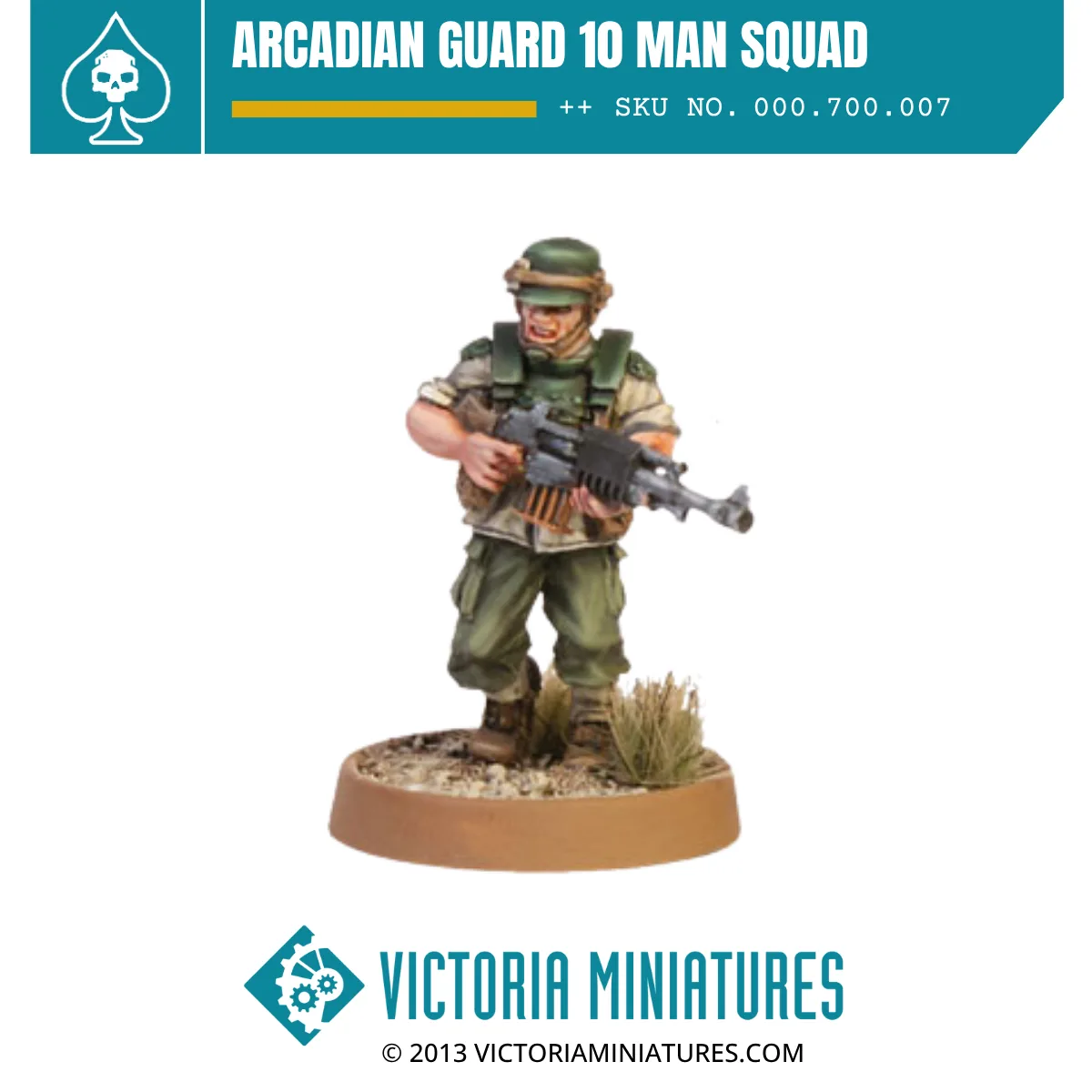
Arcadian Guard 10 Man Squad
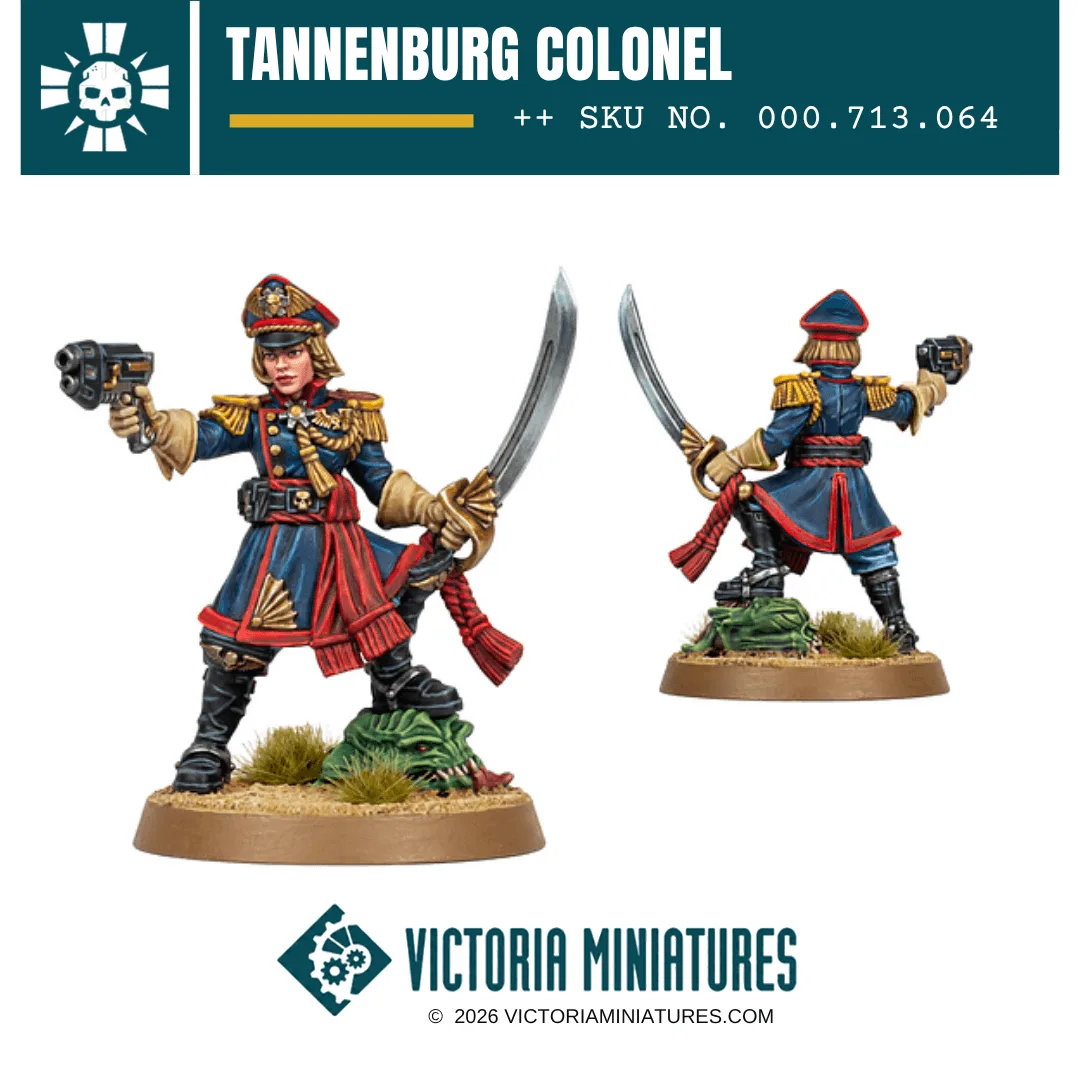
Metal kits tend to be simpler in composition, often a single figure or a small set. The Female Tannenburg Colonel is a resin 3D print with a body, right arm, and 25mm round plastic slotta base. If you want a character model with a specific pose and minimal assembly, a kit like that is straightforward. If you want a full squad with swap options, resin kits like the Arcadian Guard offer more room to customize.
- Resin squad kits often include extra heads, arms, and gear.
- Metal character models are usually simpler and faster to assemble.
Material trade-offs at a glance
- Detail vs. simplicity: Resin captures finer detail and supports more conversion work, but many kits are multi-part and require assembly skill. Metal is often simpler in one piece but offers less fine detail and fewer swap options. Pick resin for character and customization; pick metal for straightforward builds.
- Weight vs. transport ease: Metal feels substantial and resists snapping in one piece, but a full metal army is heavy to carry. Resin is lighter and easier to transport, though thin parts need careful packing. If you carry models often, resin reduces case weight; if you want heft, metal delivers.
- Assembly skill vs. durability: Resin kits are recommended for experienced hobbyists because they are multi-part and need cleanup. Metal models can be pinned for strength but may chip paint on impact. Newer hobbyists may prefer metal for simpler assembly; experienced builders often prefer resin for control.
Product facts that show the trade-off
- Arcadian Guard 10 Man Squad: This resin kit is packed with character and contains plenty of extra bits to customize your troops, including 10x Male Arcadian Heads, 10x Male Flak armor torsos, 10x Universal Rifle Arms, and a Kill Team Special Weapons sprue. Shows how resin kits can deliver squad-level customization in one purchase, which is a key reason to choose resin for army building.
- Female Tannenburg Colonel: This kit includes 1x Tannenburg Colonel body, 1x Tannenburg Colonel right arm, and 1x 25mm round plastic slotta base. This miniature is a 3D print. A compact resin character kit with minimal parts, useful when you want a specific pose without a large assembly project.
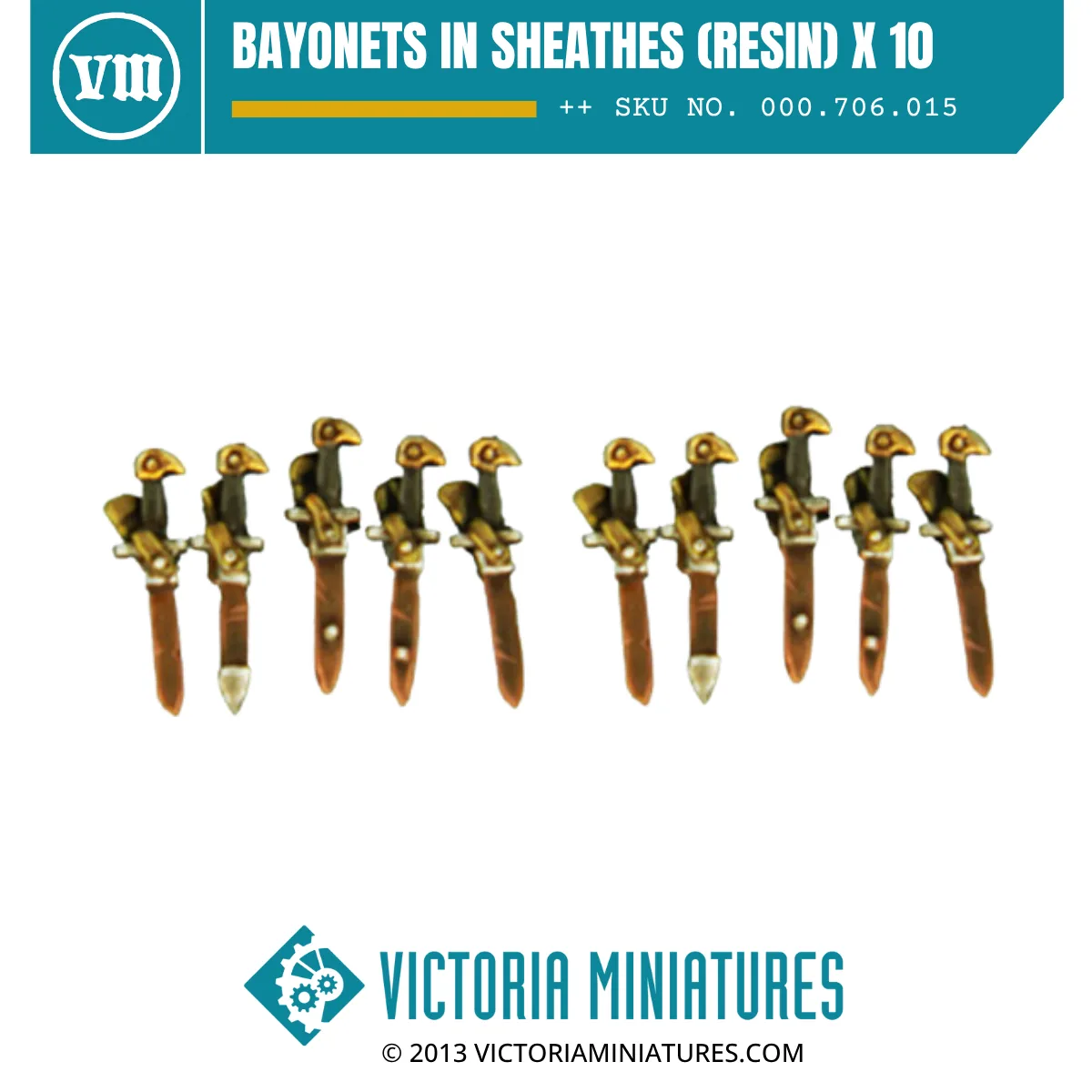
- Bayonets in Sheathes (resin) x 10: 10 bayonets in sheathes. Compatible with Victoria Miniatures and popular plastic guard. Cast in quality hand cast resin. Small resin accessory packs let you add detail to existing models, a flexibility that is harder to match with metal bits.
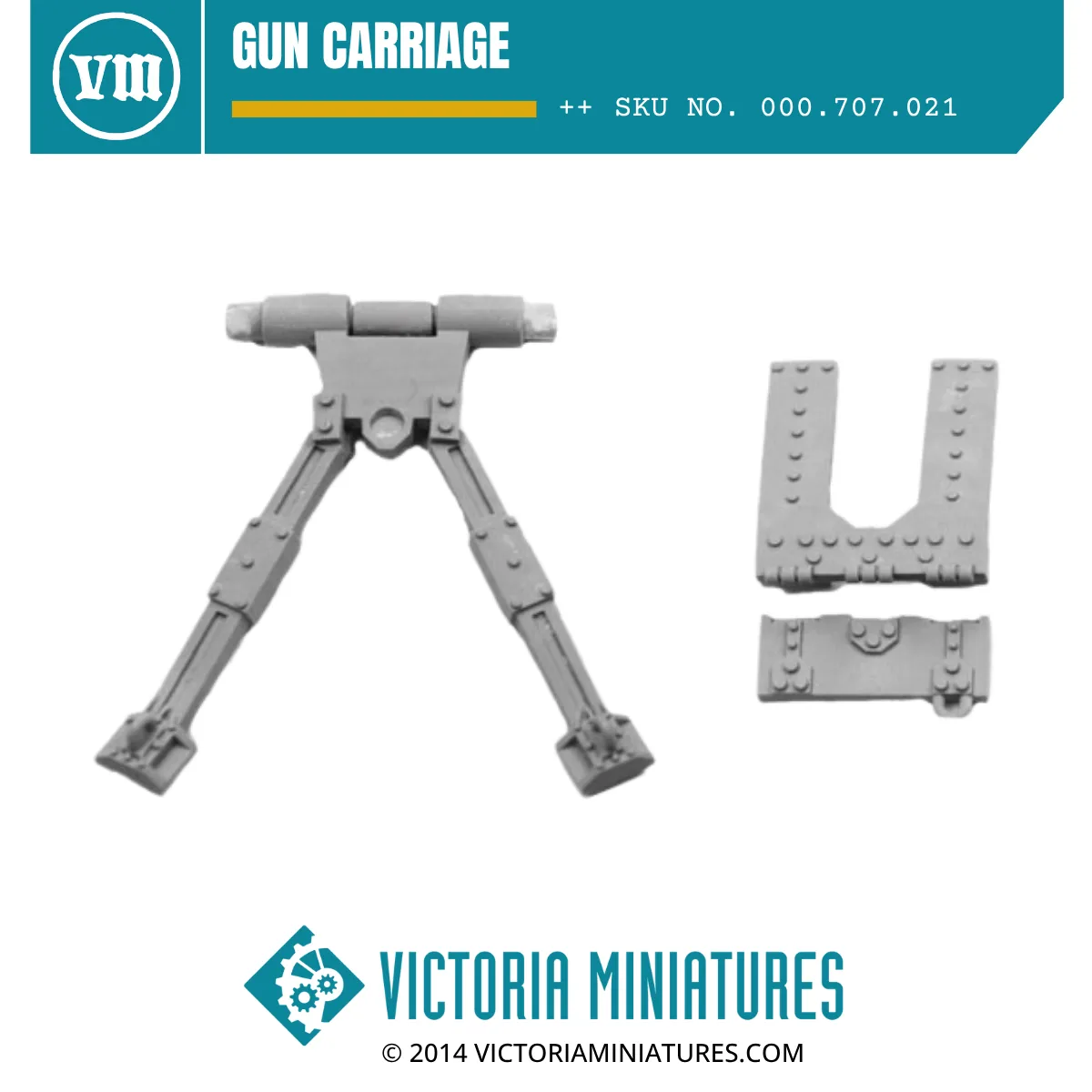
- Gun Carriage: Heavy gun Carriage to suit 28mm troops. This will fit the Standard and Heavy Artillery Wheels. And includes split frame and front shield section. Hand cast in high quality resin. Larger resin pieces like this show that resin is not only for small figures; it can handle substantial models if you are ready for multi-part assembly.
Which material fits your project?
Choose resin if you...
- Want crisp detail and lighter models for painting and transport.
- Enjoy converting and swapping parts, such as heads and torsos, across a squad.
- Are comfortable with multi-part assembly and super glue.
Choose metal if you...
- Prefer a heavier model that feels solid in the hand.
- Want a simple one-piece figure that needs minimal assembly.
- Value traditional metal durability over fine detail and conversion options.
There is no universal winner between resin and metal miniatures. Resin gives you detail, lightness, and customization; metal gives you weight, simplicity, and traditional resilience. Match the material to how you build, paint, and play, and you will enjoy the models more.