Quick answer
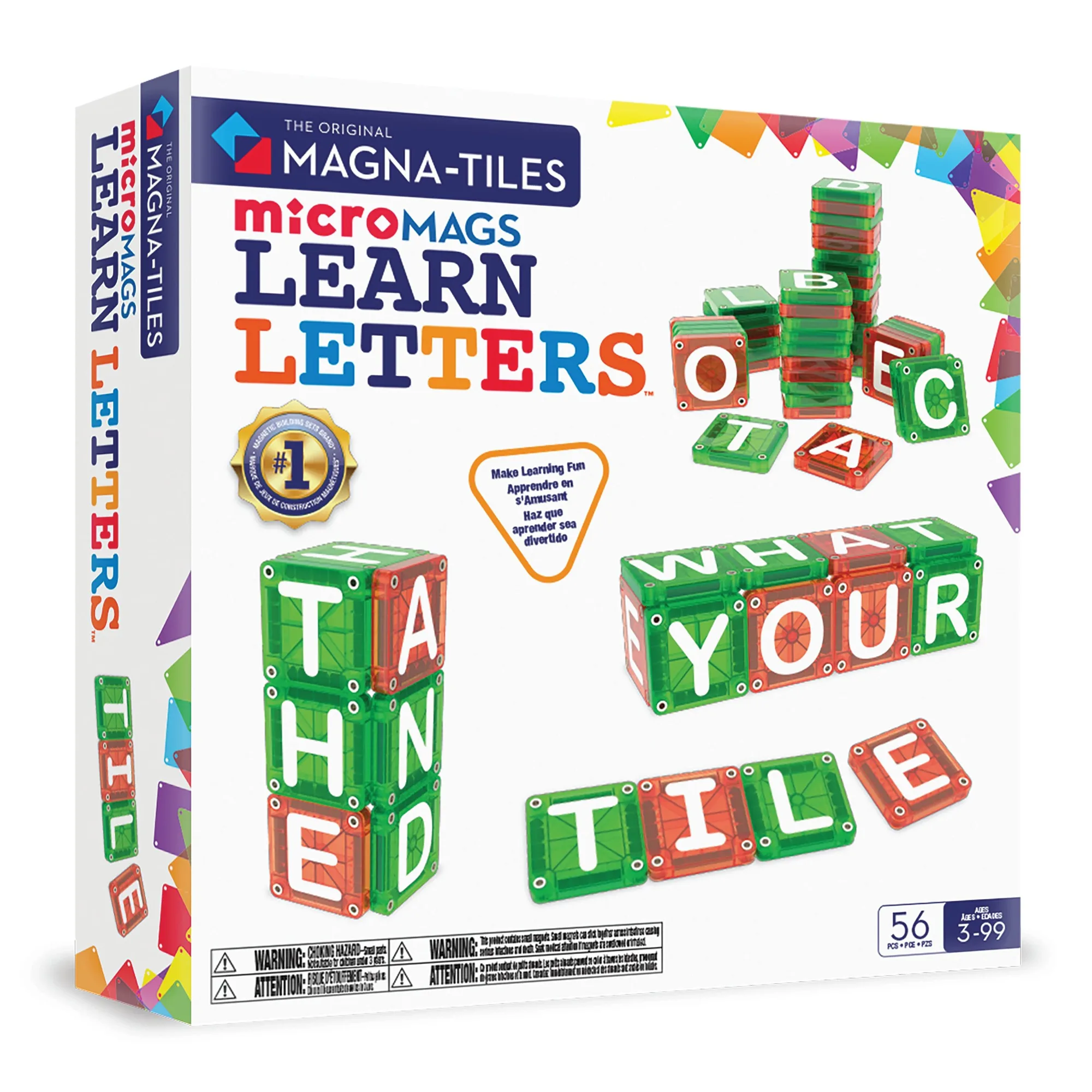
Use the microMAGS LEARN Letters 56 Piece Set as a short, playful literacy routine. Start by sorting the color-coded tiles, then move through matching, phonics, and word building in five to ten minute sessions. The set's orange vowels and green consonants make letter patterns visible, so preschoolers can spot how words are built without worksheets.
Set up a literacy-friendly play space
Before you introduce letters, clear a flat surface at your child's height. A low table or the floor works well because magnetic tiles need a steady base for building and rearranging. Keep the 56 pieces in a shallow tray or basket so your child can see the color-coded tiles at a glance. Vowels are orange and consonants are green, which turns sorting into a visual cue rather than a memorization task.
Match letters to names and sounds
Begin with the letters in your child's name. Pull those tiles from the tray and say each letter name clearly as you place it down. Then make the letter's sound and ask your child to repeat it. Because the tiles are magnetic, your child can slide them together to form the name and take it apart again. This physical back-and-forth supports letter recognition better than pointing at a static chart.
Build simple words with color cues
Once your child knows a handful of letter sounds, build two- and three-letter words such as cat, sun, or map. Place the green consonant tiles and orange vowel tiles in order, saying each sound as you go. The color contrast helps children see that every word needs a vowel. After you build a word together, mix the tiles and let your child rebuild it from memory.
Turn letter play into a daily five-minute habit
Short, frequent sessions work better than one long lesson. Keep the set accessible and rotate through three quick activities: sort vowels and consonants, build a word from a picture, or swap one letter to make a new word. This repetition builds fluency without pressure. If your child loses interest, stop while it is still fun and try again the next day.
Eight steps to teach letters with microMAGS
- 1. Sort by color: Empty the 56 tiles onto a tray and ask your child to push all orange vowels to one side and green consonants to the other. Name a few letters as they sort. Checkpoint: your child can point to a vowel and a consonant without prompting.
- 2. Match uppercase letters: Show a letter tile and ask your child to find its match in the pile. Start with five letters and add more as confidence grows. Mistake to avoid: using too many letters at once, which turns matching into guessing.
- 3. Say the sound: Hold up a consonant tile and make its sound. Have your child repeat the sound and then place the tile on the table. Checkpoint: your child can produce the sound for at least three consonants.
- 4. Build your child's name: Pull the tiles for your child's name and line them up together. Say each letter as you place it, then let your child scramble and rebuild the name. Mistake to avoid: correcting every wrong placement immediately; let them self-correct first.
- 5. Make a two-letter word: Build a simple word such as 'at' or 'up' using one orange vowel and one green consonant. Read it together and slide the tiles apart to show the sounds. Checkpoint: your child can blend two sounds into a word.
- 6. Add a beginning sound: Place a consonant in front of a two-letter word to make a three-letter word, such as c-at or m-ap. Say the new word and ask your child to copy it. Mistake to avoid: rushing to long words before short ones are solid.
- 7. Swap one tile: Build a word, then change one letter to make a new word (cat to hat, sun to run). Ask your child to read both words. Checkpoint: your child notices that changing one letter changes the whole word.
What the set includes
- microMAGS LEARN Letters™ 56 Piece Set: The microMAGS LEARN Letters 56 Piece Set includes color-coded uppercase letter tiles with vowels in orange and consonants in green. The color coding gives children a built-in visual system for sorting vowels and consonants, which supports phonics and early word building without extra instruction.