Quick answer
No, you do not need dozens of colors to paint well. A small set of paints you actually mix, thin, and layer will carry most projects, and a few specialty colors can be added only when a specific scheme calls for them. Buying more paint is not the same as painting better.
Walk into any hobby shop and the wall of dropper bottles suggests that a serious painter owns a hundred colors. That idea is one of the most persistent miniature paint myths, and it costs beginners money before they have learned to thin a single layer.
The truth is simpler: paint is a tool, not a collection. Most of the results people admire come from technique, contrast, and knowing when to mix. Below are the claims we hear most often, each with a clear verdict and the reasoning behind it.
Myth: You need every color before you can start
This is the claim that keeps new painters from starting. In practice, a small working palette covers the vast majority of a miniature, and you extend it by mixing rather than by ordering another bottle. A single green can move from a dark base to a highlight with a little white-1-a190166d490a29fe8213b012-1816307">white-2c58a54a96968356c7438d99-1815651">white or yellow, which is faster than waiting for a delivery.
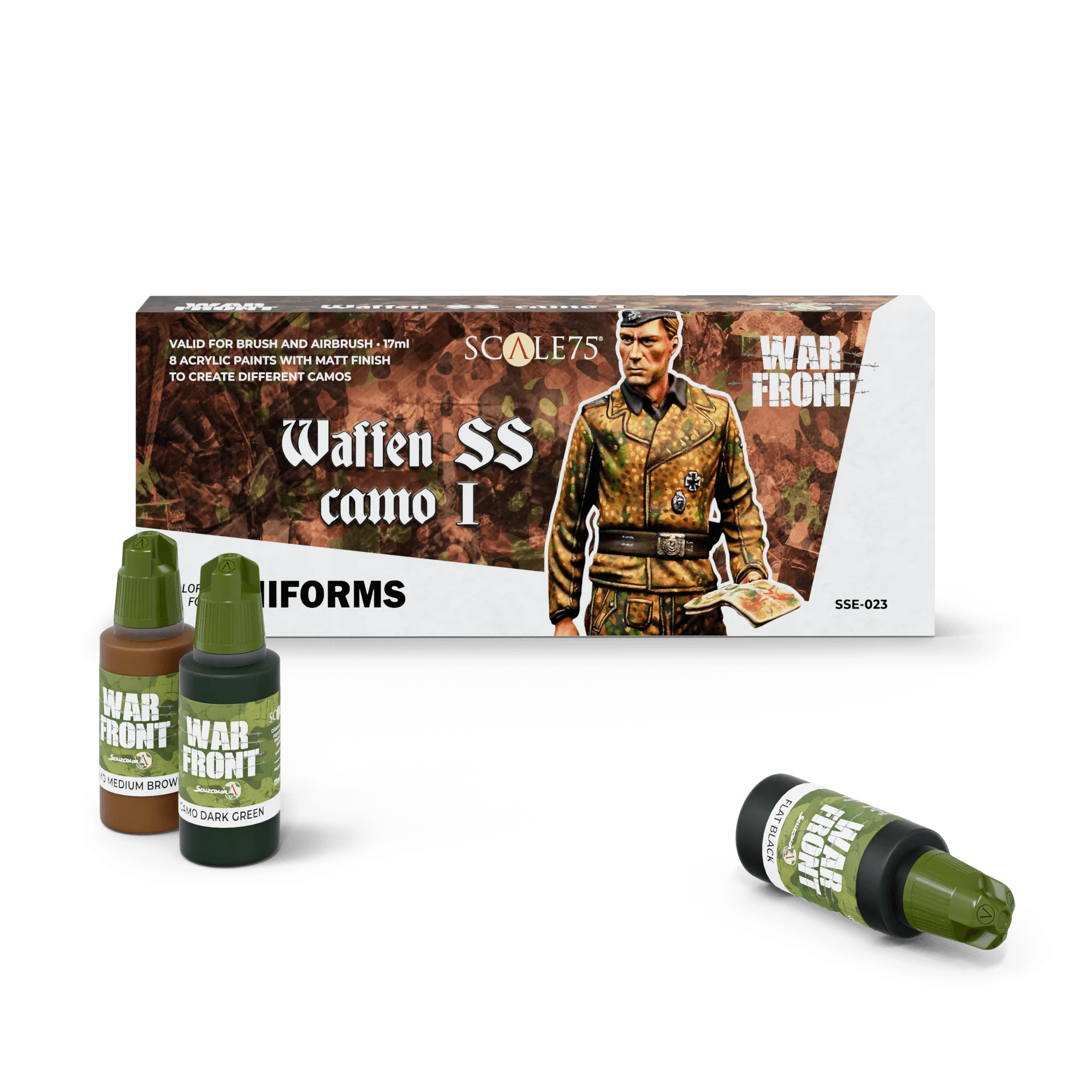
The exception is a specific historical or camouflage scheme where the supplied colors are the point. The WAFFEN SS CAMO I set is a good example: it is a set of 8 matte-finish acrylic paints chosen so you can paint Italian Pattern, Oak Leaf autumn, Oak Leaf B, Palm tree pattern, Plane Tree, and Splinter B camouflage. That is not a general-purpose collection, it is a task-specific kit, and buying it makes sense only if you are painting those patterns.
- Start with a small core of colors and add only when a project demands it.
- A task-specific set is worth buying when the project matches the set.
Myth: Mixing your own colors is always cheaper and better
Mixing is a core skill, but it is not free. Every mixed batch has to be matched again on the next session, and some colors are genuinely hard to reproduce consistently by hand. Buying a dedicated bottle makes sense when you need the same result repeatedly, or when a scheme depends on exact tones.
The practical middle ground is to mix for variation and buy for repetition. If you find yourself remixing the same green every week, that is a signal to buy it. If you are experimenting, mix first and see whether the color earns a place on your shelf.
- Mix when the color is a one-off or a variation.
- Buy when you need the same tone again and again.
Myth: Cheap paint is always a false economy
Price alone does not tell you whether a paint fits your method. What matters is how the paint behaves in the way you actually use it, and that is where product descriptions earn their keep. FALL GREEN is described as a super matte finish acrylic paint in a 17ml bottle, formulated so you can easily create glazes or build a completely opaque layer, and it is listed as valid for both brush and airbrush.
That flexibility is the real value question. A bottle that lets you glaze and also cover in one layer does more work than two bottles that each do only one job. Judge paint by the range of results it gives you, not by whether it was the most expensive option on the rack.
- Check whether a paint supports the techniques you use, such as glazing or opaque coverage.
- One versatile bottle can replace several single-purpose ones.
Myth: A big collection means you are a better painter
A large shelf is a storage decision, not a skill level. The painters who improve fastest are usually the ones who finish models with a limited palette and learn what each color does. Buying more paint does not add technique, and unused bottles quietly dry out while you wait for a project that needs them.
There is also a practical cost beyond money. More bottles mean more decisions per miniature, and decision fatigue is real when you are standing in front of forty greens. A smaller palette forces you to commit, which is exactly the habit beginners need to build.
- Track which bottles you have not opened in a year before buying more.
- A limited palette trains color decisions faster than a full wall.
Myth: You should buy the whole range at once
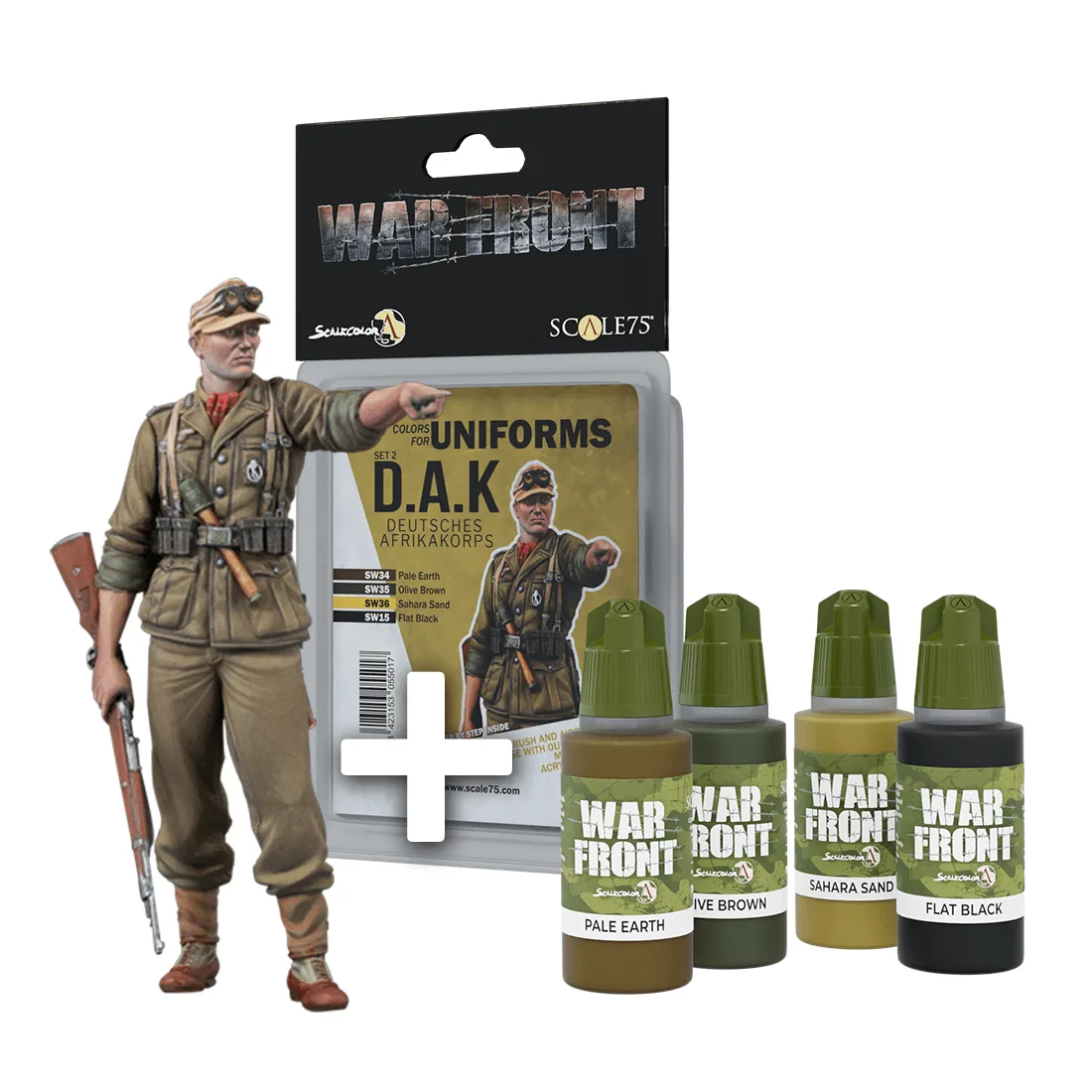
Sets are convenient, but they are only a bargain if you will use most of what is inside. The PACK OBERSHUTZE + DAK PAINT SET 2 combines a paint set with a 1/35 figure pack and includes a short step-by-step painting guide, which makes it a self-contained project rather than an open-ended collection. That is a reasonable purchase when you want a guided start.
The same logic applies to any range. Buy the entry point that matches a project you can finish, then expand based on what you ran out of rather than what looks good on a shelf. Your second purchase should be a response to a real gap, not a completionist instinct.
- A set with a guide and a figure is a project, not just paint.
- Let your next purchase answer a problem you actually hit.
Verdicts at a glance
- You need every color before starting: A small working palette covers most of a miniature; task-specific sets such as WAFFEN SS CAMO I are the exception, not the rule. Myth. Start small and add with purpose.
- Mixing is always cheaper than buying: Mixing wins for one-off variation, but repeated tones are faster and more consistent from a dedicated bottle. Partly true. Mix for experiments, buy for repetition.
- Cheap paint is a false economy: Value comes from the range of techniques a paint supports, such as FALL GREEN glazing or covering opaquely in one layer. Myth. Judge behavior, not price.
- A bigger collection makes you better: Unused bottles dry out and a crowded shelf slows every color decision without adding technique. Myth. Finished models build skill.
- Buy the whole range at once: Sets like PACK OBERSHUTZE + DAK PAINT SET 2 pay off when they are a guided project you will actually finish. Only if the set matches a real project.
Catalog facts that support these verdicts
- WAFFEN SS CAMO I: Set of 8 matte-finish acrylic paints covering Italian Pattern, Oak Leaf autumn, Oak Leaf B, Palm tree pattern, Plane Tree, and Splinter B camouflage schemes. A task-specific set like this is worth buying only when you are painting those exact camouflage patterns, not as a general starter palette.
- FALL GREEN: Super matte finish acrylic paint, 17ml, designed for professional and amateur miniature painters, formulated to create glazes or a completely opaque layer, and valid for brush and airbrush. One bottle that can glaze and cover opaquely does the work of several single-purpose paints, which is the practical case against buying a huge range.
- PACK OBERSHUTZE + DAK PAINT SET 2: Paint set and 1/35 figure pack, includes a short step-by-step painting guide. A guided, self-contained project is a better first purchase than an open-ended range you have no plan for.
- Sergeant Templar: The Templar sergeants wore a black surcoat and a red cross on both sides to distinguish themselves from members of other orders. When a scheme is defined by a small number of specific colors, you buy those colors and skip the rest of the range.
Buy paint to solve the project in front of you, not to complete a shelf. A small palette you understand will outperform a large one you are afraid to use, and the money you save can go toward the next miniature instead.